I rallied and got out of bed. What I mean is: I’m stubborn and internally driven even when externally constrained, in this case by a lung infection, so I got up and went out in search of Moenkopi samples even though I should have stayed in bed to rest and recover.
We did find two new colors of Moenkopi, neither of which is naturally occurring. One is maroon. The other is lavender. The maroon appears to be a function of the blasting required to build an adjacent highway, which swiftly exposed a buried Moenkopi bed that would otherwise have oxidized in the sun, turning it orange-red. The lavender appears to be the result of exposure to chemicals or runoff that’s bleached the Moenkopi. So human activity, including construction and contamination, have affected both of these areas.
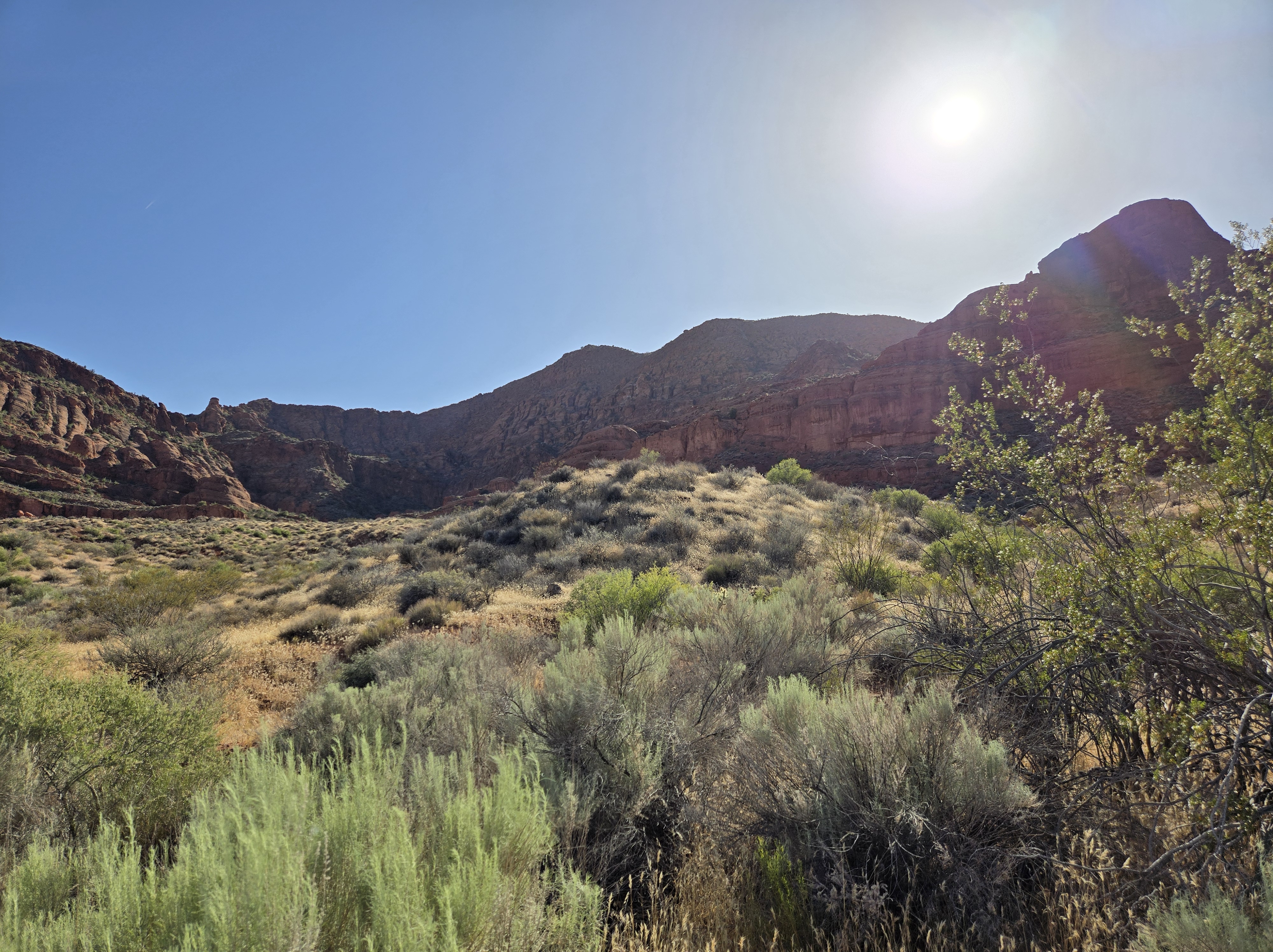
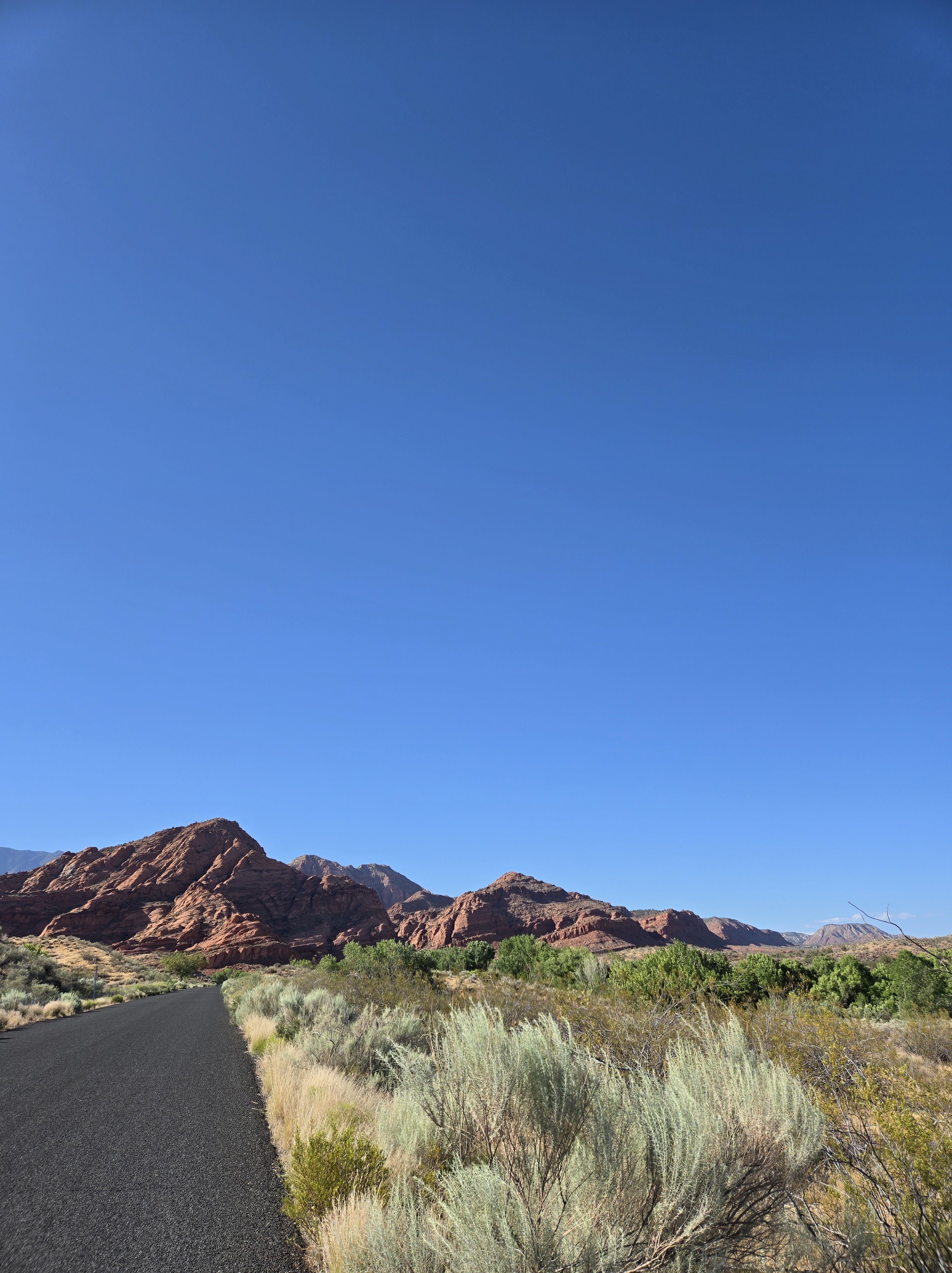
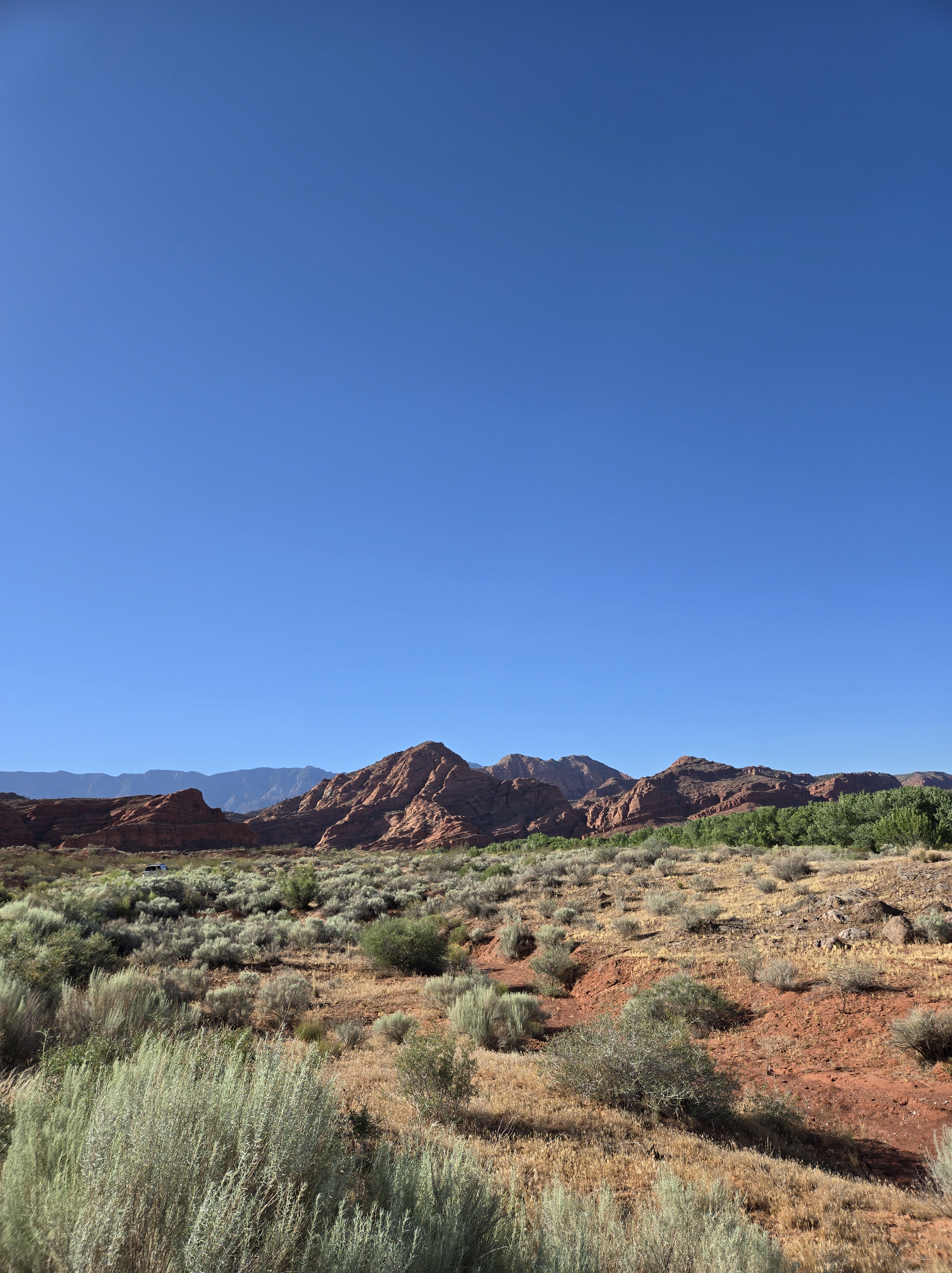
The first three photos are of the Red Cliffs Recreation Area in Leeds, Utah, which is situated at the convergence of the Mojave Desert, Colorado Plateau, and Great Basin physiographic regions. The photos show a mix of plants found in each of these regions, with Navajo Sandstone cliffs in the background.
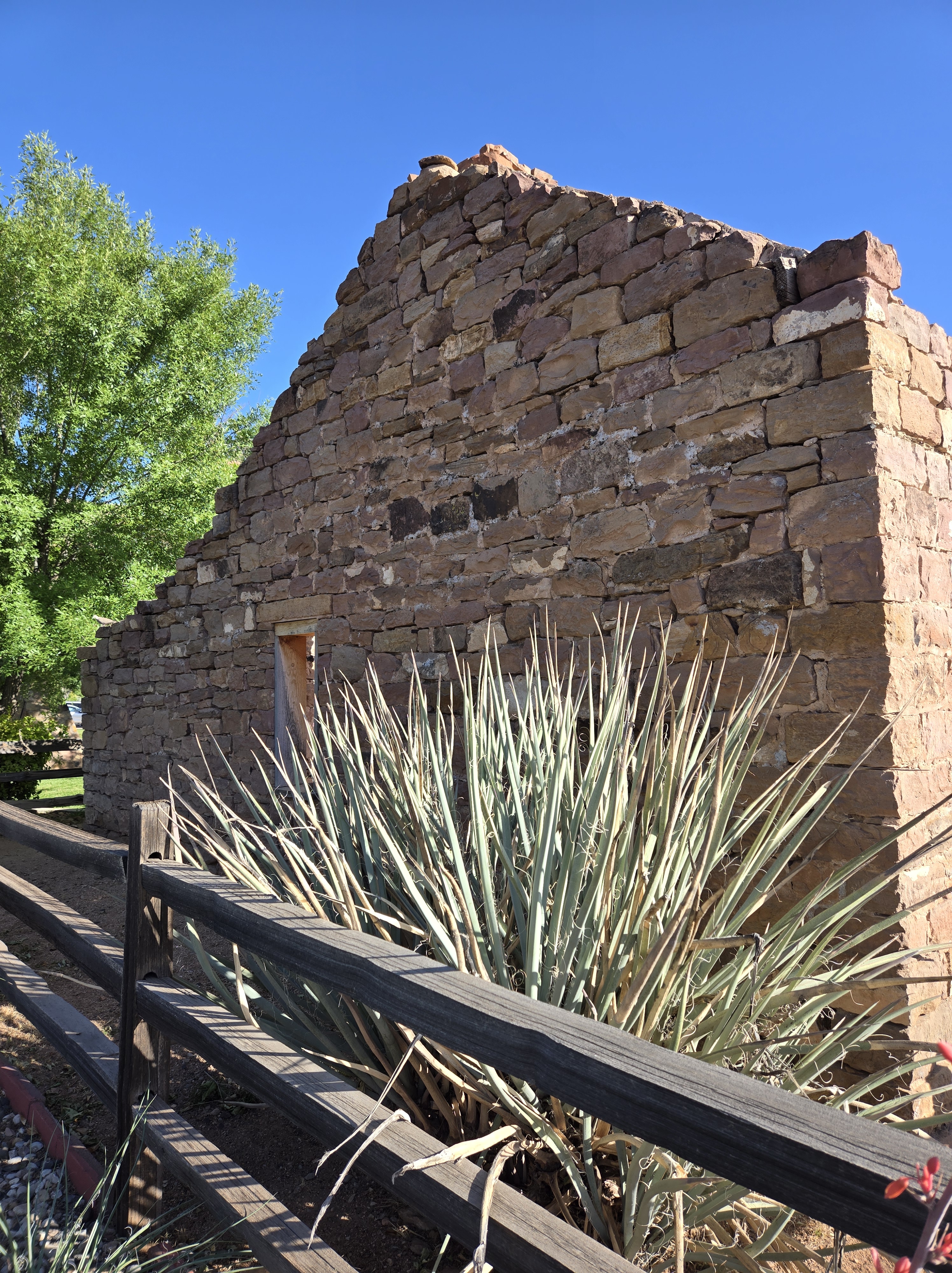
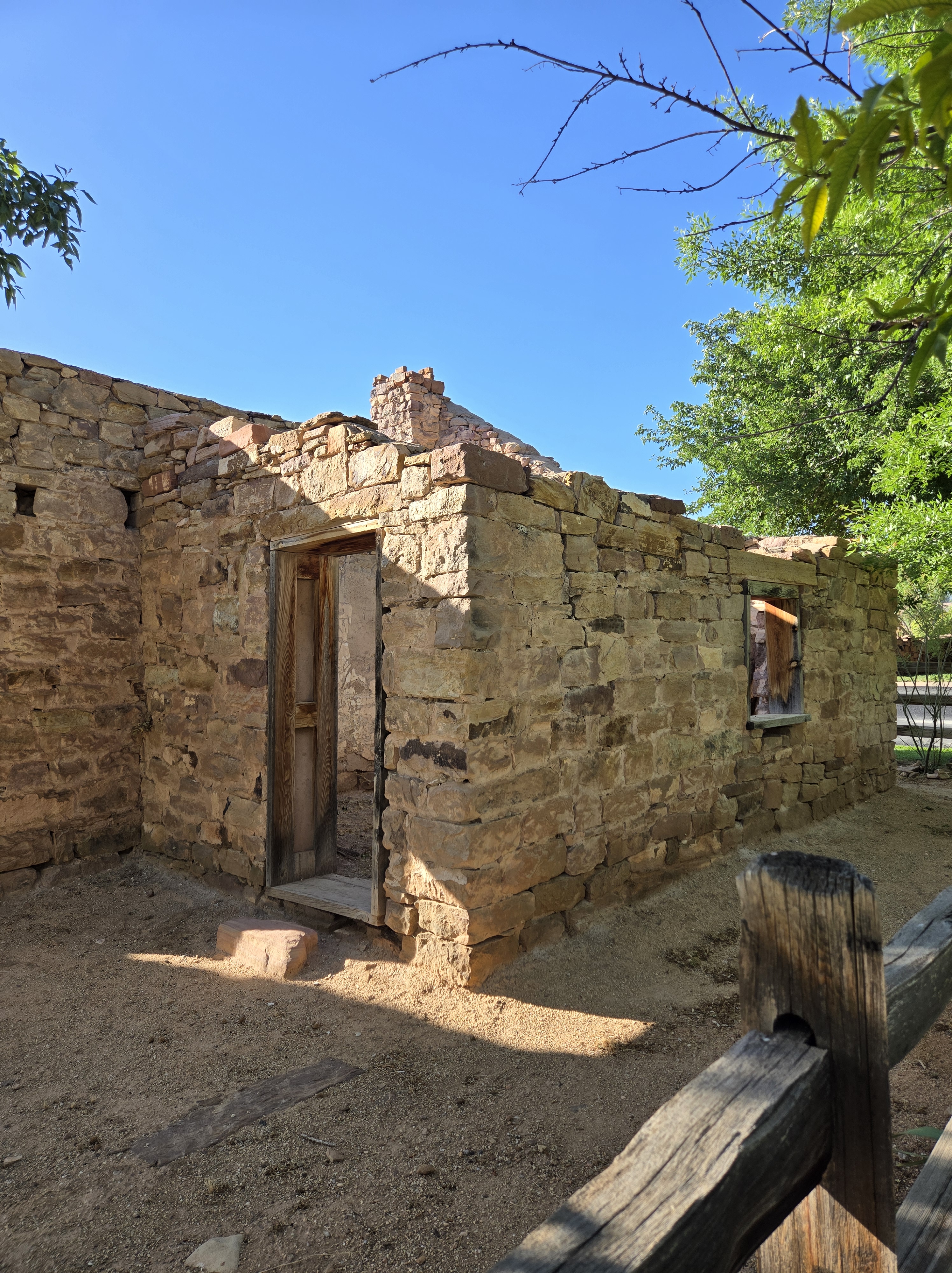
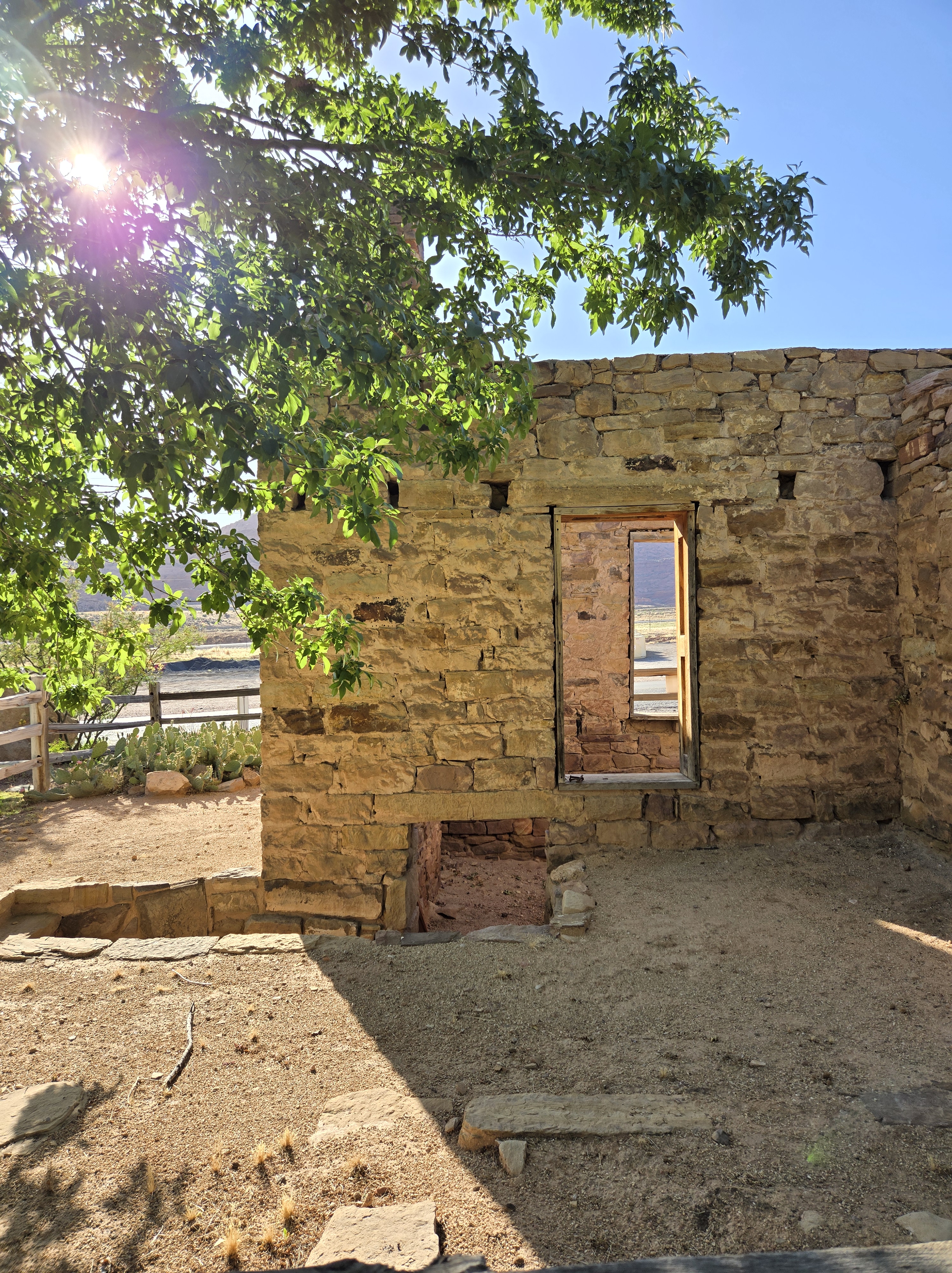
The last four photos are of what’s left of a historic pioneer home in the ghost town of Harrisburg, Utah.
Both Leeds and Harrisburg are about fifteen minutes from our home.
People ask me why I don’t apply for poetry residencies. This is why. I live in Greater Zion. This land is so beautiful, every day feels like a residency.
Images: Six photos as described in the paragraphs above.
 Dana Henry Martin