Speaking of loneliness, I once played with light as a friend. When my brother-in-law, who was much older than me and a physicist, was visiting one summer, he showed me how to capture light in a small mirror and project it onto a wall. After he left, I played with the light for hours and hours in an otherwise dark hallway, the one that led to my parents’ separate bedrooms and to my bedroom and to everything that happened in them. I don’t know what I thought I was going to accomplish by getting a ball of light to bounce around on those nicotine-beiged walls, but I knew it was better than going it alone in that house. My light friend was everything to me that summer. It only let me down on cloudy days.
Notabilia
Alex Caldiero Memorial Essay

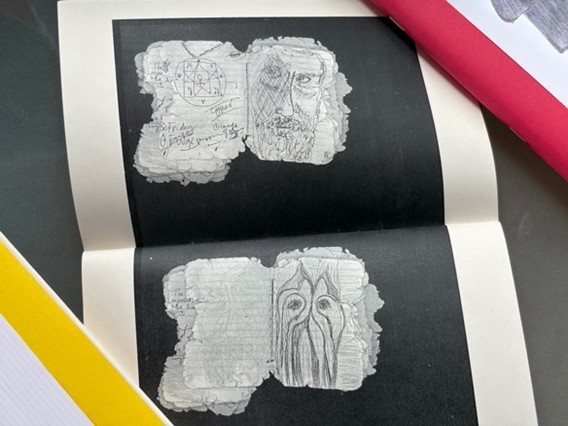
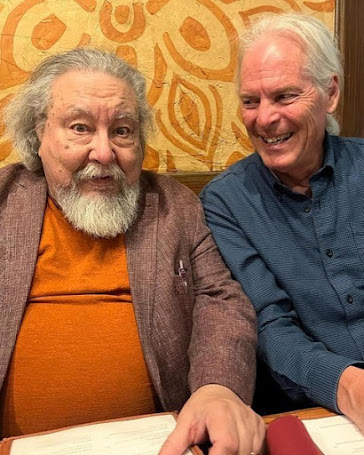
On this second day of April, I’m honored to share Scott Abbott’s tribute essay about Utah poet, sonosopher, composer, and musician Alex Caldiero, published today by Rob McLennan at periodicities : a journal of poetry and poetics. This tribute means so much. I only knew Caldiero’s work, but I recognize what a loss it was for Utah and for poets, artists, thinkers, and creative folks everywhere when he died. Rob was kind enough to reach out to me after I posted about Alex’s death to see if anyone wanted to write something about his work. Scott generously took the time to write this piece about Alex, his life, and his work. Read it. Then read it again whenever you start to think poetry and the arts don’t matter. Ad astra, Alex.
Images: 1. Alex Caldiero with Scott Abbott. 2. A poster for a Howl event with Alex Caldiero at the bottom. 3. An open page from one of Alex Caldiero’s notebooks.
No Manifesto
It’s haunting to read the “No Manifesto” poem from Chicago Review ten years after it was published. It came out thirteen days before I left poetry because I experienced some of the very issues this poem addresses. It’s situated in a time and place, or rather places, but is also timeless in that too many of the lines could be written today and still be applicable. What a mess we’ve made of poetry. I want better for it, for us. I wanted better for myself.
This is actually the first time I’ve seen the poem and this issue of Chicago Review, which includes a forum on “Sexism and Sexual Assault in Literary Communities.” The “No Manifesto” poem begins on page 221 of the linked document. The poem is 13 pages and 271 lines long.
We’ve been fighting this fight for a really long time. I can’t even see who’s been fighting alongside me. What I see is who didn’t, who hasn’t. When my loneliness leaks into the fissures left by poets and their complicity, it feels like the time I poured salt on a gash in my hand under the magnolia tree in my backyard on a sunny, blank day. I was a kid then. I didn’t know what pain was but wanted to. I’m an adult now and have no need for this pain that won’t stop seeping.
Tall Tales Turned Titillating Truths
I found a document that my paternal great-grandfather dictated for the Indian and Pioneer Historical Collection in 1937. It turns out that side of my family also took part in the 1892 Land Run.
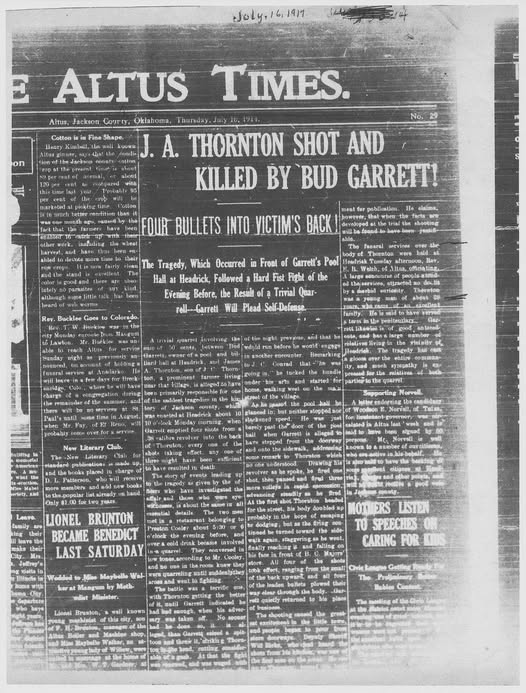
On my mother’s side of the family, I found a news story about one of her uncles dying after being shot four times in the back by a pool-hall owner in Headrick, Oklahoma, over the sum of fifty cents. My mother told me my great-uncle was shot while walking down the street, but I thought it was a tall tale. Turns out, she pretty much told the truth about everything.
Also, I found a portrait of my fourth great-grandmother on my father’s side. She looks like the botched Ecco Homo restoration.
Image: The Altus Times, July 16, 1914, with a front-page story about my great uncle being shot to death outside Garrett’s Pool Hall in Headrick, Oklahoma, by the establishment’s owner, Bud Garrett.
Word-twisping
That was fast. All fifty of the copies of No Sea Here that Moon in the Rye Press gave me are spoken for. I’m now digging into the copies I purchased at a discount, so I’ll be pivoting to a pay-what-you-can model. I hope that model will allow everyone to have a copy regardless of their ability to pay. I also love trades of all kinds, so that’s always on the table.
I’m mailing the first fifty copies out tomorrow, which means I get to visit the Toquerville Post Office, one of my favorite places in Utah. It sits beneath a steep hill festooned with chunks of basalt the size of economy vehicles. None of them have dislodged and killed anyone, at least not yet. Death by igneous rock is on my list of preferred ways to shed this mortal coil, which I always say in my head as cortal moil the way I used to call my friends who were dating Sherry and Jelly when their names were actually Jerry and Shelly.
This word-twisping is not something I try to do. It’s one of the ways my dyslexia makes itself known. Dyslexia is my mischievous little language friend who never fails to entertain me. It’s wearing a cute devil costume right now, kind of an inside joke. Dyslexia is such a comedian.
In other news, I’m happy to report that some poets are still people. I almost typed pets, which would also not be awful. Poets are sometimes people, sometimes pets, and sometimes a pestilence. I said what I said. Mostly, I was riffing on the sounds of the words. Mostly. Let me have some fun, OK? I’m going on day three of a migraine, which is in turn causing my centralized pain syndrome to flare. This is what I get for being in a body. My body doesn’t know how to have fun. Even my dyslexia can’t make it laugh.
‘No Sea Here’ Is Here
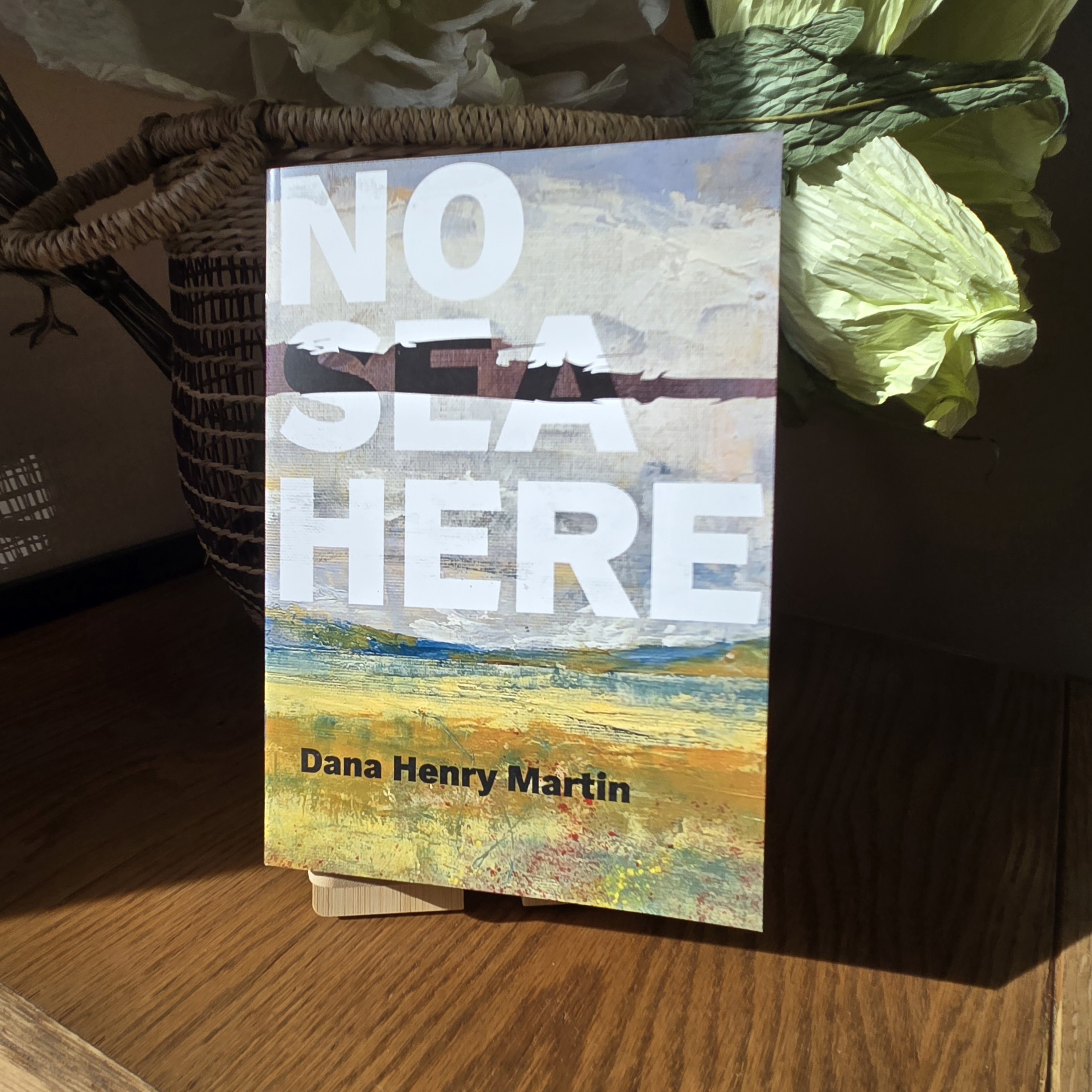
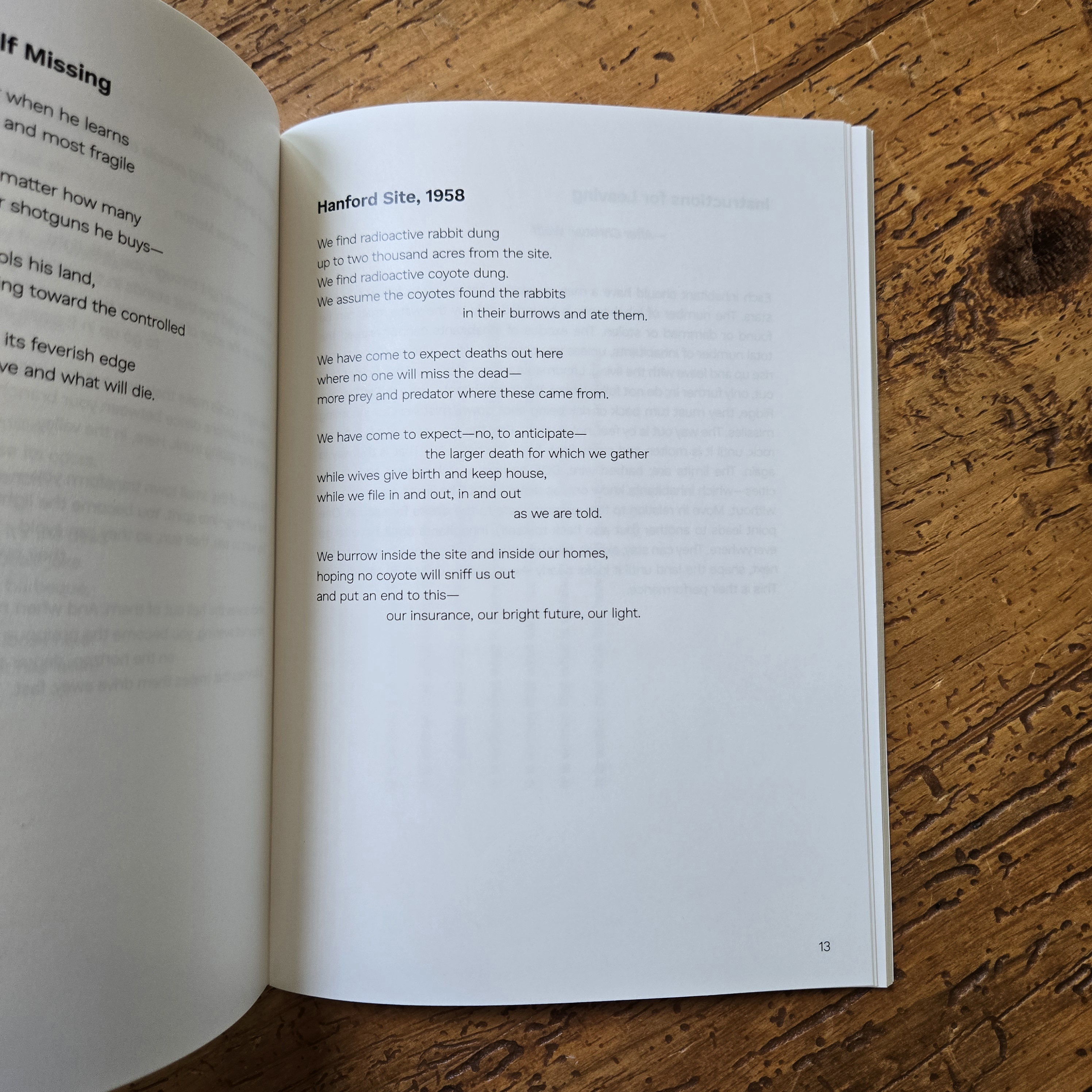
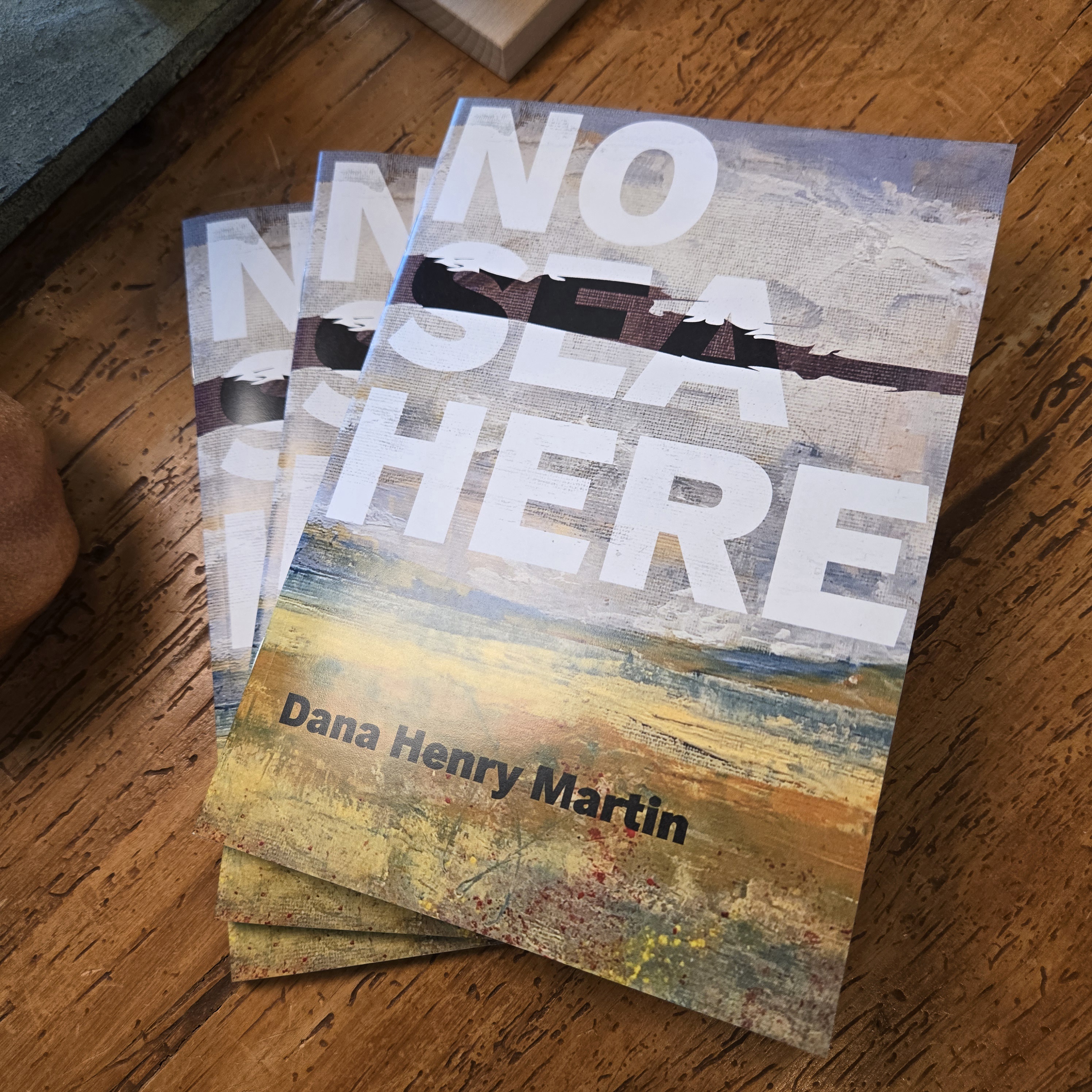
My chapbook No Sea Here is finally here, thanks to Moon in the Rye Press, Lisa Bickmore and Jem Ashton, and funding by the Utah Division of Arts and Museums.
I received fifty copies as part of this micropress project and plan to give those to folks who have already generously shared their work with me, who have helped with the collection, and who have, dare I say it, made me a better poet and person.
After the first fifty copies are gone, I’ll have additional copies available that I purchased at a discount. For those, I’ll use a pay-what-you-can model to help offset my costs, including postage, while also making sure anyone who wants a copy can have one. If there are any profits, I’ll donate them to a social or literary nonprofit.
Images: 1. No Sea Here in the afternoon light. 2. An interior page from the collection. 3. Fanned-out copies of No Sea Here. 4. The back cover of the collection with the Moon in the Rye Press logo.
Spring in Salt Lake City
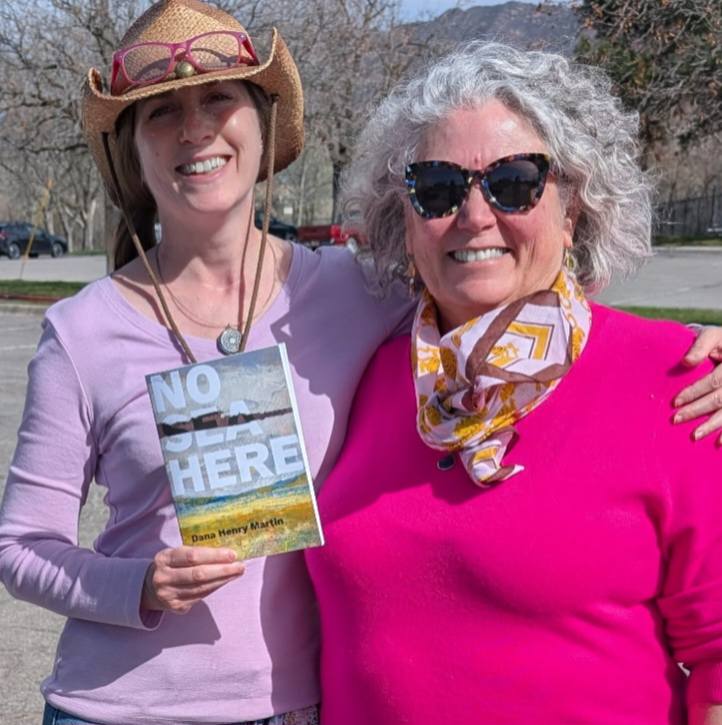
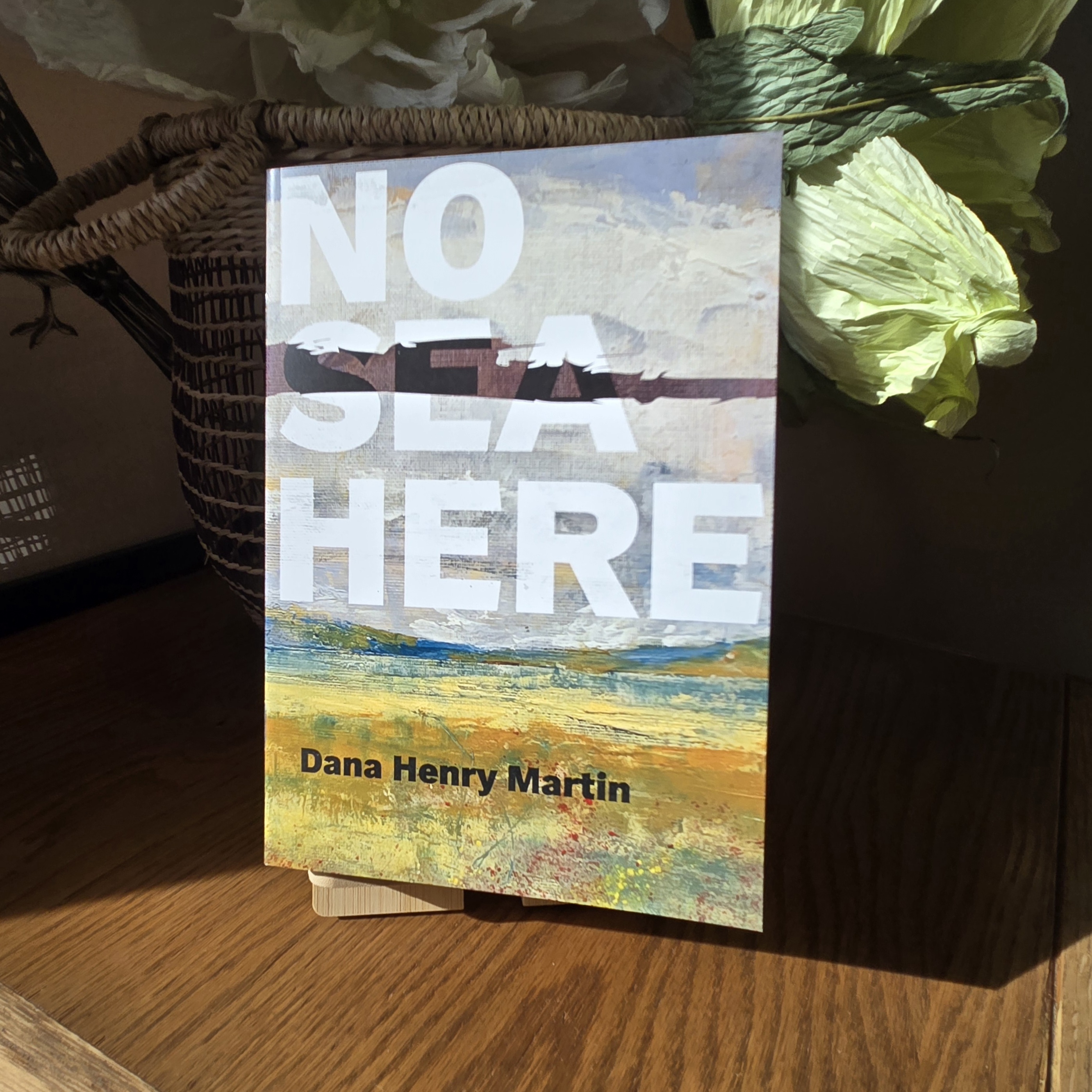
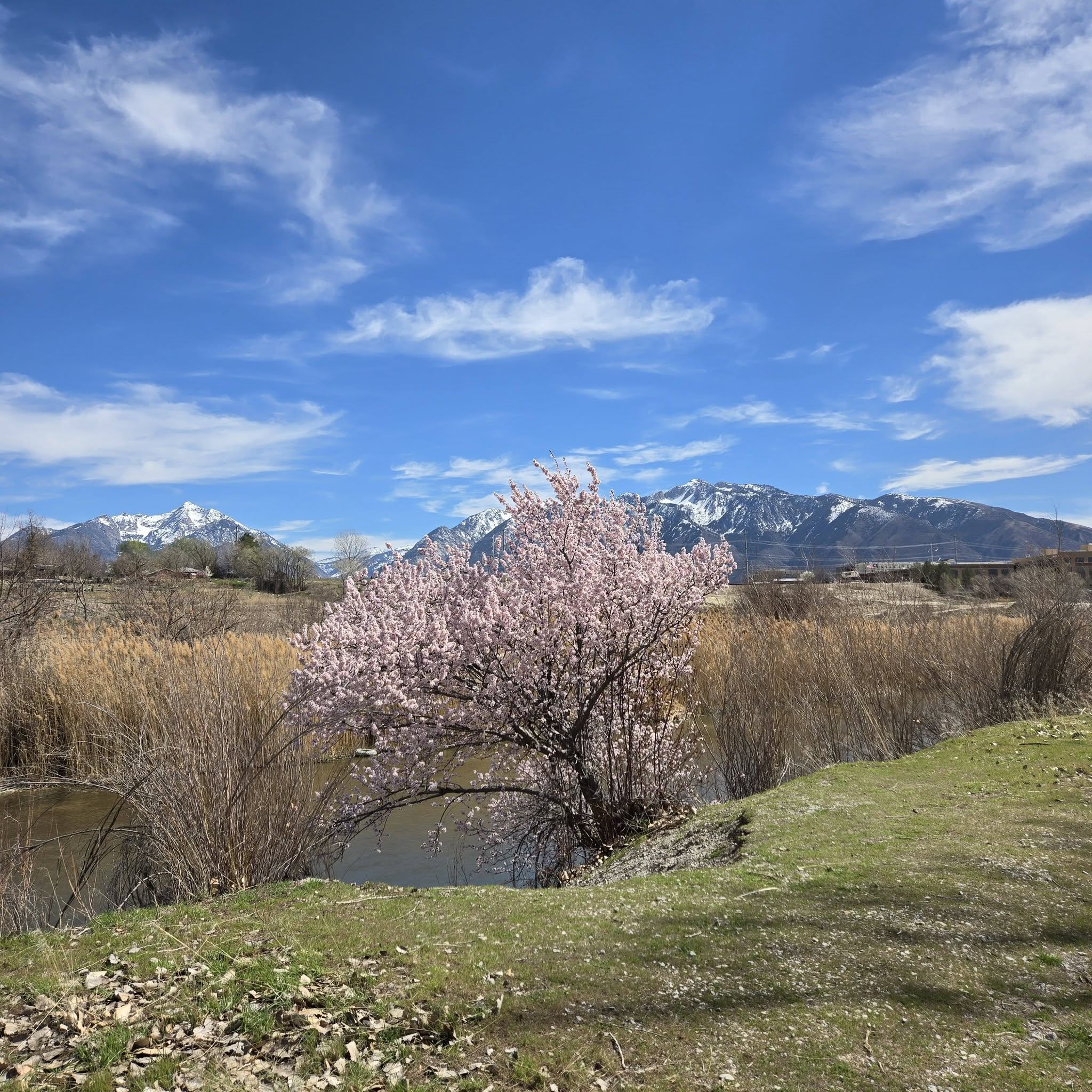
Spring in Salt Lake City and my collection No Sea Here from Moon in the Rye Press in hand.
Images: 1. Lisa Bickmore giving me my copies of No Sea Here in Salt Lake City. 2. Along the Jordan River Trail near South Jordan, Utah. 3. Another view along the Jordan River Trail. 4. The life partner, Lexi, and me at Gardner Village in Midvale, Utah.
Breaker
Somehow knowing there are sandhill cranes in Ardmore, Oklahoma, right now brings me comfort. The area around Ardmore has high rates of trafficking. (I can’t describe that trafficking in more detail without Facebook blocking this post, but I’ll link to an article in the comments.)
My father used to have me talk to truckers using his CB radio on the highway between our home and Lake Texoma. I had a handle. At least one of the men would ask about me using my handle. I didn’t realize what was happening at the time. I mean what kind of men would want to talk to a girl in grade school and what kind of father would facilitate those conversations.
But the birds help—all the birds at Lake Texoma and in Ardmore and in Norman, my hometown. I love the posts about them in the Oklahoma birding group I belong to. The fact is, those birds were there even when I was young. They’ve always been there. Beauty is always everywhere, including inside us, where it’s untouchable.
On and Off the Page
What my last post is leading me to is the understanding that I matter, meaning my voice matters, my perspective matters, my experiences matter, and my identity matters. That’s true for everyone, and it’s also true for me. Reading Andrea Gibson all day yesterday led me here, to a place where I can say That’s true for everyone, and it’s also true for me. In my case, those are easy words to say but hard ones to believe.
What’s also true is that I have a new intersection to consider, one that will guide me as I continue to share my poetry. I want to find publishers who like my work and also want to support my being in poetry. I want my voice, perspective, experiences, and identity to matter to those publishers, not just the work that stems from those things. This is especially important as I try to find homes for my manuscripts.
Right now, I feel that level of support from several publishers, including Chiron Review, Meat for Tea (both the review and the press), Moon in the Rye Press, The Nomad, ONE ART, and Thimble Literary Magazine. Each feels like it’s saying why I write what I write matters, not just what I write. Given what I’ve come through in poetry and in life, that’s important to me.
I don’t want to publish with folks who dislike me or just tolerate me. Once they know a little bit about who I am, I want them to feel like it’s important to include me in poetry, on and off the page.
Fuck Sanism in the Writing Community
I just read one of the most sanist, ableist things I’ve ever seen on Facebook. I am awake and alone and it’s the middle of the night and why do I even try is all I can think. Why do I try when it makes no difference? When folks like me are detested, seen as less than human, when everyone piles on as soon as one person gives the green light to do so?
I don’t know what to say. I am crying and shaking. The person, a writer with whom I share almost 250 mutual friends, is upset because his friend is experiencing psychosis. Folks should read his post and his comments and the comments others have made. Then they should set their own biases aside and imagine someone talking about them that way.
I left my own response in the comments, which I’m sharing below. Fuck sanism. Fuck it. We deserve better, especially from our fellow writers. This writer is wrong. He’s doing immeasurable primary and secondary harm.
—
I’m an advocate for those with mental-health issues and have lived experience myself. I know you’re upset, but I encourage you to find your own center here and situate yourself within a framework of understanding and compassion.
I don’t always love NAMI, but they have support lines for loved ones who are dealing with situations like the one your friend, and by extension you, are going through. You can call them day or night. I encourage you to do so before you do secondary harm to others, like me, who are reading your words and feeling your disgust and hatred for folks like us.
If you wouldn’t say it about a cancer patient, don’t say it about someone experiencing psychosis. It’s dehumanizing and may take someone’s last hope and remaining dignity away. Your words are doing that for me right now. I’ve survived a lot. I’m in tears. You’re saying the part out loud that everyone thinks about us no matter who we are, what we do, what we accomplish, or how much we try to educate others through art and advocacy.
 Dana Henry Martin