By Dirt, by Blood, by Oil

I could have called my family by its dirt. I could have called it by its blood. But it’s oil I settled on, the oil that extracted something from us as a family and as Oklahomans even as we came for it this way and that.

How oil turned to paper money then burned. How it burned us in the process.

I could have called my family by its horses. I could have called us by our broken land, our busted hope, our anger, our crimes, our laughter, our deaths, our abuses, our bruises, our fires—I mean real ones we set, places we took a match to when they stopped being to our liking. That includes our own bodies.

But it was always oil, my family, even before it knew it was oil.

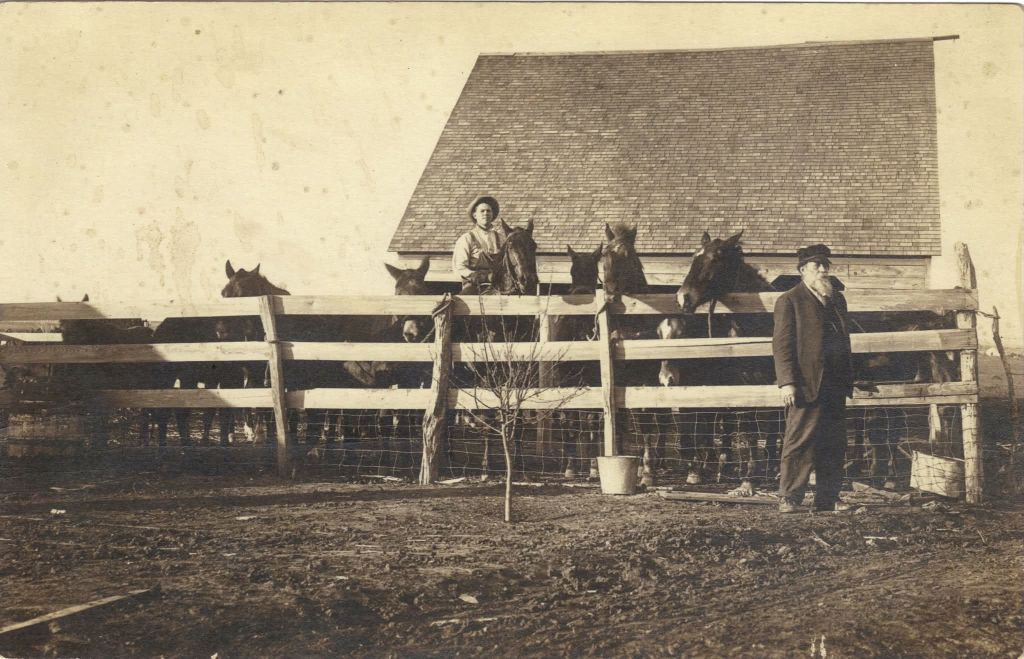
Image: My great-grandfather and my grandfather on my mother’s side along with their horses. Either Altus or Headrick, Oklahoma, date unknown, probably 1920s.

Seedbox

Poems that occur outside are becoming less popular, especially poems in, about, and from wild places.

We increasingly live in boxes and in boxes inside boxes.

We write poems about the boxes we live in, where the poems themselves are boxes that are capable of holding nothing or everything.

Birds seem to be OK still in poems, usually written about superficially or inaccurately.

Trees, same deal.

Some trees just appeared in a poem I’m reading as I write this post. They have no names but filter light. Dappled is the word the poet uses. Dappled holds nothing where trees are concerned. Dappled is not even in the box of the poem.

A Facebook post is a box inside a larger antisocial box parading as a ballroom floor where nobody knows the box step.

My office is a box inside the box of my home that looks out on a desert punctuated by more and more boxes every year. Some of those boxes move. Others never do.

I think ghosts are boxes but can’t prove it. I know some ghosts break down over time in monsoon rains. Be careful with that cardboard you’re handling. It may be your grandmother as a box.

The trees in this poem I’m reading are talking. They’re asking questions. They’re interrogating orchids. Of all the flowers worthy of investigation, orchids don’t even make my list. I want a word with the seedbox flower, aka the rattlebox. I want to know about its cubic capsules and rigid sides, why it decided to go out into the wild and be a box when it could have been anything. Explain that, seedbox. Answer for yourself.

I don’t know. I just don’t know. Maybe we should stick with boxes, not birds and trees and flowers.

At this very second, a box is lumbering down my dead-end street in the form of a trash truck to pick up recyclable boxes from a bin that’s just a fancy box.

There’s no end to boxes once you start paying attention to boxes.

There are probably more boxes on Earth than trees or birds or orchids or even poems.

The next time someone asks how I am, I’m going to say I’m boxes is how I am. It won’t make sense, but it still will be true.

Well, would you look at this? Turns out we’re full of cuboid epithelial cells, so I am boxes and I do make sense as boxes.

But our lungs are trees and our scapulae are wings. There’s no removing these wild things. We have within us what is beyond us even as we try to erase ourselves from anything that doesn’t box us in.

This essay initially appeared on Facebook.

Scattering Light

My manuscript Crude was shortlisted for the Lightscatter Press Book Award, judged this year by Heid E. Erdrich.

I’m from Oklahoma. Crude is set largely in that state. The work deals with issues related to trauma, healing, and the formation (and destruction) of identity through places and what happens in them. The word crude functions in several ways in the manuscript. It captures what is raw and coarse and also speaks to the oil industry, which informed so many people’s lives in Oklahoma through the 1980s, including my family’s.

Things like the Dust Bowl, the Great Depression, and the oil boom (and subsequent bust) may seem like forever ago and like they have nothing to do with your story. But Crude is where we were and where still are, all of us. We are all hurting in one way or another in this crude country and this crude world. We are all healing in this crude world, too. Or trying to.

We’ve survived, my kin and me, the unthinkable, the unimaginable, the unsurvivable. Surviving the impossible is possible. That’s my story. It’s that I’m still here and so are you.

Lightscatter Press is a micropress here in Utah whose publisher, Utah Poet Laureate Lisa Bickmore, and board of directors all live, write, and work in the state. It’s one of those dream presses for me because of the people involved and what the press embodies. I’ve said before that I don’t aspire to be on the biggest press. I want to be on a press that cultivates a sense of community and connection, a sense of people and place.

I’m touched by this. It’s good to know my work matters in some way to some people. After all, I’m not writing about what I’ve experienced for fun. It’s not an exercise. It’s a decision to enter into a way of being and to remain there for as long as it takes, which I hope is as long as I live.

The winner of the award is Sagirah Shahid, whose book SPIRIT: An African American Muslim Lyric, will be published in Spring 2027.

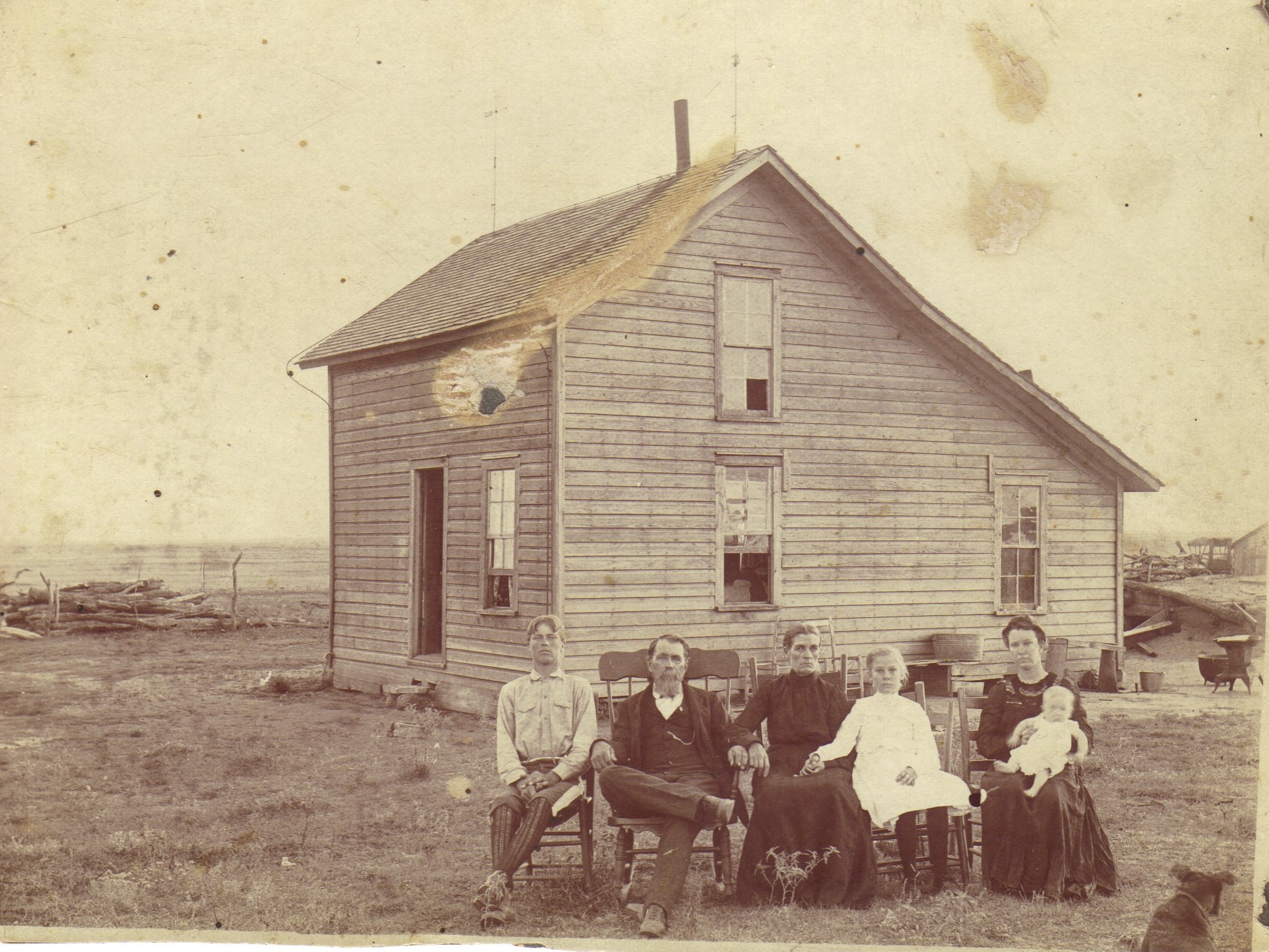
Image: My mother’s grandparents, father, aunts, cousin (who was passed off as an aunt if the rumor is true), and dog in front of one of their early homes in Oklahoma. This family photo and many more are woven into the fabric of Crude.

Propel Disability Book Series

I’m thrilled to announce that I’m joining the advisory board for the Propel Disability Book Series at Nine Mile Books. Propel focuses on disabled poetry, noting that disability is often overlooked in publishing, even by presses that prioritize other forms of diversity. All Propel books are written, edited, and produced by disabled poets.

Steve Kuusisto invited me to be part of Propel in this role. I can’t capture in words how much this opportunity means to me. The work is essential and dovetails with my personal experience and advocacy around severe health- and mental-health issues, neurodiversity, and trauma.

This role also gives me a sense of belonging, which is something I don’t typically feel. Belonging is also essential and allows us to do our best work in the world with a sense of meaning and purpose. I mean it when I say I’m honored to serve something bigger than me and something that matters to me in poetry—all while being accepted for who I am and the perspective my experiences have given me.

I feel like a clipping that’s starting to grow roots, the magic of that.

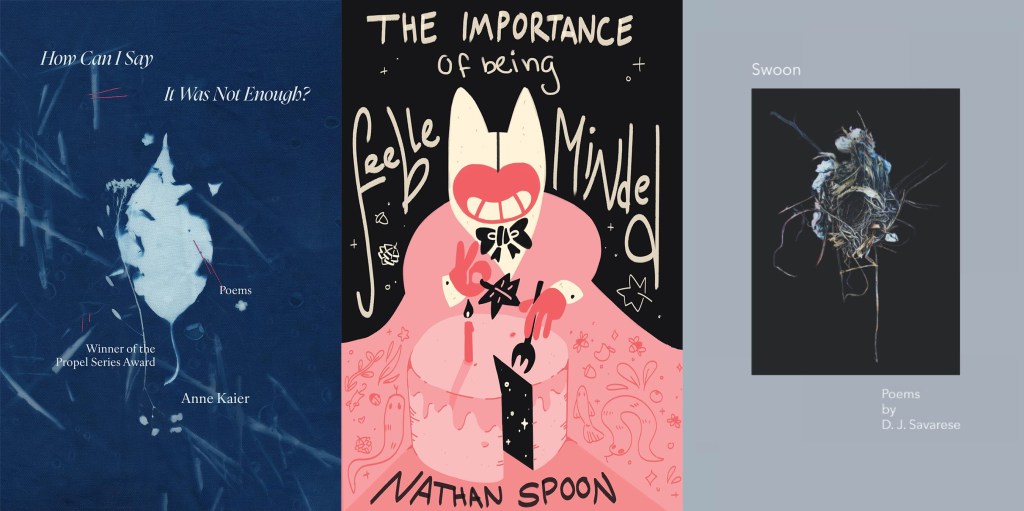
Image: The covers of three collections from the Propel Disability Book Series. Left to right: Anne Kaier’s How Can I Say It Was Enough?, Nathan Spoon’s The Importance of Being Feeble-Minded, and D.J. Savarese’s Swoon.

‘Becos,’ by Bill Knott

I had this collection years ago before I left poetry and sold, donated, or gave away most of my poetry books. I just got this beautiful copy from Chaparral Books in Portland, Oregon. A friend read a poem from the collection to me last week. I realized I no longer owned the book and needed a copy.

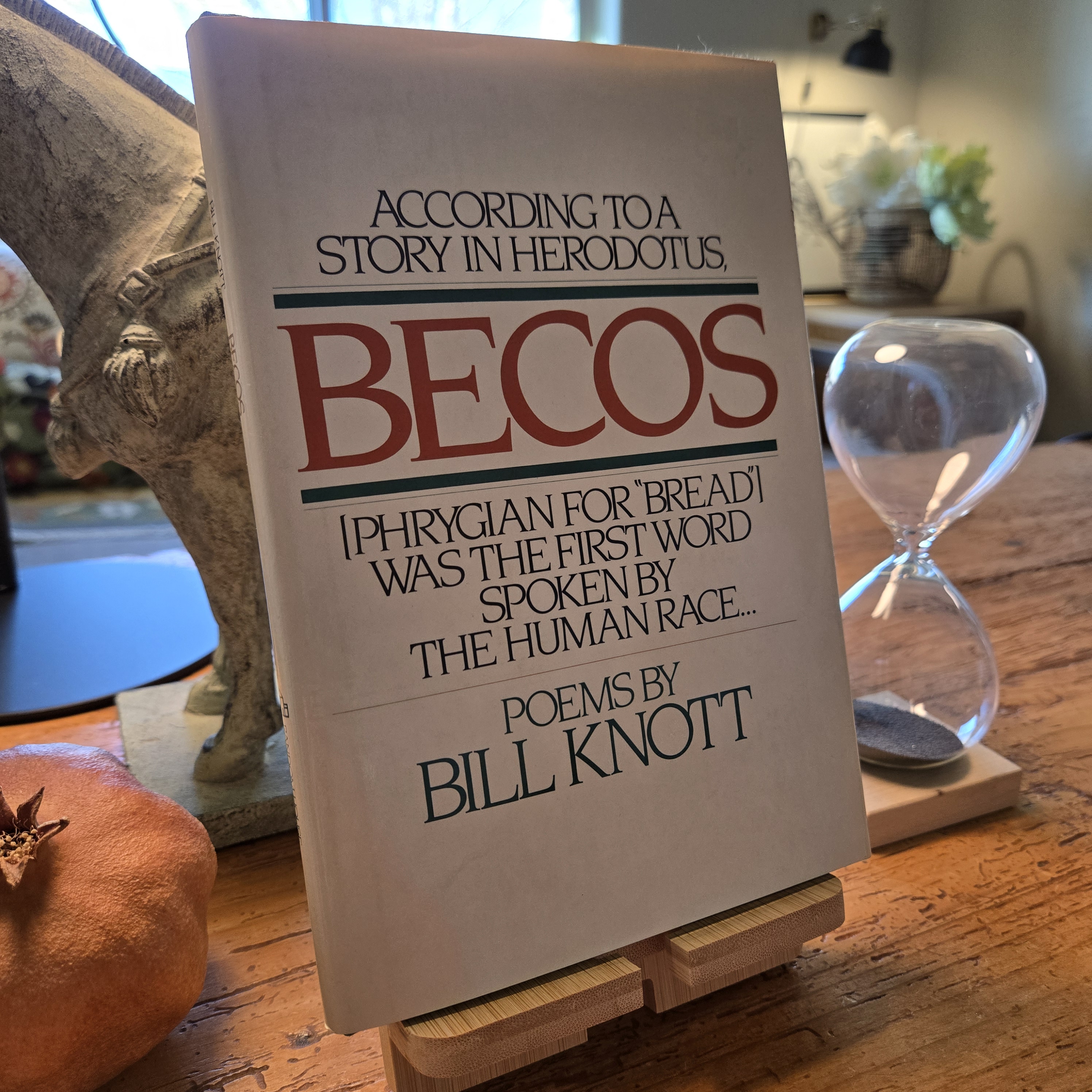
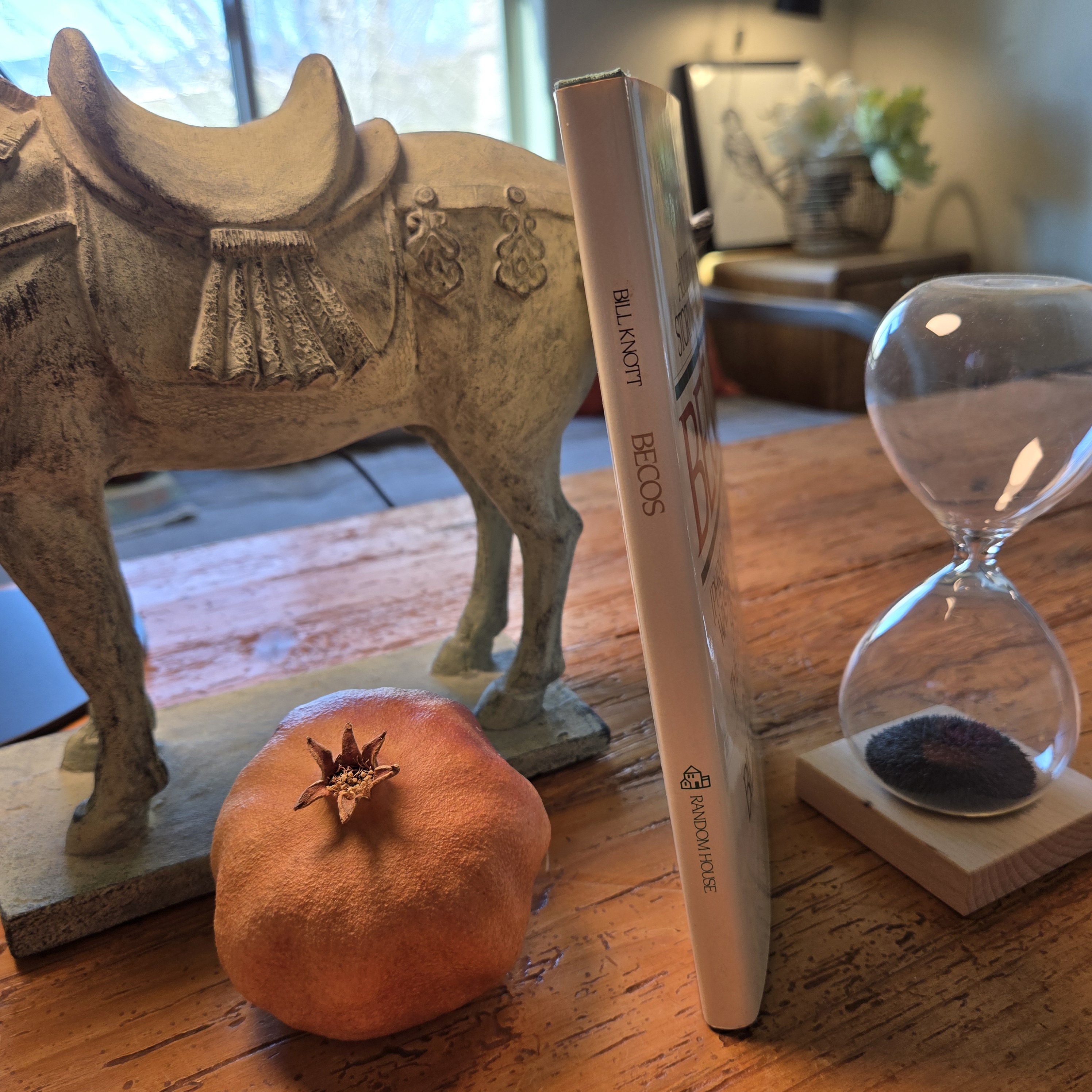
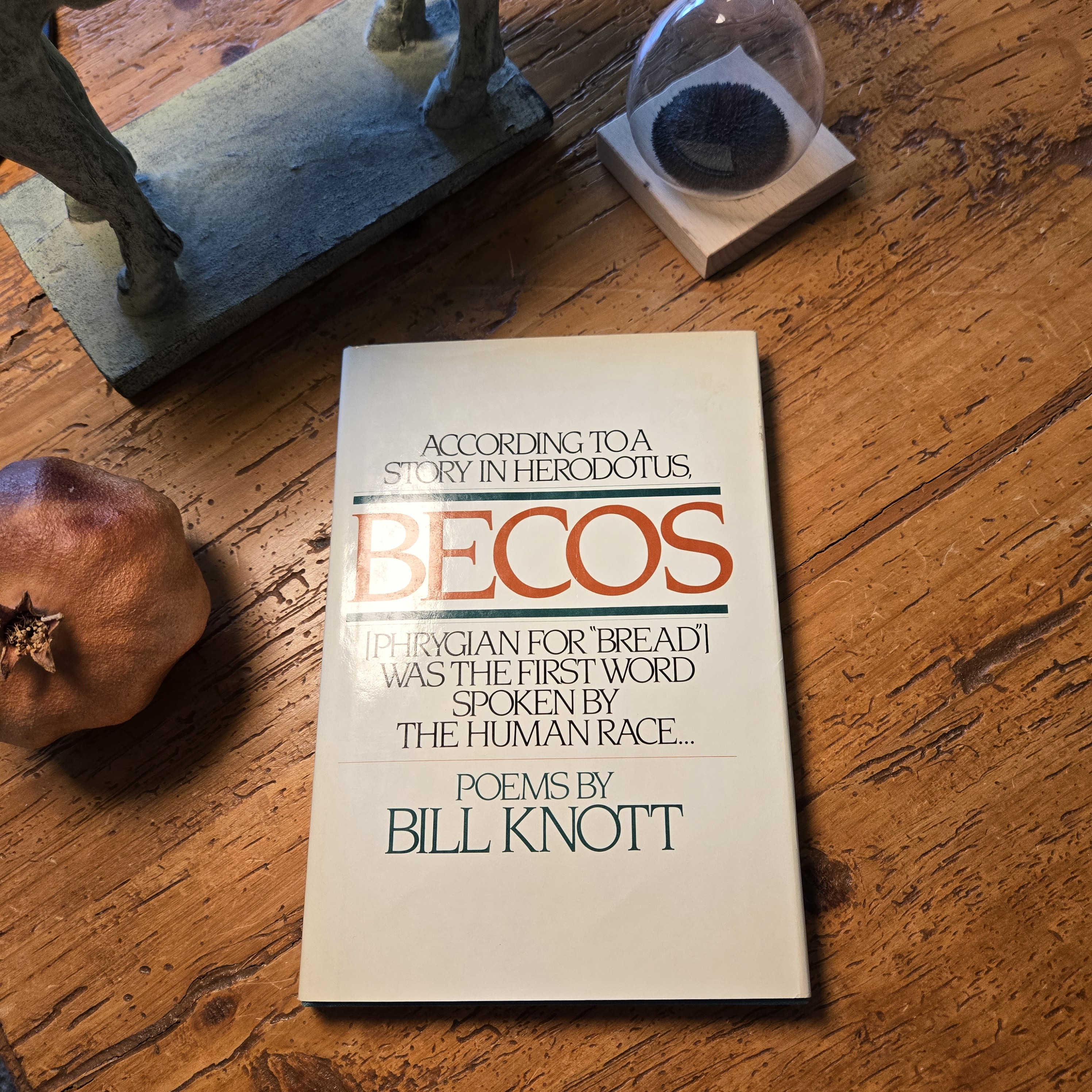
Images: 1. Becos propped up on a book stand with a dried pomegranate, a horse sculpture, and an hourglass. 2. Interior pages from the book. 3. The book propped up against the horse sculpture to show its spine. 4. The collection lying flat on a desk with the dried pomegranate, horse sculpture, and hourglass.

Killer Tomato

Colton Moser, Mosa’ati Moa, Timothy Jones

I feel like y’all’s y’alls should be a thing, like, I’m talking about y’all and y’all’s y’alls.

I got on my smart scale for the first time in just over two months, and it was like A lot of the numbers here are totally different than they were the last time you were on the scale or something to that effect. And then a big message popped up that said IS THIS THE SAME PERSON WHO USUALLY USES THIS SCALE?

For the love of …. not smart, scale. Not a smart thing to say at all. FFS, yes it’s me. It’s my weight and my visceral fat number and my subcu-you fuck all the way off, scale. It’s mine mine mine all mine.

Nurul Amin Shah Alam

My condition is not your insult. So first, let’s stop using the psychiatric as a metaphor for the awful. Politicians, celebrities, those who have platform need to stop doing this and explain why they are not using mental illness as a way of putting someone down. — Susanne Paola Antonetta

We all need to stop doing this, and we all need to explain why we’ve stopped. — Dana Henry Martin

I feel like someone’s nailed tack strip to my brain is how I am.

The Imam of the Utah Islamic Center was targeted in a shooting Monday in Sandy, Utah. This country is swimming in the fetid waters of hatred. Hate speech turns into action turns into violence turns us into something other than, less than, human. I love Utah. What I hate is that this happened here.

Woke up. Read something sanist. Read something ableist. Read something racist. Read something islamaphobic. Read something transphobic. I’m not making a random list. This is what I read on Facebook when I woke up. I’m not talking about the news. I’m talking about what some folks here are writing in their posts and comments. My body has flipped inside out to protect itself. If you see a blobby many-organed thing coming at you, it’s me, Inside-Out Dana.

In my dream, someone keeps calling Dee Jay Tee a killer tomato, and I’m here for it.

I just read penpal as penile is how I am.

A floating piece of lint just scared me is how I am.

You died. I changed my hair.

Somehow, and I don’t know how, I ended up working out in jeans today is how I am.

Robert F. Kennedy Jr. and Kid Rock make me want to swear off milk, throw out my jeans, and adopt a sedentary lifestyle.

Feeling well-seen by certain folks in poetry means everything to me. I’d call you out by name, but I don’t want to make things weird.

You can’t block the dead on Facebook.

American robins, flushed from cottonwoods flanking the creek, have settled in my honey locust. They are singing. They don’t know how not to.

I had to get out all seven of my essential oil sniffers at once is how I am.

They were out of regular headaches, so I had to pick up a cluster ice-pick headache instead. Who knew this product was even on the market? 0/10. Do not recommend.

I am fucking feral rn is how I am.

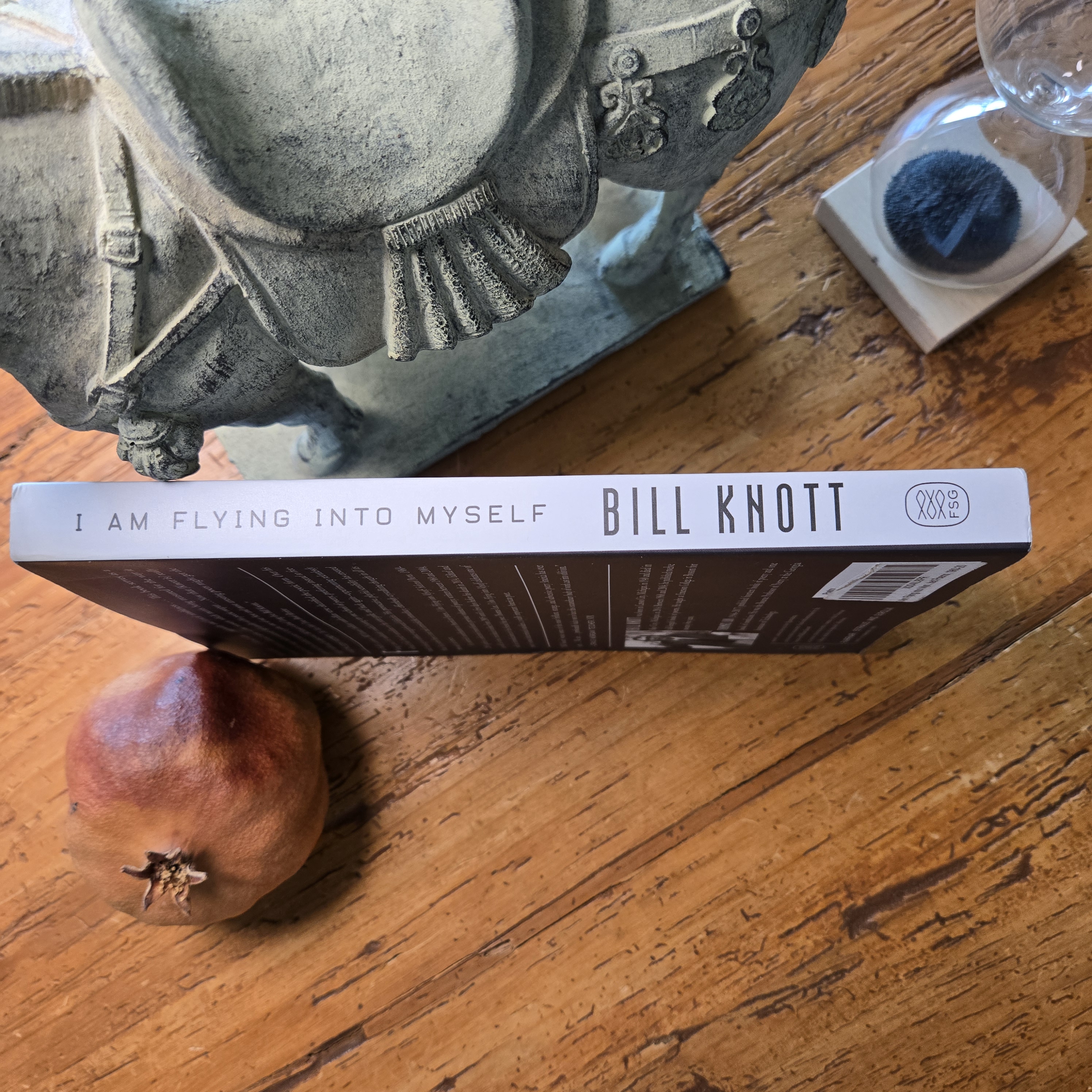
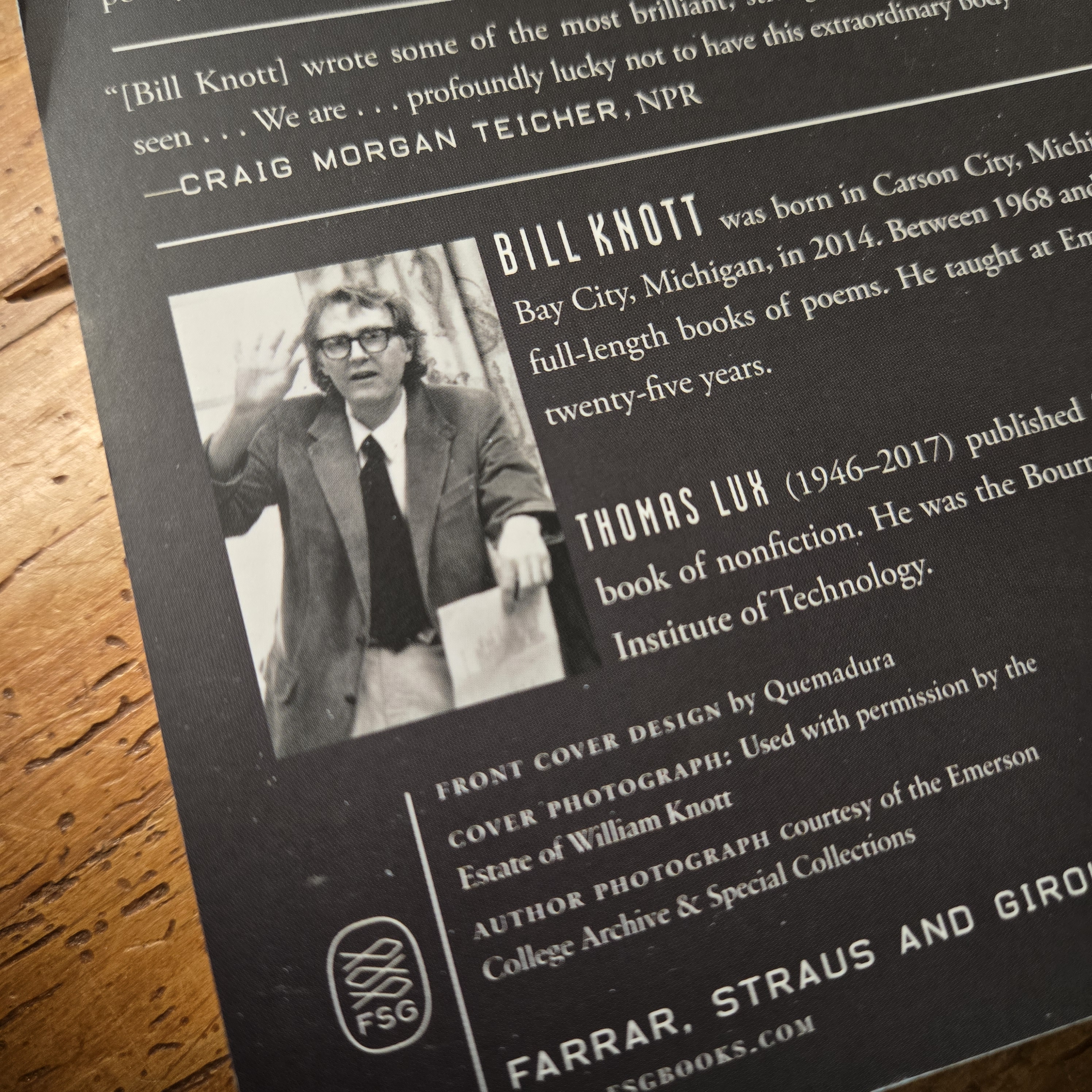
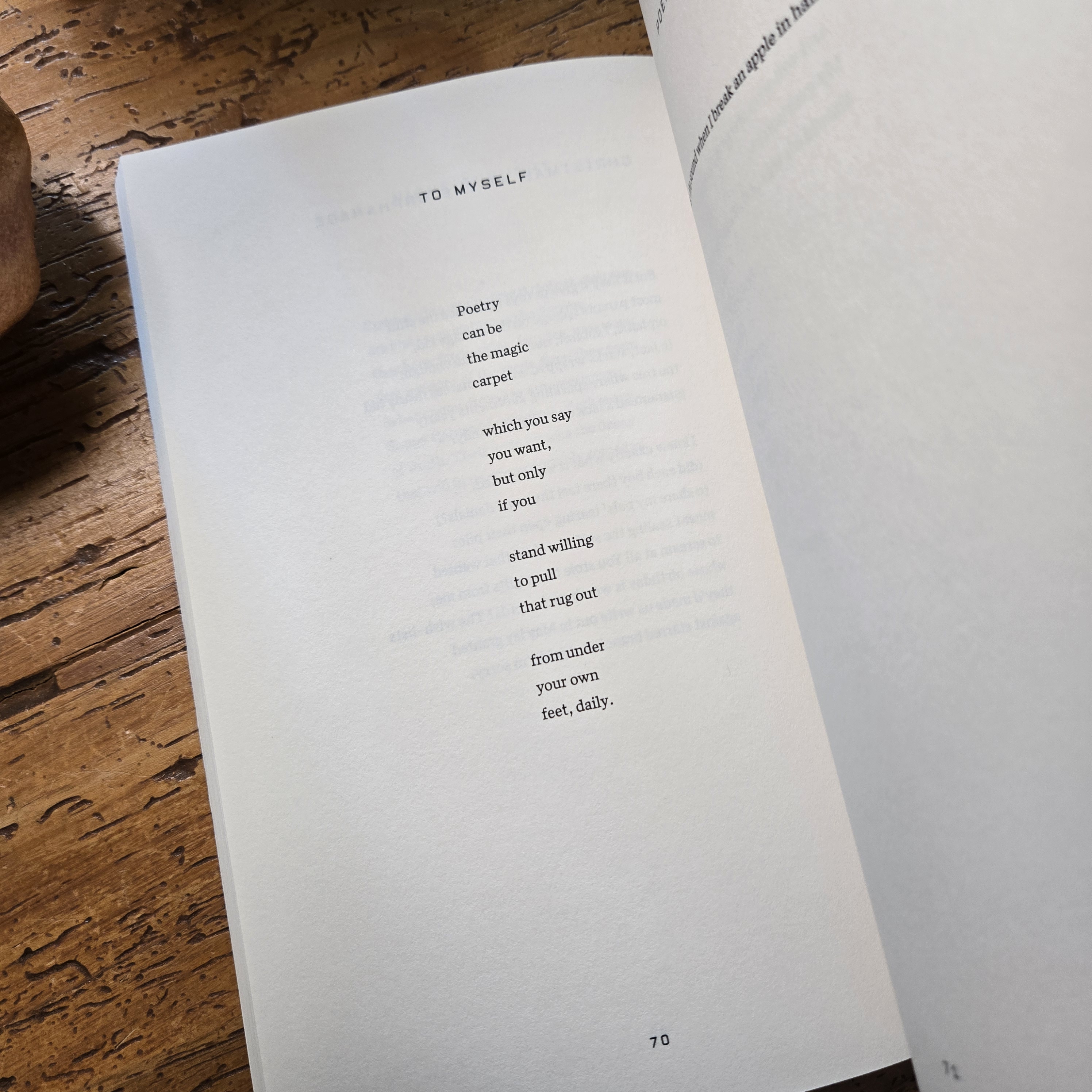
‘I Am Flying into Myself: Selected Poems 1960-2014,’ by Bill Knott

Images: 1. I Am Flying into Myself: Selected Poems 1960-2014 standing perpendicular to my desk with a dried pomegranate, a horse sculpture, and an hourglass. 2. The author image on the back cover of the collection. 3. A page from the collection.

On and Off the Page

What my last post is leading me to is the understanding that I matter, meaning my voice matters, my perspective matters, my experiences matter, and my identity matters. That’s true for everyone, and it’s also true for me. Reading Andrea Gibson all day yesterday led me here, to a place where I can say That’s true for everyone, and it’s also true for me. In my case, those are easy words to say but hard ones to believe.

What’s also true is that I have a new intersection to consider, one that will guide me as I continue to share my poetry. I want to find publishers who like my work and also want to support my being in poetry. I want my voice, perspective, experiences, and identity to matter to those publishers, not just the work that stems from those things. This is especially important as I try to find homes for my manuscripts.

Right now, I feel that level of support from several publishers, including Chiron Review, Meat for Tea (both the review and the press), Moon in the Rye Press, The Nomad, ONE ART, and Thimble Literary Magazine. Each feels like it’s saying why I write what I write matters, not just what I write. Given what I’ve come through in poetry and in life, that’s important to me.

I don’t want to publish with folks who dislike me or just tolerate me. Once they know a little bit about who I am, I want them to feel like it’s important to include me in poetry, on and off the page.

Hi, I’m Dana

Hi, I’m Dana. You may wonder how I got myself into this situation. Not really. That’s just a silly introduction. Speaking of which, consider this my introduction post.

For starters, I’m trans, specifically nonbinary, also known as enby. I’m queer, specifically ¯\_(ツ)_/¯. That’s been shifting over the course of my life, but I’ve mostly landed on asexual with hints of bambisexuality.

I’m female-bodied and am treated like a female—at least in terms of what we’ve collectively decided female-bodied and female mean—including the very not good ways those perceived to be female are treated. In college, I largely wore tuxedos I found at thrift stores, and I had short, blond, young Mary Stuart Masterson hair. That’s the only period in which I was routinely mistaken for a boy, a little English schoolboy to be precise.

What you don’t know is that I’m in drag all the time, and I like it. The man in me likes it a lot but would also like a beard and a man bun and to be totally ripped, which is how I came to marry the man I wanted to be, who eventually lost his hair, so no man bun, but who has a beard that makes him a total snacc and who also has nice guns. I mean whatever those arm muscles are, of course. We are gun-free people. Biceps. I think that’s what I mean.

I live with complex trauma. I’ve experienced abuse and violence on too many occasions for me to count, in part because I have dyscalculia, as you’ll learn below.

I live with bipolar. I’ve known the world through the lens of psychosis, though only for a tiny fraction of my days, thus far, on Earth. That lens has taught me a great deal about terror and its origins but also about love and its origins. Extreme states are extreme but not without meaning. We are meaning-making creatures, after all. We do what we can with what we’re given.

I was given words, which is a tremendous thing. I took them, actually. They weren’t given to me. You’re about to learn about my dyslexia. What that means is language was a fight, and I fought for it. That’s why I won’t give it up again, not even when poets and writers and the systems they inhabit behave badly.

I have learning disabilities, including dyslexia and dyscalculia. (I told you I was about to talk about them.) My spatial reasoning skills are top-notch. I’ve been tested. But my body in space is another matter entirely. I knock about is what I do. I’m dizzy a lot. I fall, literally. I get up.

I just read dizzy as fizzy because of my dyslexia. That’s funny. The idea of being fizzy is a hoot.

When I was younger, I could do calculus but cannot count well at all ever, which is how I once ended up in trouble with the IRS because of how I subtracted something I should have added. They were very prickly about it. I’m not an institutionalist, but I didn’t like being treated like I was trying to rip off an institution, either. My father was a crook. I’m sensitive about being accused of similar behavior.

I’m neurodivergent in other ways and not about to give up that label because some folks in the communities I inhabit don’t like it. I’ve started using a Hannah Gadsby voice as I type this, just to illustrate one of the many ways in which my neurodiversity makes itself known, even if only to me. This introduction is a lot funnier in that voice. I like the idea of Gadsby being here with me right now. It’s been a hard night. Let’s get Andrea Gibson in here, too. There. Do you feel that? They’re the keto bread to my plant-based, thinly sliced protein, but not in a Bambi way, just in a support-system sandwich way. Nom nom nom.

Most of my name is not what I was born with. My other names are my dead names. My legal name serves me better, represents me better. I may not be able to vote because I changed my name and not because I got married to the man I wanted to be. He’s a good life partner after more than three decades of trying. I’m a good life partner, too. I’m serious. I’m not even sure I want to be him anymore. These days, I’m busy being, and becoming, me.

I forgot to tell you about all my medical issues, including rare diseases that pedal wave inside me like various and sundry nudibranches. Just imagine them like that, not like what some of them actually are, which is life-threatening.

Oh, and I’m a flutist, essayist, poet, birder, and weaver who loves the world and all living beings, which is why I’m so damn vocal about everything. I’m bound to frustrate you, confuse you, or piss you off at some point if you don’t beat me to the punch. Some of those frictions will be superficial. Others may cause deeper wounds.

That’s it. Me in a nutshell. My story or my personal brand or whatever. This is the poet you’re supporting if you support me. I think I’m worth supporting, so give it a go.
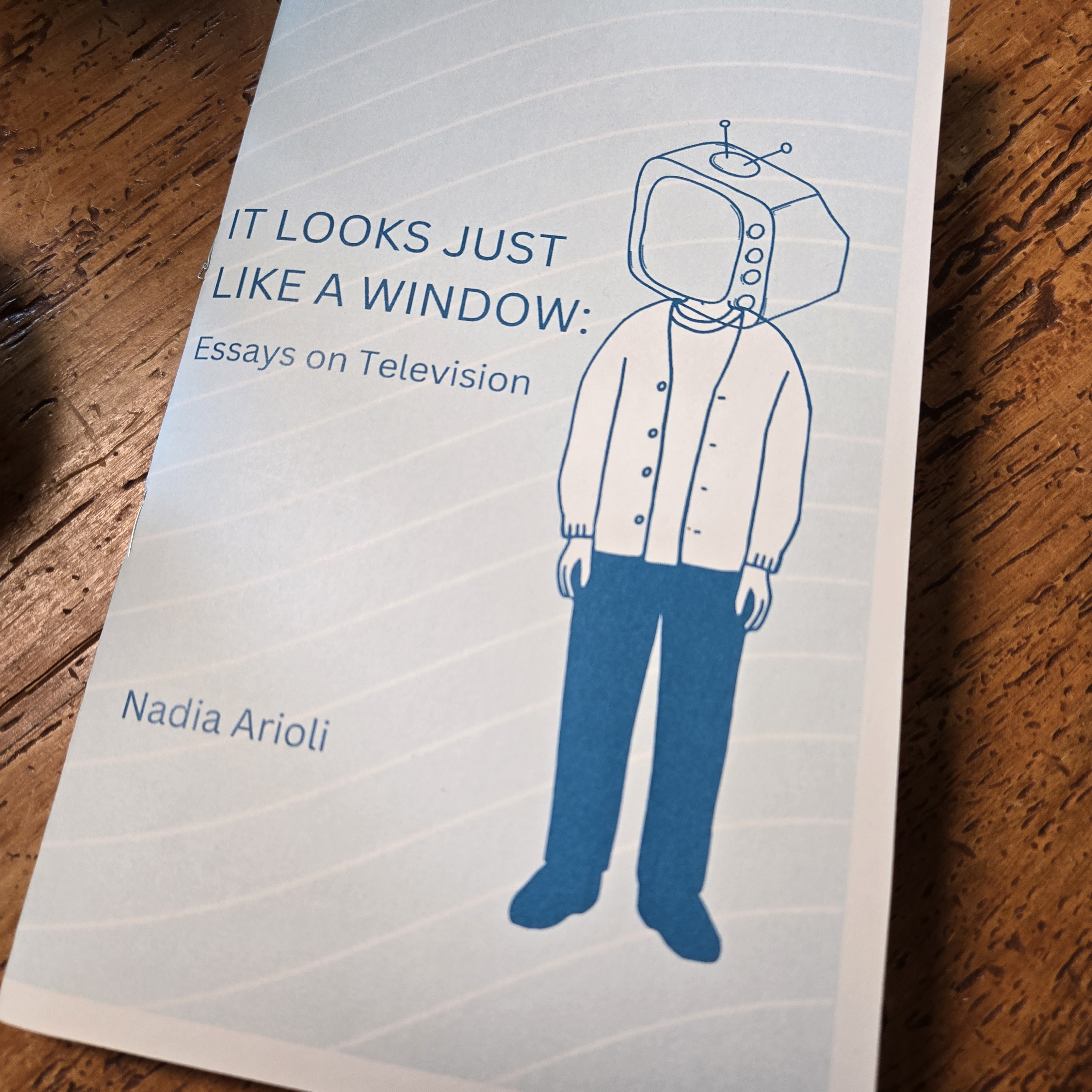
‘It Just Looks Like a Window: Essays on Television,’ by Nadia Arioli

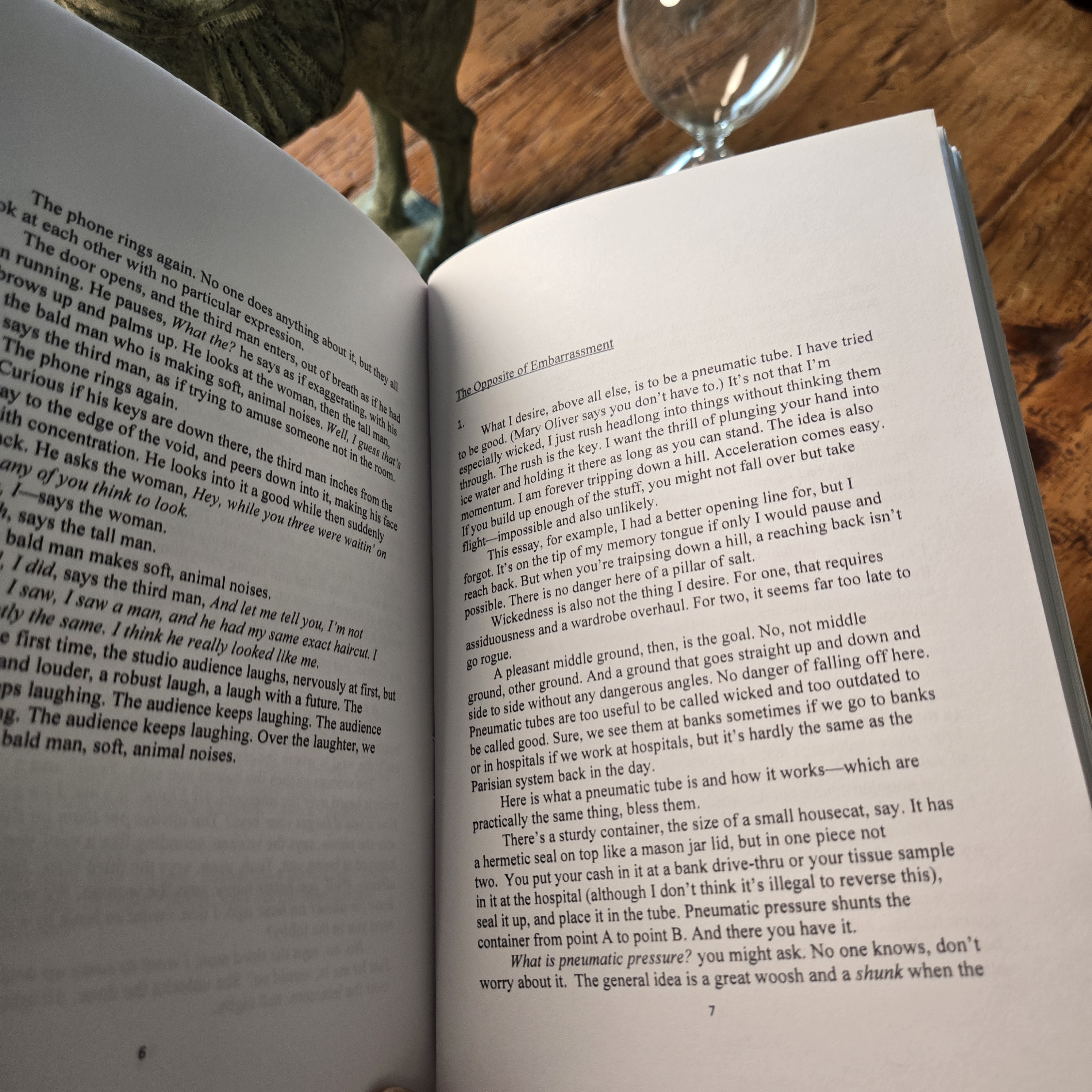
Sometimes, you think wanting to be the cylindrical carrier in a pneumatic tube system—maybe like the ones at Security National Bank or Anthony’s in your hometown—makes you strange and unrelatable. But then one day, you’re reading an essay whose author says what they desire, above all else, is to be a pneumatic tube. And you think, wow. And you think, yeah. And you think, suddenly, this is a world I may actually belong in.

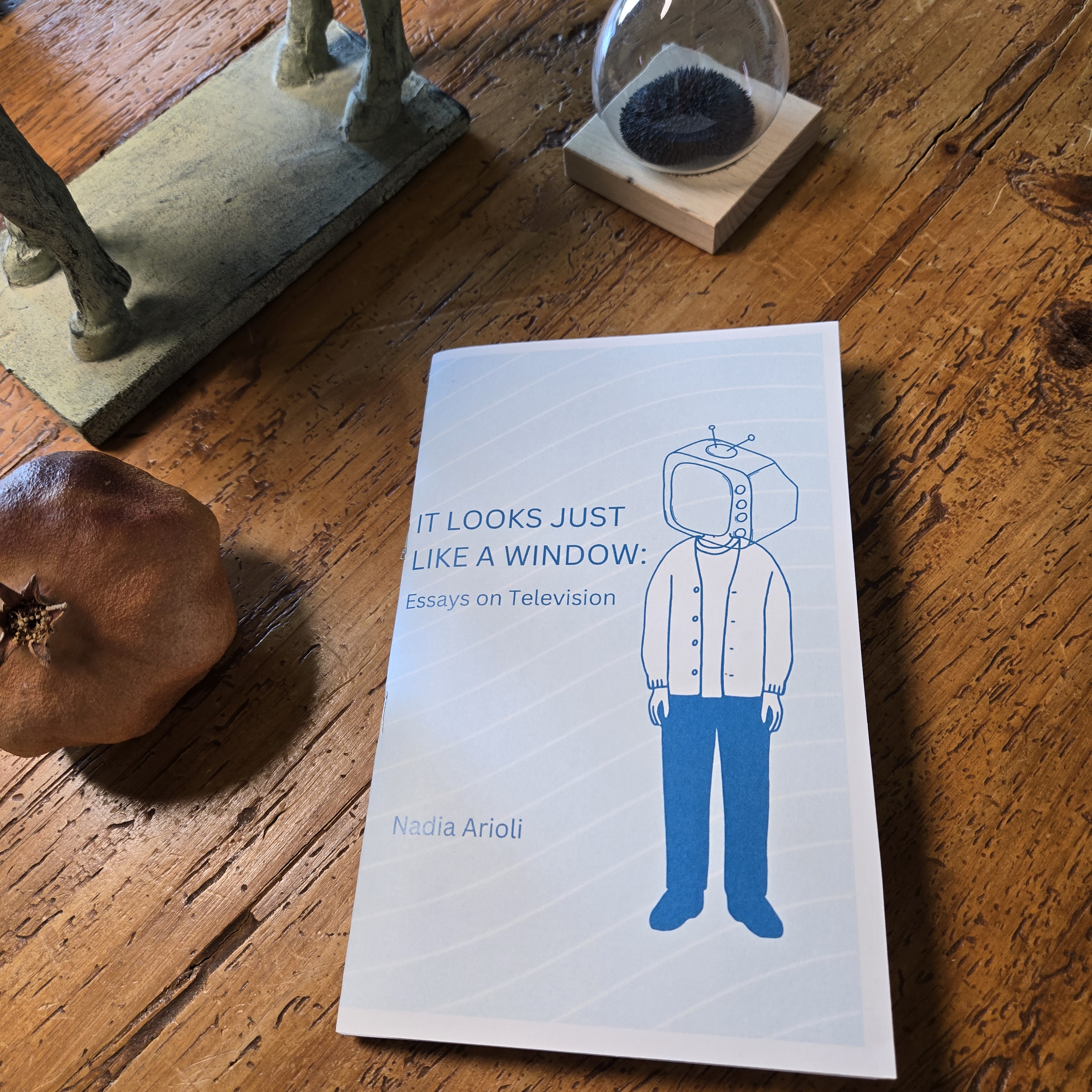
The author of that essay is Nadia Arioli. The collection it appears in is It Just Looks Like a Window: Essays on Television, from Kristy Bowen’s Dancing Girl Press. It’s really good, really really good.

It would be good even without the pneumatic tube, but it’s even better with it because now you know someone has thought about being a pneumatic tube the way you’ve thought about being a cylindrical carrier in such a tube, and you feel a little less stupidly alone and also grateful to spend time in these essays which, to borrow a word from Arioli, are “liminous” (not to be confused with luminous): each piece a pass-through place, each paragraph a doorway full of light.

Images: 1. The front cover of It Just Looks Like a Window: Essays on Television. 2. Interior pages from the chapbook. 3. The chapbook with a dried pomegranate, a horse sculpture, and an hourglass. 4. The dried pomegranate.