Howard Dully

Here’s what could get you lobotomized at the age of 12 in 1960 here in the United States: not reacting to love or punishment, objecting to going to bed but sleeping well, daydreaming and not discussing the content of the daydreams, and turning the lights on in a room when it’s sunny outside.

These are the “symptoms” that led to Howard Dully being institutionalized from the age of four and undergoing a trans-orbital lobotomy in which an orbitoclast was inserted into his brain through each of his eye sockets.

Please don’t make jokes about lobotomies or about mental-health issues and treatments in general. And please realize that we’re headed backwards in this country where mental healthcare is concerned. Lobotomies may not be in our future, but barbaric treatments and human-rights abuses are. I pray I won’t live long enough to see them or to be on the receiving end of them.

Maria Gugging Psychiatric Clinic

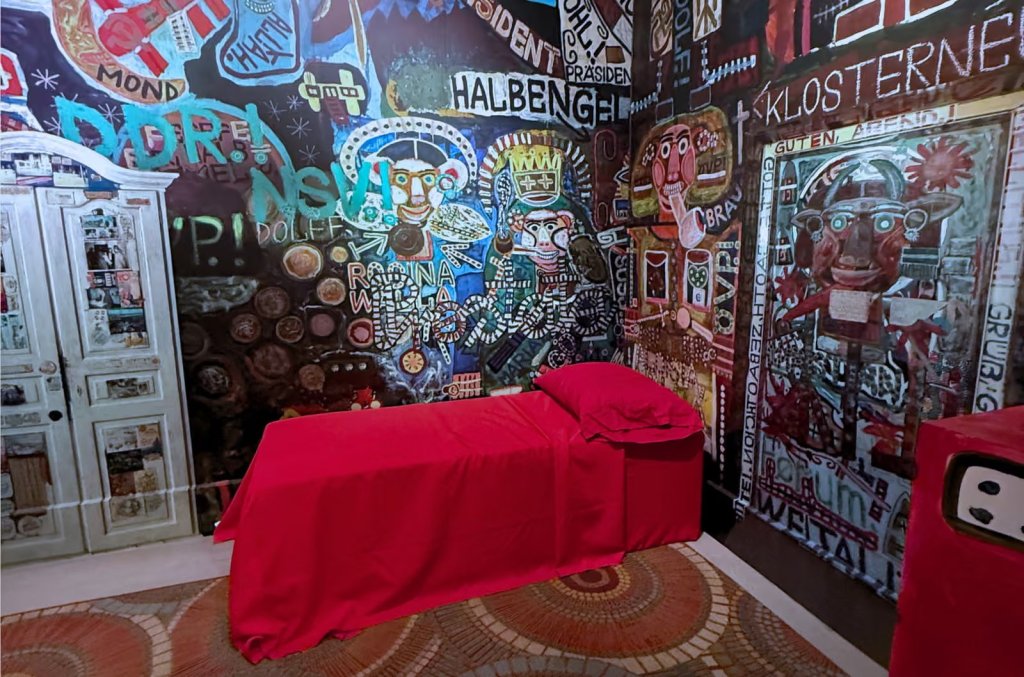
In September 1994, [David] Bowie and Brian Eno—who had reunited to develop new music—accepted an invitation from the Austrian artist André Heller to visit the Maria Gugging psychiatric clinic. The site’s Haus der Künstler, established in 1981 as a communal home and studio, is known internationally as a centre for Art Brut—or Outsider Art—produced by residents, many living with schizophrenia and other psychiatric disorders.

The acclaimed Austrian photographer Christine de Grancy documented the visit, capturing Bowie engaging with these so-called outsider artists—a term often criticised for framing artists through illness or marginality rather than authorship. For the first time, these intimate portraits will be shown in Australia, when A Day with David opens at Joondalup festival in Western Australia in March, in collaboration with Santa Monica Art Museum.

And, of note: Gugging itself carries a darker weight. Founded in the 19th century, the clinic was later absorbed into the Nazi’s Aktion T4 program, which targeted those with mental and physical disabilities, and resulted in the mass murder of an estimated 250,000 people. At Gugging alone, hundreds of patients were murdered or sent to extermination facilities.

Source: The Guardian.

December 25, 2025

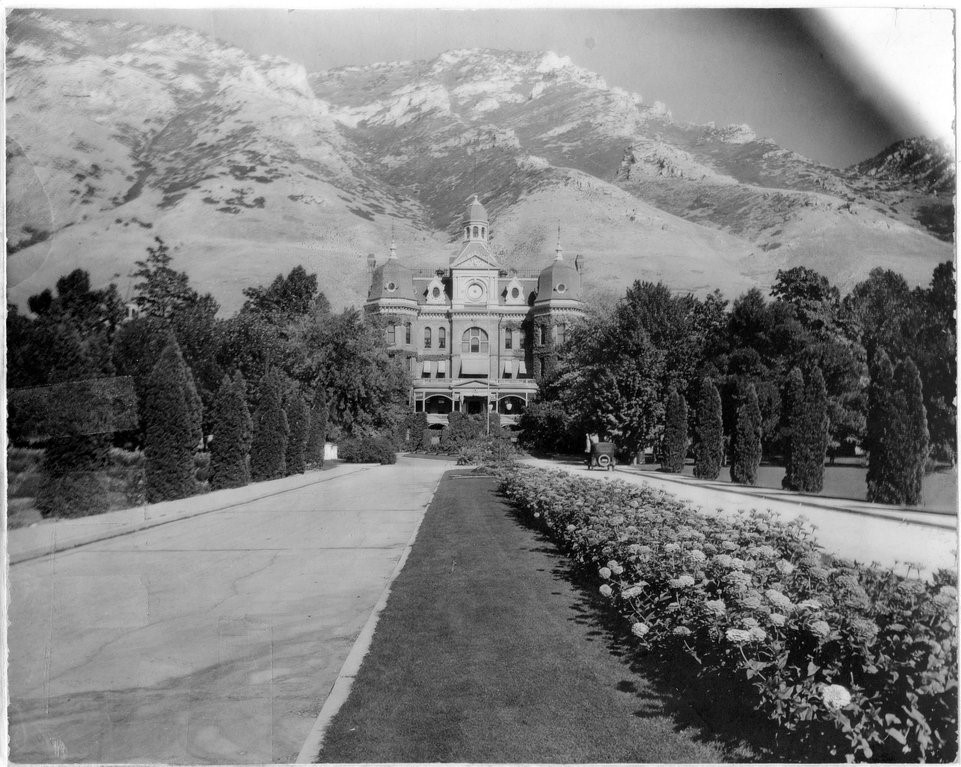
The laccolith shoulders this inelegant sky, nothing to write home about, as if this weren’t home now but that other place, the one I’m from, a town that’s rotting building by building, foundation by foundation, the fences, the red brick, the sweetgums and their dejected seeds. But mostly the psychiatric hospital, which the state left to vandals years ago.

Where I live now is less town than scrub, less scrub than sand, less sand than canyon. Plenty of room for a word to get lost, to go out on the air and never reach a listener but also never boomerang back to the speaker who stands, silent, beyond language, at least for a spell, isolated from everyone, including themselves.

That’s when the laccolith comes in handy, a kind of giant anchor for thought, for yearning. Headless under dark clouds, the color of night before night falls. A heavy future, a heavy past, a sense of always about it that makes humans seem like baubles, a bracelet of seals surrounding a whale in a faraway watery world before one slips into its mouth unnoticed.

What rises here rises in the distance, with its monzenite and spruce, big-eared bats and fir, bitter cherry, dollarjoint cactus, pygmy rabbits, sandweed, spleenwort. We’ve never been liberated from names or naming. In my ignorant past, I didn’t learn what to call things or what to call myself. Cardinal was red bird. Finch was sparrow. Father was father. I was daughter.

I read that if you think enough about a relative, your genes flip on and off to become more like theirs. Ten minutes a day for thirty days is all it takes. In case that’s true, who should I think of? I’ll take my chances with my mother, the way the white-tailed antelope ground squirrels take their chances with the feral cat when the neighbor’s trees are heavy with apricots in late summer. At least her genes helped me survive him.

Pistachios escaped cultivation in nearby mining towns and made their way up into the mountains. Birds, the first landscape architects, move them around the foothills, where they grow like bonsai. Humans spread from place to place, trying to find and lose ourselves. We look for footholds. We lock in. Even if we only grow a little, it’s something. A small life is better than none at all.

Horses and cows come and go here, the way they do where I’m from. My mother came and went, into and out of the hospital as a nurse and sometimes as a patient. Those buildings feel like her body rotting, returning to earth with no dignity. Her broken windows. The word PSYCHO spray-painted on her side. Her interior waterlogged and full of God knows what in the one-time hospital chapel that hasn’t shivered with song in decades.

Inger Christensen says there is war all the time. There is war. There is war. War in the cells. War in the genes. War in the heart. War in the mind. War in the family. War in the mother. War in the father. But there is also deerweed and spikemoss, manzanita and mat muhly. There is histone modification and methylation, expression and heritability. There is asbestos and lead, observation hatches and safety glass.

There is what happened and what passes for what happened, in memory, in polite company, in our palm lines, in our bloodlines. There is war all the time, even under new paint and old dirt.

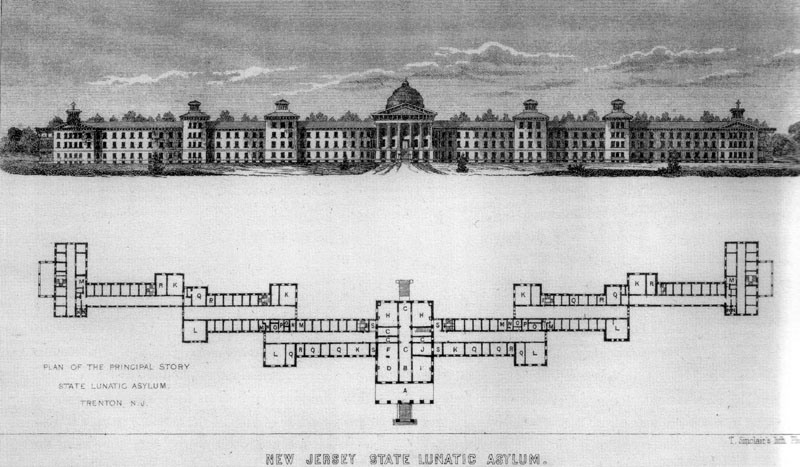
The Architecture of Mental Illness

Mental illness has an architecture. That’s part of the story of asylums and treatment in this country. Central State Griffin Memorial, the hospital in my hometown, wasn’t laid out like this, but it had that same grand feel juxtaposed against the lives of those who inhabited the buildings.

Throughout its history, which spans more than a century, Central State’s story has been one of hope, ignorance, dehumanization, and harm: the same story from the asylum era to era of deinstitutionalization to today. I can barely tell any of it but have to before that history is lost. My mother worked there as a nurse and was treated there as a patient. Her relationship with Central State spanned more than three decades. That architecture was in her body, her bones part of the structure of those buildings and that land. Now, we need to make sure these places don’t come back with a new story: one of coercion, exploitation, profit, and greed.

Source: PBS Utah video about The Kirkbride Asylum, which was the template for many other asylums across the country.

Worthless Words

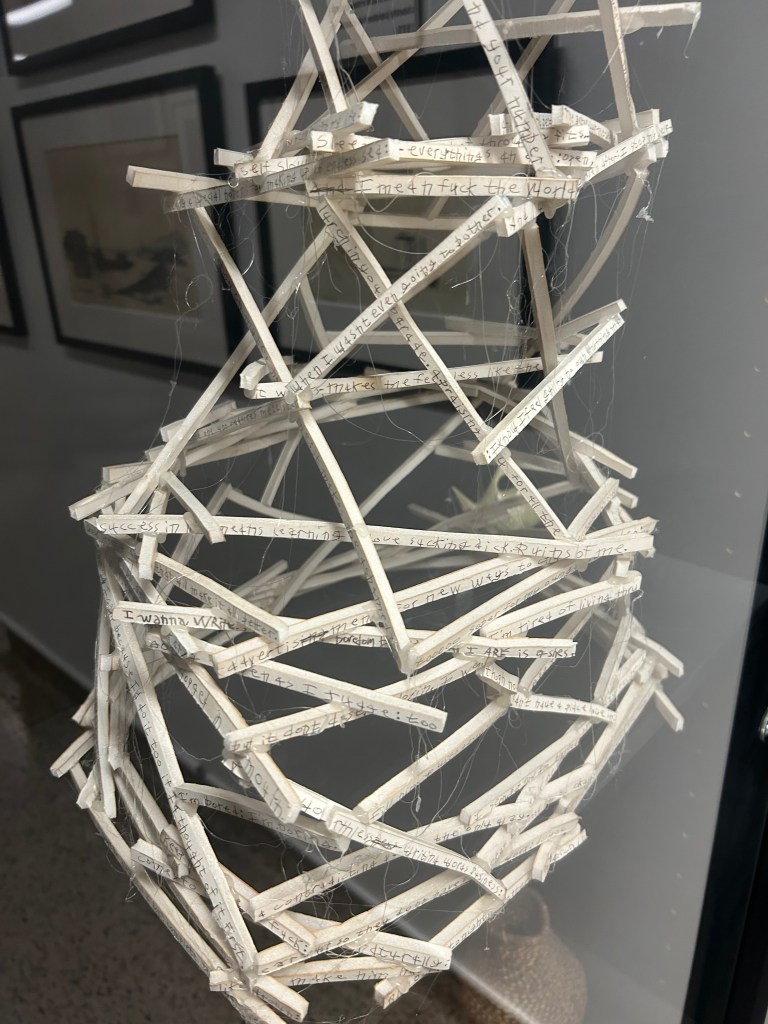
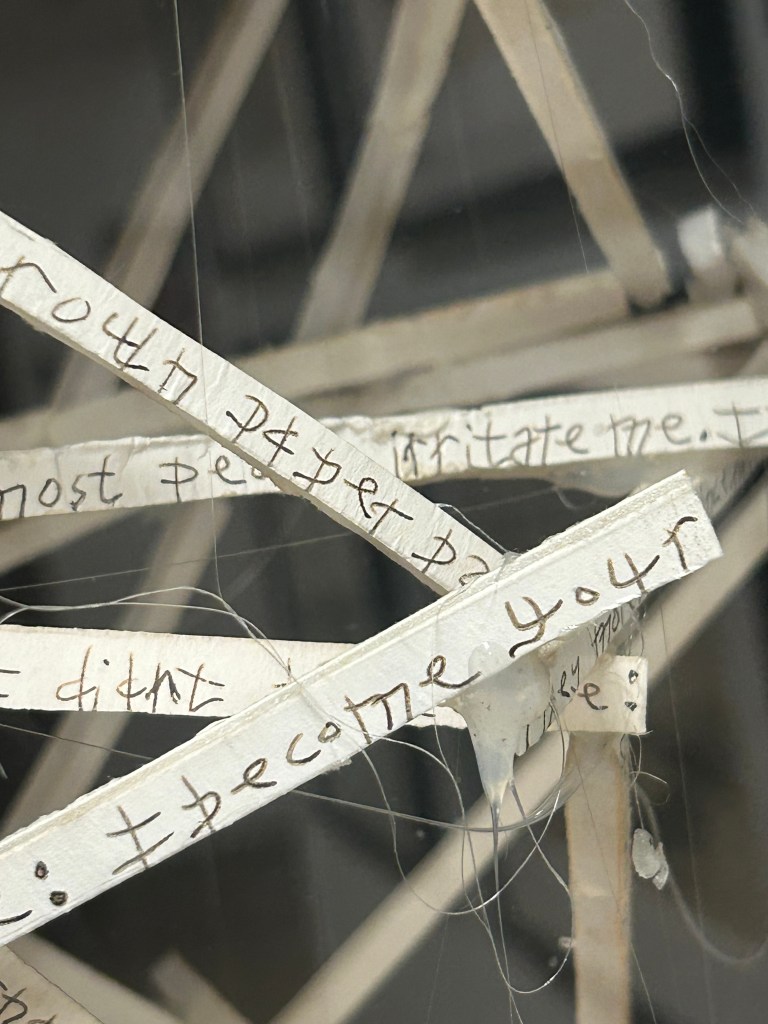
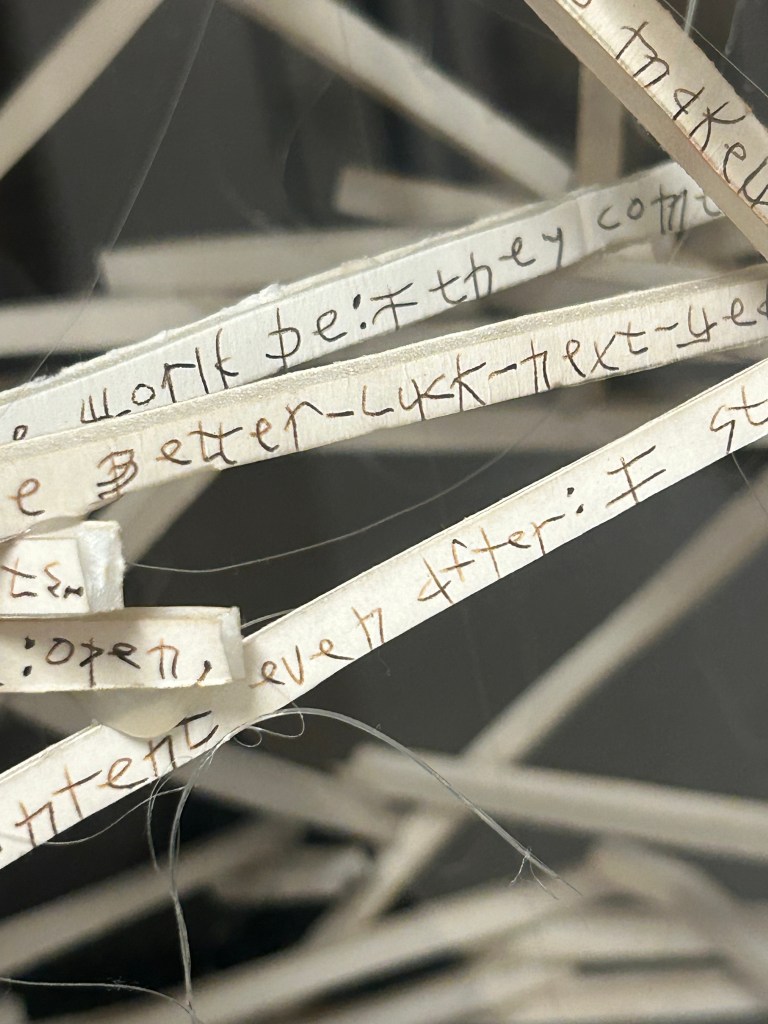
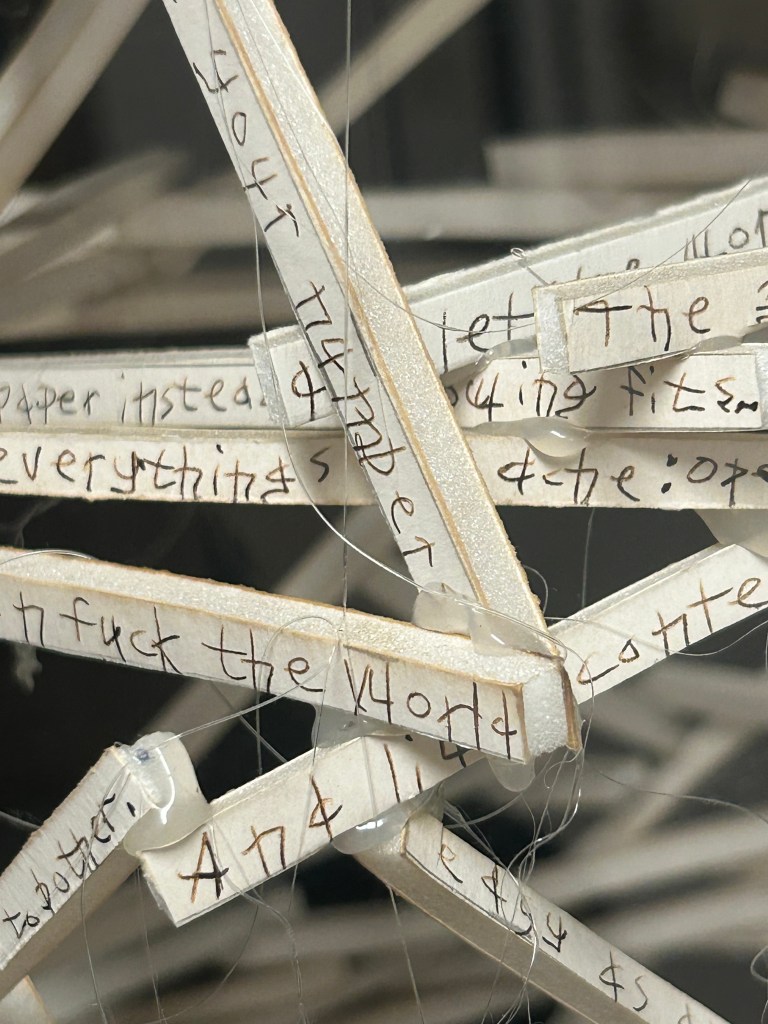
These are photos of the sculpture at Glore Psychiatric Museum in St. Joseph, Missouri, that I incorporated into a poem titled “The Sculpture.” (It was first published in Muzzle’s 2015 mental-health issue as “The Letter.”)

A patient at Glore made the piece when the hospital was still in operation. I’m visiting the museum in the spring to document the writing on each piece of foamboard along with a diagram that shows where the pieces are situated in the work.

One of the museum’s employees took these photos and sent them to me. I haven’t seen the piece in person since 2015. I’m happy it’s still on display and in good condition. Anything can outlive us. Anything can matter after we’re gone, just as we matter while we’re here. These words are not “worthless,” as the sculpture’s creator says on one of the foamboard strips.