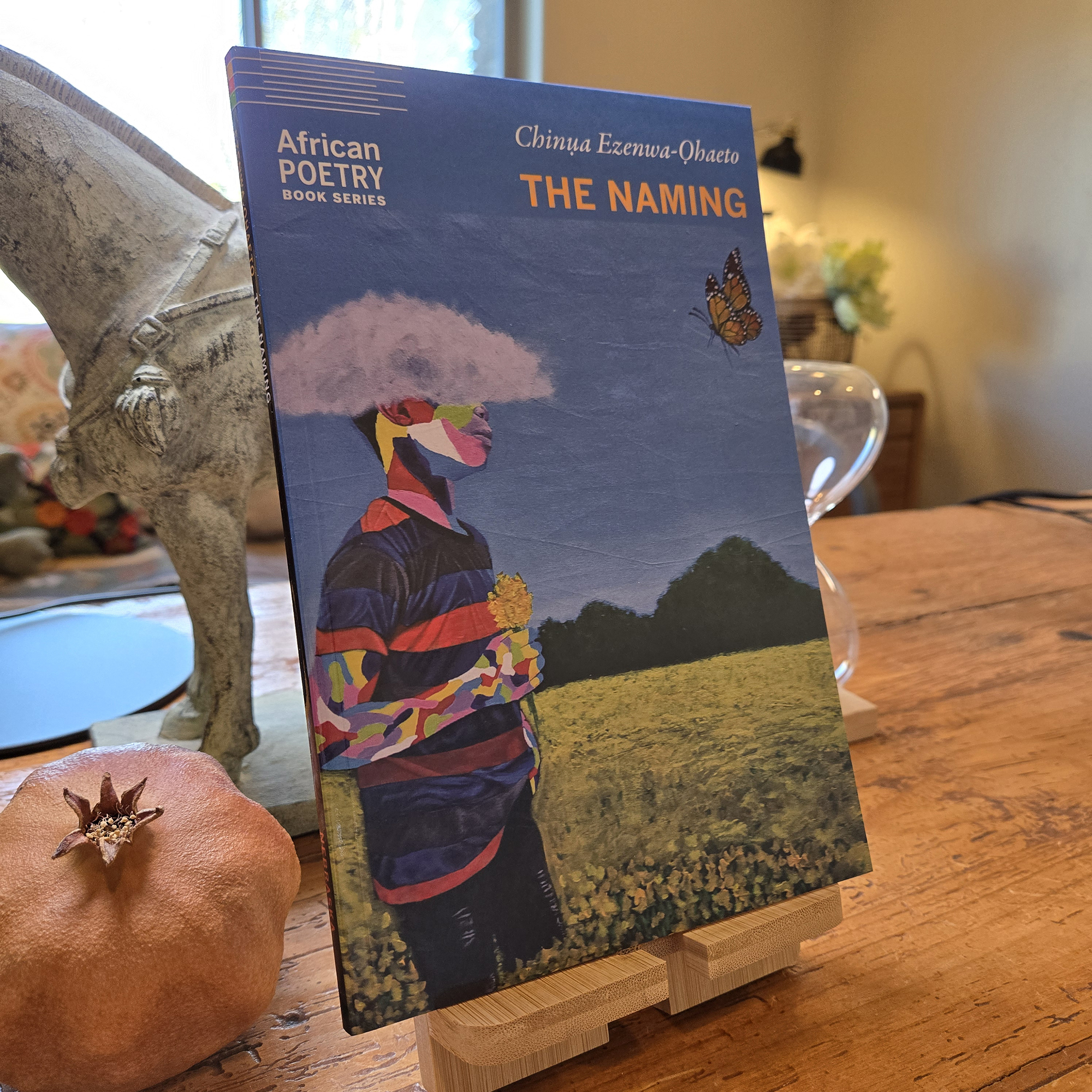
The Naming, Chinụa Ezenwa-Ọhaeto

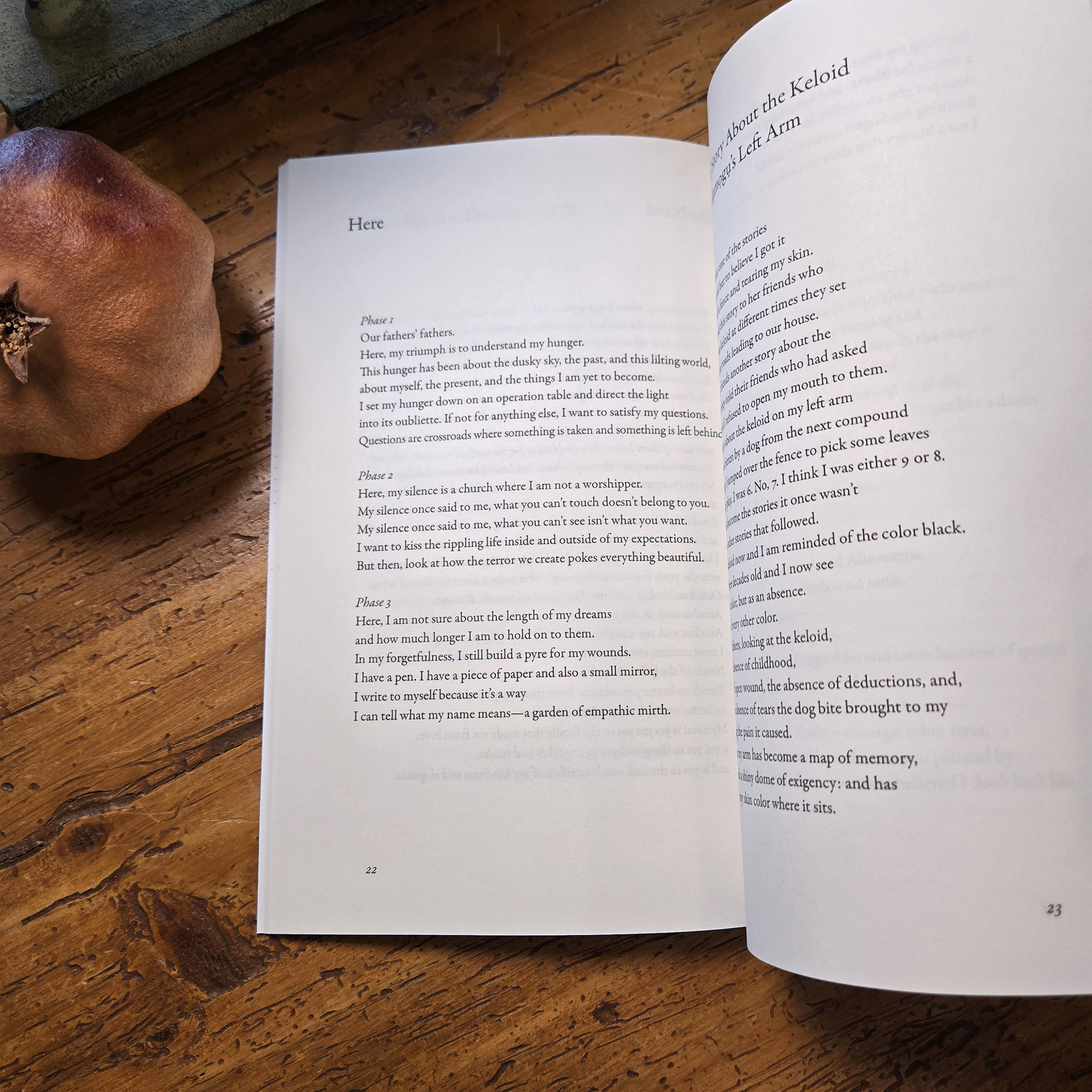
This collection is a reconciliation: with the personal, the familial, the ancestral, the spiritual, the terrestrial, the institutional, and the political. It is a world that is being created over and over again because of and through the past, one in which the speaker finds himself in time and place but also outside time and place with the help of his “father’s fathers.” I feel deep history and deep love in this work. It’s the kind of collection that makes me think, “I’ve been doing it all wrong,” and by that I mean living—in the here and now, without calling my ancestors in close, my mother and my mother’s mothers. The Naming points at history to find out where it hurts the most, but it also points at us to show us how we can begin to heal.

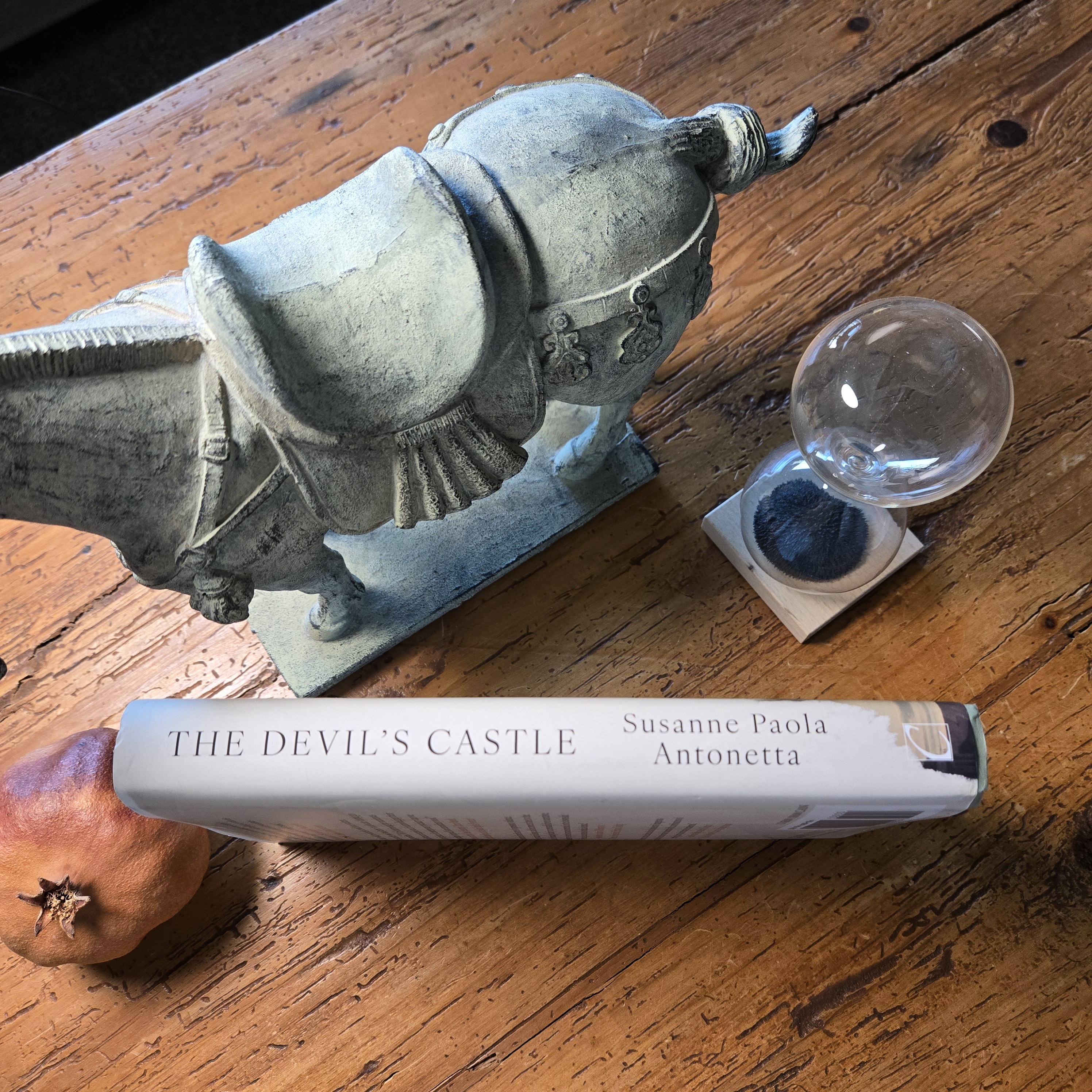
Images: 1. The collection on a stand with a pomegranate, a horse sculpture, and an hourglass. 2. Interior pages from the collection alongside the pomegranate.

‘The Devil’s Castle,’ by Susanne Paola Antonetta

Antonetta is a poet and writer whose work deals with psychiatry, madness, and science. The Devil’s Castle looks at German and American eugenics, including the T4 program in Nazi Germany that was the blueprint for concentration camps, within the larger framework of psychiatry — and from her perspective as someone with lived experience with bipolar and psychosis.

This is a hard book to read but one we can’t ignore, certainly not now, not when things are happening here that parallel things that happened in our own country’s history and in Germany shortly after the Nazis took power.

The next time you or someone you know decides to move into a sanist or ablieist stance in order to, ironically, show your support for other groups of marginalized and oppressed people,* think again. Please think again. Think about this history, this present, and the future we’re headed toward if we keep moving from one form of discrimination to another rather than examining and addressing all our biases.

Where we discriminate against one, we discriminate against all.

* One example I’ve seen is folks who support, or want to be seen as supporting, trans rights and who use sanist language to do so, that is, characterizing anyone who doesn’t support trans rights as mentally ill. That’s not going to cut it. That’s doing more harm. That’s a sign you’re performing what you’re saying, not feeling it or living it.

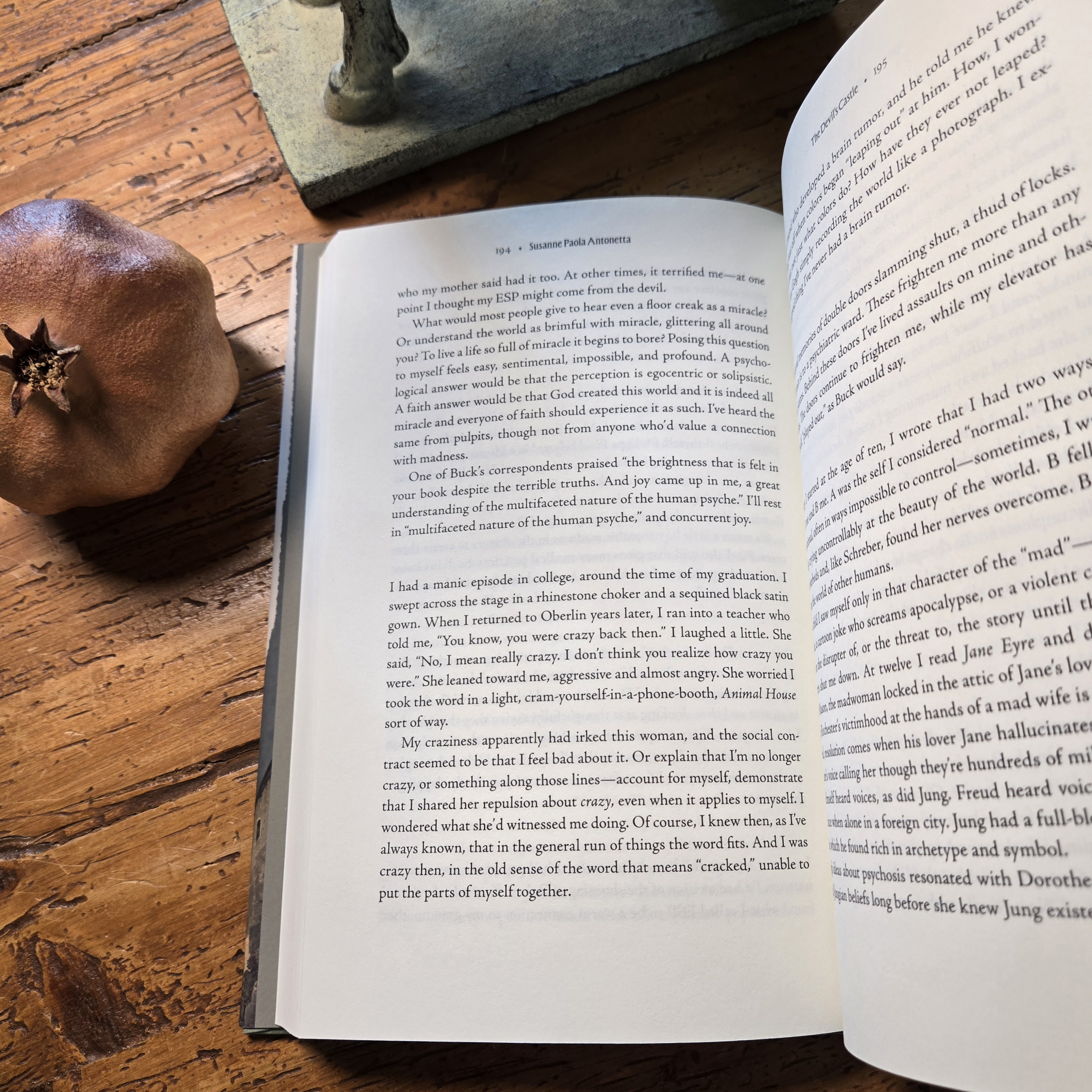
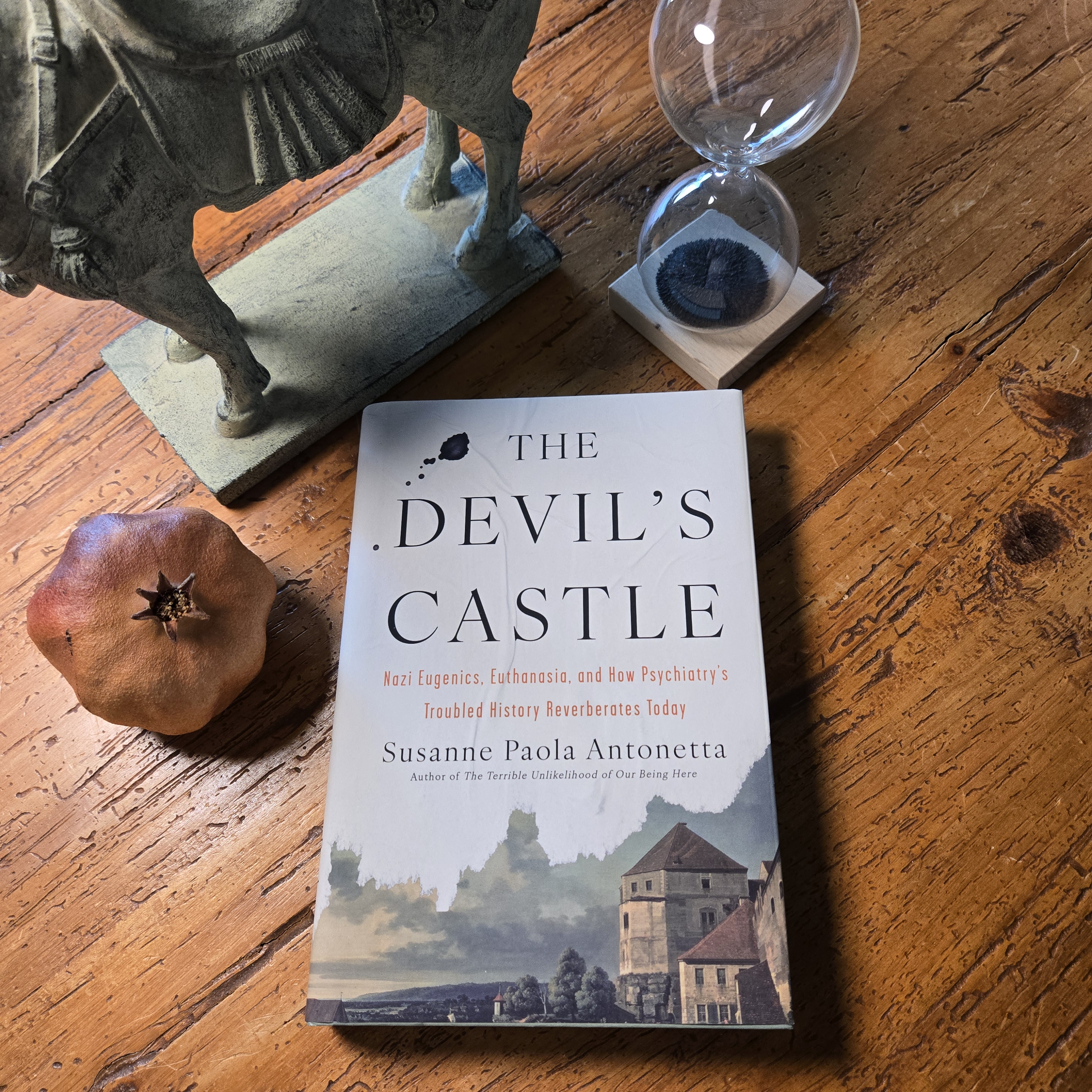
Images: 1. The Devil’s Castle standing perpendicular to my desk with a dried pomegranate, a horse sculpture, and an hourglass. 2. A page from the book. 3. A page from the book in which Antonetta discusses here first manic episode. 4. A photo of the book lying flat on my desk with the dried pomegranate, the horse sculpture, and the hourglass.

‘I Am Flying into Myself: Selected Poems 1960-2014,’ by Bill Knott

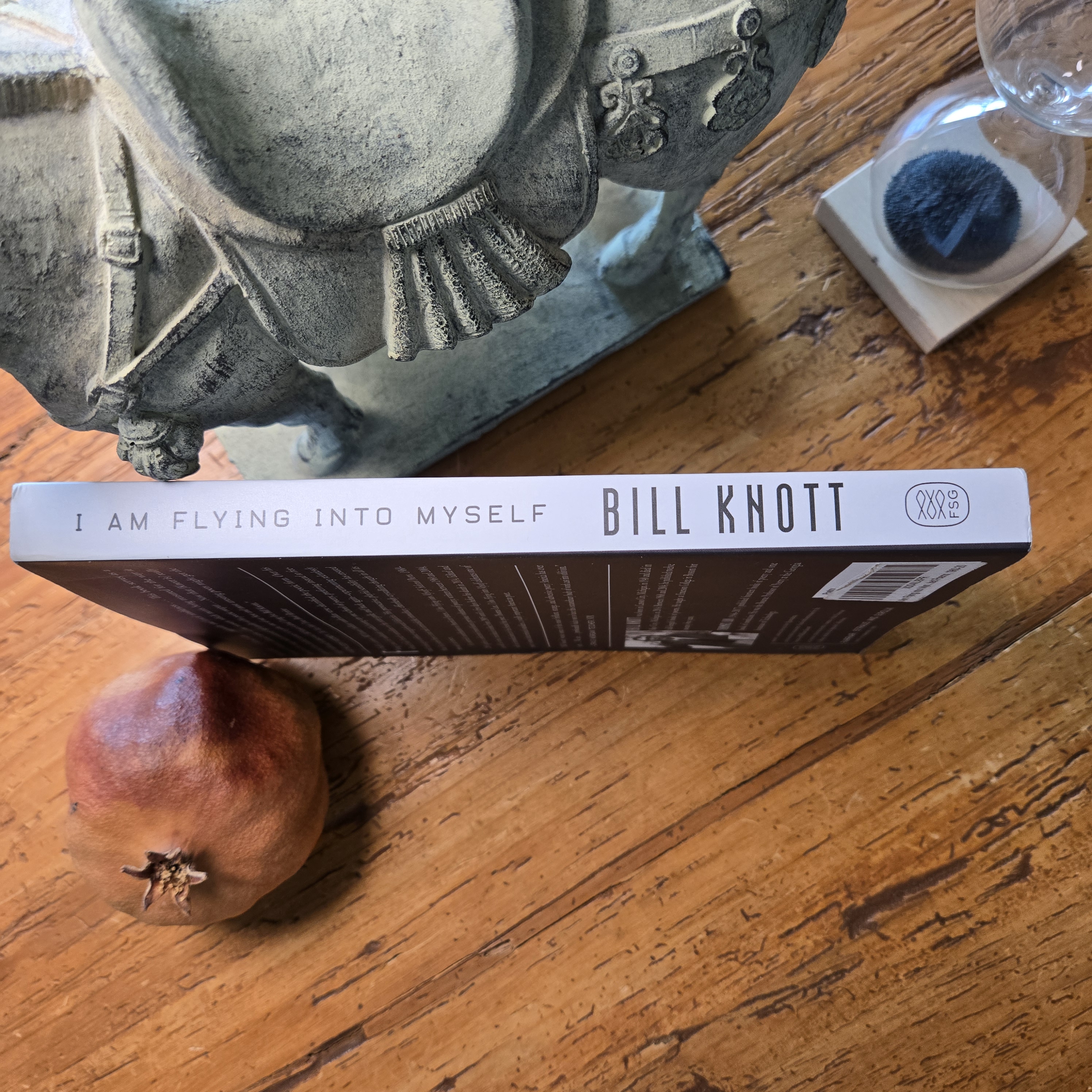
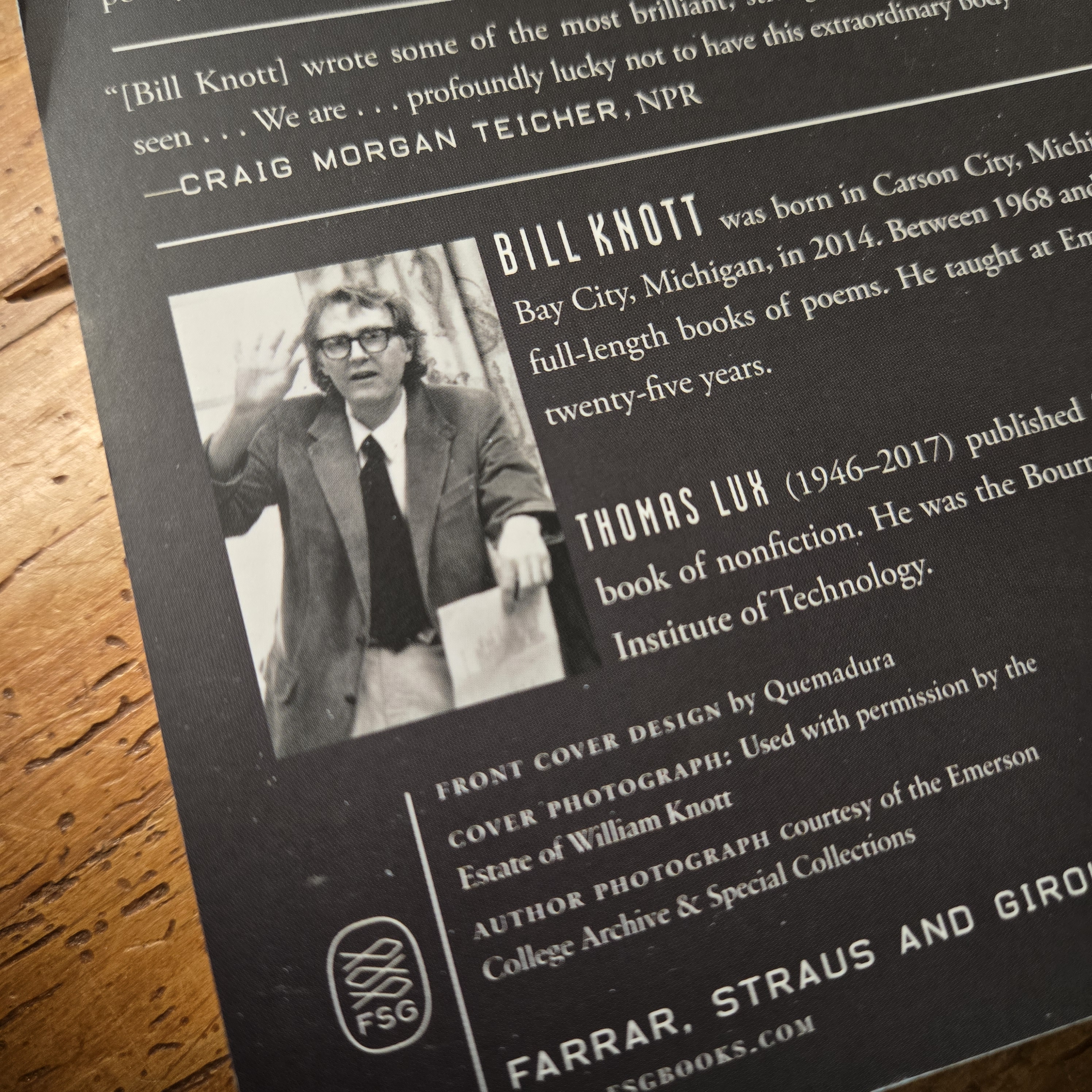
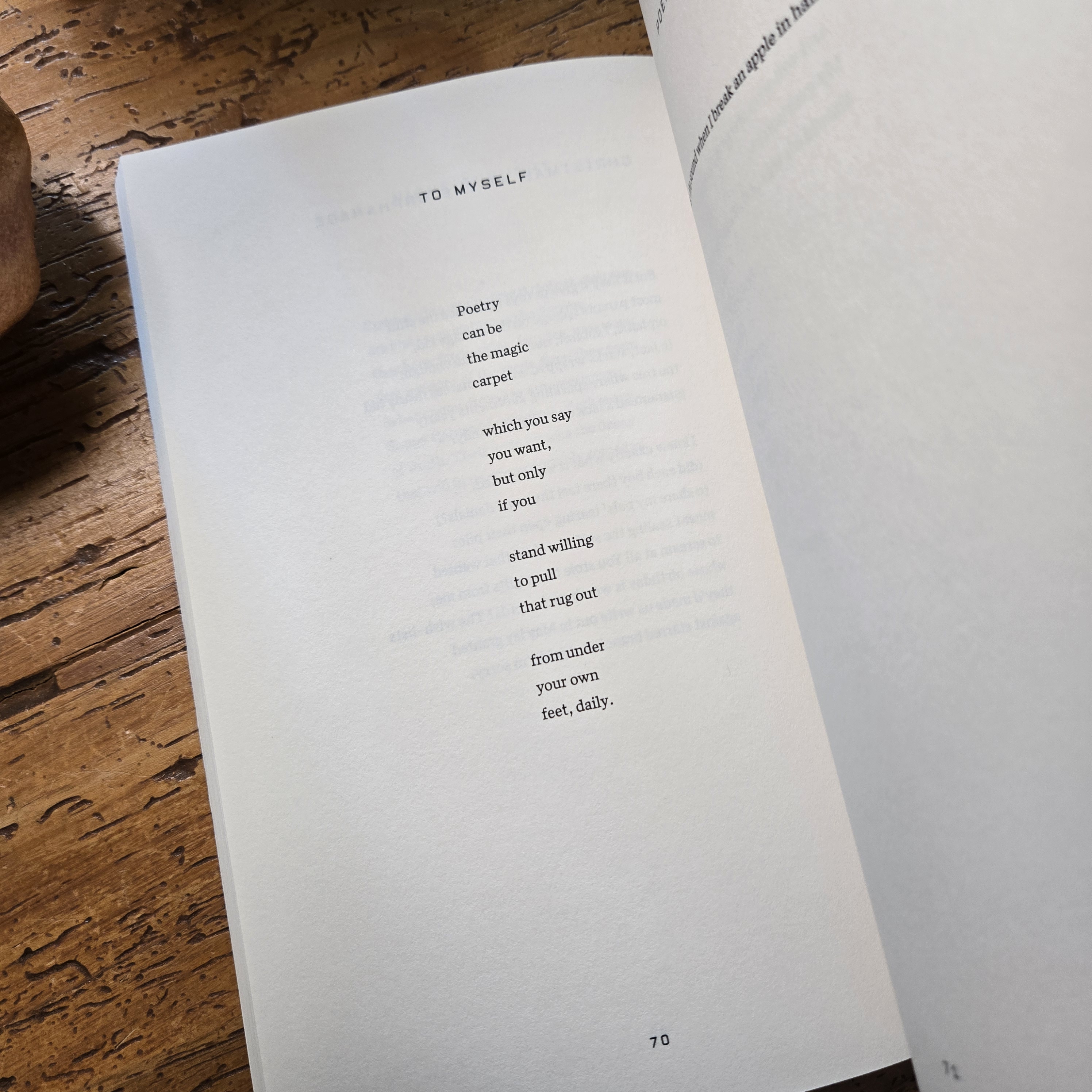
Images: 1. I Am Flying into Myself: Selected Poems 1960-2014 standing perpendicular to my desk with a dried pomegranate, a horse sculpture, and an hourglass. 2. The author image on the back cover of the collection. 3. A page from the collection.

‘It Just Looks Like a Window: Essays on Television,’ by Nadia Arioli

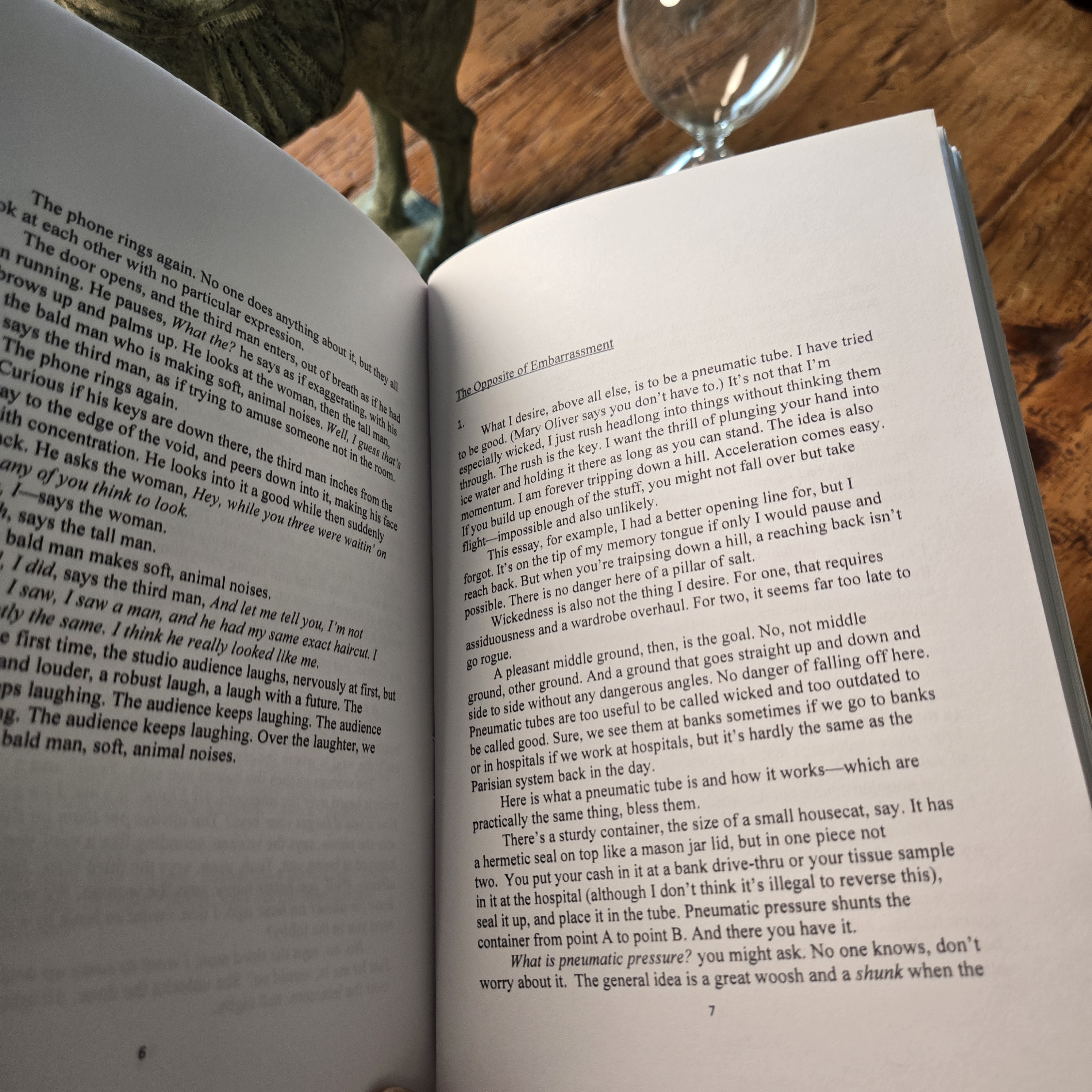
Sometimes, you think wanting to be the cylindrical carrier in a pneumatic tube system—maybe like the ones at Security National Bank or Anthony’s in your hometown—makes you strange and unrelatable. But then one day, you’re reading an essay whose author says what they desire, above all else, is to be a pneumatic tube. And you think, wow. And you think, yeah. And you think, suddenly, this is a world I may actually belong in.

The author of that essay is Nadia Arioli. The collection it appears in is It Just Looks Like a Window: Essays on Television, from Kristy Bowen’s Dancing Girl Press. It’s really good, really really good.

It would be good even without the pneumatic tube, but it’s even better with it because now you know someone has thought about being a pneumatic tube the way you’ve thought about being a cylindrical carrier in such a tube, and you feel a little less stupidly alone and also grateful to spend time in these essays which, to borrow a word from Arioli, are “liminous” (not to be confused with luminous): each piece a pass-through place, each paragraph a doorway full of light.

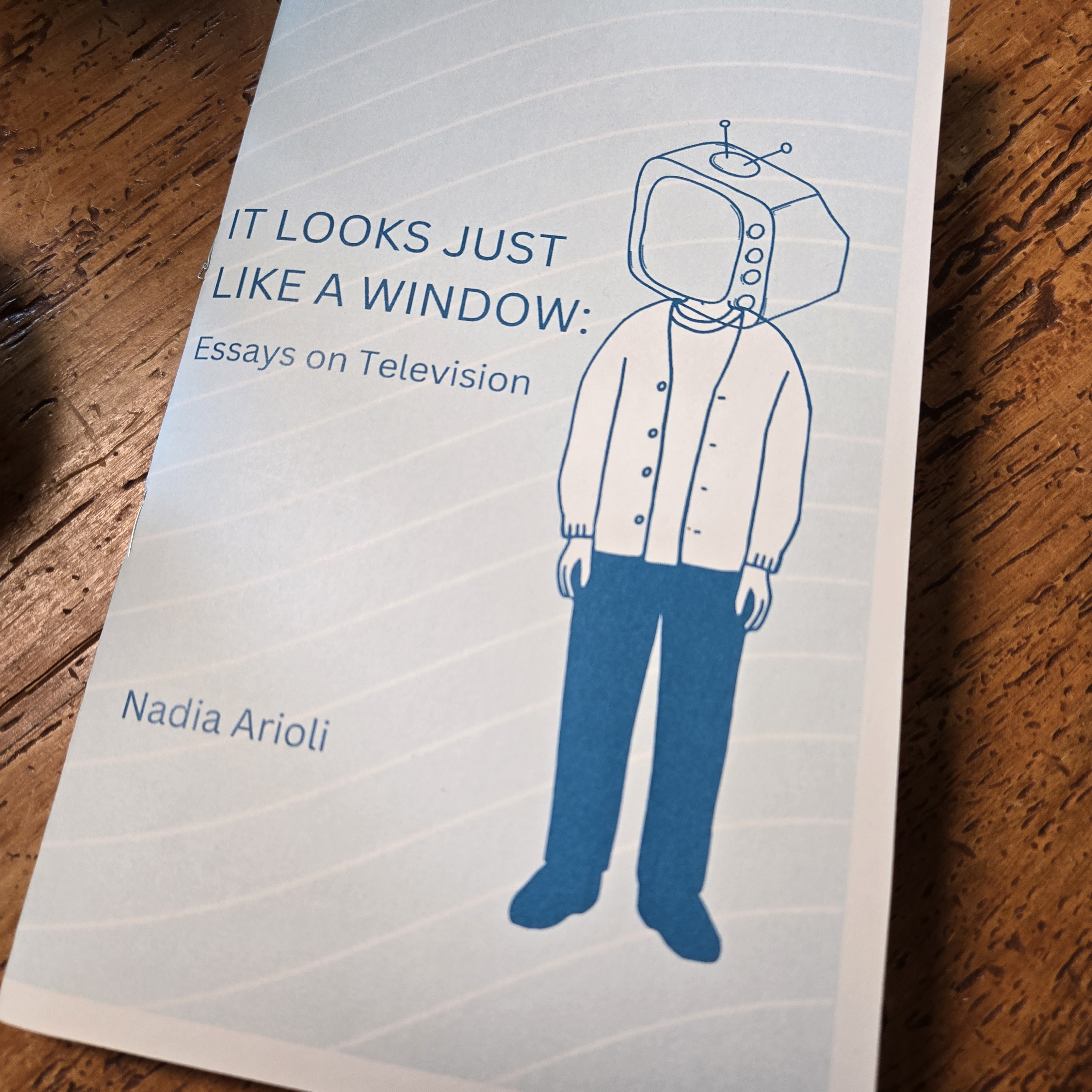
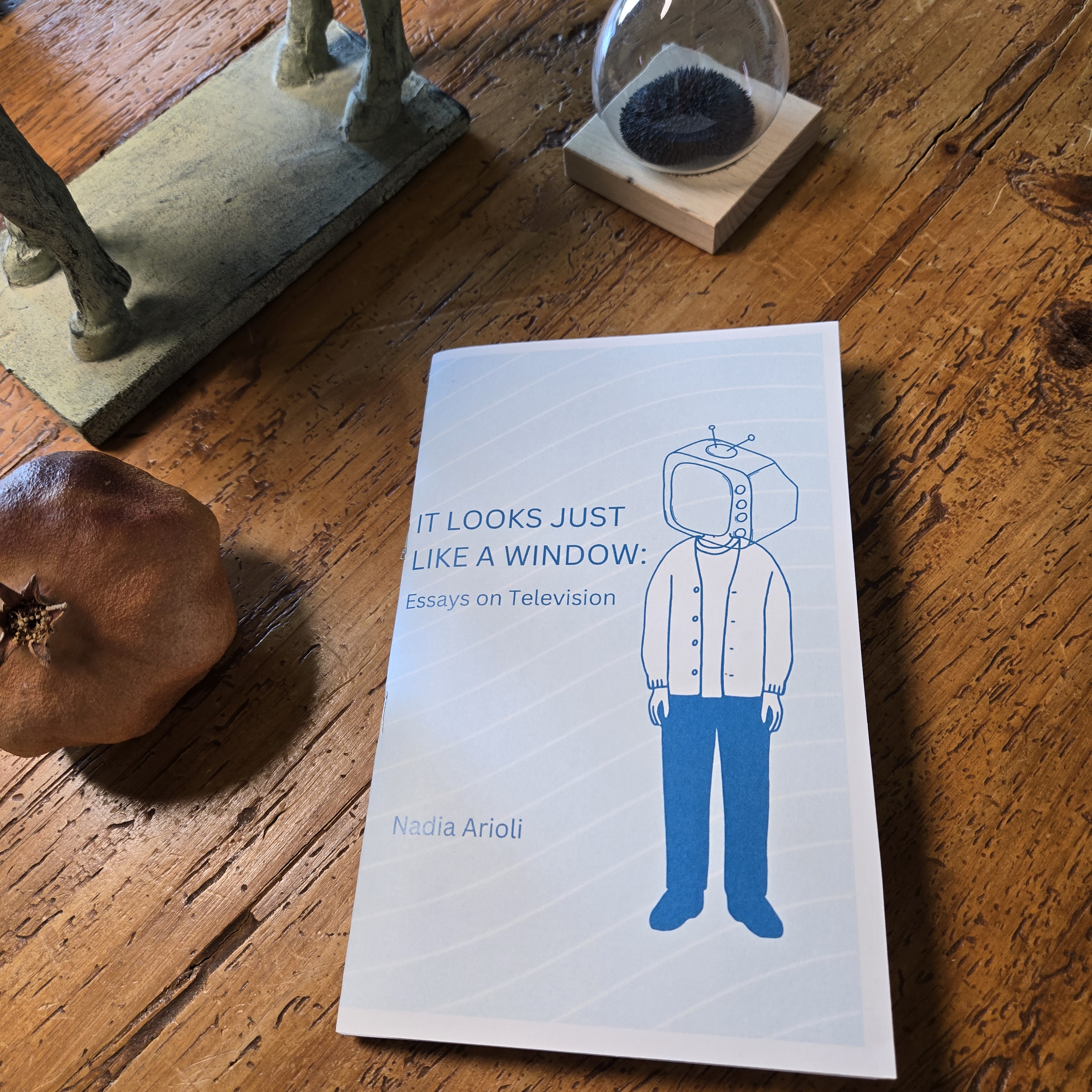
Images: 1. The front cover of It Just Looks Like a Window: Essays on Television. 2. Interior pages from the chapbook. 3. The chapbook with a dried pomegranate, a horse sculpture, and an hourglass. 4. The dried pomegranate.

‘Exploding Head,’ by Cynthia Marie Hoffman

These poems have a feel for me, a texture. Take the opening lines of “MRA Machine”:

Strapped inside this bright rocket, you are a spirit ready to be launched toward the light.

Do you feel that? In the pacing, in the sound? There’s fear, but there’s also something soothing about the language because of its music.

In Exploding Head, Hoffman’s prose poems feel like the warp of the subject matter coming together with the weft of the language she uses—language that, in her words, both opens up and clamps down hard. Reading the work is, for me, like running my hand across the face of newly woven fabric, nubbins and knots and all. I’m talking about poems that drape, that shoosh or scritch, that become something sensual, that conceal and reveal. I’m talking about a poet who can make a poem into a garment woven from different types of yarn that readers can step into and then back out again, both ourselves and not ourselves—the you in the poem an internal conversation in second person but also us if we allow ourselves that moment of extension into and beyond, which I willingly and gladly do. What is poetry if not a way to experience the world through a consciousness and creative expression that is not our own?

These poems sley the reed, thread the heddles, and follow the fell line as they take shape on the page as blocks of memory, experience, imagination, and disquiet.

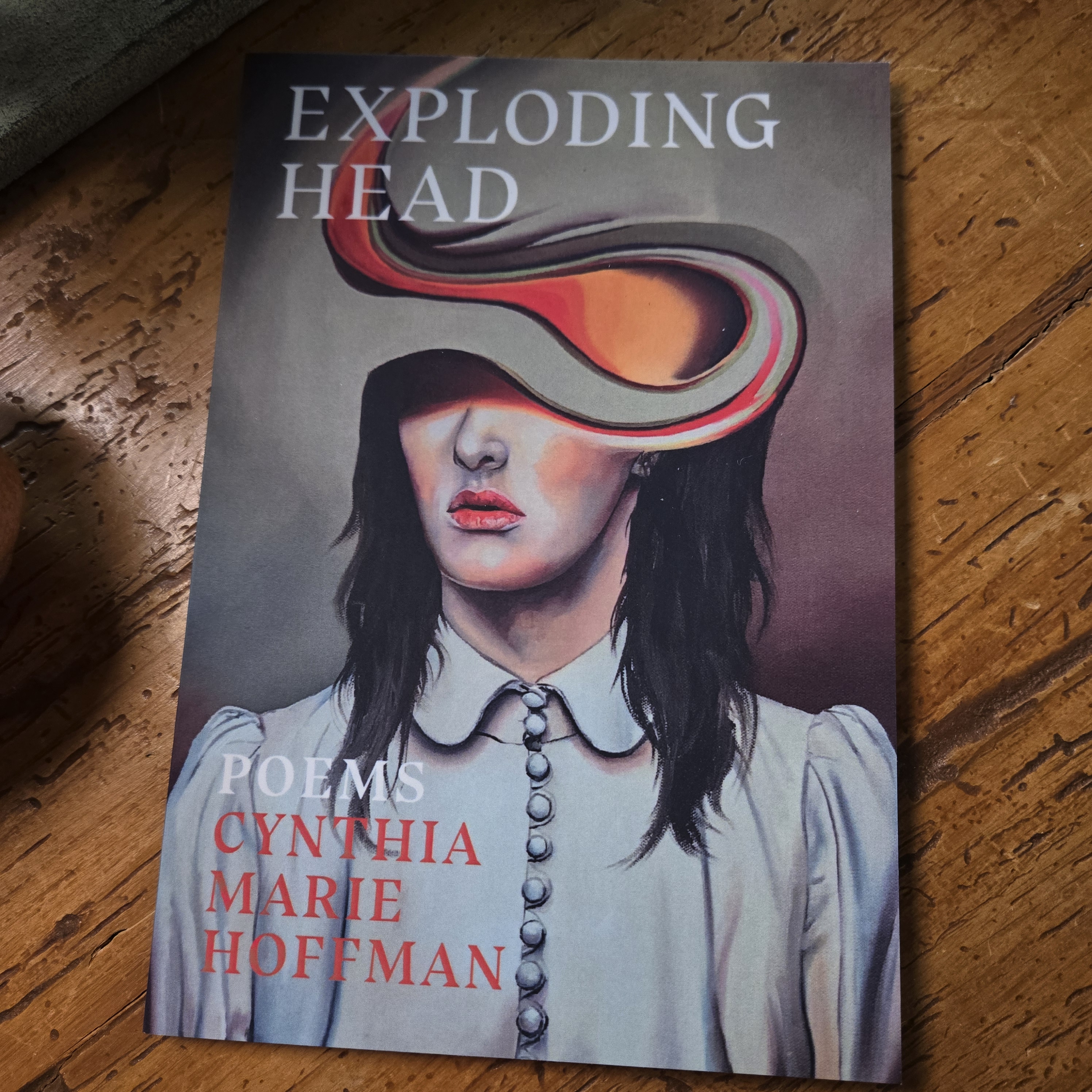
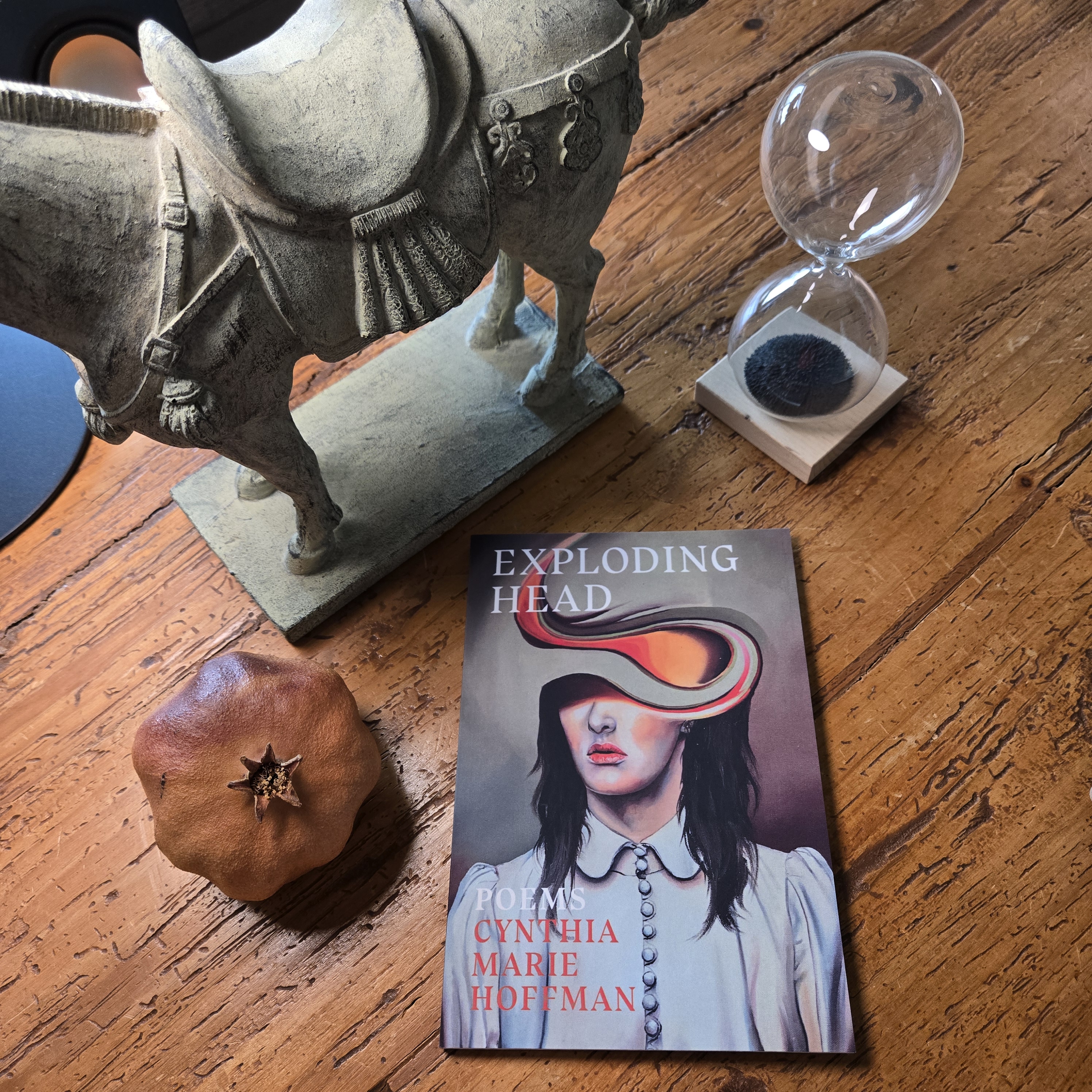
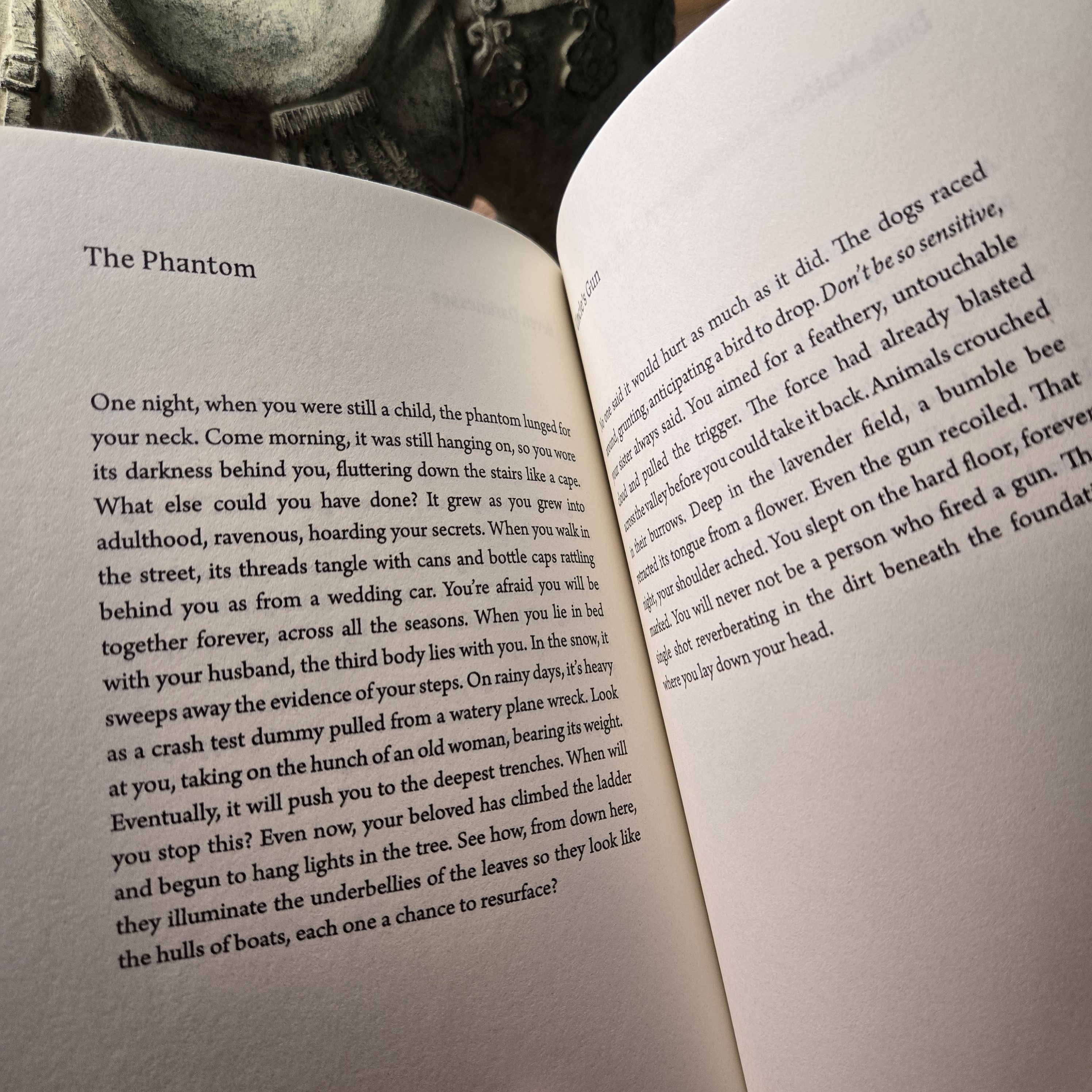
Images: 1. The front cover of Exploding Head, by Cynthia Marie Hoffman. 2. Two interior pages from the collection. 3. Another image of the front cover of the collection, along with a dried pomegranate, a horse sculpture, and an hourglass.

Mary Ruefle’s ‘Lapland’

Mary Ruefle created a powerful moment for the audience here in Tucson when she read at The Poetry Center last fall. I was there and will never forget what she did. She read her poem “Lapland,” which she wrote fifty years ago. Then she read an essay about how the word Lapland is not offensive, but now it is offensive to use the word Lapp to describe the people in Lapland. She ended her essay by saying that although the poem’s title is “Lapland” and it’s set in Lapland and the word Lapp appears twice, it’s not about Lapland. Then she uttered this sentence, which enveloped the room:

“And if you don’t understand that, then I would go so far as to say you don’t understand poetry.”

Then, in the tradition of several poets who’ve come before her, she read the entire poem again without comment. So that we would hear it. So that, with our hearts and minds adjusted, we could hear it or have the hope of hearing it.

It was powerful. It was incredible.

Click on the image below to experience Ruefle reading “Lapland,” then her essay, then “Lapland” again. The recording of the entire video is on the VOCA Audiovisual Archives. I’m just sharing the section that contains “Lapland” so you can have the experience attendees had that night at Ruefle’s reading.

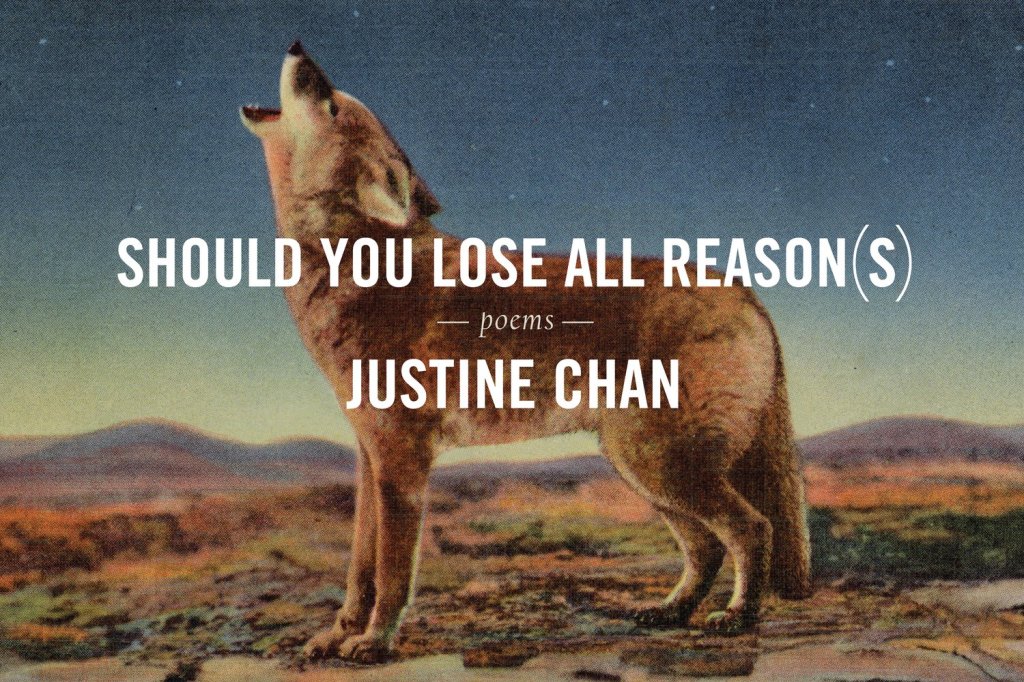
Should You Lose All Reason(s), Justine Chan

I’m reading Justine Chan’s poetry collection, Should You Lose All Reason(s). It’s based on her experience of a Southern Paiute myth she told over and over when she was working as a park ranger in Zion National Park, which is just a few minutes from our Utah home. I found the collection in the Springdale, Utah, library the day Jon and I drove out that way.

Chan lives in Washington state, where we lived for about a decade. Somehow, that makes her work resonate even more deeply for me. I’ve always felt a connection between Eastern Washington and Southern Utah. Where the land is concerned, I mean. The wildlands and the wildlife and how human consciousness is informed by both in ways they might not be elsewhere.

These poems are enveloping. They’re somehow a deep dive that feels like wading slowly into a welcoming body of water. Some parts remind me of Woman and Nature by Susan Griffin. Others remind me of a pillow book, namely the poems Rebecca Lindenberg has written in that spirit.

These poems speak to place, to identity, to what it means to live in a larger, natural world — or to live away from nature. Of who we are and how we become and how we continue. The speaker, I mean. The speaker, but also all of us. Also me, as a reader. (And maybe you if you choose to read this collection.)

Chan writes this place, Southern Utah, in ways that are image- and sound-driven without sacrificing authenticity, vulnerability, or accuracy:

You will get used to never seeing the full red sun as it rises or sets. You will see peregrine falcons and turkey vultures circling overheard, but never the condors.

None of the pictures you take will be quite right. Not in focus. Or the light’s not right. Or there is just too much.

You will bask. You will burn.

The bark of the spruce on the rim will always smell sweet and fresh in between its flaky scales.

The people will forget there was ever blanket poisoning of the public lands. That there are bounties for pairs of hacked off ears. That less, to rescind, must mean more.

Most of Chan’s lines are impressively long, like someone trying to stretch their arms as wide as the mouth of a canyon. The book is actually much wider than it is long to accommodate those lines. (It’s designed to look like an oversized postcard.) Her approach is somewhat experimental: at times bivocal, at times hugging the right margin or drifting cloudlike down the page, at times interspersed with dates and facts, and frequently breaking into song. (She quotes lyrics from sixteen songs throughout the book.)

I hope folks take the time to read this collection. Because. Just because.

Because the air is so hot, full of rasping. The land so full of landmarks and stories you can’t even begin to know.

Because you feel some part of you was / is / will always be secret.

Because the crickets are madness, a roar that fades to silence / if you forget / to listen.

Justine Chan’s ‘Should You Lose All Reason(s)’

Should You Lose All Reason(s), by Justine Chan

I’m reading Justine Chan’s poetry collection, Should You Lose All Reason(s). It’s based on her experience of a Southern Paiute myth she told over and over when she was working as a park ranger in Zion National Park, which is just a few minutes from our Utah home. I found the collection in the Springdale, Utah, library the day Jon and I drove out that way.

Chan lives in Washington state, where we lived for about a decade. Somehow, that makes her work resonate even more deeply for me. I’ve always felt a connection between Eastern Washington and Southern Utah. Where the land is concerned, I mean. The wildlands and the wildlife and how human consciousness is informed by both in ways they might not be elsewhere.

These poems are enveloping. They’re somehow a deep dive that feels like wading slowly into a welcoming body of water. Some parts remind me of Woman and Nature by Susan Griffin. Others remind me of a pillow book, namely the poems Rebecca Lindenberg has written in that spirit.

These poems speak to place, to identity, to what it means to live in a larger, natural world—or to live away from nature. Of who we are and how we become and how we continue. The speaker, I mean. The speaker, but also all of us. Also me, as a reader. (And maybe you if you choose to read this collection.)

Chan writes this place, Southern Utah, in ways that are image- and sound-driven without sacrificing authenticity, vulnerability, or accuracy:

You will get used to never seeing the full red sun as it rises or sets. You will see peregrine falcons and turkey vultures circling overheard, but never the condors.

None of the pictures you take will be quite right. Not in focus. Or the light’s not right. Or there is just too much.

You will bask. You will burn.

The bark of the spruce on the rim will always smell sweet and fresh in between its flaky scales.

The people will forget there was ever blanket poisoning of the public lands. That there are bounties for pairs of hacked off ears. That less, to rescind, must mean more.

Most of Chan’s lines are impressively long, like someone trying to stretch their arms as wide as the mouth of a canyon. The book is actually much wider than it is long to accommodate those lines. (It’s designed to look like an oversized postcard.) Her approach is somewhat experimental: at times bivocal, at times hugging the right margin or drifting cloudlike down the page, at times interspersed with dates and facts, and frequently breaking into song. (She quotes lyrics from sixteen songs throughout the book.)

I hope folks take the time to read this collection. Because. Just because.

Because the air is so hot, full of rasping. The land so full of landmarks and stories you can’t even begin to know.

Because you feel some part of you was / is / will always be secret.

Because the crickets are madness, a roar that fades to silence / if you forget / to listen.

Poems as Places

During the Southern Utah Book Festival, poets Paisley Rekdal, Danielle Dubrasky, and Simmons Buntin led the workshop “Real Locations, Imagined Selves,” whose focus was on defining a sense of place through words and documenting a place through poetry.

The conversation was much more far-reaching than expected. Poetry of place tends to focus on physical places, as in Richard Hugo’s Triggering Town or Wendell Berry’s poetry, which is closely tied to the specific farms he’s played in and worked on over the course of his life. Both Hugo and Berry’s approaches to place seem to be consistent with James Galvin’s notion of what a poet of place is, which is someone who situates himself in place in order to lose himself in it.

Rekdal discussed something similar to Galvin’s concept in the workshop, but she also talked about many other layers of writing about place—ones that augment and challenge the notion of place itself. She used the term palimpsest to describe places and our experiences of them, noting that places are layered in terms of their geographies, histories, uses, cultures, and more. Other layers include the ways in which places inform us psychologically, mentally, and politically.

The question implicit in this discussion is this: How can we begin to examine the layers of a place in order to more deeply know it, each other, and ourselves?

Partway through the workshop, an attendee said his body feels like a place, one that’s being politicized and treated like a territory. This was a powerful moment. The idea of the body as a place, one that can not only be inhabited by the self but also invaded, in a sense, by others, is disconcerting. When that type of invasion occurs in a physical space (someone’s community, their school, their place of worship, and so forth), body and space intersect, making both feel less safe. Here, we see layers of place building up and around the human body within the social, political, and physical elements of a place.

Rekdal says much of how place is defined is through bodies, and much of how bodies are being called into or excluded from a place is racial. She then discussed how the Chinese in the West could become white or reject becoming white depending on whether they wanted to be part of the United States. The idea she touched on is that, like places, race isn’t static. Bodies aren’t static. They’re all processes that are in flux and that meld into or layer over one another—and that sometimes collide with each other.

(I want to add that bodies are also excluded from places because of discrimination based on ethnicity, gender, sexuality, disability, age, national origin, and sex.)

Place is not just where you inhabit. It inhabits you, too, Rekdal said as the conversation began reaching toward the ineffable. I sometimes think about places as hauntings, she added.

She notes that we can be drawn to places we’ve never been before, perhaps because something inside us may be encoded to seek out a place and call it home. Or perhaps we seek out a place and immediately feel the atrocities and suffering that occurred there, such as at the Topaz Internment Camp Museum in Delta, Utah, where Rekdal gives tours as the director of the American West Center.

Whatever the reason, humans seem to have the capacity to carry a sense of place within us that’s larger than life and longer than the human lifecycle.

             Nothing natural but made
             in the beauty of this place. To create a home,
             we imported trees and water, we slashed
             and burned to excavate a state where nothing
             lived, nothing ruled us, and yet in all this nothing
             we were subject to the rules nothingness demande

Those lines are from Rekdal’s poem “Soil,” which appears in West: A Translation. She says places create relationships and help us develop empathy for each other. The forging of community from hardship is evident in the lines above and is part of the universal human experience.

The takeaway is that places can’t be places in any human way of understanding and experiencing them without our presence in them: the communities we build, the bonds we create within and because of place, and the ways in which we come to know place.

Wendell Berry says we’re losing our connection with place because our use of our places is greatly reduced from what it was in the past. Of course, he means literal places and a very specific type of past use of those places.

Perhaps Berry’s not imagining place as broadly as possible. As Buntin pointed out at the end of the workshop, imagination itself is a place. Imagine that. If what we imagine is a place, then the products of those imaginings, such as poems, are places. We really can create worlds out of words.

I wonder what you all think about where we are with regard to our relationships with places in any or all senses of the term? Is our understanding of places—like places themselves—a multidimensional process rather than a half-static relationship in which only human understanding changes, not the very idea of what constitutes a place?

Asked another way, are we as deeply connected with place as ever, even if we haven’t quite identified all our places as places: interior, exterior, past, present, analog, digital, elemental, philosophical, built, imagined, and so forth?
Walking with Cavafy

Whatever I try to do is fated to turn out wrong / and my heart lies buried like something dead. / How long can I let my mind moulder in this place?

Windy night. Windy morning. Tumbleweeds congregate in my yard like churchgoers who stick with their own kind and bristle at anything unlike them.

Wherever I turn, wherever I look, / I see the black ruins of my life, here, / where I’ve spent so many years, wasted them, destroyed them totally.

I walk from one tumbleweed to the next literally sizing them up. I want a fat one, nice and round, no thorns. I find one I like and carry it high like a torch to my back door. I imagine I’m carrying justice or truth, though it’s just a dead amaranth and I’m just a person living in Toquerville, Utah, trying to make sense of this place before I leave it.

You won’t find a new country, won’t find another shore. / This city will always pursue you.

This is not a city, I think. Not in any real sense. Eighteen hundred people live in this town named after a Paiute Chief who may not have existed. He makes a nice story, though, one of Native Americans and Mormon pioneers living in harmony, so the locals are sticking to it. There are probably as many cows and chickens as humans here. Six cloned while bulls live up on the hill. Two Shetland ponies reside down the street. More than anything, this place is comprised of sandy soils, so many types they each have a name — alfisols, aridsols, entisols, mollisols — not like the basalt, which is just called basalt. Chief Toquer was named after that basalt, so the story goes.

You’ll walk the same streets, grow old / in the same neighborhoods, turn gray in these same houses. / You’ll always end up in this city.

The tumbleweed will stay on my coffee table until I get on the road to Tucson, where I’ll display it as a reminder of the place I’ve left. Well, mostly left. We never leave the places we leave. Didn’t Cavafy say as much in his poem “The City”?

Don’t hope for things elsewhere: / there’s no ship for you, there’s no road.

But I have hope. Those of us who despair must also hope. It’s like a teeter-totter, but with great effort you can sit closer to the fulcrum and find balance. Hope isn’t a thing with feathers. It’s a tumbleweed trying to spread its seeds as far as possible even after it’s dead. I have that kind of hope, one that moves with me and urges me to move. Movement is breath, is heartbeat. I especially love those slabs of highway that make the car go “ga-dung, ga-dung, ga-dung” the way my heart does when I know I’m alive. The roads between here and Tucson undulate like a roller coaster meant for children. They make me nauseated, which is another way of knowing I’m alive, an old way of knowing, a way I may cast off one day as I tumble along.

Now that you’ve wasted your life here, in this small corner, / you’ve destroyed it everywhere in the world.

Then I might as well go anywhere I want, Cavafy. Why relegate myself to this small corner? Why do here what I could do in wilder lands with deeper histories? Where admission is possible and millions of saguaros throw up their arms to welcome the beloved wrecked and wretched with perfect equanimity.

The text in italics is from “The City,” by C P. Cavafy.