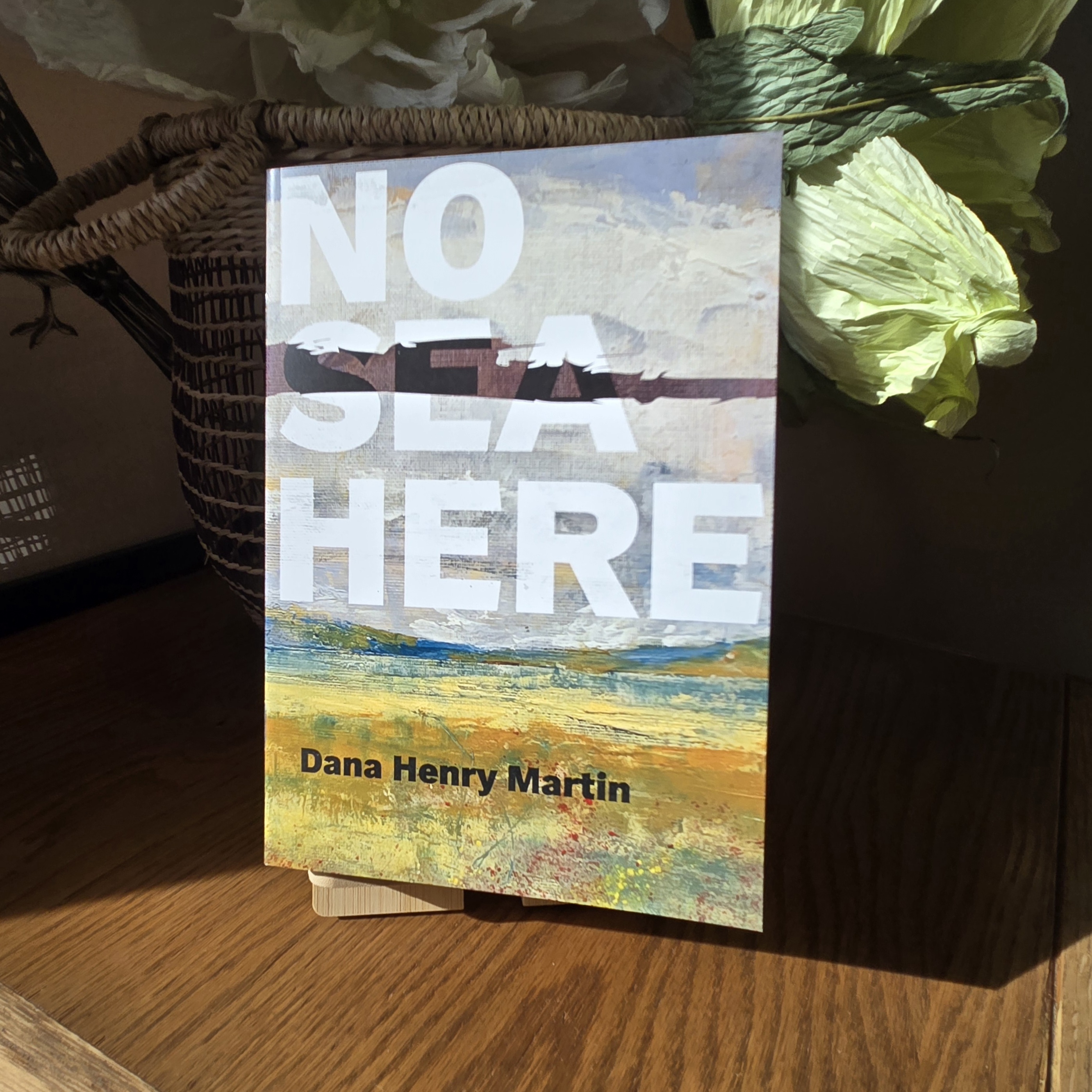
White Salamanders

We invented numbers, then we assigned meaning to them, both everyday meanings and special meanings when they show up in a certain way, like 11:11. That’s how everything we do works. We make something up. We agree on what it means, or at least some of us do. We find aberrations that appeal to our cognitive biases and imbue those aberrations with magic, extraordinariness. We can’t just accept that everything is extraordinary all the time, no sleight of hand needed. No tall tales.

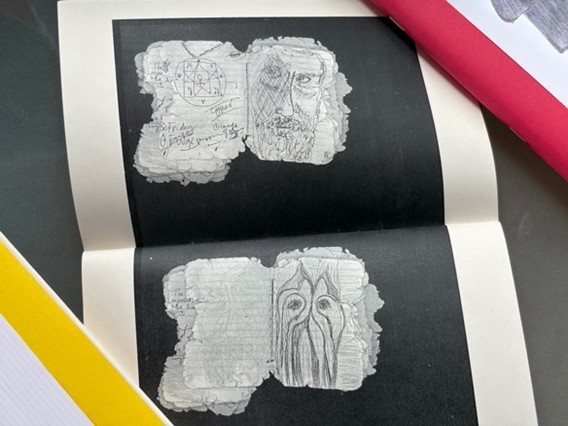
But we love stories, don’t we? Stories like the white salamander letter. (Look it up. You won’t regret it.) Even I love that story and am terribly sad it was based on a forgery. A real untrue story, fully committed to, is better than a con, I think. It’s close to poetry. Maybe it doesn’t matter: origin, intent. Something in us needs stories, and we’ll get them one way or the other.

I dreamed I was in a large, tiered, auditorium-style room looking for a place to sit so I could read a book and drink some tea from a demitasse teacup. I was dressed like Alice from Alice in Wonderland. Everyone else in the room was male or male-bodied. All the seats were leather and moist from the glandular skin of those who’d recently sat in them. None of the seats were right for me.

I suddenly felt scared and ran out of the room into a long hall. It was a secret part of the library in my hometown at the university where my father worked. Red carpet and decor. Brown spines. Brown wood. Books covering every wall all the way to the ceiling. The smell of dust and leather and cigars. The air hazy.

A man in a tophat and his rabbit held open the curtain to an adjoining room. The curtain was maroon and heavy, with thick twisted gold fringe, the kind where each twist is under constant tension from being held in its contorted shape. I walked through it. I have no idea what happened next, but I know something happened next.

I write stories in my sleep, that rich world I visit every night. What comes to me is essential, life-giving nonsense. I couldn’t live without it. That world is loose, vivid, surprising, and informed by every moment of my life, all outside of time. Ah, time. Now, we’re back to numbers, their rigidity and our desire to break them out of that box they must live in most of the, ahem, time to serve us and let them walk through the curtain into who knows what, who knows where. All we want to do is follow.

For Carolyn Kizer

My severe hypothyroidism is taking a toll. For the past two weeks, gobs of hair have been falling out every day. I’ve been in bed since Friday. I need to have blood work done to see if the new dose of thyroid-replacement medication is improving things at all, but I didn’t have the energy to call the lab to schedule an appointment because the required opening up the cabinet where I put the lab paperwork, pulling it out of a stack of papers, finding the phone number, dialing the phone, and talking to someone. Too much. Also too much: doing my immunoglobulin infusions, the ones that keep me alive; preparing for the support group I’m facilitating that starts this week; hydrating; exercising; bathing; eating.

In this hypothyroid state, which has been creeping up on me since last fall, I’ve also been thinking a great deal about poetry and what I’m doing as a poet. A hypothyroid state isn’t the best one to be in when having these thoughts, but anyone who’s been hypothyroid knows these are the kinds of thoughts one has when hypothyroid.

Here’s my conclusion. Poetry is, at its worst, a discriminatory and harmful system. I’ve experienced discrimination and harm firsthand. But the system being what it is doesn’t make it one I can walk away from. I’m a poet. Being a poet isn’t something I chose or can unchoose. It’s a way of being.

When I was close to death in 2022, writing an imitation poem after Richard Siken is what brought me back to life and what allowed me to continue living. There was no question for me then that I was bound to poetry, to being a poet. It doesn’t matter that it was a Richard Siken poem. It could have been any poem, imitation or otherwise. I time-traveled in that poem. I found my way into and through time itself, not because I’m special or any given poet is special. What’s special is poems: who we are in them, who we aren’t, what we see, what’s beyond seeing. That dissolving when we need to dissolve. That emerging when we need to emerge. That liminal space between dissolving and emerging where we can live more expansively.

I came back to poetry. I can’t leave it again. I think my presence makes poetry better, not worse. I’ve written about what happened to me in poetry and beyond. I see issues at the systemic level and call attention to them. Because I’m older, I have a longer memory than a lot of poets do, which gives me insights others may not have. I make choices about where to send my work and who to associate with accordingly, which is necessary when poems enter the world of poetry, that less-than-optimal system that can and does do damage.

I’m neither a sycophant nor the poetry police. I call things like I see them. I’m not trying to make anyone feel bad about the unexamined biases that exist in poetry or the ways in which they may be contributing to those biases or at least not helping alleviate them. I do think we should all pay more attention to the institutions and organizations we support, the people we defend, and how we talk about those who are exploited and otherwise victimized within the system. But I know I can’t change anyone or the system as a whole. I can only control how I navigate it and who I am within it.

I suspect things would be different if poets didn’t have jobs to worry about or tenure or getting published or securing money for their projects or any of the other pressures that keep the system humming along without much change over the past several decades. I’m not fettered by any of that. I just read and write poetry.

I still remember Carolyn Kizer telling a group of poets that another famous poet tried to rape her. It was at a dinner before a reading she was giving. I also remember how the other poets at the table responded, which was to react in a flustered way and quickly change the subject. That was nearly thirty years ago, when I was just starting to write poetry. But what happened to her occurred decades earlier.

Poetry has had systemic issues that affect individual poets for a long time. These issues didn’t start yesterday, and they won’t end tomorrow. That’s why I’m not going to stop writing poetry or talking about what I’ve experienced and seen in the poetry community. Carolyn Kizer was talking to me that day in 1997. She was warning me. I heard her. I try to hear everyone who speaks.

The Portal

I dreamed the poetry community was a psychosis-inducing haunted mansion that all the poets had to live in together. My room had a closet with a secret panel. Behind the panel was information about a poet who’d died in the 1800s. Behind that panel was another panel with warnings about not ever opening the second panel ever no matter what. The second panel popped open on its own. Behind it was the corpse of the poet laid out in an open casket. It was Emily Dickinson in her white dress. Behind the casket was a tunnel that led straight down to hell. I bumped the casket. Dickinson’s corpse slid down the tunnel. I almost followed but braced myself against the tunnel’s walls. Once I was back in my room, I sat on the bed and vowed to tell none of the other poets what had happened. The panel covering the tunnel had no latch. I waited for whatever was going to come through to come through as fear crawled up my spine. That fear was the devil. Downstairs, the other poets laughed and drank and carried on, unaware.

              Death is not a jinn.
              It’s a hollow limb snapped off
              the tree, a portal.

The Fog

Writing used to be my way of working through things in order to discover beauty, complexity, and meaning, as well as what escapes meaning, to feel those textures and colors the body and mind together send to the surface like koi in a pond waiting to be fed. All those little mouths mouthing at once. All those fat bodies and watery fins. So much movement but not without pattern, like music.

Writing used to be my music, its notes distributed like lilypads the bodymind somehow reads through touch, for that’s what language is. Something we touch, not something we see. Something we touch and hear.

I worked hard to learn how to write despite my dyslexia. To write, to read, to understand. I wanted into that world because of what poems could do.

              The fog comes
              on little cat feet.

If fog could be a cat, I could be anything in language, not what I was in my home. I didn’t have to be that child or a child at all. I could be something that made sense or was so far beyond sense that sense wouldn’t matter anymore. I wanted to do that with language, to unlock its magic. It took decades, but I did. I think I did.

I’ve come to identify with being a poet and writer, with sitting down at my desk and writing every day. I told people poetry was everywhere, always, like a faucet you can just open up and there it is.

I don’t feel like that anymore. I open the tap and there’s nothing. People are cruel. I’ve encountered more cruelty in the past three years, which is when I started writing again, than in the other twenty years of writing combined, with the exception of some awful things that went down in the poetry community in 2015. I’ve been personally threatened, accused of appropriating the term CPTSD (as if my trauma isn’t real), attacked both for not really being neuroatypical (based on how I appear) and for using the neurotype framework, told nobody should listen to me because I have bipolar, that I’m morally unclean, that my writing is doing harm, and more.

That’s on top of the more general comments people have made in response to my writing: things like everyone who has a mental-health label should be round up and forcibly removed from Utah or queer people are evil and satanic.

               It sits looking
              over harbor and city

These comments are like gargoyles draining the life from my writing and from me as a person. They go well beyond discourse. They’re attacks. They’re erasures. They’re discriminatory. They’re scary.

They’re what passes for engagement these days. We’re all seeing comments like this day in and day out, especially on social media. Some of us are participating in it in our own ways. Most if not all of us are negatively affected by it. Even outlets that are designed to give us a voice can end up sending us to slaughter with every piece of ours they publish. For civil discourse? For freedom of speech? Or for clicks, shares, page views, and increased reach? If an outlet wants to keep you angry at those who also trying to speak to the larger issues in our culture, our country, and our communities rather than catalyzing you to also speak and act in response to those larger issues in your own way, ask yourself what that outlet’s motives are and what effect the infighting it generates has on anyone’s ability to advocate for anything—or even to survive what’s become increasingly difficult to survive.

How is a writer who, for years, wrote for some of the largest medical organizations and research universities in the country, as well as an esteemed consortium comprised of the top medical and research centers, in this position? Who’s routinely had work in competitive literary journals and with well-regarded indy presses? Some of this is coming from social media and website comment threads and is in response to my essays and opinion pieces. Some of it’s happening with friends on Facebook, namely people who read my work and then project things onto me so that, when I am not what they think I am or what they want me to be to them, they can and sometimes do become irate, belittling me and my poetry.

This is how things are now. And they’re going to get worse. But I don’t have to keep saying OK to it. I’ve already started saying none of this is OK. Now, I’m grieving on many levels—what poetry and writing can and can’t be, what kinds of audiences it can and can’t have, what the writing community and our communities in general are and aren’t—and I’m waiting for the faucet to flow again. That may be the only faith I have left in me. I believe I can find my way back to poetry, and poetry can find its way back to me. I have to believe this to survive.

              on silent haunches
              and then moves on.

May the fog that obscures poetry move on. May the fog that keeps us from seeing each other move on. May the fog that blankets our entire country move on. Let it move on. Let it move on.

I appreciate my friends on Facebook who feel their way through the world using language and take the time to communicate thoughtfully. You are the antithesis to much of what passes for communication these days.

The poem used in this essay is “The Fog,” by Carl Sandburg. It is in the public domain.

Notched

I dreamed I was a crew member for a reality television show in which a group of women and female-bodied contestants were trying to overcome their trauma and abuse by getting a very old man—who was close to death and just wanted to collect sticks on the beach and fashion them into wings before he died—to love them. The goal was to get him to lay down his pile of sticks and follow one of the contestants. In this moment, both the old man and the contestant would be healed live on national television.

I realized the man was being forced into a situation he didn’t want to be in and his life was being prolonged because he couldn’t leave Earth until he completed his wings. I saw that the contestants were becoming more and more traumatized. Their flesh peeled away from their backs like old papier-mâché falling from the form it was appended to, exposing their ribs. The contestants were carving deep notches in each rib for every day they were made to participate in the show. One woman had so many exposed ribs and notches that the camera crew couldn’t figure out how to shoot the final scene. I heard two producers talking off stage.

We wanted to show trauma but not this degree of trauma, one said. Who in America wants to see someone as crazy as this?

They adjusted the scene so all the contestants’ scarred ribs were visible but not too visible. I stood in a pool of red velvet drapery at the edge of the set trying to make everything go away, even myself. We were moments from taping the final scene. The old man was oblivious to what was happening. The contestant who’d been deemed the winner was elated that she’d finally be healed. Everyone thought she’d be able to get the old man to follow her as she ran down the beach and waves teased her bare feet.

The show’s final song played in the background.

              In your flowing sea-green gown
              Tempt father death and you’ll be found
              To have a body-mind unmoored
              To be life’s bride and not its whore

The old man found his pile of sticks, which had been stashed by one of the producers. He quietly began picking them up. I helped him. I wish I could tell you that made me a hero. It didn’t. I wish I could tell you the man flew off. He didn’t. I wish I could tell you the contestants healed or the producers learned something about empathy or the audiences who watched the show learned from the old man and the contestants. They didn’t. They didn’t. They didn’t.

Ribbety

When we fail to recognize sanism and ableism in all its forms, we fail to protect ourselves and each other.

Give us ribbety or give us death. — Sign at No Kings Protest

Me: I’m going to have a nice day.

My Intestines: Not so fast.

A group of frogs can be called an army, a chorus, or a colony. I call a group of frogs a democracy.

I used to want to be the cylindrical container that shot through the pneumatic tube at the bank. I also wanted to be the money inside the container. Anything to not be human.

I made a bunch of big decisions, I’m in the bed, and the life partner is bringing me no-bake cookies, ice cream, and caramel corn is how I am. My therapist said this is OK. I’m not so sure.

I stole the last Zevia in the house from the life partner is how I am.

I’d rather be too soft for this world than too hard.

I’m eating caramel corn while lying in bed with my dog on me is how I am.

We can be born after we’re born, and it doesn’t need to happen in a religious framework.

The Harvest Moon Supermoon and the Waning Gibbous Moon are stealing my dreams. I need those dreams. They’re for me, not for various and sundry moons.

Half of what you’ve done has already been done before and by half I mean all.

Whole in Your Wholeness

Sometimes, you travel somewhere and leave something behind: the body of your pain, which is taken into so many mouths and carried into the air and consumed and changed and spread until it becomes one with earth, water, air, and fire. Until it transmogrifies, and you think finally, finally, because you’re ready to let it go. You wanted to let it go a long time ago but now you can, so you do, and your doing becomes something done, something you did, have done, as if the past in all its verb forms exists independent of the present, as if you exist now and only now. And right now, you do. That’s exactly what you do. You are here, sometimes, whole and aware of your wholeness. Say hello to who you are.

Called to Serve

When Sandra Cisneros spoke at the Desert Nights, Rising Stars Writing Conference yesterday, I felt like every poet and writer in the audience was being called to do our best and be our best as creators and as human beings. I felt a sense of purpose and responsibility, the way our country’s leaders used to make me feel when I listened to their most inspiring speeches. I haven’t felt that way in a long time, and I’ve never felt that way as a poet: encouraged to live and write thoughtfully, mindfully, with presence, and with clarity.

Obstacles and Destinations

The life partner has informed me that he’s no longer angry with me. We just woke up. We haven’t even interacted today.

The white-crowned sparrows have arrived for the winter, which means joy has taken up residence in this desert.

I just thought about baby animals, and I’m suddenly very happy.

When I see nothing but darkness, teach me to see the dark. When I hear nothing but darkness, teach me to hear the dark. When I feel nothing but darkness, teach me to feel the dark. When I realize I am darkness, teach me to love the dark that I am. The darkness of my body. The darkness of my mind. The darkness I came from and will return to. The darkness that is all that is.

I would really love to be in a room where I feel wanted, welcome, like I don’t have to hide essential parts of myself, where I don’t have to listen to things that are painful and othering, and where I can speak in full voice without shame and trepidation.

When you think you’re the destination, but you’re just the obstacle.

The only thing worse than having wet hair is having wet hair in a new place.

Your cracks are how the universe enters you.

I just googled what is a sand time thing called is how I am.

I wrapped my king-sized chenille blanket around my waist and am wearing it like a sarong is how I am.

Sentence from my dream: Like gods in Greek myths, we are gilded, guilted, and gutted.

You’d think I’d put all my dopamine to better use, but no. I make fiddly spreadsheets.

I’m doing a deep dive into facts and fictions about the Osage orange is how I am.

A list of my bad habits:

1. All of them.


Frictions

“Nothing about us without us.” That’s a guiding principle in the disability-rights movement. It applies to the mental-health justice and recovery movements as well because mental-health issues are often disabilities for those of us who live with them—sometimes because they are truly disabling and sometimes because our cultures disable us, our communities disable us, and those around us disable us because they don’t understand us (or try), don’t include us (or try), discriminate against us (often because of unexamined or dismissed bias), and subject us to their versions of who we are, which happens daily through language and actions and the way real and conceptual spaces are structured.

I bought a clicker, one of those old-fashioned ones that employees at the academic library where I worked in college used to track how many people came in each day. I’m going to use it for two weeks and track how many times I encounter instances of sanism, both in real life and on social media. I started doing something similar last week by making ticks on a piece of paper. But I like the idea of using a clicker in part because it’s an object I can hear and feel as I operate it, in part because it fits in my hand, and in part because it’s a bright color. I have the kind of sensory processing that appreciates those things. The clicker also feels more formal and official, and I can use it even when I don’t have a pen and paper with me, which makes it more practical. I may include notes about each instance, including the context, date, and time.

OK, I actually bought six clickers in an array of colors because they came in a set, but that’s beside the point. You may think that’s too many clickers. I don’t. I’m mildly tachycardic right now just thinking about their arrival. There’s a black one and a green one and a pink one and a red one and a white one and a yellow one. I’m actually trying to humanize myself in this paragraph and the last one because I made some big assertions in my opening paragraph, the kind that make people (in this case me) unlikable mostly because they fall under the information you didn’t ask for that I think you should know category but also because they may apply to you or those you know rather than some far-off “they” that we can all join in both hating and distancing ourselves from together.

“Nothing about us without us.” I take this principle seriously. It’s like no taxation without representation, only it’s like no characterization, no proclamations based on misinformation, no policy decisions, no representations in the arts and the media, no casual or formal conversations, no application of diagnostic labels especially when used in a pejorative manner, and no limited or completely erroneous lay insights without our representation. That means we are centralized, not marginalized. We are present, not absent. We are heard, not talked over, not silenced, not discounted. It means if we say there’s an issue, you listen. You don’t shift in your seat or put up a wall or fail to respond or shift blame to us. 

I’m no longer entering rooms where there are frictions only I appear to see and concerns only I appear to discern, one thousand frictions that are invisible to those who are not queer or neuroatypical or living with trauma or serious mental-health issues. That doesn’t mean those frictions don’t exist. It just means they may not exist for you, and if that’s the case, I’m happy for you. I’m glad a room is just a room is just a room. But your inability to see what others see, feel, and experience in those rooms—your failure to cultivate literacy about the things those who are oppressed and marginalized have to see in order to survive every day—is part of why rooms continue to not be the same rooms for you that they are for others.

These rooms are exhausting. Click click click (click click). If in addition to instances of sanism, I count instances of trans erasure (click), ableism (click), neurotypical bias (click), discounting of women and those who are female-bodied (click), jokes about diversity (or the lack thereof) in a space (click), and more,* there will be no end to the clicking in too many rooms, even rooms full of poets.

It’s impossible to know which rooms will be full of frictions. I’m trying to figure out what clues I can look for ahead of time and to develop a matrix I can use so I know when to call any given room quits. I no longer believe I can change hearts and minds with my presence, my words, or my work. I feel like, more than ever, I’m in a box called “crazy” and that terrifies people, no matter how I live, what I accomplish, how I treat others, or how wonderful folks think I am before they learn I have a DSM diagnostic label or that I’m queer or that I’m neuroatypical in numerous ways. I’ve seen that semipermeable membrane more times than I can count: the one where inclusion becomes exclusion and being part of becomes being removed from.

I feel like my attempts to address frictions only lead to more frictions, many of them in the form of irritation, denial, resentment, and even fear and disgust. But I will do what I can until I realize I can’t do any more. Then I’ll leave before I accept my own erasure and even start erasing myself. I can’t abide that or any other form of complicity.

I’ve mainly seen this level of friction in Utah. At least in other places, my experience has been that I become more human when I talk, when I write, when I take part in things. Of course, I was largely in the closet about my bipolar until two years ago. That may be part of why people accepted me as a human being and not as an amalgam of their stereotypes, biases, and misunderstandings about bipolar. Who knows what those places are like now, in this new world that has us all doing the work of marginalizing and dehumanizing others on some level.

The rooms with poets are the ones I must approach with care above all the others because I need to believe in poets, even if that belief is misguided. I’m not ready to let go of that yet. I know better. I think I know better. I want to know better but, more than that, I want to be wrong. I want to believe in poets the way some people want to believe in God. It’s like that for me.

I also can’t help but see something else in those rooms, wherever they’re located: a kind of arts-driven traveling medicine show meets multilevel marketing network. It’s not quite either of those things, but it does feel like a system that created itself and now uses its existence as a way of validating itself, one that enriches the few and relies on the many, and one that’s unhinged from actual oversight or governance by the institutions many of these poets actually work or once worked for, which means those institutions will not act based on anything that happens, up to and including sexual assault, in or near those rooms. It’s hard not to see it like that, especially after some of my personal experiences in such rooms, which makes it even harder to find spaces that are safe and poets who are doing good work in those spaces.

* I’m just listing ones I’ve encountered recently.