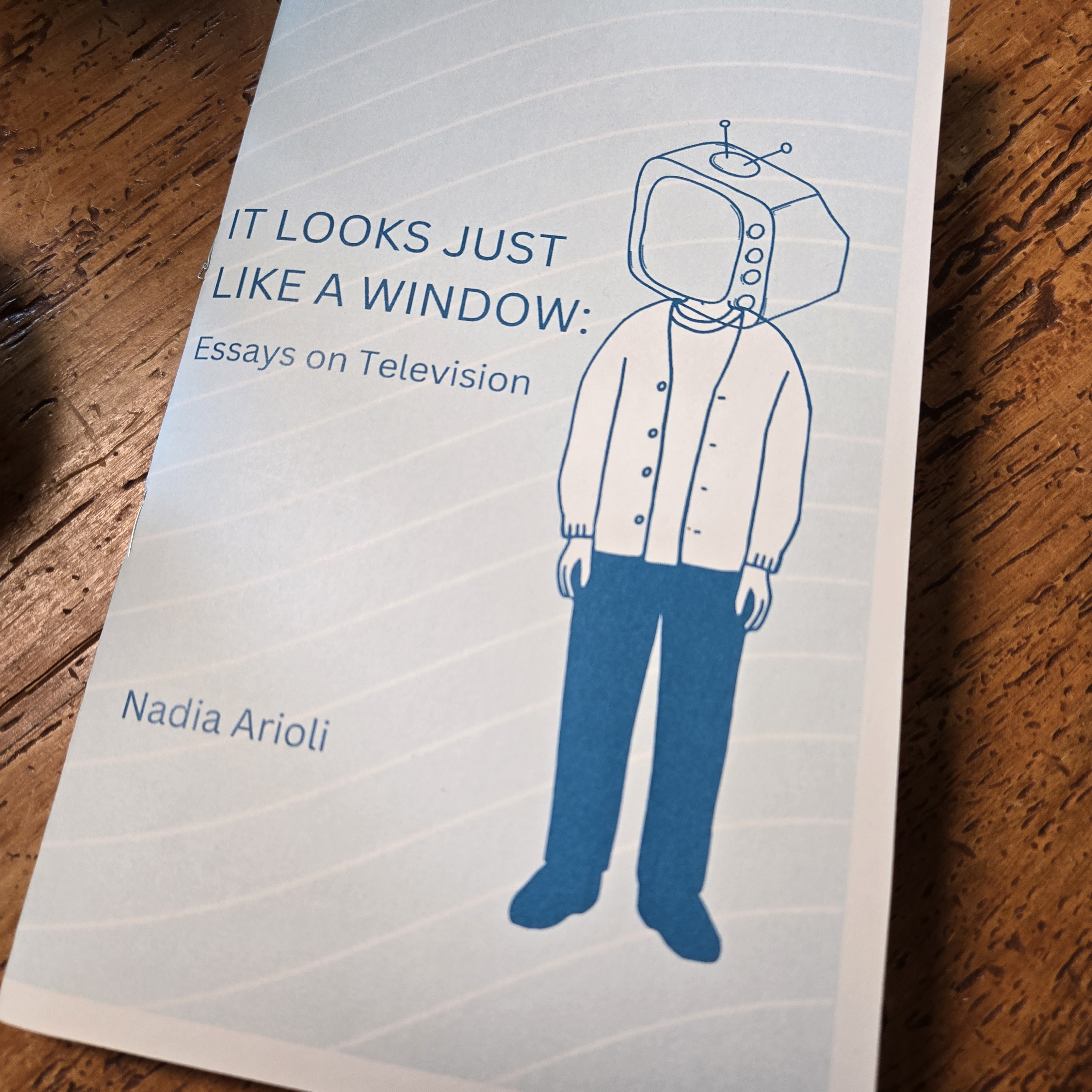
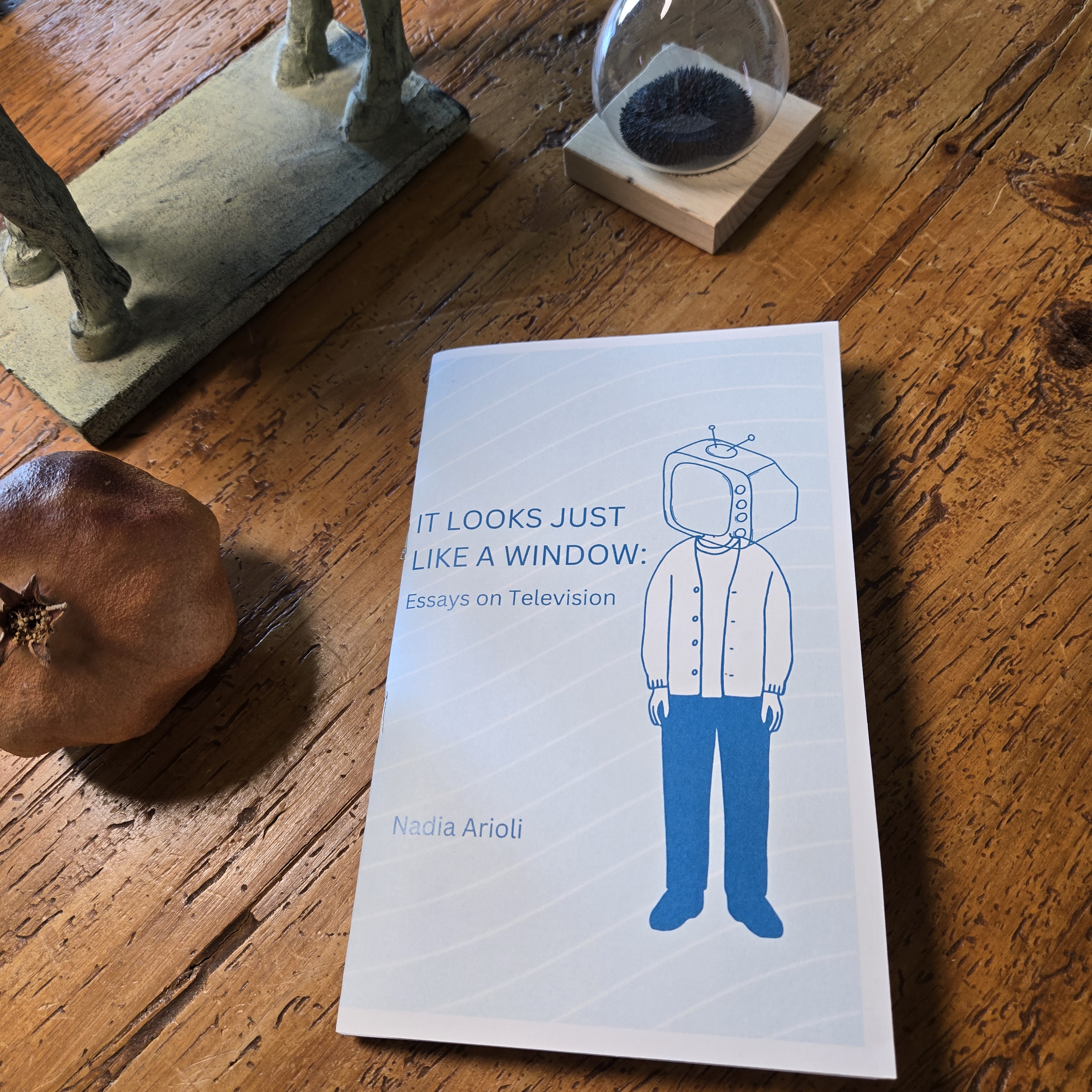
‘It Just Looks Like a Window: Essays on Television,” by Nadia Arioli

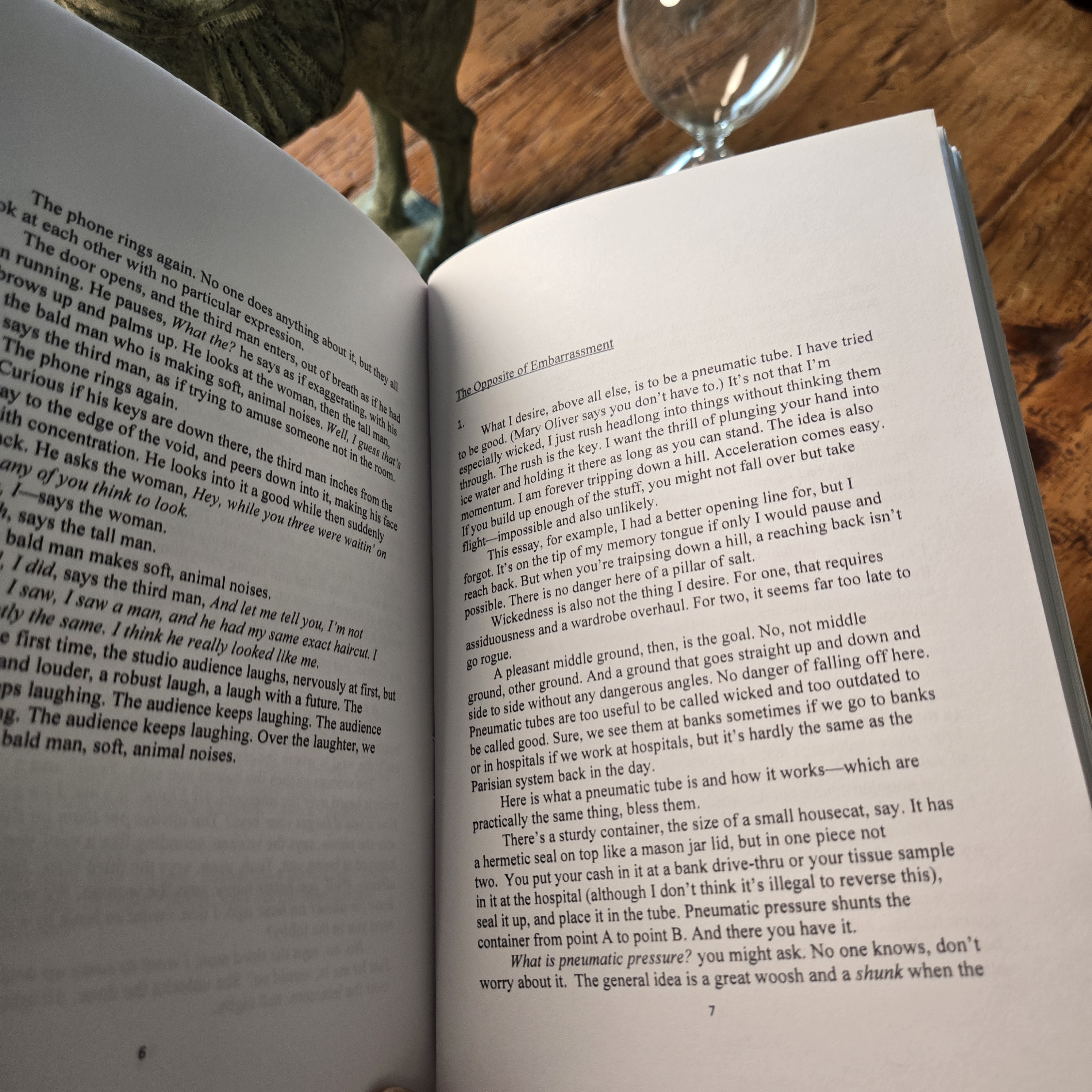
Sometimes, you think wanting to be the cylindrical carrier in a pneumatic tube system—maybe like the ones at Security National Bank or Anthony’s in your hometown—makes you strange and unrelatable. But then one day, you’re reading an essay whose author says what they desire, above all else, is to be a pneumatic tube. And you think, wow. And you think, yeah. And you think, suddenly, this is a world I may actually belong in.

The author of that essay is Nadia Arioli. The collection it appears in is It Just Looks Like a Window: Essays on Television, from Kristy Bowen’s Dancing Girl Press. It’s really good, really really good.

It would be good even without the pneumatic tube, but it’s even better with it because now you know someone has thought about being a pneumatic tube the way you’ve thought about being a cylindrical carrier in such a tube, and you feel a little less stupidly alone and also grateful to spend time in these essays which, to borrow a word from Arioli, are “liminous” (not to be confused with luminous): each piece a pass-through place, each paragraph a doorway full of light.

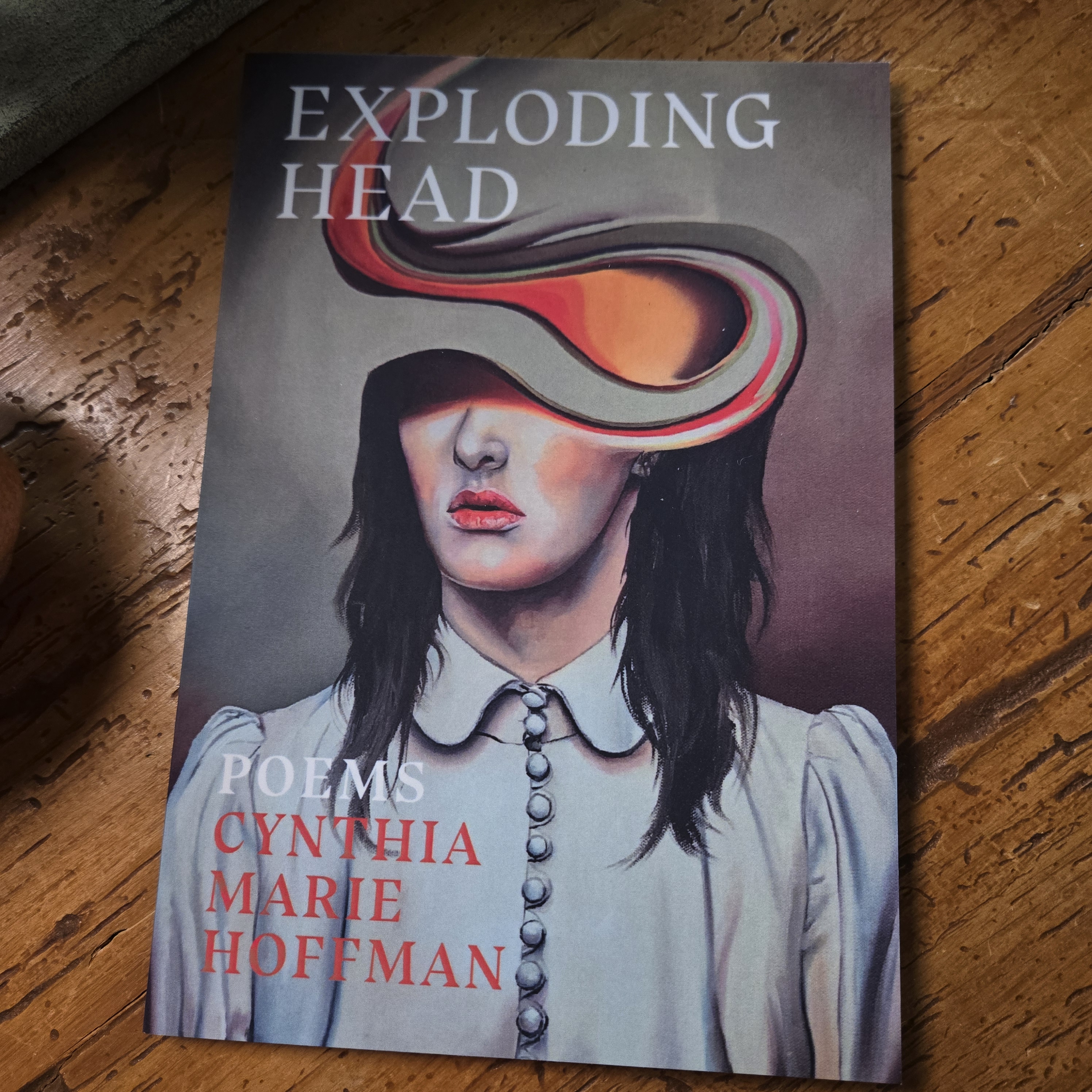
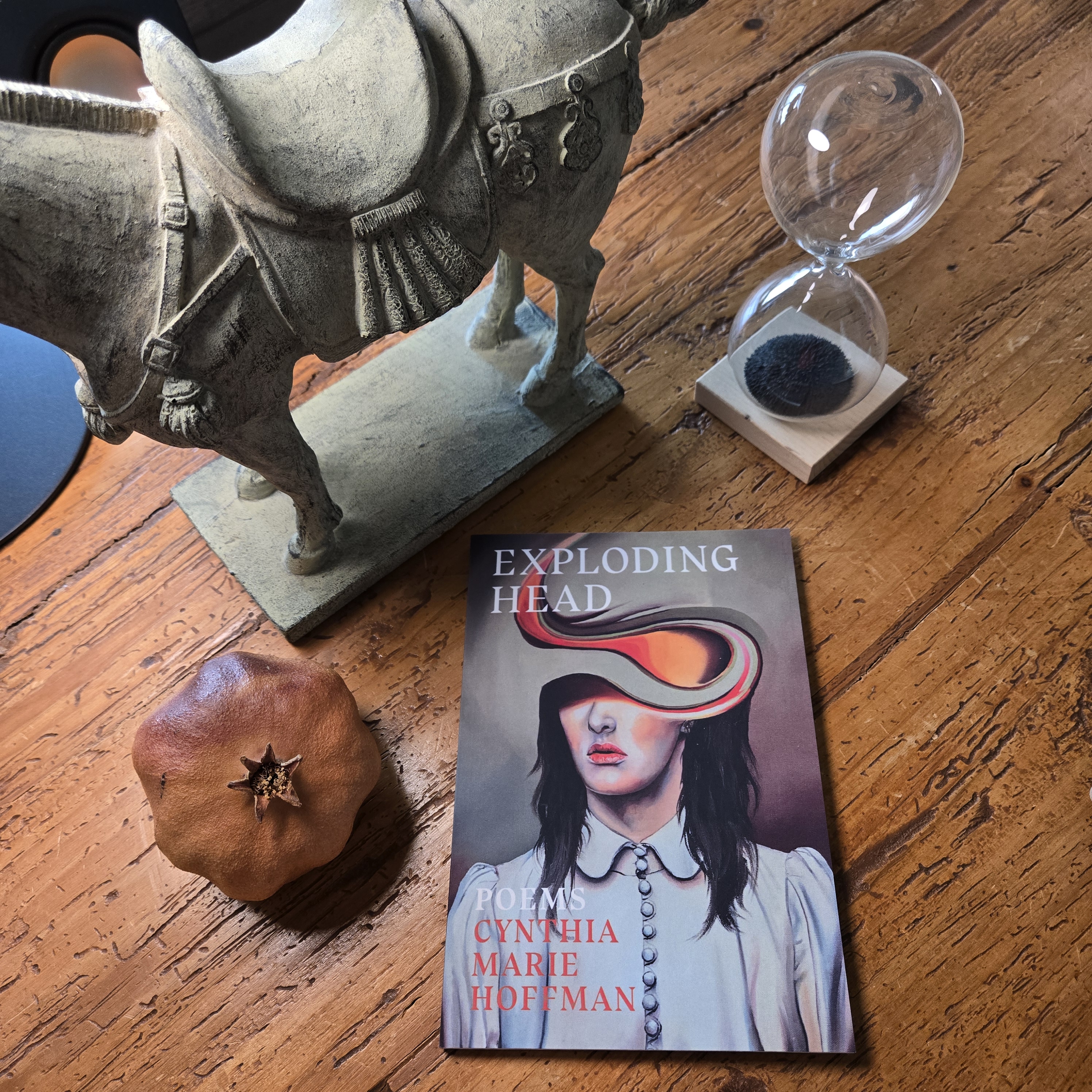
‘Exploding Head,’ by Cynthia Marie Hoffman

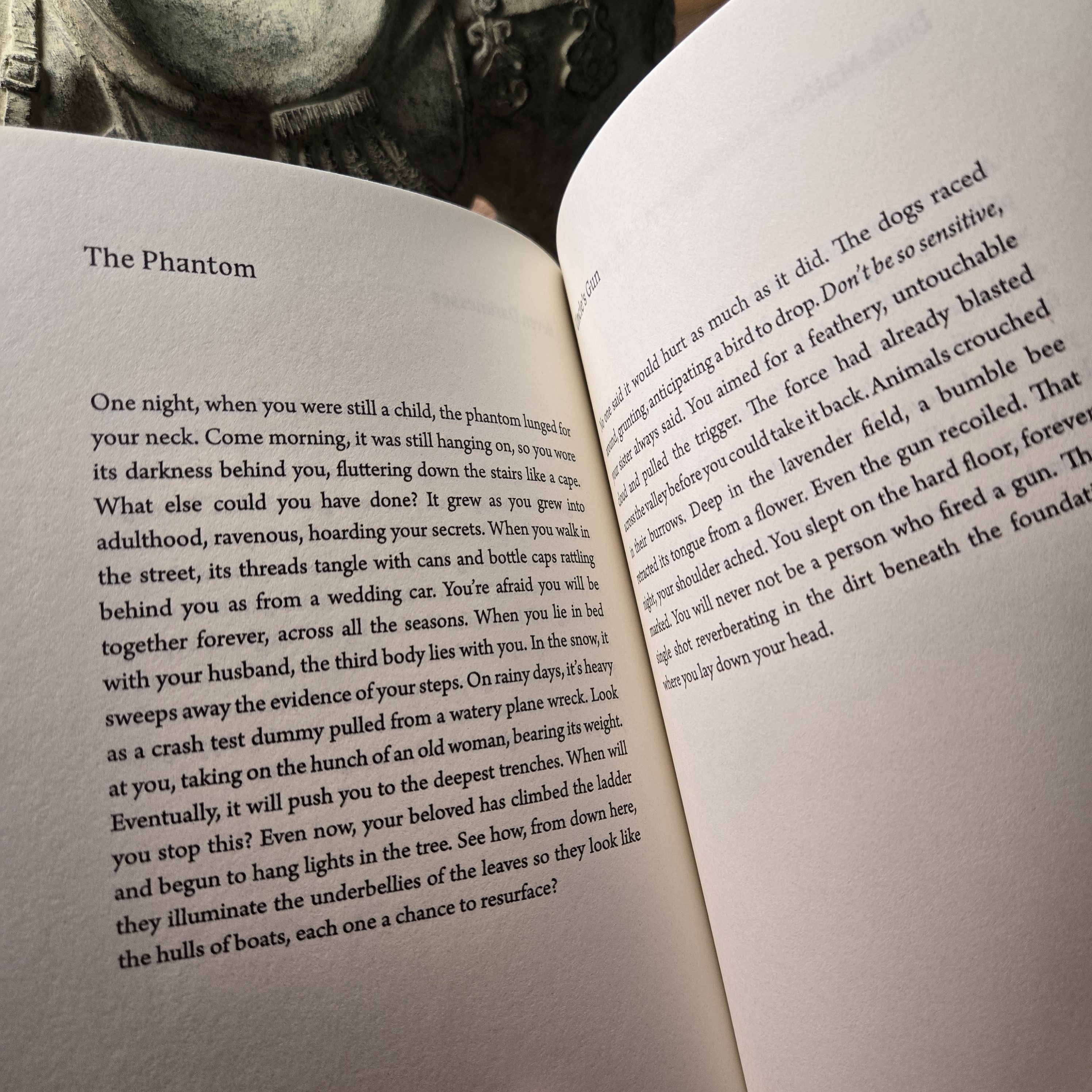
These poems have a feel for me, a texture. Take the opening lines of “MRA Machine”:

Strapped inside this bright rocket, you are a spirit ready to be launched toward the light.

Do you feel that? In the pacing, in the sound? There’s fear, but there’s also something soothing about the language because of its music.

In Exploding Head, Hoffman’s prose poems feel like the warp of the subject matter coming together with the weft of the language she uses—language that, in her words, both opens up and clamps down hard. Reading the work is, for me, like running my hand across the face of newly woven fabric, nubbins and knots and all. I’m talking about poems that drape, that shoosh or scritch, that become something sensual, that conceal and reveal. I’m talking about a poet who can make a poem into a garment woven from different types of yarn that readers can step into and then back out again, both ourselves and not ourselves—the you in the poem an internal conversation in second person but also us if we allow ourselves that moment of extension into and beyond, which I willingly and gladly do. What is poetry if not a way to experience the world through a consciousness and creative expression that is not our own?

These poems sley the reed, thread the heddles, and follow the fell line as they take shape on the page as blocks of memory, experience, imagination, and disquiet.

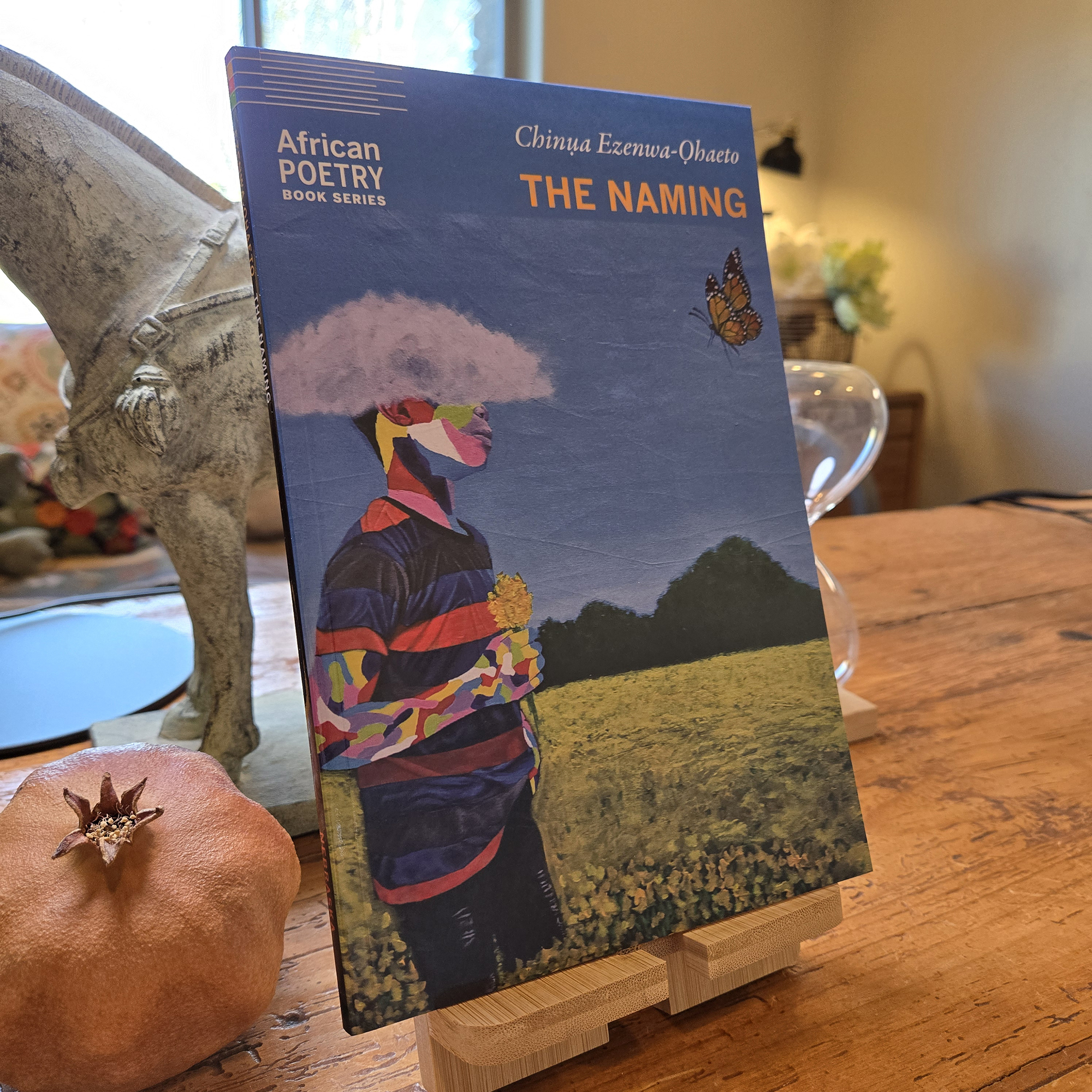
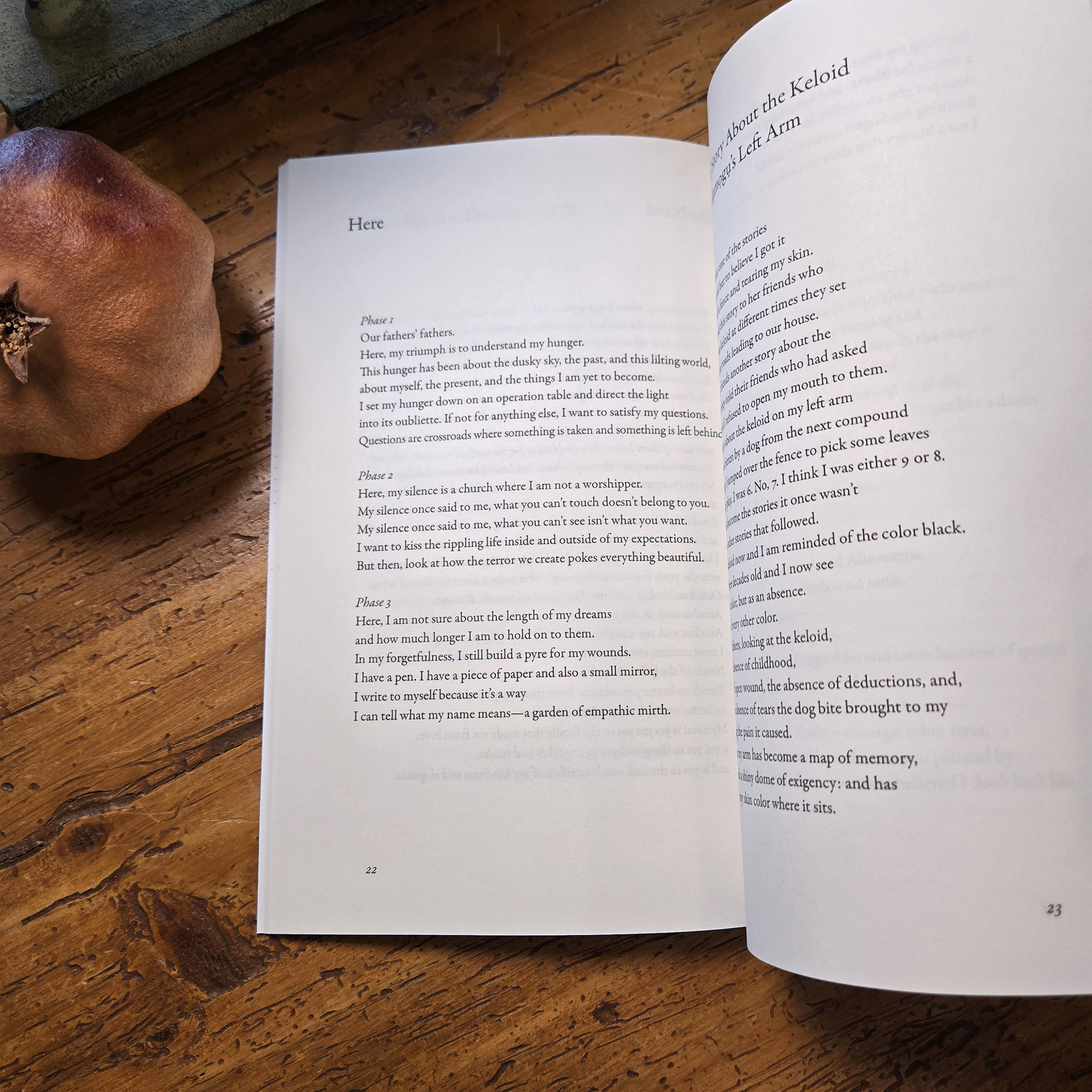
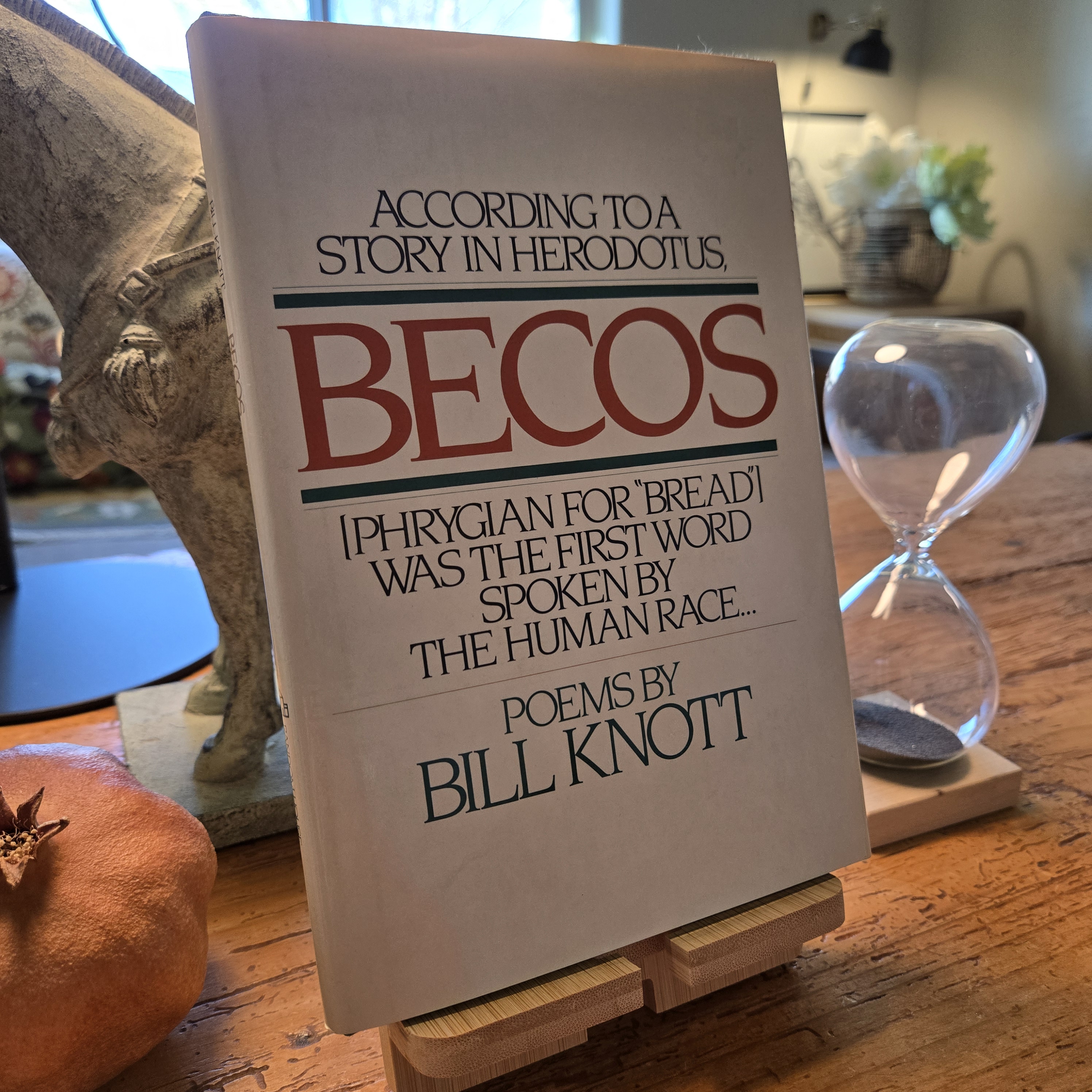
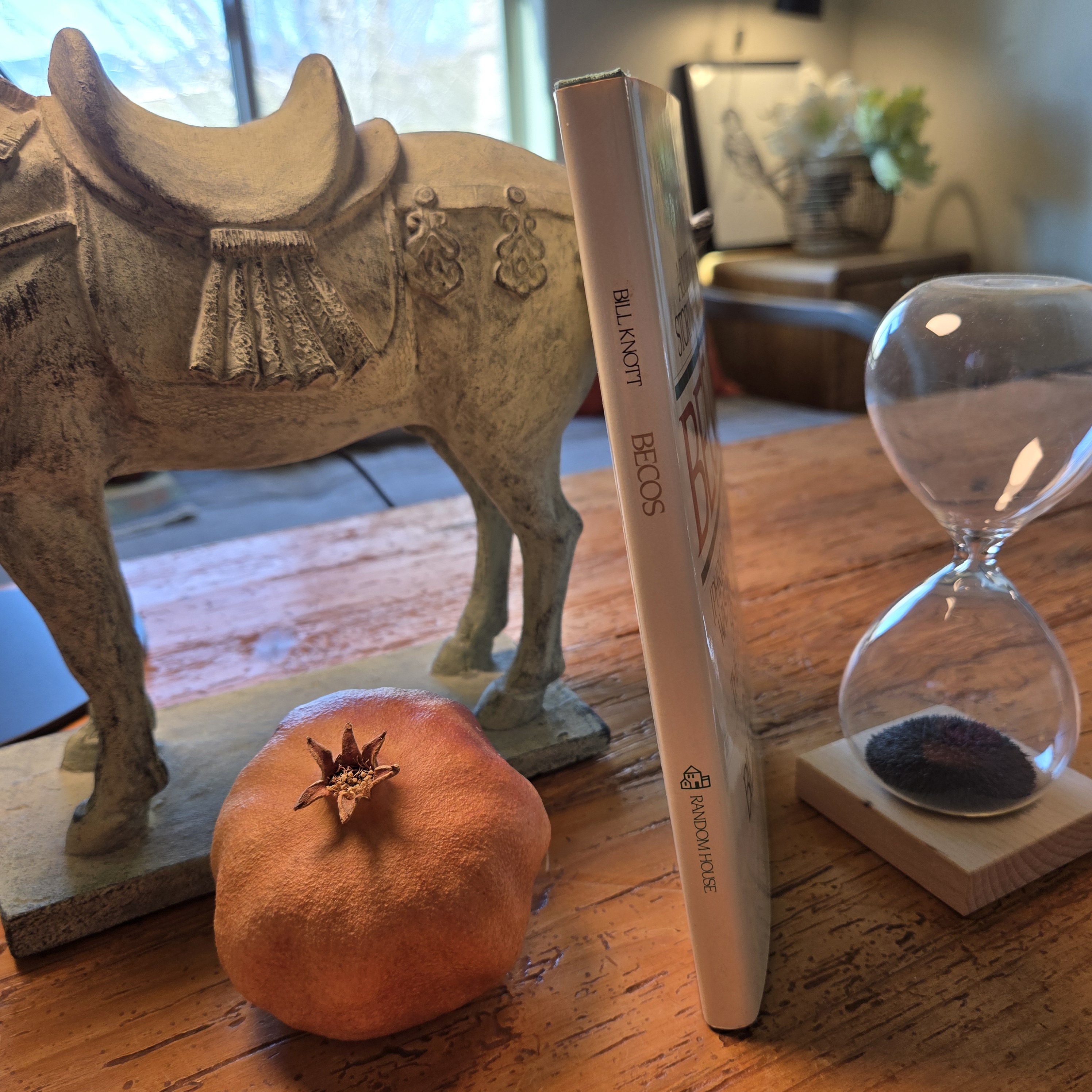
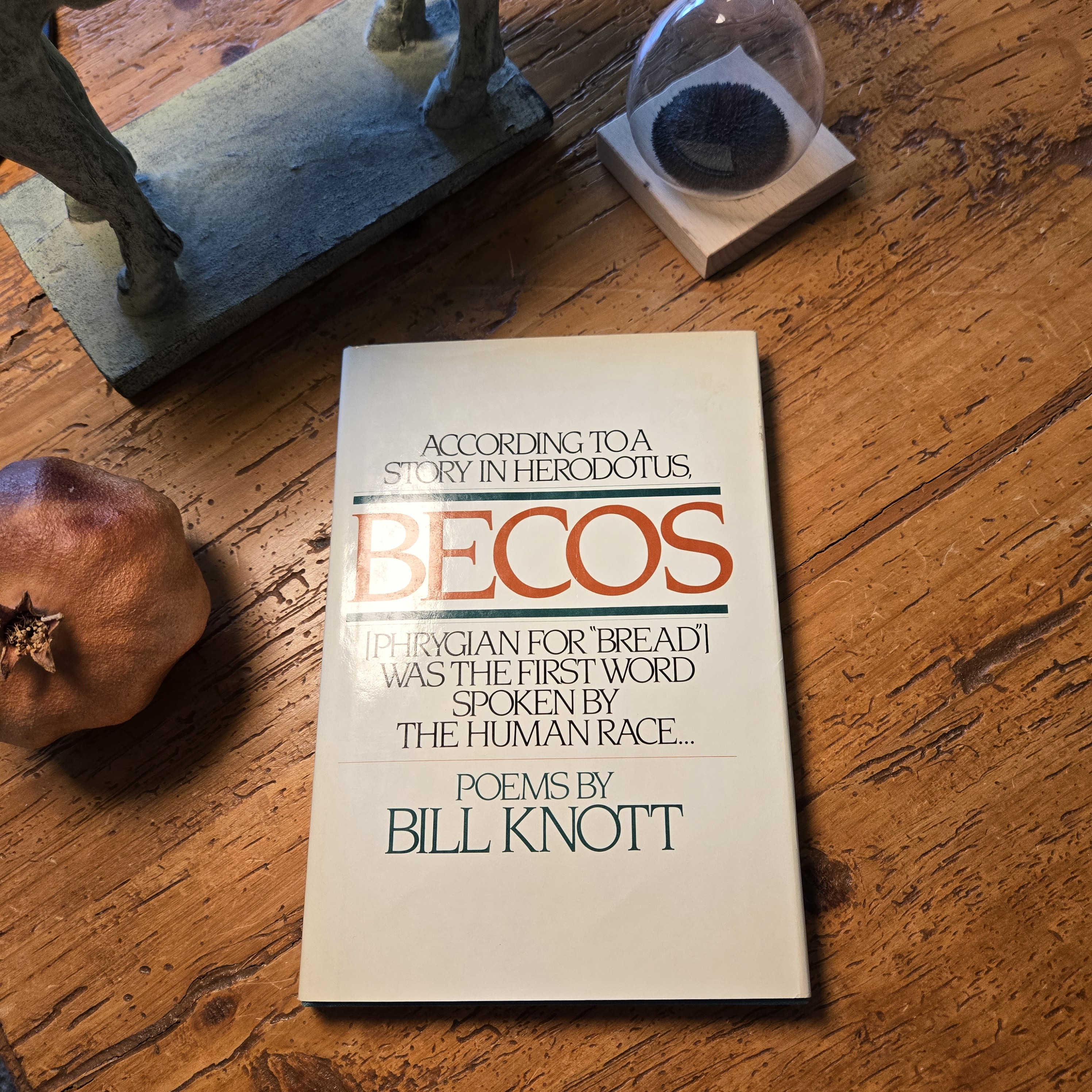
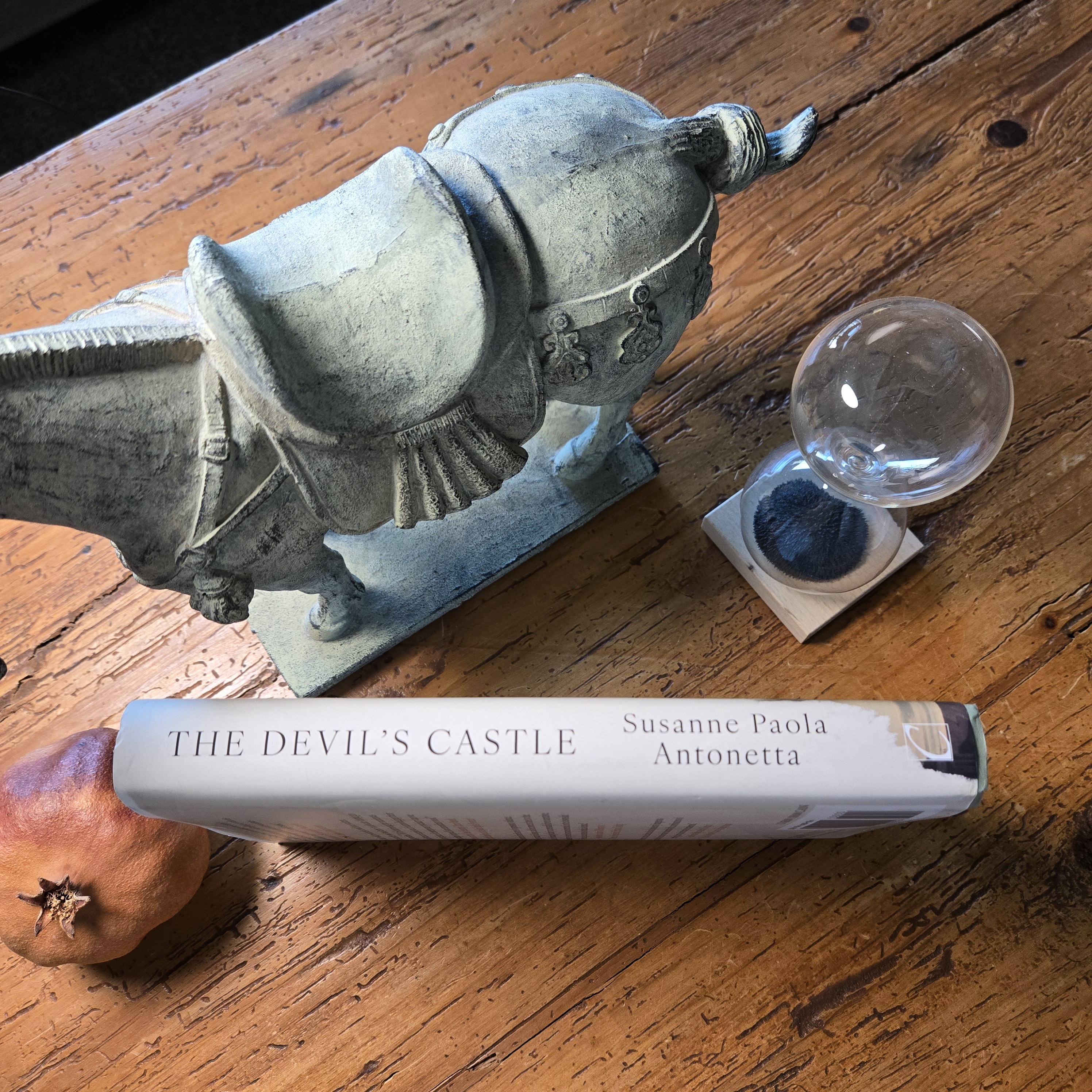
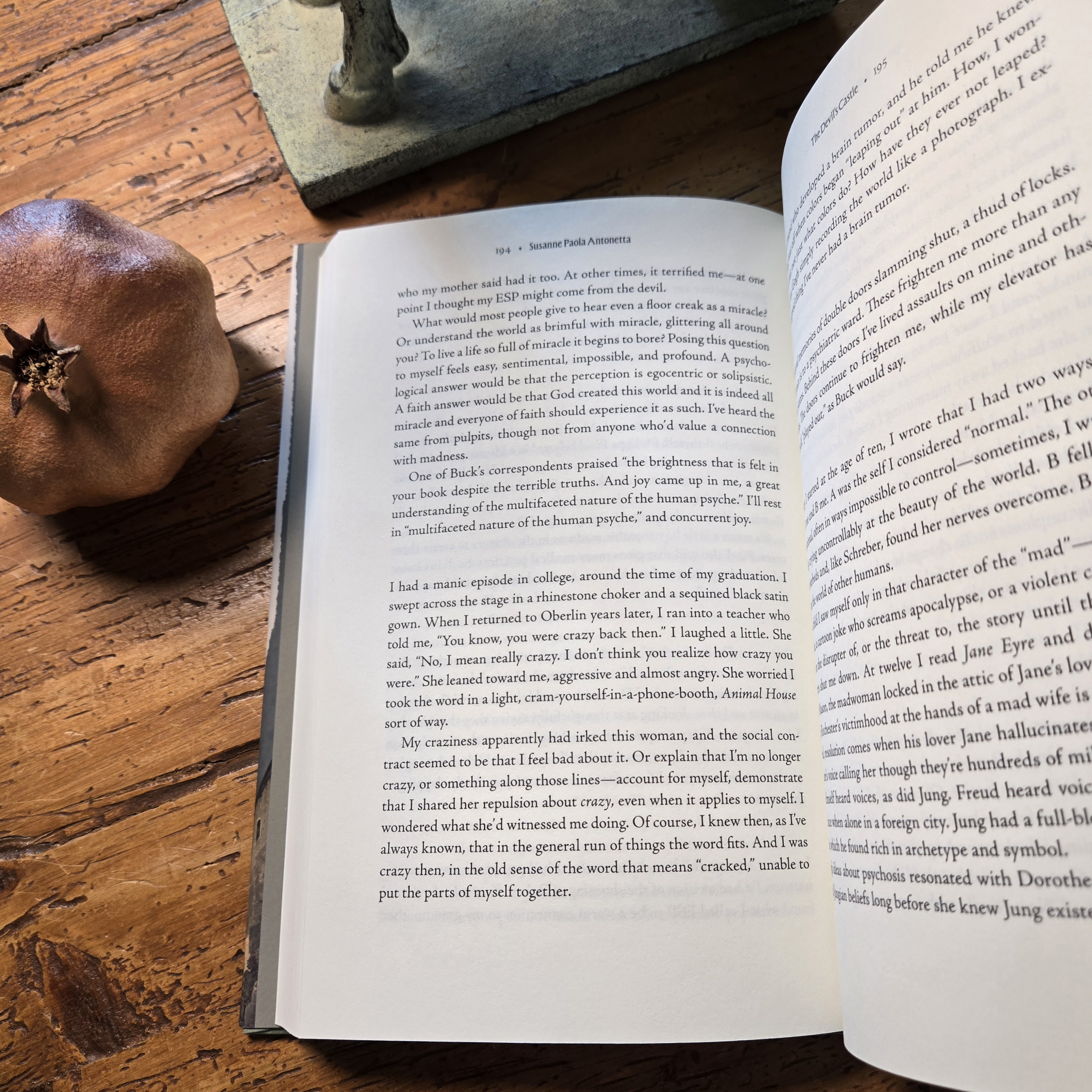
Images: 1. The front cover of Exploding Head, by Cynthia Marie Hoffman. 2. Two interior pages from the collection. 3. Another image of the front cover of the collection, along with a dried pomegranate, a horse sculpture, and an hourglass.

Carolyn Kizer

Let’s just call her what she was: a siren, a soothsayer, a mythmaker, a chorus, a riot. I met her. She took a sliver of me. I am but a sliver of her. You will never remove that sliver.

Image: A photo of Carolyn Kizer that ran in Poetry Northwest.

Cunt Norton, Dodie Bellamy

Why am I scarfing down a whole thing of chocolate hummus all at once? Because I’m reading Cunt Norton, by Dodie Bellamy. Here’s an excerpt from the introduction by Ariane Reines:

This book will make your mouth water.

It will make you want to live, whatever that means. It might even make you want to write.

If bliss could become a book, I mean if a book could become bliss, then this is that book.

I mean that this book is the greatest fuck poem in the English language, and it isn’t even a poem.

Shakespeare is commended to his or their proper androgyny in this book. In this book, Ginsberg is better and gayer than Ginsberg. This book is so happy, it is so beyond gay.

Gender is nothing compared to this book.

If you hear me screaming yes yes yes with my volume maxed out, trust me: I’m just reading this book.

(Personally, I think it is a poem.)

Worthless Words

These are photos of the sculpture at Glore Psychiatric Museum in St. Joseph, Missouri, that I incorporated into a poem titled “The Sculpture.” (It was first published in Muzzle’s 2015 mental-health issue as “The Letter.”)

A patient at Glore made the piece when the hospital was still in operation. I’m visiting the museum in the spring to document the writing on each piece of foamboard along with a diagram that shows where the pieces are situated in the work.

One of the museum’s employees took these photos and sent them to me. I haven’t seen the piece in person since 2015. I’m happy it’s still on display and in good condition. Anything can outlive us. Anything can matter after we’re gone, just as we matter while we’re here. These words are not “worthless,” as the sculpture’s creator says on one of the foamboard strips.

My Poems in Fence

This is the issue of Fence that my work appeared in back in 2001 just after I completed my undergraduate coursework. When I showed it to my first poetry teacher, he wouldn’t even look at my poem. He just said the journal wasn’t one he read or took seriously. I felt stupid for thinking my work had merit and that Fence was a credible publication. I didn’t submit work for seven years after that interaction with my teacher. I mostly didn’t write during that period, either. Matt Jasper calls this kind of thing wing clipping. This felt more like ripping my feathers out by their calami.

The issue I was in includes work by Bruce Andrews, Jorie Graham, Cate Marvin, and Adrienne Rich, among others. It’s astounding that anyone could look at the table of contents and respond the way my teacher did. Fence is one of the best literary journals out there. My teacher should have been celebrating me, not diminishing me.

Fence is currently open for submissions. Their reading period closes October 31, 2025.

Justine Chan’s ‘Should You Lose All Reason(s)’

Should You Lose All Reason(s), by Justine Chan

I’m reading Justine Chan’s poetry collection, Should You Lose All Reason(s). It’s based on her experience of a Southern Paiute myth she told over and over when she was working as a park ranger in Zion National Park, which is just a few minutes from our Utah home. I found the collection in the Springdale, Utah, library the day Jon and I drove out that way.

Chan lives in Washington state, where we lived for about a decade. Somehow, that makes her work resonate even more deeply for me. I’ve always felt a connection between Eastern Washington and Southern Utah. Where the land is concerned, I mean. The wildlands and the wildlife and how human consciousness is informed by both in ways they might not be elsewhere.

These poems are enveloping. They’re somehow a deep dive that feels like wading slowly into a welcoming body of water. Some parts remind me of Woman and Nature by Susan Griffin. Others remind me of a pillow book, namely the poems Rebecca Lindenberg has written in that spirit.

These poems speak to place, to identity, to what it means to live in a larger, natural world—or to live away from nature. Of who we are and how we become and how we continue. The speaker, I mean. The speaker, but also all of us. Also me, as a reader. (And maybe you if you choose to read this collection.)

Chan writes this place, Southern Utah, in ways that are image- and sound-driven without sacrificing authenticity, vulnerability, or accuracy:

You will get used to never seeing the full red sun as it rises or sets. You will see peregrine falcons and turkey vultures circling overheard, but never the condors.

None of the pictures you take will be quite right. Not in focus. Or the light’s not right. Or there is just too much.

You will bask. You will burn.

The bark of the spruce on the rim will always smell sweet and fresh in between its flaky scales.

The people will forget there was ever blanket poisoning of the public lands. That there are bounties for pairs of hacked off ears. That less, to rescind, must mean more.

Most of Chan’s lines are impressively long, like someone trying to stretch their arms as wide as the mouth of a canyon. The book is actually much wider than it is long to accommodate those lines. (It’s designed to look like an oversized postcard.) Her approach is somewhat experimental: at times bivocal, at times hugging the right margin or drifting cloudlike down the page, at times interspersed with dates and facts, and frequently breaking into song. (She quotes lyrics from sixteen songs throughout the book.)

I hope folks take the time to read this collection. Because. Just because.

Because the air is so hot, full of rasping. The land so full of landmarks and stories you can’t even begin to know.

Because you feel some part of you was / is / will always be secret.

Because the crickets are madness, a roar that fades to silence / if you forget / to listen.