Poetry Is an Act of Living

I dreamed I was in the U.S. Senate chambers, where a politician was spewing the hate of the moment as faithfully as a geyser, when a feeling started moving through my body. It began in my gut and had me on my feet before it reached my brain. I didn’t even know what I was going to say, but it ended up being this:

What’s the point of poetry?

Why does it matter when it can lead you down some unknown path, and you don’t even know how it will end?

When it gets you so lost you feel like you’ll never be found?

When everything ahead of you is a blank page, and there’s nobody there to help you fill it?

What’s the point of starting out on that journey all alone, maybe never to finish, never to come back the way so many who wander lose in the end to their wandering, boots into snow, knees into dirt, head into clouds?

The point is to go forth anyway.

To try.

To make that creative journey, which is an existential journey, because it can bring us back to ourselves and each other in the end rather than relegating us to seats where hate lives and breathes, where the air is sucked out of the room every time we open our mouths, because poetry is an act of living and an act of love, and politicians, hell all of us, need to lean into love.

Leaning the other way, into darkness, is not an option because it’s an extinguishing.

The human spirit will not be extinguished.

Living beings will not be extinguished.

The Earth will not be extinguished.

We’re here.

Poems are here to remind us why.

The whole thing was somehow caught on a live camera and played to a gaggle of teens who were visiting the capital. As I left the chambers, they all threw their arms up the way I’d thrown mine up as I spoke. In unison, they yelled “POETRY!” Poetry gave them hope that day, as it gives me hope every day.

I’ve written before about how dreams may be more our reality than waking states. I hope that’s the case and that dream logic seeps into all our waking states today, tomorrow, and as long as we’re all sharing space here in time. Happy fall equinox.

More Abuses in Poetry

I’m reflecting on how I could have stopped writing poetry at any of a number of points over the past year:

Last spring, when a poet I’d known for more than two decades went on his page and threatened me because he thought it was inappropriate for me to tell him that, as a friend, I loved him. He decided that meant we were having an affair. He attacked me privately, then went on his page to tell the entire poetry community he was going to out me as a married woman who was acting disgracefully. I had to watch women poets, including those I know, console him rather than telling him his behavior was inappropriate. That is the one and only time I’ve screenshot a Messenger conversation and shared it. I did so to put an end to the unfounded, untrue, and libelous comments he was making. He immediately blocked me. I never even said his name—though I would if something like that happened again today—and I removed the screenshots the next day rather than leaving them up as I could have.

Last winter, when a poet who’d been following my work for months and said he wanted to publish some of my poems left an obscenely hostile, sanist comment on one of my microessays lamenting the fact that people are using a bridge down the street to die by suicide. He screamed that I needed to be in therapy rather than writing and that my writing was the last thing he needed in his life, as if he hadn’t followed me and chosen to read, and laud, my work up to that point. As if he didn’t have the power to stop reading what I wrote or unfriend me or mute me or any of a suite of well-adjusted options that were available to him.

Two days ago, when a poet I’ve known for more than a year, perhaps the most successful and talented poet I know, lashed out at me for using the term sanism, indicating that I was “borrowing” the term, implying my experiences with abuse and trauma and my lived experience with bipolar aren’t valid because, unlike him, I haven’t been to war. It was not the first time he’d lashed out at me or the first time he’d engaged in disconcerting comments about and behavior toward women, namely women poets with mental-health diagnostic labels and lived experience.

That’s about one-third of what’s happened over the past year. Poets can be so toxic and vitriolic and othering and fragile and entitled and bullying—and even engage in nasty tactics like gaslighting—that it’s still hard for me to wrap my head around it. I am shocked every time it happens, though I shouldn’t be. Something similar but much worse is why I left poetry for years back in 2015.

Shame on those who engage in behaviors like this. Shame on the effect you’re having on other poets. Shame on the dynamics that underlie what you’re doing. Shame on you for doing everything seemingly in your power to remove folks like me from poetry in particular and the world in general. I mean the human world. I also mean the living world. Like everyone with a dignoastic label and lived experience with bipolar, I have a 1 in 5 chance of unaliving myself. Not trying to. Actually doing it. Anyone who nudges, pushes, or shoves another human being in that direction needs to sit with what they’re doing and why they’re doing it. Bigtime.

I had just finished my essay for Mad in America the day before the poet accused me of appropriating the term sanism. What if I’d pulled that essay? What if I’d decided not to submit my manuscript to any more contests? What if I’d decided not to write poems or essays anymore? What if my mental-health recovery had been compromised?

Folks who need my writing would have lost my voice, including my insights, perspective, and stories. And I would have lost part of myself. That could have been what happened because poets like the ones listed above make poetry too much. Too hard. Too unwelcoming. Too dehumanizing. Too rancid. Because of the sexual assault that occurred with my mentor, which took me away from poetry and—in a sense—my life for seven long and lonely years, I am always close to leaving when some new poet rears his head in a similar way, with similar impulses and similar levels of dysfunction.

But I told myself when I came back that I will not leave. I will not budge. I will not back down. I will be a 4 in 5 even if certain men in poetry have absolutely no regard for my health, well-being, or life. That’s the biggest fuck you I can give men like that.

And I will write. I will not stop writing.

And those of you who know these types of folks and do nothing? Shame on you as well.

And those of you who think folks like me should shut up about things like this, who confuse us for the problem because we speak about the problem, who tell us to just get over it or at least not talk about it publicly? Shame on you, too.

I do not have the capacity for any of you. The work I’m doing is far more important than publishing poetry, that is if I have to stay silent about abuses in order to have work accepted or dissociatively participate in the system without being able to advocate for change within the system. I will not stay in the good graces of a toxic culture. This is about human rights. All of it. My life, my work, my purpose.

Updated Immunotypical Privilege List

In 2014, I wrote a piece titled “44 Signs of Immunotypical Privilege” shortly after my diagnosis with common variable immunodeficiency. It’s a compilation of my experiences and those articulated by others living with various forms of primary immunodeficiency. The Irish Primary Immunodeficiencies Association published it on their site and had plans to make it into a brochure, though I’m not sure the brochure ever materialized.

My piece was inspired by Peggy McIntosh’s famous essay, “White Privilege: Unpacking the Invisible Knapsack,” written in 1998. I later updated my piece when “COVID” and “monkeypox” became household names. It’s now titled “46 Signs of Immunotypical Privilege.”

I plan to write a new piece titled “44 Signs of Neurotypical Privilege in the Poetry Community.” It won’t make people feel comfortable. That’s not the point. The point is that it needs to be written, and it matters, and I can’t see how to not do so after what amounts to an executive extermination order against those with mental-health issues. Ask Brian Kilmeade. He sees that order for exactly what it hopes to be and understands exactly what it allows those who hate us through and through to say, including my fellow Utahns.

46 SIGNS OF IMMUNOTYPICAL PRIVILEGE

Every day, as an immunotypical person—

  1. I can go out when COVID is circulating without being in a high-risk category that makes me much more likely to be hospitalized, die, or develop long COVID.

  2. I can go out during flu season without worrying too much about how serious contracting the flu could be.

  3. I can see the exponential rise in monkeypox cases and not worry that I might be especially vulnerable to the disease.

  4. I know my immune system will respond to flu and COVID vaccines. I might even skip vaccination altogether without serious health consequences. Attenuated, live vaccines such as the one for monkeypox are safe for me because my immune system works properly.

  5. I can read about measles resurgences without feeling alarmed. After all, the measles vaccine isn’t contraindicated for me, and I know my body has mounted an immune response to the disease.

  6. I can touch door handles and other surfaces in public without much concern.

  7. If I get a slight cough, I don’t have to worry about it turning into bronchitis or pneumonia.

  8. My health status never goes from relatively normal to life-threatening in a matter of hours.

  9. When I take antibiotics, they work quickly, and I only need one round.

  10. I haven’t been on antibiotics dozens or even hundreds of times over the course of my life.

  11. I’ve never been on prophylactic antibiotic therapy. I don’t even know what that is.

  12. I don’t have to routinely take medicines such as prednisone that weaken my bones and put me at greater risk for osteopenia and osteoporosis.

  13. I don’t have to wonder what comorbidity might be lurking just around the corner and if it will be a noninfectious condition, a malignancy, or an autoimmune disorder.

  14. I’ve never heard the phrase “immune dysregulation” and don’t have to concern myself with what that might mean.

  15. For me, boosting immunity means popping more vitamin C or Airborne. I have no idea what immunoglobulin is or why it’s essential to the human immune system.

  16. When I attempt to eat out, I don’t have to think too much about how long items are left on buffet tables or how well food is washed and prepped by food handlers.

  17. When I’m out in public, I don’t have to worry when people cough into their hands or without covering their mouths.

  18. I can be sure that, when I go to classes, movies or restaurants, I’ll find a place to sit in which I’m free from issues that exacerbate my breathing problems, such as perfumes, fragrances, and cigarette smoke.

  19. I know I won’t have to pass on social activities because they would put my health at risk.

  20. I know family gatherings won’t pose a threat to my health, even if young, potentially unvaccinated, children are present.

  21. If someone I love is in the hospital, I don’t have to think about when I can visit, how long I can stay, or other health considerations. I can fully focus on that person and their health needs.

  22. I can attend school, have a full-time job, raise a family, and engage in recreational activities without also having to manage the many conditions that would affect me if my immune system didn’t function properly.

  23. I can leave meetings, classes, and conversations and not feel excluded, fearful, attacked, isolated, outnumbered, unheard, held at a distance, stereotyped, or feared because of my immune system.

  24. If I pick up a magazine or watch television, I’ll see images that represent me and my experience of my health.

  25. I never have to speak on behalf of all those who are immunotypical. My thoughts about my immune system can be my own with no need for political alliance relative to my immune function.

  26. My actual and potential contributions to society will not be challenged because of my immune system.

  27. I can go for months without thinking about or being spoken to about my immunotypicality.
  28. I’m not identified by my immunotypicality.

  29. I won’t lose friends who can’t relate to what I’m going through, who think I’m exaggerating about my symptoms, or who just can’t deal with having a friend with my health status.

  30. I know I won’t be discriminated against by employers who neither understand my condition nor have the desire to provide a reasonable accommodation, despite the legal requirement that they do so.

  31. I don’t have to be afraid that, when I talk with others about my health, they will suggest unsolicited supplements, dietary approaches or exercise programs.

  32. I won’t be told by friends, family, and even uninformed members of the medical community that my condition is really just a psychological problem such as anxiety or depression.

  33. I know nobody looks at me and makes assumptions about why I appear to be ill (or well), or why I am too thin (or too heavy), or why I am not fit (or manage to stay fit despite my illness), or why I do (or do not) eat what I do (or do not) eat.

  34. I don’t have to explain why I have a lingering cough, why I might sometimes need to wear a mask in public, or why situations and settings that are safe for others may not be safe for me.

  35. Because I have never had to wear a mask in public, I have never been asked to leave a public place because the manager or owner of the establishment believes I am putting others at risk, when in fact the mask is to protect me from the pathogens others carry.

  36. I don’t have primary immunodeficiency, so I never encounter people who make the assumption that, despite the condition being genetic, I somehow brought it on myself through my diet or lifestyle.

  37. People aren’t embarrassed to be seen with me because of my health status.

  38. When I talk about my health, I can be certain that friends, family, co-workers, and others won’t become uncomfortable and change the subject.

  39. My partner doesn’t suffer from undue stress and hardship because they’re my primary or only caretaker.

  40. Nobody tells me I should feel lucky to have primary immunodeficiency because it means I don’t have to work or accomplish anything during my lifetime.

  41. My doctors have seen a lot of patients who are immunotypical. This means I’m not put in the position of having to educate them about my immunotypicality, since they’re already familiar with it.

  42. When I present in a health crisis at the emergency room, I’m given prompt medical treatment, not told I’m merely having a panic attack.

  43. I’ve never had the experience of being misdiagnosed over and over again throughout my life.

  44. I don’t have old misdiagnoses in my medical record that can’t be removed without a great deal of time and effort on my part.

  45. I don’t have to deal with the financial burden of expensive, ongoing medical care and therapy.

  46. I don’t have to face insurance companies that must review coverage for my life-saving therapy before that treatment is approved; that sometimes make patients go off their therapy for months in order for those patients to prove they still have the condition; and that sometimes deny therapy because they don’t feel the patient is ill enough to warrant it, despite documentation to the contrary in the patient’s file.

My Poems in Fence

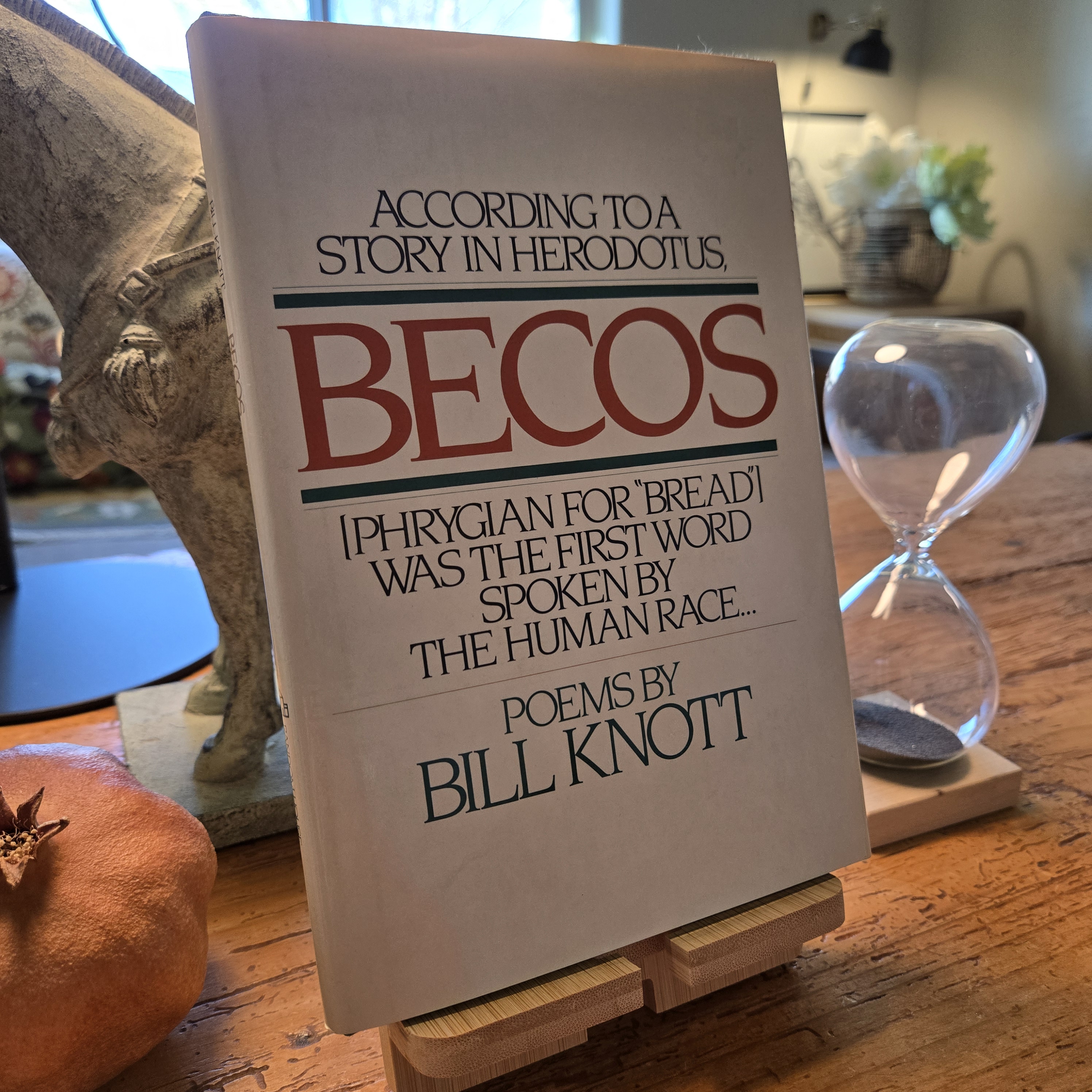
This is the issue of Fence that my work appeared in back in 2001 just after I completed my undergraduate coursework. When I showed it to my first poetry teacher, he wouldn’t even look at my poem. He just said the journal wasn’t one he read or took seriously. I felt stupid for thinking my work had merit and that Fence was a credible publication. I didn’t submit work for seven years after that interaction with my teacher. I mostly didn’t write during that period, either. Matt Jasper calls this kind of thing wing clipping. This felt more like ripping my feathers out by their calami.

The issue I was in includes work by Bruce Andrews, Jorie Graham, Cate Marvin, and Adrienne Rich, among others. It’s astounding that anyone could look at the table of contents and respond the way my teacher did. Fence is one of the best literary journals out there. My teacher should have been celebrating me, not diminishing me.

Fence is currently open for submissions. Their reading period closes October 31, 2025.

Biomimicry: Poetry As a Cell

In a world of ribosomes (poets) crowding the nucleus (poetry establishment), live reeflike as the smooth endoplasmic recticulum on the outskirts of the cell. This is where synthesis happens, and much-needed detoxification.

Shown: Image of a cell I altered so the labels apply to poets and poetry: Establishment Poetry, Barrier, Poets Girdling Establishment Poetry, Reeflike Synthesizing and Detoxifying Poets.


Breaking Molds or Just Breaking

More notes on how and why I’m at an impasse with poetry. I’m amending my previous statement about my poetry and writing not being strong enough to continue with either. I think both are strong but that my poetry in particular is not aligned with what editors and publishers are looking for and that shaping my work so it’s better aligned with what contemporary editors want will destroy something fundamental in the work, in the process, and in my healing.

I don’t want to slot my poems into this or that mold. I don’t even want to be aware of what the molds are. Poetry is as much about breaking molds as honoring those that have a history of serving poems and their readers well, even if it’s just because familiar molds create one less barrier for the reader. But new molds do something for the reader as well, and for the poet. And barriers aren’t always a bad thing. Some of the most rewarding poems require thoughtful consideration on the part of the reader. New molds are important and shouldn’t be rejected because they’re unfamiliar. Not everything new is bad. Not every outsider poet has no idea what they’re doing.

The highly endogenous nature of poetry doesn’t always serve poetry well, as folks tend to gravitate to the names they know and the styles of poetry that sound a lot like the other poems they’ve been reading. How many voices are being missed? My guess is a lot.

I think poetry has moved in some disconcerting directions in the past few years in terms of what’s allowed and what’s not allowed, which extends to which voices are included and which are excluded. I’m not down with any of that. I’m down to write — and to write from my embodied self as it relates to the world. I don’t want to see my work altered to the point of being unrecognizable so that it can get published. What use do I have for a poem that doesn’t look or feel like me anymore? I don’t want to see my work or my life or my mother’s life gutted for the sake of having an easier or more palatable or less complicated poem or understanding of the world or understadning of things like psychosis.

I also recognize that if I had more talent or if my poems were challenging in the right ways (whatever that means), there would have been some evidence of it by now. That evidence doesn’t exist. As I move into my mid-50s, I have to consider what I’ve invested in poetry over the past three decades and whether I can continue to invest in it. Workshop fees, contest fees, manuscript reviews, submission fees, and more add up, as does traveling to read my work, assuming I could even get an invitation to read anywhere. I don’t have the time, energy, or health to keep up with the financial and other demands of poetry, all while waiting years for something, anything, to happen.

Then there’s the sexual assault I’ve talked about more than some of you might like. That experience in itself was awful, but worse, perhaps, was the poetry community’s response years later when information about that poet came to light from several sources. Hundreds of poets were involved in discounting the poet’s actions and claiming he couldn’t have done what he was accused of doing. By that I mean: hundreds of poets I respected up until that collective public outburst were involved in discounting the poet’s actions and claiming he couldn’t have done what he was accused of doing.

This is what I mean when I say pathology is systemic. In this case, it wasn’t just one poet doing harm. It was many, including editors and publishers, the very people I won’t placate now with easy-to-slot work that doesn’t raise anyone’s hackles or that only raises certain hackles the right way (again, whatever that means). There are too many of these poets to avoid. They live in every part of the country, teach at numerous institutions, and have published with just about every publisher out there. I remember what they said. It’s triggering to see their names throughout the day when someone brings one of them up or quotes their work or drops their name into a group chat I’m in.

When I crept back to poetry cautiously in 2022, I thought things would be better. They aren’t. The kinds of things that happened to me are continuing to happen to other poets. Poets are still largely silent about everything that happens in poetry and protective of those who create and sustain systems that lead to inappropriate exertions of power.

Navigating all this is weighing heavily on me. I told myself in 2022 that I’d go as far as I could go in poetry and that I’d stop if it became clear I needed to. I would just stop. I said this to myself as if it would be simple, stopping. It isn’t. Continuing isn’t simple, either.

I’ll leave comments open on this post, but I reserve the right to delete any responses that miss the mark. I hope it’s clear this isn’t a simple situation with easy answers.

Beating Back Blackbirds

I went to Storm the Mic tonight at Art Provides in St. George, Utah. This is the energy and community I’ve been looking for here in Southern Utah. Things finally aligned in a way that allowed me to attend. I also read three of my poems. It’s the first time I’ve done so in more than eight years.

It was important for me to read tonight. If I didn’t do it, I’d never do it. And poems can’t just live on the page. They live in us, through us, and between us. We have to give them breath. They move through our bodies by way of our lungs, our throats, our mouths.

Poems are like instruments. You can’t leave an instrument in its case or just open the case and peer inside at all that bright metal or dark wood. You have to get it out and say it/play it.

I left poetry and the poetry community eight years ago after an especially traumatizing situation that made it impossible for me to continue writing. I vowed to never write another poem. And I didn’t until I had a cancer scare last summer and started talking with some friends of mine, poets who never gave up on me, who kept loving me and checking in on me year after year. One night, after talking with one of those friends, I decided to write a poem to wind down before I went to sleep.

“Boys are beating back blackbirds. Houses hoard the sunrise. / This autumn is unmetered, a dream of wind and shovels.”

Those were the first two lines. I knew I was in trouble. Poems were still there, inside me, surrounding me, eager to be transcribed. Poems waited for me, too, all those years. When I returned, they weren’t even angry. They just flowed.

“This room. This rock. This rough sand. On my shoulder. / On my stutter. On my girl skull. On my hinges.”

Oh, I was in so much trouble. But it was good trouble. This time, poetry would be nothing in my life but good trouble. I could tell. I could feel it. I was home, again, in these words that twist and dance and break and stammer all around us all the time. I could catch them and engage in deep play, deep exploration.

Love. That’s what it is. Writing poetry is an act of love, an act of care directed inward and outward: community care and self-care. It doesn’t even matter what we write about. It’s all love, ultimately. Love is—didn’t Thich Nhat Hanh say this—the act of being alive not only within but also because of uncertainty and pain. (I’ll find the quote and update this post when I do.) The upshot is: What isn’t love? It’s all love.

“Night of deep crimes. Day of mirage ceilings. / During each, an orchestra of fire between my ears.”

Darren Edwards does an incredible job hosting Storm the Mic. I’m so thankful for him, for everyone who attended and read, and for Art Provides for letting folks use their space. They are literally providing for artists, poets, and writers when all three are so desperately needed.

On Poetry and Healing

I don’t approach poems as therapy. I just come to them as myself.

Poems allow us to reclaim our stories, understand trauma and survival, realize that growth and healing are possible, lessen shame and embarrassment, and give us a sense of belonging.

The hippocampus, which situates our memories in time, doesn’t function properly under stress or during trauma. My poems are an external mechanism for placing traumatic events in time, which keeps them from feeling never-ending and ever-present. I think of it as a kind of assistive technology, like a keyboard for my dyslexia or glasses for my farsightedness.

Poets use the beauty intrinsic to poetry to shape their experiences and change the way they live in the mind and body. What’s made is more than noise. It’s a way of singing through pain or, as Orr says, allows us to order the disorder that’s in and around us, that’s intrinsic to the world we live in.

I see great value in dreams and writing about them, not only because dreams are where we do unfiltered processing of our experiences without the imposition of an artificial sense of time or an enforced rigid inner governance but also because we can more freely make leaps when talking about dreams, since that’s exactly what dreams do. Injecting a bit of the surreal into the poem can help us bring our dream wisdom into our waking lives—and therein lies not just surviving, but the ongoing work of healing.

Poetry’s concision and beauty allow me, as a writer and reader, to enter into myriad experiences—some like mine and some unlike mine—and to see common human impulses at work. A collective psyche emerges—a collective conscience and collective unconscious—as a backdrop to the individual experience. Poetry has taught me a great deal about my own psyche, my own mind, my own impulses, and my own needs. But it’s also contextualized all of that within a larger environment and larger swaths of time than a single human timespan. Poetry approaches the archetypal, the mythical, the things that lie deep in our ancestry: things we can’t, and shouldn’t, ignore if we’re going to survive on this planet and help this planet survive.

Stephan Torre says that, for him “… writing comes when it must, when it’s too hard to hold in the joy or grief without blurting it out.” I love that way of approaching poetry, but I personally don’t wait until the point of bursting. I try to do the work every day of cultivating making music out of noise, as Kim Addonizio writes in her poem “Therapy.”

Gregory Orr talks about something similar, which is that the act of writing a poem gives the poet more control than they had at the time of the traumatic event they’re writing about, which in itself is empowering and healing.

And then there’s all this beauty intrinsic to poetry, which the poet uses to shape the experience and move it into a different part of the mind and body. What’s made is more than noise. It’s a way of singing through pain or, as Orr says, allowing us to order the disorder that’s in and around us, that’s intrinsic to the world we live in.

Poems as Time-Stamps

During Saturday’s Utah Poetry Festival panel discussion on Poetry As Survival, if there’s time, I’d like to talk about why trauma is a wound of the present and how poetry (and other forms of art) can help with processing those wounds.

One of the reasons trauma from the past plays such a role in the present is because our brains don’t time-stamp traumatic events properly. The hippocampus, which is responsible for encoding and storing dates for our memories, can’t do so when levels of arousal or stress are too high. Instead, memories are recorded in great detail but without a time-stamp associated with them. That’s why there’s an always-ness to traumatic memories, an endlessness, a nowness.

The first way poetry addresses this issue is by allowing us to move time around as we write. As Gregory Orr says, this gives us more control over a situation we may have had little or no control over when it was happening, which in itself is empowering. The very act of writing about the experience is an act of survival. But the act of writing also gives us a past, a present, and a future—that is, the sense of time and its passing that’s missing in our encoded memories about what happened.

Even if we write about an experience in the present tense, the act of putting that experience in writing, moving it from the body to the page, from feeling to language, helps us do the time-stamping necessary to process what we’ve lived through. That’s what I believe anyway, as a poet who lives with trauma but who’s not a psychologist or neuroscientist.

The second way I believe poetry is helpful is that it serves as a creative historical record that we can revisit anytime we want and reinforce what we’re learning as we heal. I realized this last fall when I was looking through my older poems. Together, they serve as a network of external time-stamps that reinforce an “I am here” as opposed to “I am still there” message. I can read my poems and situate them in time in a way that helps me make sense of my past and my life as a whole. This thing happened. Here is when it happened. Here is when I wrote about it. A year ago. A decade ago. A week ago. Not now.

And that’s the point of time-stamping: to know what was then and what is now, as well as what isn’t now.

I’ve had similar experiences when I look at photos I’ve taken, but the time-stamping isn’t as strong for me as it is with poetry, probably because I just point at things and click. I don’t put artful effort into my photos the way I do with my poems. I’m also not stepping into parts of my life or into the world itself in photos the way I do—or the way I hope to—when I write a poem.

I love language in ways I can’t properly articulate. I’m dyslexic and had extreme difficulty with reading and writing when I was young. It was poetry that allowed me to enter into language, not dull language but magical language that gave me access to worlds outside my family, my home, my town, and what happened there. I have a strong time-stamp associated with the first real poem I read. It was in a children’s book tucked on a shelf in what was once my sister’s room, but it wasn’t a nursery rhyme. I found it, and I loved it, and it was mine. I know where I stood when I read it, how the paper felt, what it did in six lines, and how I came alive reading it. Fully alive. Fully present. I had no idea at the time what a gift the poem would be or how it would shape my life and my healing.

For me, healing is a process and there will always be an ongoing-ness to it. But the poems I write are essential parts of my mind at this point, externalizations of what my hippocampus can’t do as readily as someone who hasn’t experienced trauma. I hope I also create beauty, at least sometimes, in and through my writing.

I’ll close by saying that I’m not talking about poetry as therapy. I approach poetry as an art, and I also recognize its healing powers, which for me are rooted in psychology, neuroscience, philosophy, and spirituality.

Poetry and Internal Family Systems

I’ve been thinking about Internal Family Systems and how that model of the psyche, of the self, applies to healing in and through poetry. The IFS model draws on Carl Jung’s work, which drew on indigenous ways of knowing, so there’s a long tradition behind it about being conscious and being human. The focus in IFS is on the mind, but it’s also on the body because we are all embodied. No mind without body. No body without mind. Or minds, as Richard Schwartz, the creator of IFS, might say.

I’ve long understood that different voices were at work in my poetry, much more so than when I write a lyrical essay or, say, a feature story about health or medicine. In my earlier work, those voices were darker, for lack of a better word. Not that they were dark. They just lived in darkness. I couldn’t see them well outside my poems. I often thought I was channeling some experiences that were outside of me or that were part of the collective unconscious, which certainly can be the case.

I came to see, over a period of more than two decades, including the seven years I spent not writing poems, that what those voices were sharing was either what happened to them or their feelings about what happened to them. The “them” in question was me. Many of those things happened to me. My voices were what Schwartz calls parts, also known in other models as subpersonalities or ego states.

Poems gave me permission to write what I couldn’t face or completely understand or entirely integrate. I write poetry in a state that’s closer to meditation or sleep, so the door is at least somewhat open to parts of my experience and parts of my self that are otherwise sequestered.

I’m not talking about a pathology or a label like dissociative identity disorder. Schwartz says this having of and living with parts is the natural state of the mind and works well until trauma happens. Or traumas. Even then, no part is bad. They’re all trying to help. They all want to be heard, and they need to be heard. I keep typing heart instead of heard, as if parts of me know this going in, going toward them, is the heart of the matter.

I typically move fluidly with my parts now when I write poems. I think this is one reason I write so much. All the parts, well at least many of the parts, come to the table and follow my lead as I tell their stories. That’s my self, guiding these creative interactions, which makes the parts feel safe. Safety is exactly what they need.

We’re still working on how to be in the world, but we’ve got the poetry experience down. A couple of my parts are still in the shadows. They’re the most vulnerable ones and the ones I fear. There’s one I may feel disgust toward. We all have parts like that. The work is doing the work to talk to them and bring them closer to me, unshaming them and loving them.

I’m not sure Internal Family Systems has been written about in terms of trauma literary theory, but it should be. It’s another lens for understanding how and why poetry can help heal trauma. It rings true for me, like the bells I sometimes hear in downtown Toquerville that make their way across the creeks to find my body and set it to music.