Demons

Was I creating demons when I was at a poetry dinner party in Kansas City with Carolyn Kizer, and the entire group attempted to elide over her comments when she talked about another well-known poet attempting to rape her?

Was I creating demons when a member of my poetry class in Kansas City started stalking me, leaving flowers, torn-up copies of my poems, and letters about how bad and offensive my writing was on my windshield?

Was I creating demons when a poet and publisher in Kansas City screamed in front of a large group of poets, including my best friend, that I wanted to fuck him behind a dumpster?

Was I creating demons when a poet in Seattle who had agreed to work with me on my poetry googled (from his IP address) the words married and naked in combination with my name before we met? When he then canceled the appointment, told me I was childish for writing cut-up poems, and said I was wasting his time. When he also created a fake blog username and trolled me on my site (again, from his IP address) for months, trashing everything I wrote, including my poems.

Was I creating demons when two other Southern Utah poets said my work was pornographic and I should find another state that would accept it, while refusing to let me join their two state poetry society chapters and telling me they’d stopped meeting when they hadn’t?

Was I creating demons when a poet who’d been following my work for months and said he wanted to publish some of my poems left a hostile, sanist comment on one of my microessays in which I was lamenting the fact that people are jumping from a bridge down the street? When he screamed that my writing was the last thing he needed in his life, as if he hadn’t followed me and chosen to read, and laud, my work up to that point. As if he didn’t have the power to stop reading what I wrote or unfriend me or mute me or any of a suite of well-adjusted options that were available to him. That poet later disappeared during a mental-health crisis. When I was asked to help, I skip-traced him to his brother’s house, and he was eventually found safe. Because that’s who I am. Not someone who creates demons or treats people like demons. I’m a person who helps people when they need help, no matter how they’ve treated me.

Was I creating demons when a poet asked to read one of my manuscripts, then replied that he was sorry he’d even asked to read it? When he then rewrote part of it the way he’d like to see it, infantilized me and my work, assumed the speaker was me, treated the work not as work but as the opportunity to intervene in my personal life and my past, and talked about me in extremely sexist ways. When I responded and he continued the attack and infantilization, using my own work against me by calling me a little fist of a girl, a line from one of my poems. When he continued to move between unwanted intimacy, flirtation, and attacks in successive emails, even after I asked him to stop communicating with me. Or when my life partner had to intervene to make him observe my boundary.

Was I creating demons when a poet I’d known for more than twenty years threatened me here on Facebook, publicly in front of the entire poetry community, saying I was committing both a transgression and a manipulation when I told him I loved him, platonically, as a friend, something my context made clear? Was I creating a demon when he did similar things to other women and female-bodied poets.

Was I creating demons when a poet messaged me about a gay Arab who had gotten ahold of a photo of him in bed without his shirt on and how upsetting that was for him and who then sent me that photo through DM so I could see what he was so upset about? Or when that same poet viciously attacked a woman who was experiencing psychosis and got a group of poets to gang up on and attack her, which could have put her life in danger. Or when he refused to take his public post about her down so she could get some help without being pushed further into a dangerous or life-threatening situation. Or when he later told me I was borrowing the term CPTSD and wielding the label sanism, implying I don’t live with the former like he does as a war veteran and therefore have no right to identify and address the latter. By the way, I helped that woman, too. I reached out to her directly and got her a welfare check. If I’d been in the same part of the county as her, I would have been there for her in person. That’s a lot better than telling her she’s a terrible person and getting at least a dozen other poets to do the same.

Was I creating a demon when my poetry mentor breached my trust seventeen years ago with his words and his body and his insistence and his intrusion? When he made me talk about the ways in which my father abused me and became aroused when I did so. While he had me pinned down with his body. While he talked real nice, real childlike. While he continued despite no and stop and no and no and no. That was not a demon. That was a man. And a poet. A beloved one at that. I didn’t create that man any more than I create demons.

More recently, was I creating demons when a poet told me my comment about mentors not taking advantage of their students, which stems from my own experience, didn’t need to be said because it was already implied in the statement that students shouldn’t sleep with their mentors? That, in other words, we should all just be following the programming we’ve been given, which is to place responsibility on victims for not being or becoming victims. Look at my paragraph above. What part of that looks like a mentor trying to sleep with me? What part of that could I have avoided under the circumstances? Was I creating demons when that poet interrupted me in front of a group of poets to make his assertion? How about when he turned my gender into a joke and literally wanted to tell it as a joke on his joke podcast. How about when he asked how my life partner felt about my having sex with whoever I wanted and continuing to ask me that inappropriate bullshit question even as I kept repeating the word asexual, emphasizing the first syllable in the hope he’d understand not only his error but the violation intrinsic in his question. Is that evidence of my demon-making. (Note to everyone: Just because someone uses language for their gender and sexuality doesn’t make it your right to ask personal questions about either, especially not when first meeting them.)

Was I creating a demon when a friend of the poet in the paragraph above, one who’d been supportive of me, my work, and everything I’ve discussed about poets and poetry—up until it involved someone he personally knows—sent me a message in response to my asking not to be invalidated in which he says I am marshaling evidence, finding demons, distracting from real communication, seeing a glitch as a serious issue—thereby invalidating my concern about that issue—calling me a wrecking ball, making it clear none of the poets in the group, my former friends, like me, not even the one who appears to like me, saying this very personal issue around my story of sexual assault should have been mediated in the group and as a group—as if my experience and my trauma should be on trial and the most painful parts of my life should be made freely available to the group? Then, when in order to drive the point home about what a terrible person he thinks I am, he says, I think you’re a great writer. That opinion is somehow impersonal and won’t change. Or when he ends by saying he knows his own mind and I am welcome in it anytime I welcome that.

And that was from a friend, a dear one, who in one paragraph tried to invalidate everything I’ve ever seen or experienced and to get me to see myself as nothing, as worthless, as a monster. He reminds me of my father. He reminds me of my father’s best friend. He reminds me of Ruthie’s father and her brothers. He reminds me of Shawn Green and Greg Kullich and Jack Ladd and Matt Rawlinson and my trigonometry teacher, Steven Knight. He reminds me of my nephew. And of my old friend Jared.

The life partner says I tend to be drawn to creative people, and they tend to be drawn to me. I need more boundaries around that, clearly: who gets access to me and when and where and how. In this case, I’m at a bit of a loss. I’d been close friends with this person for years, the one who reduced me to creating demons. It feels like another example of someone being with me all the way until I talk about someone they know personally. That happened around the assault seventeen years ago as well.

Ironically, the group I created where this rift occurred was supposed to be a safe space, a place for creativity to flourish, and a place for peer support around mental-health issues. That’s something I need in my life and know others need as well. Instead, my biomarkers have been negatively affected, I feel like I was attacked when being vulnerable, I feel like my story was submerged under the weight of those who don’t want to hear it, and I feel like this last email was designed to destabilize my mood and be health- and even life-threatening. One in five is the statistic for those living with bipolar, not even bipolar coupled with trauma. Knowing my past and what I’ve survived, I can’t reconcile how this poet, this friend, would choose to do the maximum amount of harm possible, including attacking my sanity, my motives, my perceptions, and my worth as a human being.

I’m at a loss. With regard to my relationships. With regard to poetry. With regard to this country. All I can do is honor my commitment to speak out and keep speaking out about issues and injustices at all levels. I am not on this Earth to remain silent. The moment I let someone silence me is the moment I stop living.

Not Being One

A few months ago, I attended a writing conference in Arizona. I experienced instantaneous healing after a speech by the keynote speaker. During her speech, she told students not to sleep with their mentors. As someone who was assaulted by a poet acting in the role of mentor, I immediately saw the imbalance in that comment. It’s akin to telling people not to get raped rather than teaching people not to rape or saying boys will be boys (and by extension men will be men) rather than teaching all children (and adults) how to be respectful, kind, and compassionate. In each case, the responsibility is shifted to the person who has little to no power, who has been targeted, and who doesn’t hold the keys to or actually wield institutional, professional, or social power.

When the conversation was opened up for questions, I stood and spoke. I asked if anyone in the room was a mentor. Then I said, Mentors, please don’t take advantage of your students. It was well-received. People clapped. The speaker expanded on my comment. Some of the attendees came up to me afterward and thanked me for what I added to the conversation.

There was no awkward silence, no feeling alone, no sense of isolation. None of what I’d lived with for seventeen years, which is how long ago the assault happened. I wrote this shortly after the conference:

Those of you who know me and my history will recognize why that was such a meaningful moment. I was able to leave part of my past and part of my pain behind as I spoke those words. I said them because they needed to be said, but I want them to mean something. I hope they make a difference for others. I want things to change, and to continue changing, for the better in poetry and for all poets.

When I say instantaneous healing, I both do and do not mean that. I’ve been healing for years from what happened, first outside of poetry and more recently as a poet and within poetry circles that I feel are safe and inclusive. But there was also a culmination of that work that I never thought I’d experience. It happened the moment those words left my mouth, in that room with those poets, where I was suddenly aware of how understanding the world can be and how I can be understood within it. I mean the larger world and also the world of poetry, which felt cordoned off from me after what happened seventeen years ago.

When I got back from the conference, I met with a few poets online. One of them asked me to talk about my experience in Arizona. I began to recount the story above. Partway through, before I could describe how healing the experience was and why it was transformative, another poet interrupted me to say that I didn’t need to make the comment I made. It was unnecessary. His reasoning was that men (his word, not mine) already know they shouldn’t be doing what they’re doing with their students. It doesn’t help to make a comment like that.

This poet knows about my assault. He’s one of the few people I’ve entrusted with that story. He knew why that moment at the conference was meaningful for me, but he chose to cut me off and derail the conversation in favor of his imposed read on my experience and my decision to speak when and how I did. There’s no better illustration of gender-laden explaining, negation, and erasure than that one, at least not in my book.

I tried to point out how we do this in our culture: assign responsibility in innumerable situations to those who don’t have the power and control, as opposed to those who do. It was as if he’d never heard such arguments before, as if nobody on the call had heard of such a thing. I was baffled, confounded, and hurt. I want to say my healing at the conference was undone in that moment, but I won’t let that be taken away from me, not by anyone, and certainly not by a poet whose aim was to discount what I was saying and smother my voice with his own.

I’d had other experiences with this poet that were suboptimal before this interaction, but I was still trying to give him the benefit of the doubt and get to know him better. I should have seen the red flags for what they were. Issues included stereotyping people with mental-health issues, minimizing the harms being done in this country to folks who are queer and trans, and allowing people to make infantilizing and sexist statements to guests in a series he runs. He also tried to turn a story about my being nonbinary into a joke. And, when I had an emotional conversation with him about being assaulted by the poet who was acting as my mentor, he wasn’t listening, at least not fully. I thought he was asking questions because he was engaged in the conversation, but he was trying to get keywords from me so he could find the name of the poet who assaulted me online. That felt like a violation, much like his comment about my experience at the conference felt like a violation.

After that call, the poet reached out to me. I told him how I felt about his transgressions in a private message. He replied that he didn’t feel safe because my perception of him might affect his writing career. He then went to the other poets who were on the call and tried to send my private communication to them, which felt like another violation. He purportedly told at least one of them that it was a difficult time to be a white male poet. I’m sharing my message below, since he’s already shared it or threatened to share it with others:

It feels like you miss the mark in terms of connecting meaningfully and emotionally at important moments, then you interrupt and turn to playing devil’s advocate or, worse, imposing your own framework on someone else’s life and experience. You’ve done this several times in [our] meetings and when you and I have interacted one on one.

You also did it during [ ]’s first meeting with us. It feels like a dilute, deflect, and dismiss approach. In my case, it involved dismissing my concerns about those who often have no choice or power or control being yoked with the burden of preventing what those with power and control are doing. There are myriad analyses of this kind of shifting of responsibility to the exploited. Women, including presenters at the conference, didn’t approach me after the session to thank me because what I said was already known and didn’t need to be said. [The speaker] didn’t thank me in front of everyone and expand on what I said because it was implied, and that was enough.

You are daft about this issue and come across as extremely insensitive and entitled. You did the same thing when [ ] and I were discussing the specific ways those who are queer are under attack. You tried to claim everyone is behaving like that now. You diluted what we were saying, and it took an inordinate amount of emotional energy to talk you through why and how you were doing that. I don’t have that energy. You embody a lot of what I’m working against in poetry. I don’t see you as emotionally safe.

You also revealed private health information about your [co-worker’s] mental-health issues in one of our meetings. [In your professional line of work], you should know better than to do that. Why would you not do the same to me or any of the [group] members? You aren’t modeling best practices around mental-health support.

Why am I writing about this now, months after it happened? Because it happened. It’s still affecting me and my relationships with poets I once trusted and considered dear friends, one of whom is calling into question the validity of my concerns. Things like this happen far more often than they should, and not just to me: both these types of experiences and the ways in which they’re minimized, denied, and justified with language like, We don’t always have clear seeing or There’s often more to a person than we realize. As if people in these situations don’t understand the first thing about perception and memory. As if we level other human beings the way kids smash LEGO figures, reducing them to one aspect of who they are or to a single moment.

Neither of those things is true. What is true for me personally is that I know harm when I see it, when I feel it, when I hear it, when I taste it in the air. I know harm, and I know when someone is doing harm. Humans don’t need to be omniscient to know that, to call it what it is, and to stop giving it yet another pass.

Oh, and for anyone who thinks it’s hard being a white male poet these days? Try not being one.

Howard Dully

Here’s what could get you lobotomized at the age of 12 in 1960 here in the United States: not reacting to love or punishment, objecting to going to bed but sleeping well, daydreaming and not discussing the content of the daydreams, and turning the lights on in a room when it’s sunny outside.

These are the “symptoms” that led to Howard Dully being institutionalized from the age of four and undergoing a trans-orbital lobotomy in which an orbitoclast was inserted into his brain through each of his eye sockets.

Please don’t make jokes about lobotomies or about mental-health issues and treatments in general. And please realize that we’re headed backwards in this country where mental healthcare is concerned. Lobotomies may not be in our future, but barbaric treatments and human-rights abuses are. I pray I won’t live long enough to see them or to be on the receiving end of them.

Maria Gugging Psychiatric Clinic

In September 1994, [David] Bowie and Brian Eno—who had reunited to develop new music—accepted an invitation from the Austrian artist André Heller to visit the Maria Gugging psychiatric clinic. The site’s Haus der Künstler, established in 1981 as a communal home and studio, is known internationally as a centre for Art Brut—or Outsider Art—produced by residents, many living with schizophrenia and other psychiatric disorders.

The acclaimed Austrian photographer Christine de Grancy documented the visit, capturing Bowie engaging with these so-called outsider artists—a term often criticised for framing artists through illness or marginality rather than authorship. For the first time, these intimate portraits will be shown in Australia, when A Day with David opens at Joondalup festival in Western Australia in March, in collaboration with Santa Monica Art Museum.

And, of note: Gugging itself carries a darker weight. Founded in the 19th century, the clinic was later absorbed into the Nazi’s Aktion T4 program, which targeted those with mental and physical disabilities, and resulted in the mass murder of an estimated 250,000 people. At Gugging alone, hundreds of patients were murdered or sent to extermination facilities.

Source: The Guardian.

Humane Bug Trapper

Meanwhile, in Oklahoma, birders are calling owls “lil darlings,” and I’m here for it.

Happy New Year. Thank you all for making this one survivable.

I have to use binoculars to see the spines of the books on my high bookshelves is how I am.

I dreamed I asked someone to sign my copy of their chapbook. They were like, How do you spell your first name, Darling? Without thinking and without an ounce of humor or irony, I replied, S-A-D.

I know having a waterbed filled with zero sugar Cherry Coke that I can sleep on and drink from is impractical, but it’s what I want.

I’m stressing myself out in that way that I only am capable of stressing myself out is how I am.

Listening to Modeselektor on repeat is how I am.

Writing letters to my dead mother is how I am.

Facebook thinks I’m a library and is trying to furnish me.

Speaking the truth is not without consequences.

String art weirds me out.

More and more, I like less and less. 

Oh. It’s December 20. My mother died twenty-one years ago today.

I don’t think of myself as sans serif. I think of myself as serif-free.

I bought a replica of a medieval carnival badge called “Good Harvest.” Badges like this one supposedly provided protection and ensured prosperity. The one I ordered depicts a person driving a wheelbarrow full of phalluses along a road that’s a giant phallus with legs. That’s quite the harvest. During the Middle Ages, phalluses were believed to drive out evil and confer good luck. Badges like this one were popular in the fourteenth and fifteenth centuries. Google “medieval carnival badge” if you want to see an assortment of designs. There’s one that’s a vulva with legs walking around with a rosary in one hand and a phallic pilgrim’s staff in the other. That might be my favorite.

I really can’t see very well these days. I’ve needed glasses for years but have gotten around it by memorizing the eye chart right before the ophthalmologist comes in for my appointment. Today, I thought I was going to watch a program called “The Smurftown Tunes.” It was actually “The Situation Room” with Wolf Blitzer. Not at all what I was expecting.

This new font, Sans Gender, is hard-coded to replace more than one hundred needlessly gendered terms with inclusive terms. This font is so the boss of me. I don’t know if the font would allow me to say that, but it’s true. And something has to be the boss of me. Why not a font?

I see the poet who threatened me last year has a new collection out with a press that purports to be a safe space. Congratulations all around: to the poet, the press, and the community that makes it all happen.

CNN: Quit putting Hans Nichols on your program. He’s using the term “schizophrenic” right now to describe inconsistent behavior. That’s sanist and unacceptable.

The gash in my fitted sheet created by my rough heels has grown so long that one of my calves is now stuck in it. I could free myself, but that would require a teensy bit of physical and emotional effort. I think I’m just going to stay like this all day. My heels win. The gash wins. I’m going to nap like a cruel President.

The chair of psychiatry at the University of Oklahoma in my hometown was a consultant for MKUltra. My friend told me this today. I’m super weirded out about it. My mother may have known him. He also killed an elephant at the Oklahoma City Zoo with a large dose of LSD.

There are pyrrhuloxias in Oklahoma. Hot damn.

The Nazis used the font Fraktur and its variations for their propaganda, including Mein Kampf, but banned it in 1941 for being “judenlettter,” which translates to “Jewish letters,” meaning it was linked to Jewish printers and writers, so an edict was issued to replace the font with Roman styles, which were required for all Nazi communications throughout Europe.

Now, the ousted font is one that’s accessible to people with disabilities. And its replacement is a Roman style. This is significant. This is eerie. This is history repeating itself.

It’s good to know fascism has a font. I’m still on the font thing.

Literary journals and presses that require all submissions to be set in Times New Roman may want to rethink that requirement. It’s not an accessible font for those with reading issues and learning disabilities. And now it carries an ugly political connotation to boot.

Dear Leader, I found a readable font family called Sans Gender that works for me as a dyslexic nonbinary individual, and yes I am buying it. And no, you can’t stop me. Take your Times New Roman and be on your way.

Keep your hate font away from me.

Well, I know what font I won’t be using moving forward.

Walan the wombat has stopped having panic attacks, has started doing zoomies, and is now shaking his head back and forth, which is a sign he feels happy and secure. He’s also been playing with other baby wombats. I’ll tag you on his latest video if you want to see it. And no. I’m not crying. Not even a little.

I am going to Thomas Merton myself into hermitage until I no longer say and do all the wrong things.

Yesterday in Utah, a skier had to be rescued from a crevasse, and a hiker had to be rescued from quicksand. This is why I say inside.

Hacking my gut microbiota with apple cider vinegar is how I am.

Dear New York Times: Cookies are delicious, but “cookie” is not a season. Thank you for your attention to this matter.

Department of Injustice

Watching a video of a nudibranch pooping is how I am.

Apparently, the FDA is practicing evidenceless-based science now.

In the Oklahoma birding group, someone posts a photo of a dead white-throated sparrow they’ve found at their campsite, hoping to get an ID. Someone IDs the bird. Someone posts a quote from the Bible: Not even the sparrow falls to the ground without God’s notice and care. Someone posts a painting they created based on that Bible verse, an unassuming sparrow looking up into a shaft of light. A funeral of sorts is held for the sparrow. A space opens up in the group for mourning and love. This is deep birding, not the run-of-the-mill look at my beautiful bird photography skills found in other birding groups.

Sometimes, all I can say about a poem is that it exists.

I just misread a headline as “Hummus: A Monstrous History,” and everything I thought I knew about hummus flashed before my eyes before being supplanted with a darkness I could only imagine and barely fathom. But no worries. It was just humans in that headline. Not hummus. We’re all good. Enjoy your hummus, monsters.

The rock fracture at Yosemite National Park is actively occurring. Meanwhile, I am passively occurring. We all have our way, Yosemite.

As an aside, look at this glorious language. Geologists dispatched to the area of the fracture said they could hear it cracking like a frozen lake that wasn’t consolidated. That description must absolutely be used in a poem.

TFW you wake up in the morning and suddenly remember you shared one of your poems on Facebook the night before.

I’m totally involved in the life of a sick baby wombat named Walan is how I am.

I’m buying a humane catch-and-release bug trapper is how I am.


The Architecture of Mental Illness

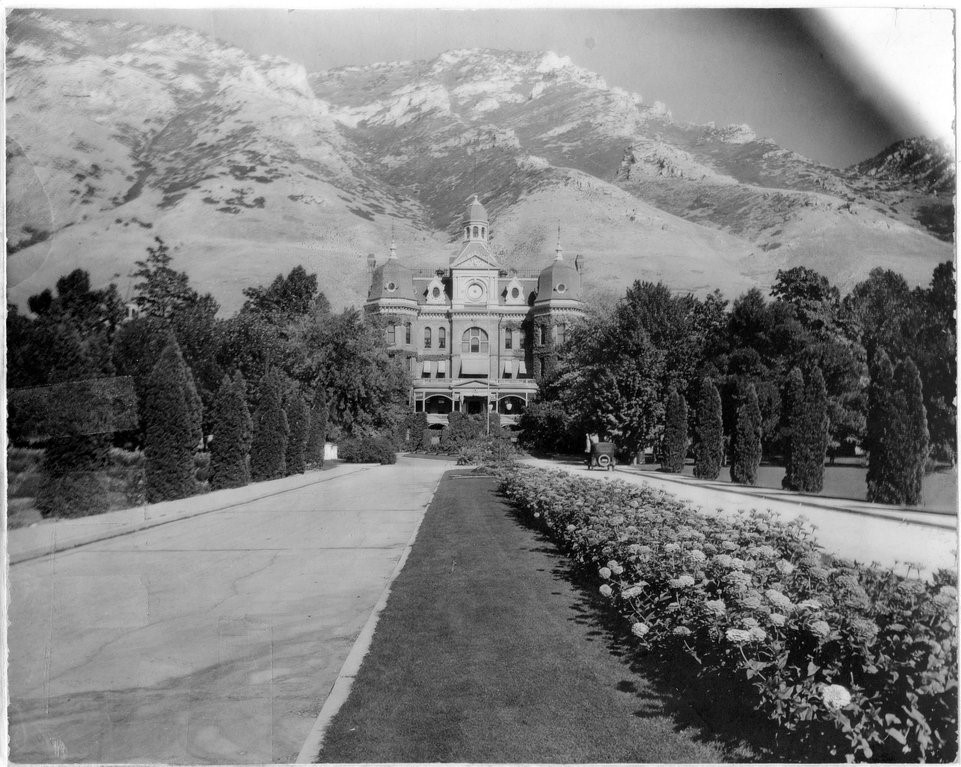
Mental illness has an architecture. That’s part of the story of asylums and treatment in this country. Central State Griffin Memorial, the hospital in my hometown, wasn’t laid out like this, but it had that same grand feel juxtaposed against the lives of those who inhabited the buildings.

Throughout its history, which spans more than a century, Central State’s story has been one of hope, ignorance, dehumanization, and harm: the same story from the asylum era to era of deinstitutionalization to today. I can barely tell any of it but have to before that history is lost. My mother worked there as a nurse and was treated there as a patient. Her relationship with Central State spanned more than three decades. That architecture was in her body, her bones part of the structure of those buildings and that land. Now, we need to make sure these places don’t come back with a new story: one of coercion, exploitation, profit, and greed.

Source: PBS Utah video about The Kirkbride Asylum, which was the template for many other asylums across the country.

Coerced Treatment

Matthew Yglesias today, on the heels of the July 24 executive order and its implementation in states like Utah: … there is a non-trivial population of chronically homeless people who suffer from addiction and other illnesses who probably should be coerced into treatment.

This is my red line, and it’s one of the areas in which I’m most in alignment with Mad In America: Coercive treatment isn’t treatment. It’s often abuse that takes myriad forms, and that abuse can happen even in something as short as a three-day hold. I know because it’s happened to me, but I’m not using inductive reasoning here. There’s data from studies and accounts from those with lived experience with mental-health issues that backs up my claims about forced treatment being harmful.

There’s also what I saw as a child in the psychiatric hospital where my mother worked as a nurse. And there’s my mother and the treatments that were forced on her and nearly killed her.

I’m not saying Matthew Yglesias is a terrible journalist or human being. I’m saying he doesn’t know what he’s saying. This is privilege at work, the privilege of not knowing and not having to know about these kinds of issues and experiences, which results in his slipping an incredibly dangerous statement into a longer piece about whether prisons have replaced mental hospitals. I’m not talking about the piece as a whole. I’m talking about that statement because it matters. He can’t even commit to it, as evidenced by that probably. Probably should. Probably should be. Probably should be coerced.

Yglesias probably. Probably should. Probably should be coerced away from privilege. Oh, wait. We would never coerce anyone in that way or in any way unless we don’t see them as fully human and therefore entitled to the same human rights as everyone else, would we? Link in comments.

The Order

I want to talk about the concentration camp being built in Utah, where I live, that will warehouse people who are unhoused and force treatment on them for real or perceived mental-health issues and substance-use issues. I want to compare it to the Topaz concentration camp that was built here in 1942 and operated until 1945 under Executive Order 9066, whose name I know because I have to know it. To survive. To advocate. To resist. To not repeat the past even as we repeat the past because others don’t know the name Executive Order 9066 or what it did, what it made our country and its people: ugly, cruel, inhumane. Those who don’t (or don’t want to) know about EO 9066 also may not know that another EO made this new concentration camp in Utah possible, the one written July 24, 2025, whose official title I won’t mention because it doesn’t describe what the order does, what it enables. It would be better if it just had a number, not a misleading title. It would be better if it didn’t exist at all.

But I can’t talk about the concentration camp because my language isn’t welcome, especially among those who also have lived experience with mental-health issues. Those I most want to communicate with will attack me for using the diversity model to give context to what I’m conveying. Those of us with lived experience with mental health have different experiences and use varied frameworks for communicating our experiences. We are and should be polyvocal. Yet there’s a growing push for monovocality—for one way of speaking, for one way of perceiving and communicating human experiences. So I’m not talking, not the way I want to be or to the audience I want to talk to. At least I have this loose take on the haibun.

              The age of pastures
              is over. Detention is
              involuntary.

                            Your right to exist
                            on your own terms ends now.
                            You belong on outskirts.

              Get used to the word
              stern. Your life is a concrete
              slab if you’re lucky.

                            Say no and go to jail.
                            What is this if not jail
                            by another name?

              Like a rose. You think
              you’re like a rose when really
              you’re a line item

                            in a multi-million
                            dollar budget. You’re our
                            ticket, our future.

              Containing you is
              business. Here’s a pill.
              We’re sorry it’s come to this.

                            Swallow. Concentrate
                            means gather. We gather you
                            today for Holy

              Capital, for the bottom
              line. You’ve lost your right
              to leave, so don’t try.

Worthless Words

These are photos of the sculpture at Glore Psychiatric Museum in St. Joseph, Missouri, that I incorporated into a poem titled “The Sculpture.” (It was first published in Muzzle’s 2015 mental-health issue as “The Letter.”)

A patient at Glore made the piece when the hospital was still in operation. I’m visiting the museum in the spring to document the writing on each piece of foamboard along with a diagram that shows where the pieces are situated in the work.

One of the museum’s employees took these photos and sent them to me. I haven’t seen the piece in person since 2015. I’m happy it’s still on display and in good condition. Anything can outlive us. Anything can matter after we’re gone, just as we matter while we’re here. These words are not “worthless,” as the sculpture’s creator says on one of the foamboard strips.

Frictions

“Nothing about us without us.” That’s a guiding principle in the disability-rights movement. It applies to the mental-health justice and recovery movements as well because mental-health issues are often disabilities for those of us who live with them—sometimes because they are truly disabling and sometimes because our cultures disable us, our communities disable us, and those around us disable us because they don’t understand us (or try), don’t include us (or try), discriminate against us (often because of unexamined or dismissed bias), and subject us to their versions of who we are, which happens daily through language and actions and the way real and conceptual spaces are structured.

I bought a clicker, one of those old-fashioned ones that employees at the academic library where I worked in college used to track how many people came in each day. I’m going to use it for two weeks and track how many times I encounter instances of sanism, both in real life and on social media. I started doing something similar last week by making ticks on a piece of paper. But I like the idea of using a clicker in part because it’s an object I can hear and feel as I operate it, in part because it fits in my hand, and in part because it’s a bright color. I have the kind of sensory processing that appreciates those things. The clicker also feels more formal and official, and I can use it even when I don’t have a pen and paper with me, which makes it more practical. I may include notes about each instance, including the context, date, and time.

OK, I actually bought six clickers in an array of colors because they came in a set, but that’s beside the point. You may think that’s too many clickers. I don’t. I’m mildly tachycardic right now just thinking about their arrival. There’s a black one and a green one and a pink one and a red one and a white one and a yellow one. I’m actually trying to humanize myself in this paragraph and the last one because I made some big assertions in my opening paragraph, the kind that make people (in this case me) unlikable mostly because they fall under the information you didn’t ask for that I think you should know category but also because they may apply to you or those you know rather than some far-off “they” that we can all join in both hating and distancing ourselves from together.

“Nothing about us without us.” I take this principle seriously. It’s like no taxation without representation, only it’s like no characterization, no proclamations based on misinformation, no policy decisions, no representations in the arts and the media, no casual or formal conversations, no application of diagnostic labels especially when used in a pejorative manner, and no limited or completely erroneous lay insights without our representation. That means we are centralized, not marginalized. We are present, not absent. We are heard, not talked over, not silenced, not discounted. It means if we say there’s an issue, you listen. You don’t shift in your seat or put up a wall or fail to respond or shift blame to us. 

I’m no longer entering rooms where there are frictions only I appear to see and concerns only I appear to discern, one thousand frictions that are invisible to those who are not queer or neuroatypical or living with trauma or serious mental-health issues. That doesn’t mean those frictions don’t exist. It just means they may not exist for you, and if that’s the case, I’m happy for you. I’m glad a room is just a room is just a room. But your inability to see what others see, feel, and experience in those rooms—your failure to cultivate literacy about the things those who are oppressed and marginalized have to see in order to survive every day—is part of why rooms continue to not be the same rooms for you that they are for others.

These rooms are exhausting. Click click click (click click). If in addition to instances of sanism, I count instances of trans erasure (click), ableism (click), neurotypical bias (click), discounting of women and those who are female-bodied (click), jokes about diversity (or the lack thereof) in a space (click), and more,* there will be no end to the clicking in too many rooms, even rooms full of poets.

It’s impossible to know which rooms will be full of frictions. I’m trying to figure out what clues I can look for ahead of time and to develop a matrix I can use so I know when to call any given room quits. I no longer believe I can change hearts and minds with my presence, my words, or my work. I feel like, more than ever, I’m in a box called “crazy” and that terrifies people, no matter how I live, what I accomplish, how I treat others, or how wonderful folks think I am before they learn I have a DSM diagnostic label or that I’m queer or that I’m neuroatypical in numerous ways. I’ve seen that semipermeable membrane more times than I can count: the one where inclusion becomes exclusion and being part of becomes being removed from.

I feel like my attempts to address frictions only lead to more frictions, many of them in the form of irritation, denial, resentment, and even fear and disgust. But I will do what I can until I realize I can’t do any more. Then I’ll leave before I accept my own erasure and even start erasing myself. I can’t abide that or any other form of complicity.

I’ve mainly seen this level of friction in Utah. At least in other places, my experience has been that I become more human when I talk, when I write, when I take part in things. Of course, I was largely in the closet about my bipolar until two years ago. That may be part of why people accepted me as a human being and not as an amalgam of their stereotypes, biases, and misunderstandings about bipolar. Who knows what those places are like now, in this new world that has us all doing the work of marginalizing and dehumanizing others on some level.

The rooms with poets are the ones I must approach with care above all the others because I need to believe in poets, even if that belief is misguided. I’m not ready to let go of that yet. I know better. I think I know better. I want to know better but, more than that, I want to be wrong. I want to believe in poets the way some people want to believe in God. It’s like that for me.

I also can’t help but see something else in those rooms, wherever they’re located: a kind of arts-driven traveling medicine show meets multilevel marketing network. It’s not quite either of those things, but it does feel like a system that created itself and now uses its existence as a way of validating itself, one that enriches the few and relies on the many, and one that’s unhinged from actual oversight or governance by the institutions many of these poets actually work or once worked for, which means those institutions will not act based on anything that happens, up to and including sexual assault, in or near those rooms. It’s hard not to see it like that, especially after some of my personal experiences in such rooms, which makes it even harder to find spaces that are safe and poets who are doing good work in those spaces.

* I’m just listing ones I’ve encountered recently.