Mary Reufle’s ‘Lapland’

Mary Reufle created a powerful moment for the audience here in Tucson when she read at The Poetry Center last fall. I was there and will never forget what she did. She read her poem “Lapland,” which she wrote fifty years ago. Then she read an essay about how the word Lapland is not offensive, but now it is offensive to use the word Lapp to describe the people in Lapland. She ended her essay by saying that although the poem’s title is “Lapland” and it’s set in Lapland and the word Lapp appears twice, it’s not about Lapland. Then she uttered this sentence, which enveloped the room:

“And if you don’t understand that, then I would go so far as to say you don’t understand poetry.”

Then, in the tradition of several poets who’ve come before her, she read the entire poem again without comment. So that we would hear it. So that, with our hearts and minds adjusted, we could hear it or have the hope of hearing it.

It was powerful. It was incredible.

Click on the image below to experience Reufle reading “Lapland,” then her essay, then “Lapland” again. The recording of the entire video is on the VOCA Audiovisual Archives. I’m just sharing the section that contains “Lapland” so you can have the experience attendees had that night at Reufle’s reading.

Justine Chan’s ‘Should You Lose All Reason’

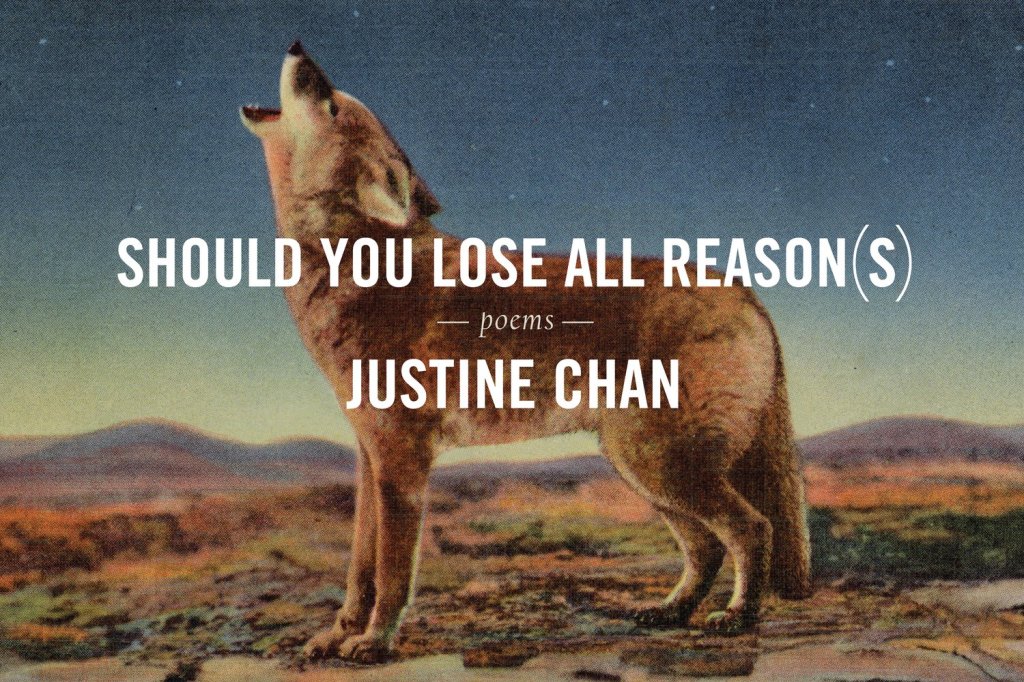
Should You Lose All Reason(s), by Justine Chan

I’m reading Justine Chan’s poetry collection, Should You Lose All Reason(s). It’s based on her experience of a Southern Paiute myth she told over and over when she was working as a park ranger in Zion National Park, which is just a few minutes from our Utah home. I found the collection in the Springdale, Utah, library the day Jon and I drove out that way.

Chan lives in Washington state, where we lived for about a decade. Somehow, that makes her work resonate even more deeply for me. I’ve always felt a connection between Eastern Washington and Southern Utah. Where the land is concerned, I mean. The wildlands and the wildlife and how human consciousness is informed by both in ways they might not be elsewhere.

These poems are enveloping. They’re somehow a deep dive that feels like wading slowly into a welcoming body of water. Some parts remind me of Woman and Nature by Susan Griffin. Others remind me of a pillow book, namely the poems Rebecca Lindenberg has written in that spirit.

These poems speak to place, to identity, to what it means to live in a larger, natural world—or to live away from nature. Of who we are and how we become and how we continue. The speaker, I mean. The speaker, but also all of us. Also me, as a reader. (And maybe you if you choose to read this collection.)

Chan writes this place, Southern Utah, in ways that are image- and sound-driven without sacrificing authenticity, vulnerability, or accuracy:

You will get used to never seeing the full red sun as it rises or sets. You will see peregrine falcons and turkey vultures circling overheard, but never the condors.

None of the pictures you take will be quite right. Not in focus. Or the light’s not right. Or there is just too much.

You will bask. You will burn.

The bark of the spruce on the rim will always smell sweet and fresh in between its flaky scales.

The people will forget there was ever blanket poisoning of the public lands. That there are bounties for pairs of hacked off ears. That less, to rescind, must mean more.

Most of Chan’s lines are impressively long, like someone trying to stretch their arms as wide as the mouth of a canyon. The book is actually much wider than it is long to accommodate those lines. (It’s designed to look like an oversized postcard.) Her approach is somewhat experimental: at times bivocal, at times hugging the right margin or drifting cloudlike down the page, at times interspersed with dates and facts, and frequently breaking into song. (She quotes lyrics from sixteen songs throughout the book.)

I hope folks take the time to read this collection. Because. Just because.

Because the air is so hot, full of rasping. The land so full of landmarks and stories you can’t even begin to know.

Because you feel some part of you was / is / will always be secret.

Because the crickets are madness, a roar that fades to silence / if you forget / to listen.

Poems as Places

During the Southern Utah Book Festival, poets Paisley Rekdal, Danielle Dubrasky, and Simmons Buntin led the workshop “Real Locations, Imagined Selves,” whose focus was on defining a sense of place through words and documenting a place through poetry.

The conversation was much more far-reaching than expected. Poetry of place tends to focus on physical places, as in Richard Hugo’s Triggering Town or Wendell Berry’s poetry, which is closely tied to the specific farms he’s played in and worked on over the course of his life. Both Hugo and Berry’s approaches to place seem to be consistent with James Galvin’s notion of what a poet of place is, which is someone who situates himself in place in order to lose himself in it.

Rekdal discussed something similar to Galvin’s concept in the workshop, but she also talked about many other layers of writing about place—ones that augment and challenge the notion of place itself. She used the term palimpsest to describe places and our experiences of them, noting that places are layered in terms of their geographies, histories, uses, cultures, and more. Other layers include the ways in which places inform us psychologically, mentally, and politically.

The question implicit in this discussion is this: How can we begin to examine the layers of a place in order to more deeply know it, each other, and ourselves?

Partway through the workshop, an attendee said his body feels like a place, one that’s being politicized and treated like a territory. This was a powerful moment. The idea of the body as a place, one that can not only be inhabited by the self but also invaded, in a sense, by others, is disconcerting. When that type of invasion occurs in a physical space (someone’s community, their school, their place of worship, and so forth), body and space intersect, making both feel less safe. Here, we see layers of place building up and around the human body within the social, political, and physical elements of a place.

Rekdal says much of how place is defined is through bodies, and much of how bodies are being called into or excluded from a place is racial. She then discussed how the Chinese in the West could become white or reject becoming white depending on whether they wanted to be part of the United States. The idea she touched on is that, like places, race isn’t static. Bodies aren’t static. They’re all processes that are in flux and that meld into or layer over one another—and that sometimes collide with each other.

(I want to add that bodies are also excluded from places because of discrimination based on ethnicity, gender, sexuality, disability, age, national origin, and sex.)

Place is not just where you inhabit. It inhabits you, too, Rekdal said as the conversation began reaching toward the ineffable. I sometimes think about places as hauntings, she added.

She notes that we can be drawn to places we’ve never been before, perhaps because something inside us may be encoded to seek out a place and call it home. Or perhaps we seek out a place and immediately feel the atrocities and suffering that occurred there, such as at the Topaz Internment Camp Museum in Delta, Utah, where Rekdal gives tours as the director of the American West Center.

Whatever the reason, humans seem to have the capacity to carry a sense of place within us that’s larger than life and longer than the human lifecycle.

             Nothing natural but made
             in the beauty of this place. To create a home,
             we imported trees and water, we slashed
             and burned to excavate a state where nothing
             lived, nothing ruled us, and yet in all this nothing
             we were subject to the rules nothingness demande

Those lines are from Rekdal’s poem “Soil,” which appears in West: A Translation. She says places create relationships and help us develop empathy for each other. The forging of community from hardship is evident in the lines above and is part of the universal human experience.

The takeaway is that places can’t be places in any human way of understanding and experiencing them without our presence in them: the communities we build, the bonds we create within and because of place, and the ways in which we come to know place.

Wendell Berry says we’re losing our connection with place because our use of our places is greatly reduced from what it was in the past. Of course, he means literal places and a very specific type of past use of those places.

Perhaps Berry’s not imagining place as broadly as possible. As Buntin pointed out at the end of the workshop, imagination itself is a place. Imagine that. If what we imagine is a place, then the products of those imaginings, such as poems, are places. We really can create worlds out of words.

I wonder what you all think about where we are with regard to our relationships with places in any or all senses of the term? Is our understanding of places—like places themselves—a multidimensional process rather than a half-static relationship in which only human understanding changes, not the very idea of what constitutes a place?

Asked another way, are we as deeply connected with place as ever, even if we haven’t quite identified all our places as places: interior, exterior, past, present, analog, digital, elemental, philosophical, built, imagined, and so forth?
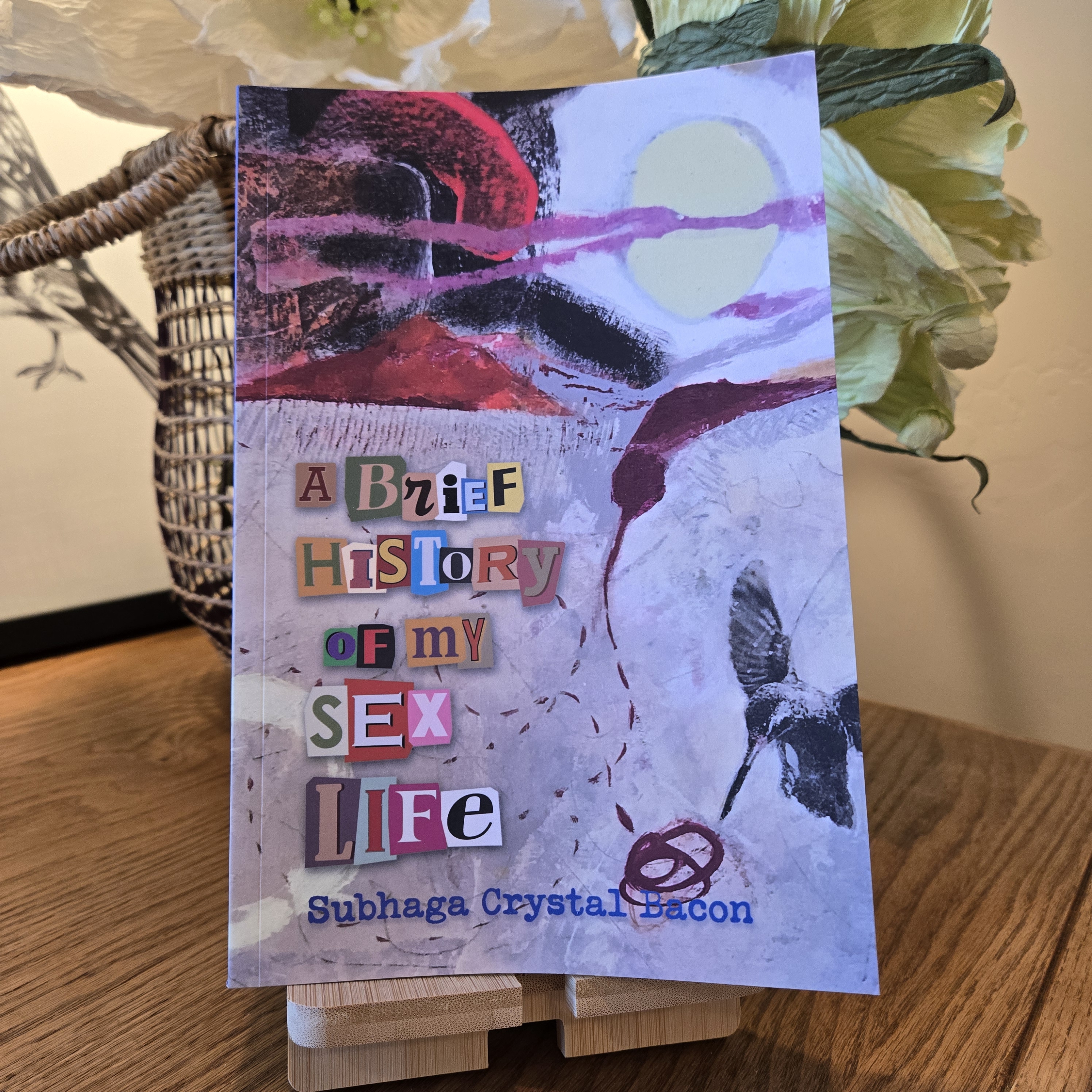
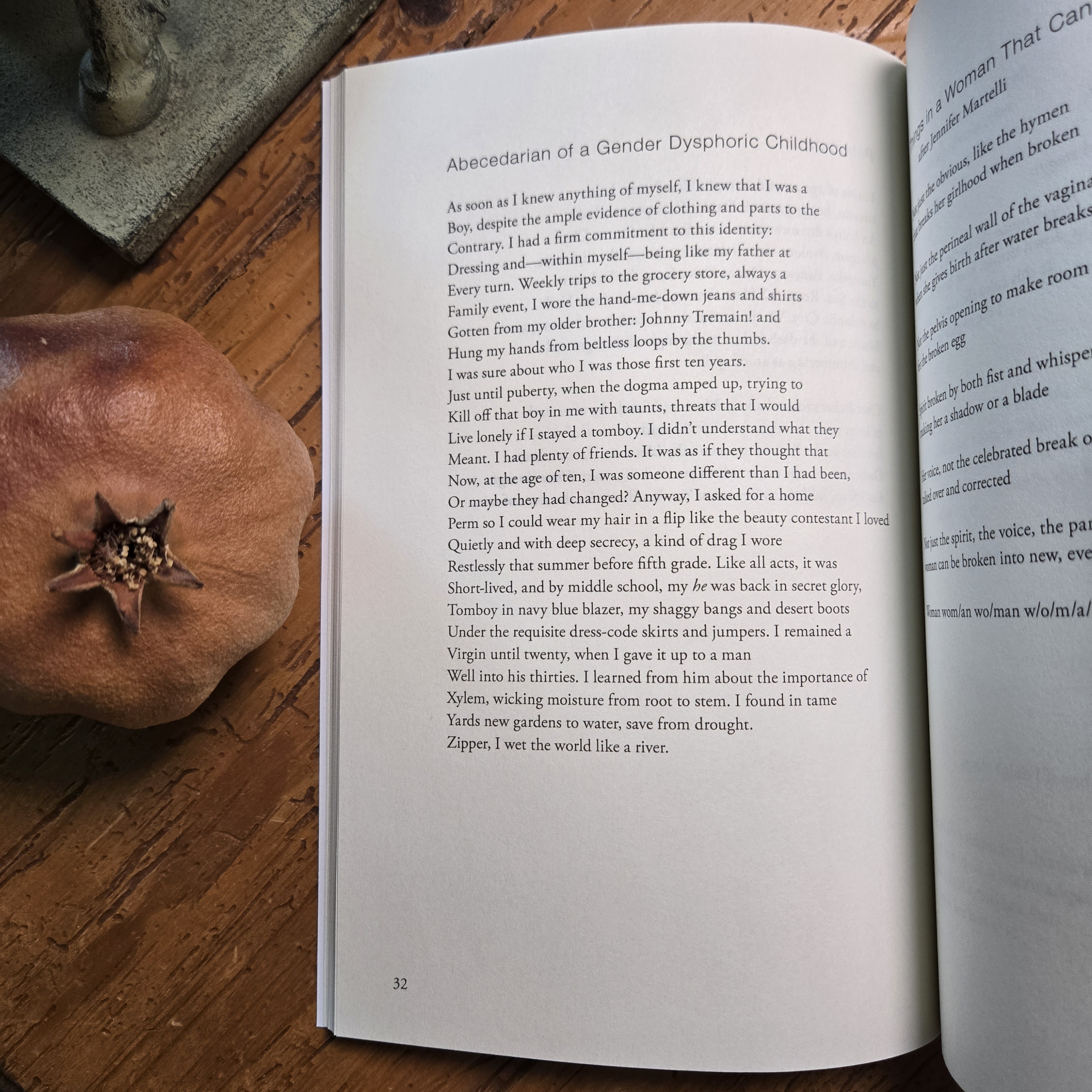
Walking with Cavafy

Whatever I try to do is fated to turn out wrong / and my heart lies buried like something dead. / How long can I let my mind moulder in this place?

Windy night. Windy morning. Tumbleweeds congregate in my yard like churchgoers who stick with their own kind and bristle at anything unlike them.

Wherever I turn, wherever I look, / I see the black ruins of my life, here, / where I’ve spent so many years, wasted them, destroyed them totally.

I walk from one tumbleweed to the next literally sizing them up. I want a fat one, nice and round, no thorns. I find one I like and carry it high like a torch to my back door. I imagine I’m carrying justice or truth, though it’s just a dead amaranth and I’m just a person living in Toquerville, Utah, trying to make sense of this place before I leave it.

You won’t find a new country, won’t find another shore. / This city will always pursue you.

This is not a city, I think. Not in any real sense. Eighteen hundred people live in this town named after a Paiute Chief who may not have existed. He makes a nice story, though, one of Native Americans and Mormon pioneers living in harmony, so the locals are sticking to it. There are probably as many cows and chickens as humans here. Six cloned while bulls live up on the hill. Two Shetland ponies reside down the street. More than anything, this place is comprised of sandy soils, so many types they each have a name — alfisols, aridsols, entisols, mollisols — not like the basalt, which is just called basalt. Chief Toquer was named after that basalt, so the story goes.

You’ll walk the same streets, grow old / in the same neighborhoods, turn gray in these same houses. / You’ll always end up in this city.

The tumbleweed will stay on my coffee table until I get on the road to Tucson, where I’ll display it as a reminder of the place I’ve left. Well, mostly left. We never leave the places we leave. Didn’t Cavafy say as much in his poem “The City”?

Don’t hope for things elsewhere: / there’s no ship for you, there’s no road.

But I have hope. Those of us who despair must also hope. It’s like a teeter-totter, but with great effort you can sit closer to the fulcrum and find balance. Hope isn’t a thing with feathers. It’s a tumbleweed trying to spread its seeds as far as possible even after it’s dead. I have that kind of hope, one that moves with me and urges me to move. Movement is breath, is heartbeat. I especially love those slabs of highway that make the car go “ga-dung, ga-dung, ga-dung” the way my heart does when I know I’m alive. The roads between here and Tucson undulate like a roller coaster meant for children. They make me nauseated, which is another way of knowing I’m alive, an old way of knowing, a way I may cast off one day as I tumble along.

Now that you’ve wasted your life here, in this small corner, / you’ve destroyed it everywhere in the world.

Then I might as well go anywhere I want, Cavafy. Why relegate myself to this small corner? Why do here what I could do in wilder lands with deeper histories? Where admission is possible and millions of saguaros throw up their arms to welcome the beloved wrecked and wretched with perfect equanimity.

The text in italics is from “The City,” by C P. Cavafy.

Ad Astra

There’s a point at which there are diminishing returns with regard to learning more about a place, a culture, a collective mindset, a community fever.

There’s a point at which it becomes time to pray with your feet. I’m at that point. I’m not an investigative journalist nor do I want to be one. I’m a creator. I want to create. As Richard Siken says, I’m just a writer. I write things down. That’s what I do and what I need to do. I need to create. I need to bring beauty to what’s awful, to what we want to look away from, to what we want to deny and suppress and ignore. But the beauty part is key. Beauty first, beauty always.

I don’t want to be pulled further into what this place is and does and isn’t and doesn’t do. I don’t want to be somewhere that takes and takes and takes everything from me, leaving no me left to love, to grow, to write, to create.

I’m leaving, come hell or high water. There, I said it. It’s time. It’s beyond time. My return to this place in March was necessary because of my health, because of my trauma, because I had issues to resolve with my husband, and because I needed to make sure I’d done all I could possibly do to be part of this community. I’ve done those things now, and I’m done.

I’m going to Oklahoma, Kansas, and Missouri in September. I’m looking at MFA programs in Oklahoma while I’m there. I’m evaluating the healthcare system, housing costs and availability, and employment opportunities. I have family in Oklahoma. My family. My people. Oklahoma, my home, my home, my home.

I’m going to need help to do this in the form of love, support, and understanding. There’s so much more trauma for me to address now after living in Utah for five years and Southern Utah for three years. I’m a strong person, but I’m now a broken person. I can come back. I know I can. I can become who I am again, who I’m losing, who I may have lost.

Tomorrow is my birthday. I’ll be fifty-two. One year ago, I was radioactive. I was sitting in a rented tiny home overlooking the Virgin River Gorge because I had to be isolated for several days. I spent hours talking to Jose Faus on the phone after watching the gorge all day. I had just started writing poetry again. I read a short piece to Jose over the phone as he fell asleep. Maybe my words put him to sleep. That’s OK. I always fall asleep reading my own writing, too. Anyone out there with insomnia might consider using my work to help them regulate their sleep.

Seven years ago, I was sitting in a hospital room in Kansas City with my husband, my legs under constant pressure and a breathing device on the table that I had to use every thirty minutes or so—the former to prevent leg clots and the latter, I think, to prevent a pulmonary embolism. I’d just had my thyroid removed to cure my autoimmune thyroiditis. They found tumors during the procedure, but the doctor assured me they wouldn’t be malignant. He came into my room all ego and narcissism and said there was only a one-percent chance the tumors would be cancerous. That’s why he went easy, left a little tissue in sensitive places. That’s why he didn’t remove the lymph nodes. Then he wished me a happy birthday. The pathology report came in a week later. It was cancer, and it hadn’t all been resected.

What will tomorrow bring? My husband and I plan to look at the stars with a telescope we’re borrowing. I plan to visit a bookstore. I plan to play with our dog, Lexi. I plan to write and write and write and read and read and read. That’s the plan. We’ll see what actually happens.

Love to those dealing with health issues, emotional issues, addictions, dependencies, and any form of pain or suffering. Love to those who’ve almost died and managed to survive. Love to those who tried to survive and didn’t manage to do so. Love to you beyond place, beyond time, beyond loss, beyond memory.

Love to you all. All of you, love.

Ad astra per aspera. PrairyErth, we are one.

It’s not Oklahoma’s fault that I was abused in Oklahoma, that I was raped in Oklahoma, that I was trafficked within and beyond Oklahoma. Humans destroy each other. Humans destroy the land. The land never destroys us. The land never trafficks us. The land never rapes us. The land never abuses us. The land never destroys itself.

I am grateful for this pain. This pain is a compass. This pain is a signal. This pain is my dearest friend, my greatest protector, my guide, my heart. This pain is everything.

Every day is a journey, and the journey itself is home. ― Matsuo Bashō

Matthew

Matthew, this would have happened with any first poem you got your hands on: repeating lines mantralike. Any good poem could have been that for you. That’s how poems work and how we move through what Hazard Adams calls the offense of poetry.

Matthew, all poems have an incantatory power.

Matthew, Eliot had some issues. Big ones. Pound, who you also mention, too. Maybe you address that in your essay. I’m just responding as I read the piece. Let’s see if you factor those issues into why there might not be great fanfare right now for great work.

Matthew, we don’t even know if there will be a one-hundred years from now let alone what poetry will or will not be celebrated at that time. Do you have tea leaves we can’t see? A divining rod? A hat with a rock in it?

Matthew, you’re etherizing your own essay on the table now. I can barely read this. I have a bad heart. Your words are making it clomp and stomp.

We stopped writing good poetry because we are now incapable of doing so. Matthew, I’m going to have to ask you to vacate your essay now. Please. There’s still time for you to not complete it, to not publish it, to save … oh, wait, you’ve already published it.

The culprit is not bad pedagogy or formal experimentation but rather the very conditions of modern life, which have demystified and alienated us from the natural world. Matthew, this is deranged. There are so many rural places. I live in one and am surrounded by them. Travel.

Permit me, by way of argument, a medium-size quotation. Matthew, this is your freaking article, in The New York Times. You know you don’t need our permission to include your little medium-sized quotation in your essay. And it is sized, not size. At least for us Gen X editors.

Matthew, my eyes are glazing over at your essay, not poetry. It’s not your fault I have POTS, but your words are literally inducing presyncope. And I use literally the way any good Gen Xer would: to emphasize something literal while expressing my annoyance at having to do so.

Matthew, I do like Milton.

Matthew, does science disenchant? Does technology deaden? That’s not been my experience of either. Did the stove and the kitchen sink wreck the blues? Or were they folded into lyric and life alike?

Matthew, why do you think poets of all people can’t see the world as anything other than an undifferentiated mass of resources to be either exploited or preserved? Make your case, or do you think you’re doing so in this essay?

Matthew, yes. Poets can draw from everything. Everything! That’s not bad. What do you … why … what’s really bothering you, Matthew?

Matthew, I like some of these paragraphs you wrote about Eliot and LSJAP.

Matthew, I don’t know that Eliot is an end-of-tracks poet. I just don’t buy that.

Matthew, I see that you’re about to reference Slavoj Žižek. Please don’t. I beg you.

Matthew, Žižek also plagiarized ideas. You know that, right? And frankly, others have also said that thing you say he said. It’s also not a very interesting thing to say. I prefer Fritjof Capra on similar matters.

Matthew, I feel like you’re upset at the internet, not poetry. Am I getting close? Can we go then?

Matthew, I need to do some shit now like ignoring men like you. One of you, your ilk, tried to destroy me years ago. By one I mean many. It didn’t work. I’m here on behalf of muses, of mystery, of wonder, and of words you might not know. Time for me to mutter, retreat.

One more thing, Matthew. The problem is content. The shift to content. That happens on the internet but is not of the internet. It’s just shit that’s happening, mostly on social media and driven by forces you didn’t even manage to allude to. Unless you did and I nodded off.

Hey, what’s your last name again, Matthew?

My Dog, My Hands, My Buttery Butter-Stick Fingers

I know when my dog, Lexi, is happy. I know when she’s sad. I know when she wants to be tickled. I know when she wants me close but doesn’t want me to touch her. I know when she’s waking me up because she’s scared versus happy versus feeling playful versus wanting a tummy rub versus having to potty really bad.

This morning, my dog had to potty really bad at 5:09 a.m. That was a hard way of entering into today, but I did it because when I have to use the bathroom, nobody makes me wait until it’s convenient for them. And because I don’t “have” a dog, even though I used the phrase “my dog” above: I live with a dog, I love a dog, and I share my life with a dog. She’s family. And my bestest family member had to potty at 5:09 a.m. this morning.

I was sleeping soundly—my mattress and pillows are puffy clouds soundly—when Lexi woke me up. I was dreaming of something. What was it? A subway, glimmering tile, water in the distance, a weaver I know, an unnamable feeling, and some Southern Utah LGBTQ+ community overlord trolling my Facebook page telling me what not to say.

I didn’t want to get up, especially not at 5:09 a.m. in December, which feels the way 1:09 a.m. does in June. So dark. So nightlike it could never pass as anything other than night. Not dusk, not dawn, not the cusp of dusk or dawn.

My hands are cold. My keyboard is loud. My ears are sensitive. My fingers are sliding off keys. I’m writing off-key, too, because I’m typing letters in the wrong order, all of them. (Thanks, dyslexia.) There’s no flow in the writing for me right now, which makes writing unbearable.

My fingers are hard sticks of butter qwertying without finesse. I know my fingers are smaller than butter sticks, but that’s how they feel so I’m sticking with my imperfect metaphor. Do they make miniature butter sticks? If so, all the butter for this hard metaphor spreading across my nearly inoperable fingers at what is now 5:51 a.m.

A writer posted on Twitter yesterday about marriage being for everybody. I thought he said “margarine.” That’s emblematic of the unsolicited gifts dyslexia gives me daily:

Margarine: It’s for all of us, not just some of us!

Hilarity ensued as the writer and I had a good chuckle over the outdatedness of margarine and how, for now, butter has the upper hand, which is funny because we’re back to hands, which obviously makes me think of my hands or at least my fingers. We’re back to my sloppy butter/finger metaphor. (Yes, I went there. Sue me. Puns are a sign of intelligence.) There’s no escaping this metaphor. It’s smeared all over this bleary essay like butter on a slice of toasted bread.

The thing is, margarine has a hell of a story. It rose to fame during World War II when butter was in short supply, so it and other fats were rationed.1 Margarine had been around since 1869, but it had a problem, which was its color.1,2 It was white. It was plain. It was super meh to look at, which made it unappetizing. We eat with our eyes, after all. (That’s actually not entirely true, and it’s an ableist thing to say.) In a word, margarine suffered from oilism.

The solution to the meh-ness of margarine? Dye!3 Margarine was mixed with vegetable dye to make it look sunny, like the butter everyone knew and loved, the color we used to paint our kitchens before beige then gray then greige then white then apparently beige again shouldered color out of our homes.

And here’s the really interesting part: The customer had to do the mixing. Margarine was originally sold in its white state along with a capsule of vegetable dye, which the “home cook,” meaning the woman of the house, had to mash into the margarine until the concoction turned yellow.3

But I digress. I’ll write a proper essay about margarine later. What I wanted to say this morning is that my dog, Lexi, got me up early. I understood exactly why because she came from an abusive situation in Texas where she was bred by an unethical breeder. She’s learned how to overread and overcommunicate with humans in a way I’ve never seen any other dog do. Strikingly, in the year since she’s lived here, she’s learned how to imitate me when she needs to convey something, anything, everything. She can’t use language like I do, but she knows how to use her entire body—from her ears to her eyes to her paws to her tail—in various combinations to say things like, Mom, quit giving me those silly kisses. Please know I still love you, though, and want you here next to me. Just ‘no’ on the kisses, OK?

She talks to my husband and me like this all day long, and it’s the most adorable and endearing thing ever. Dad, why are you close to the back door with that coat on, but you aren’t looking at me like you’re about to take me outside?

Or Don’t you see me lying here like a piece of driftwood, so good and so quiet, but also so hungry? I don’t want to be demanding or anything, but you totally forgot to feed me. You’re at least ten minutes late doing that. Do you want me to be this sad piece of driftwood forever?

Or, a new one she added recently that I had trouble translating: Mommy, mommy, maaaaaaaaaawmeeeeeeeee. I feel weird and have to, like, lie here like this on the rug in the middle of the living room, aimless and foggy. I don’t know what’s going on. Is the floor quicksand? Is it, like, holding me down or something? Am I, like, stuck here forever?

That was the day we gave her one-quarter tablet of trazodone before a visit to the veterinarian to make sure she hadn’t cracked her tooth on a toy that’s not supposed to be capable of cracking a dog’s tooth.

The most intriguing part of all this is that she acts like me. These aren’t generic communications. She tilts her head the way I do. She puts her paw on my chest the way I put my hand on Jon’s chest when he’s rushing up to me too fast and I need to whoa-nelly his overly enthusiastic approach. She mopes the way I mope and lets joy flood her body the way it floods mine. She even dances like me.

Lexi’s asleep now on the flokati rug in the living room that we call her Floofer, not to be confused with my electrophysiologist, who I call Dr. Flvoolr because that’s what I called him right when I came out of anesthesia the other day. (Dr. Flvoolr is not his actual name, but it’s sort of close. I got three of the seven letters right.) Lest you think we’ve relegated Lexi to the floor, that Floofer is on top of a fluffy dog bed which, in turn, is on top of our moderately uncomfortable mid-century-style sofa. It’s nearly a princess and the pea situation, Lexi’s Floofer setup.

My hands are warmer now, but they still aren’t serving me well. My ears are ringing. The keyboard still sounds like someone rummaging around inside a drawer full of Legos. The lamplight interrogating my desk is as taxing as the first general income tax ever imposed in our country, which occurred during World War II, when the number of Americans required to pay federal taxes rose from 4 million in 1939 to 43 million by 1945.4

(All that taxation and a gal couldn’t even get her hands on a stick of butter. I know, I know. It was a war. A big one. I get it.)

I want to go back to sleep like Lexi has, but now I’m staring the day right in the eyes. It’s staring back. I tried turning my head slightly the way Lexi would as a calming signal. The day isn’t averting its gaze. I’m trapped here among the wakeful, at least for now. Time to putter around the house, grab some breakfast, and catch up on the news. Kyrsten Sinema! Britney Griner! Elon Musk! President Biden and Title 42! Fourteen more books designated as “pornographic” by the Washington County School District in Utah—including several by poet and novelist Margaret Atwood! There’s never not news these wide-eyed days. My new favorite pastime is reading the news before my husband or my friend José has, then being the one to break it to them, especially when the news is salient, good, strange, or all three somehow—the perfect news trifecta.

Below, I’ve included a poem I started writing in 1995 about margarine when I was taking Robert Stewart’s poetry class at the University of Missouri-Kansas City. It’s not the best poem, but I like it and it’s relevant, so there it is. It’s my one-thousandth version of the poem and is the best shape I could whip it into. I may not have whipped it like butter, but I like to think I at least whipped it good.

Margarine During War

Women keep settling
(oleo, factory jobs)
though they pine for sex
the way they long
for butter on their lips.

After war, they dab
eye shadow and rouge for men
whose war-whores
didn’t teach them to kiss.

But the women
hoist skirts, drop stockings,
for soon the bread they’d break
would be kissed with butter
(real butter).

Sources

  1. Yglesias, M. (2013) Guns vs. Butter, Slate Magazine. Slate. Available at: https://slate.com/business/2013/07/butter-rationing-guns-vs-butter-in-world-war-ii.html (Accessed: December 9, 2022).
  2. Vaisey-Genser, M. (2003) “Margarine, Types and Properties,” in B. Caballero (ed.) Encyclopedia of Food Sciences and Nutrition. Second. Elsevier Science Ltd.
  3. Magazine, S. (2011) Food Dye Origins: When Margarine Was Pink, Smithsonian.com. Smithsonian Institution. Available at: https://www.smithsonianmag.com/arts-culture/food-dye-origins-when-margarine-was-pink-175950936/ (Accessed: December 9, 2022).
  4. Tassava, C.J. (no date) The American Economy During World War II, EHnet. EHnet. Available at: https://eh.net/encyclopedia/the-american-economy-during-world-war-ii/ (Accessed: December 9, 2022).

Sacred and Desecrated

One of the penalties of an ecological education is that one lives alone in a world of wounds. 

― Aldo Leopold

I’m staying in a tiny home that overlooks the Virgin River Gorge in La Verkin, Utah. This is my view from the balcony. When I got here, the river was low and relatively unremarkable—a muddy brownish-red my friend in Missouri described as “stark.” Then it rained heavily in Cedar City, a town that should have been called Juniper City because those are the trees that grow there, but I digress. The river swelled and grew noisy, pushing trees and other large pieces of debris aside as it flowed angrily past. This was a new river, a different river, one that felt at once mystical and mythical. But the sky wasn’t about to let water get the upper hand. The sunset last night, shown in my photo, was brief but as powerful as the one James Tate describes in his poem, “Never Again the Same,” which reads, in part:

              The colors were definitely not of this world,
              peaches dripping opium,
              pandemonium of tangerines,
              inferno of irises,
              Plutonian emeralds,
              all swirling and churning, swabbing,
              like it was playing with us,
              like we were nothing,
              as if our whole lives were a preparation for this,
              this for which nothing could have prepared us
              and for which we could not have been less prepared.

Heavy rain and lightning today, along with markedly cooler temperatures, made the creatures who call this wild area home stir. A great blue heron hunted squirming fish from a basalt boulder flanking the river. Squirrels scurried on the balcony then settled in and stared into the middle distance. Broad-tailed hummingbirds fed on native and cultivated shrubs in the seam where what’s wild meets what’s manicured only to the degree that it still looks wild. A red-tailed hawk swooped into the gorge then headed southish following the water.

The collective stench of wildlife urine, pungent and rising from newly moist soil, mingled with the sweet and musty scents given off by the surrounding flora: native plants such as cottonwoods, globemallow, Mormon tea, and sand sage that live alongside introduced species such as cheatgrass, Russian olives, tamarisk trees, and tumbleweeds.

This riparian habitat is unique in Utah. It comprises only one half of one percent of the state’s total land. The highest levels of biodiversity are found in spaces like this. More wildlife species live here. Bird densities are twice as high here. The visitors who flock to this area each year, especially in the warmer months, may look out from their balconies and see something pristine and untouched and remarkable and precious. 

Except for the homes built right up to the gorge’s steep, unstable cliffs. Except for the homes and retaining walls and bird feeders and playground sets the gorge has already swallowed or threatened to swallow. Except for the large banner on the other side of the gorge advertising finished lots for sale—ones that also hug the gorge’s edge. 

Except for the trash dropped over the cliffs’ steep sides and forgotten. Except for the residents who breed their dogs unethically and leave them outside all night long to howl from fear and frustration. Except for what happens behind some of the closed doors here—the kinds of things that could happen anywhere in terms of the broad strokes but whose details follow unique, longstanding patterns specific to this area.

Wendell Barry writes, “There are no unsacred places; / there are only sacred places / and desecrated places.” This is a sacred place, but it is also a desecrated place. Visitors for the most part don’t see beyond the perfect images they capture from their balconies, the ones that literally exclude the houses, trash, and other incursions on the natural land from the frame. They trot out, often barefoot and shirtless, right when the sky erupts with color. They are, as Tate describes, totally unprepared for what they’re seeing, to the point that it makes no impression other than the ones they get on social media for images that have a shelf life shorter than the energy drinks they chug after getting a buzz scaling this or that nameless cliff—not because the cliffs have no names but because those scaling them don’t bother to learn their names before picking up and moving out, on to the next adventure, the next cheap high.

Review of Wunderkammer, by Cynthia Cruz

Wunderkammer, by Cynthia Cruz
Four Way Books, 2014
ISBN: 978-1-935536-47-5
Perfect bound, 72 pp., $15.95
Review by Dana Henry Martin (aka M Ross Henry)

The wonder chamber, or cabinet of curiosities, occupies a unique space in history. These rooms emerged in the sixteenth century and functioned as encyclopedic collections of objects belonging to three classes: “naturalia (products of nature), arteficialia (or artefacta, the products of man), and scientifica (the testaments of man’s ability to dominate nature, such as astrolabes, clocks, automatons, and scientific instruments).”1 Wonder chambers were regarded as a microcosm or theater of the world, and as a memory theater.2,3 Also known as wunderkammern, these rooms grew out of an age of unprecedented European discovery whose essence was only partially captured by returning ships full of objects from uncharted lands. Noblemen, scholars, and merchants were eager to add these objects to their personal wonder chambers so they could have a miniature representation of the world located within the walls of their own homes.3

The Tate describes Renaissance wunderkammern as:

… private spaces, created and formed around a deeply held belief that all things were linked to one another through either visible or invisible similarities. People believed that by detecting those visible and invisible signs and by recognizing the similarities between objects, they would be brought to an understanding of how the world functioned, and what humanity’s place in it was.4

It is this context that we must bring to a reading of Cynthia Cruz’s third collection, Wunderkammer. In this work, the poet continually defines and redefines the concept of a wonder chamber and, in doing so, suggests a new group of visible and invisible lines that connects all things to one another. People and places, health and illness, dream and reality, and time itself (past, present, and future) weave and unweave in the creation and subversion of order and meaning. In Wunderkammer, Cruz explores the dark side of wonder and the implications of believing that by cataloging the world we can at once understand and control it.

Throughout the collection, we encounter a series of wonder chambers (wunderkammern), side worlds (nebenwelts), self-portraits, and poems set in all manner of locations, including gardens, hospitals, hotels, passageways, and sanitariums. Taken together, these poems transmogrify the wonder chamber into a phenomenon both tethered to and unmoored from history, myth, geography, culture, and cultural artifacts. A bombed Berlin meets ancient Greece meets a Greyhound station bathroom. Hades meets Eden. Brooklyn’s Greenpoint neighborhood meets South America’s Orinoco River meets an unnamed airport city. Swarovski meets Warhol meets a boombox meets the Bathysphere. The products of nature, the products of man, and the testaments of man’s ability to dominate nature glimmer and whir inside the rooms Cruz constructs, each poem another cubby or display case spilling over with necrotic, narcotic-laced secrets.

The collection opens with the first of several poems titled “Nebenwelt.” In this piece, we find a speaker “drowned in a cream velvet / Mini gown, mind blown out like a city” who vanishes into a “… silvery paste of vapor on the ice.” The poem concludes with a sweeping gesture away from the speaker to the greater, fetid world:

              A row of pretty blonde dummies in the Dutch death

              Museum, death dressed in Chanel and Maharaja

              Paste jewels, a vibrant green bacteria of sea and decay.

This side world sets up the collection as a whole, moving from the personal to the larger, and largely human, forces that shape and limit identity. The dummies in the museum speak to a cultural representation of women in life and after death, as well as referencing the historical role of wunderkammern as precursors to museums. In the last line, the sea is invoked—that body of water humans have crossed time and again on quests for discovery and domination, the same body Renaissance ships traversed in search of artifacts, relics, and natural objects with which to build miniature worlds.

“Wunderkammer,” the second poem in the collection, turns to ancient times—“A Greek crime mars the pastoral. / Charts and maps, an atlas of anesthesia- / Laced nostalgia.” The preoccupation with memory that wonder chambers embody seems to have grown out of their precursor, Italian scholar Giulio Camillo’s “theater of memory.” Its architecture was similar to an amphitheater, and its function was to allow its users to memorize all the world’s knowledge.5 Camillo’s work was informed by mnemonic techniques adopted by ancient Romans and Greeks in which visualization was used to organize and recall information. Cicero described this technique as the method of loci (also called the memory palace).5,6 By taking us back to ancient Greece at the beginning of Wunderkammer, Cruz both situates her collection within a larger historical context and also sets up one of the work’s main themes, which is memory—from its “incessant rush” early in the collection to its effacement near the collection’s close:

              This is not meant to be a koan
              Or a fable.

              I am telling you everything.

              One day they’ll remove
              The memory out of me.

              — “Hotel Feral”

Rather than facilitating memory, Cruz’s vision of the wonder chamber is one in which memory is haunting, failing, or entirely absent. The wunderkammeris not a means for sharpening memory. Instead, it has the capacity to preserve trauma, promote amnesia, and dissolve identity.

In “Self Portrait in Fox Furs, with Magic,” Cruz draws on the concept of the “memory palace” while subverting the idea that a microcosm of the world can be representative of the world at large. “In the city / Of palaces,” she writes, “I lived / Inside a doll house.” Other types of chambers appear in the collection. These include cages, jewelry boxes, mansions, palanquins, wards, a music box, and a locked motel room. These chambers fit together like a set of nesting dolls—some smaller, some larger, but all of them conscribed the way the wonder chamber itself is conscribed.

Throughout the collection, the wunderkammeris imposed as well as self-imposed. The imposition is evident in the poems “Junk Garden” and “Hotel Oblivion,” respectively: “I move my body / But I never leave this room” and “We are promiscuous / In our thinness, don’t leave the green mansion, / Are trapped inside the snow box, noiselessly / Splendoring.” But self-imposition is also articulated. In “Atlas of the Molecular Kingdom of Girl Orphans,” Cruz writes: “In the end, I made my way through the never-ending / Atlas of my own making.” The imposed and self-imposed seem to converge in the poem “Kingdom of Cluttering Sorrow,” in which Cruz writes: “I am frozen forever in this wonder / Room, this zoo of one million / Diamond machines.”

The closing poem, “Some Velvet Morning,” comes back to the marred pastoral introduced at the beginning of the collection. The poem is set in an undetermined point in the future, in a “Garden with its brilliant white / Hives of memory, its mausoleums / Of locked, oblong boxes jam- / Packed with history.” No longer just a chamber, a memory theater, or a museum, the wunderkammer has undergone a transition. It is now a mausoleum whose locked, oblong boxes are reminiscent of the neatly housed and organized specimens of the wonder chamber. Rather than reflecting the world of the living, the wunderkammer houses the world of the dead.

Wunderkammer starts in death and ends in death, but its central question seems to be whether we can come to know the self, to develop an identity, when the impulse to see the world through the lens of the wunderkammerhasprevailed, when an entire sea and its suffering has been compressed into “Spots of water on crystal.” Perhaps we can’t. In the collection’s third poem with the title “Nebenwelt,” Cruz writes: “Like you, I am / Incapable of interpreting my own body, / Its soulless and mollusk iterations.” Though the speaker is addressing a specific “you,” the lines feel as if they are being directed at the reader. With this utterance, we become more than visitors at the wunderkammer. We leave the chamber-turned-museum-turned-mausoleum to reckon with our own sense of terror, knowing that the wunderkammer has been handed down to us, too, and that it informs our perception of ourselves, each other, and all that is. What have we tucked away in our own memory theaters and what shadow puppetry is enacted on the scrim? In a world where even language is implicated, we are left wondering what part we have played in what Cruz describes as, “These words, this terrible song.”

Sources

  1. The Metropolitan Museum of Art. “Collecting for the Kunstkammer.” http://www.metmuseum.org/toah/hd/kuns/hd_kuns.htm (accessed February 25, 2015).
  2. Mendoza, Bernardo Uribe, Rodolfo Ramirez, Neslson Cruz, Manuel Guillermo Forero, and Patricia Cervantes. 2000. “A ‘Virtual Worlds’ Theatre of Memory (Scheme for a Contemporary Museum).” In Virtual Worlds, ed. Jean-Claude Heudin, 205–213. Springer Berlin Heidelberg. http://link.springer.com/chapter/10.1007%2F3-540-45016-5_19 (accessed February 25, 2015).
  3. Funston Antiques. “Wunderkammer: An Introduction and Preface.” http://www.funstonantiques.com/2009/05/09/wunderkammer-an-introduction-preface (accessed February 25, 2015).
  4. Tate Britain. “History of the Wunderkammern (Cabinet of Curiosities).” http://www.tate.org.uk/learn/online-resources/mark-dion-tate-thames-dig/wunderkammen (accessed February 25, 2015).
  5. Neault, Michael. “The Museum as Memory Palace.” http://blog.art21.org/2012/08/30/the-museum-as-memory-palace/#.VO9Io_nF_uM (accessed February 25, 2015).
  6. Stanford Encyclopedia of Philosophy. “Mental Imagery > Ancient Imagery Mnemonics.” http://plato.stanford.edu/entries/mental-imagery/ancient-imagery-mnemonics.html (accessed February 25, 2015).

“Review of Wunderkammer, by Cynthia Cruz” first appeared in Prick of the Spindle.

The Poem and the Body, the Body and the Poem

I intended to write a piece on poetry yesterday, but instead I experienced a tear in my retina. Right eye. Noonish. I saw white lights like fireworks, followed by a hovering gray blob that obscured my vision. It was roughly the shape of an acorn cap or a winter hat with a fuzzy ball on top. An ophthalmologist at KU Medical Center saw me right away. He looked deep into my vitreous gel with a fancy headlamp that made him look like he was about to go spelunking and exclaimed, I see the acorn in your eye! I thought he was making a joke, but apparently he could see a bundle of proteins torn from my retinal lining floating in the gel.

Why does the poetic image communicate faster than other forms? A few years ago, I asked this very question on Facebook and then proceeded to answer it myself. How annoying of me. My answer was as follows:

Arthur Koestler has an interesting theory. He says poetry requires thinking on a third plane, a kind of “bisociation,” meaning perceiving a situation or an idea in two individually consistent but habitually incompatible frames of reference. This bisociation disturbs our patterns of thinking/feeling and causes a crisis, which requires a third plane of thinking/feeling to arise, one that is antithetical to but that does not negate the strife of the two.

Since this moment of entry into the poem is a moment of crisis, I would argue that we respond to the crisis the way we are hard-wired to respond to all crises—as quickly as possible. Our entry into the poem is similar to pulling a hand away from a scalding object before realizing on a conscious level that the object is hot. It’s instinctual, a survival tactic. Perhaps bisociation in poetry works on this level as well—because of the crisis the poem presents, we move swiftly to a different mode of thinking/feeling that allows us to enter the poem without completely fracturing our identities, without obliterating our ways of seeing and moving through the world. Bisociation is a way of surviving the poem, of seeing the world as we experience it on a day-to-day level, then seeing the world of the poem itself, then seeing a plane on which to stand, one that straddles the two and gives the reader a place to exist, to breathe.

Perhaps this is why poems work on us so quickly, why the image communicates faster in poetry than in other forms of writing. Precisely because poems put us in crisis.

I removed that post from Facebook years ago, but I stashed it in my poetry files. I came across it today and appreciated it as one way to understand how poems work. I also appreciated my former self for leaving me this trace. It could prove useful when people ask me what poems are, how the mean, and under what conditions they operate.

If you look at a vertical sagittal section of the human eye, you are supposed to see something that resembles a camera. That’s not what I see. I see an angelfish without the fins. I’m sure this says something fundamental about me. The watery fish in the head. The brain home to an aquarium. The two specimens that cannot swim, that cannot escape, that do my bidding, that are forced to document the production.

In his poem “Trace,” Eric Pankey writes: To occupy space is to shape it. / Snow, slantwise, is not white / But a murk of winter-black basalt. / In the gullied, alluvial distances, / On the swallow-scored air, / Each erasure is a new trace.

Having a torn retina is not without its consequences. I feel like a mean girl punched me in the eye. Maybe at a bar. Maybe after I looked at her the wrong way. Maybe after she mistook the fireworks in my eyes for something I never intended.

If you look closely enough at a poem while wearing a headlamp, you can enter its recesses and observe the detail held within its vitreous gel. What drifts and where. What has lost viscosity with age and use. What holds fast. But when you occupy the poem, you change it. We change things by looking. There is no way around this.

When I told my husband about my retina, he asked if reading poetry might have caused the tear. I said poetry had no bearing on what happened. He seems to think poetry leads to disaster. I’ve tried to tell him for years now that we all lead ourselves to disaster, with or without poetry. Poems simply document the path from cradle to grave; from point of entry to point of no exit; from one dark, craggy landmark to another.