Headrick, Oklahoma

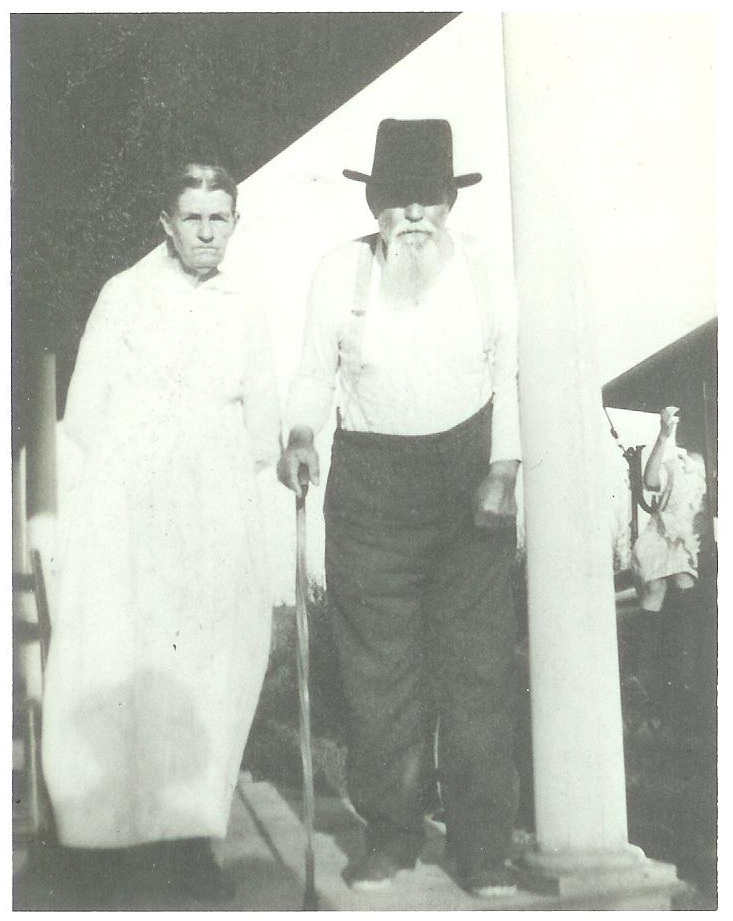
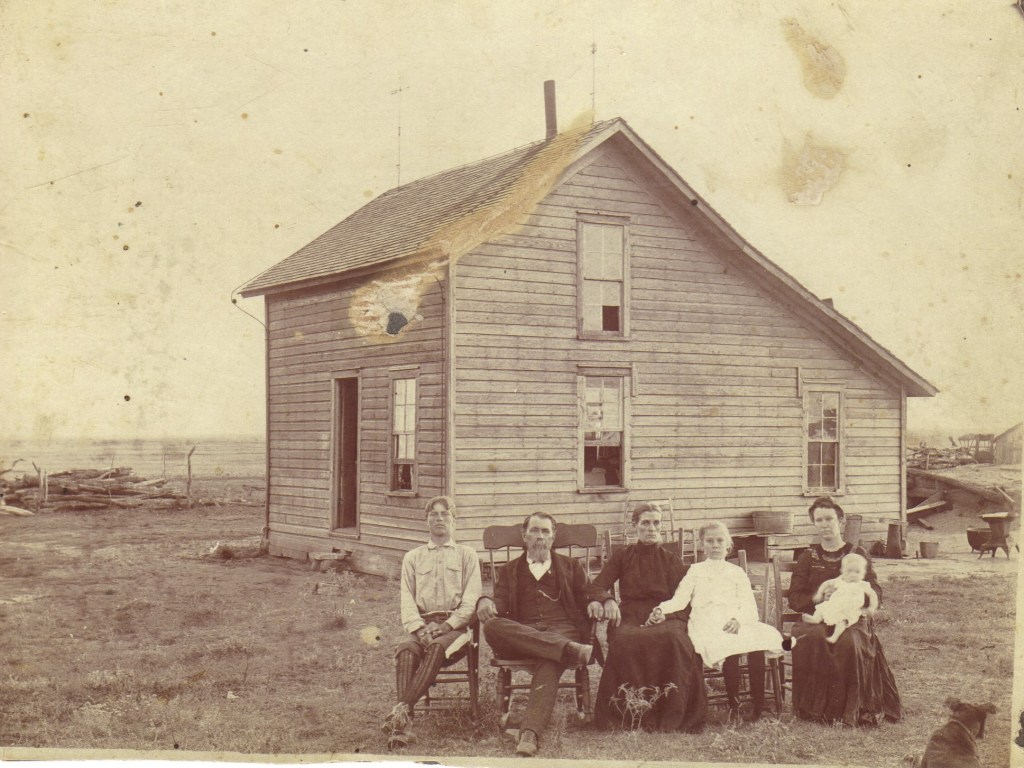
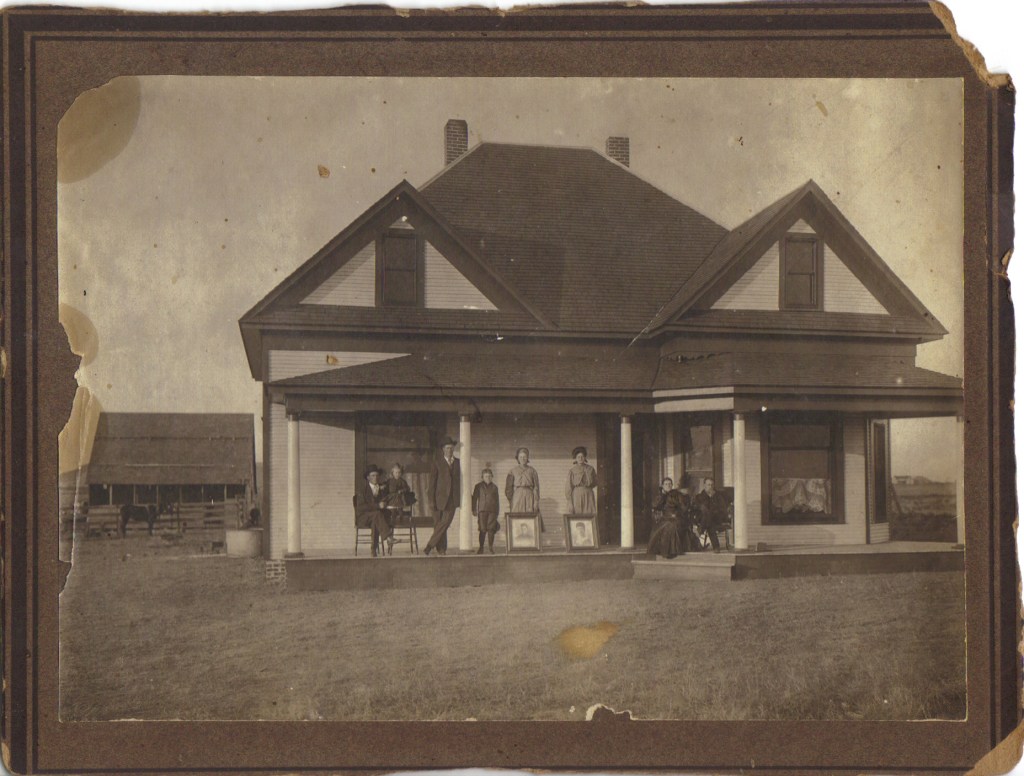
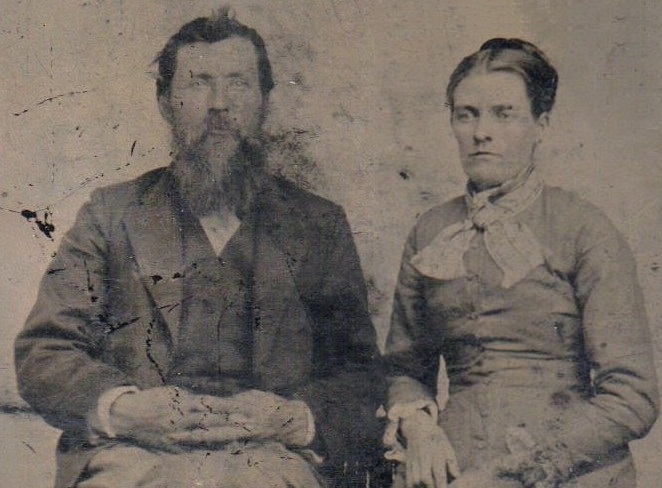
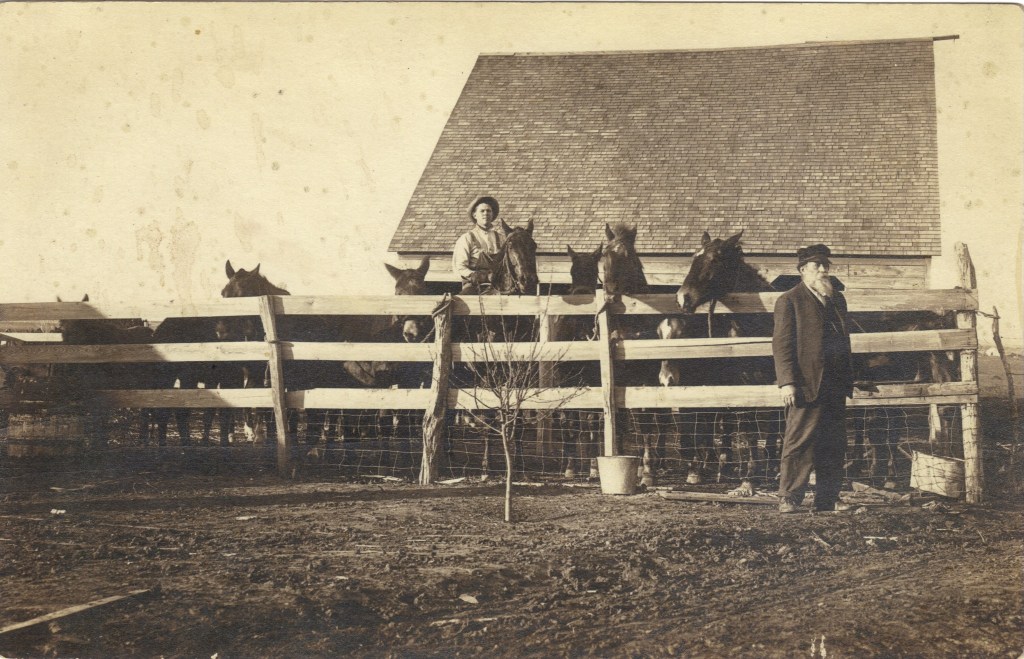
My family on my mother’s side. 1. My great-grandparents, Jesse and Sarah. 2. My grandfather, my great-grandfather, and horses. 3. My great-grandparents on their porch, children all around the place, many outside the frame. 4. My grandfather, great-grandfather, great-grandmother, a great-aunt, another great-aunt, I think, and a baby who was supposed to be her sibling but was really her child. This was their not-nice house. 5. My family on the porch of their nice house. The dead (suicide, unknown cause) are propped up in framed images in front of the living.


On Writing, Poetry, Health, Trauma, Surviving, and Lucid Dreams

This essay was written on Twitter throughout the day on January 1, 2023.

I’m drafting a new essay here piecemeal, the way I write my notes for a story on a series of notecards, real ones, old school. That’s really all I ever do here: Write long stories in small chunks, in vignettes and aphorisms and observations. I’m doing that today.

Ginsberg didn’t have time for metaphors. I might not have the time or desire to fix my typos or to state things perfectly in this story outline. I certainly don’t have time to say things in order. That will come later. Or the narrative will remain disjunctive, which I also like.

There’s power in disjunctive narrative. Is disjunctive even what I mean? It’s not. What do I mean? I mean narrative that’s all scrambled up the way we think about our lives and stories. I mean: no imposed order other than capturing what the mind presents as quickly as I/we can.

Because we all do this. We all have minds. Our minds don’t live inside narrative. We have to learn narrative in order to survive. Narrative turns chaos into something we can respond to and live within. But today, the particular, infinitesimal part of the we doing this is me. This is my scrambled story.

Welcome to my mindfield. You have one, too. We all do.

You’re inside your mindfield right now. I’m inside mine. Don’t confuse the mindfield with a minefield. Having a mind is not the same as littering the land with weapons: the communal land; our lands that are shared but are not, and never will be, owned.

I’ll tell you the two endings to this draft essay right up front, where they belong in a scrambled story. First, this ends today. I had transient ischemia overnight, then SVT, then atrial fibrillation, then hypoxia. Diltiazem will end that until I visit Mayo next month.

Second, I had the most profound lucid dream in that hypoxic, crushed-heart state. About my trauma, of course. But also about healing. There was healing once I made the choice to leave the concrete place with the men and dance on sand with four women who’ve tried to be my mothers.

But it ends today. Once I have the diltiazem on board, along with the fludrocotisone, along with other treatments that are on the way, this will be over. What, you ask? All this trauma (re)processing. These dreams. This heart stuff. This near-death stuff. Over. And on my terms.

I’m fixing my busted heart enough for now to get back to real sleep, not the galloping, faltering sleep of the arrhythmic and heart-strained. I’m throttling my trauma (re)processing until I can do it slowly and sustainably.

That image, the one where I’m dancing on the sand with my four mothers, is where I’m landing with the trauma work for now. It’s what I’m holding onto. Because I did that. In my dream, I made the choice to leave the nightmare of concrete men. I went to my mothers in the soft sand.

[Interlude while heart recovers. Imagine soft music playing. Mill about.]

[Adding a note to clarify that I have my endocrinologist’s and interventional cardiologist’s support to take diltiazem. I’m not making that call on my own.]

I’ve been making use of a writing studio I rent from time to time. It’s ten minutes from my home, just on the other side of Flying Monkey Mesa as the locals call it because of its dreadful googlable history. I’ve been able to drive to it since I started taking fludrocortisone.

I can’t sleep at the studio because of my heart issues, but I can be here during the day. This morning, on my way here, I encountered a rockslide that the police are monitoring. Then I hydroplaned twice. It’s been raining, a lot. The rocks and roads aren’t behaving.

Depending on what happens with the rockslide, I may have no way home this afternoon. The police officer said he didn’t think things would get so bad that all the lanes would be affected. We also haven’t had this kind of rain in years, so … [shrugs] … who knows?

I want to say “of course” about the rockslide and the hydroplaning. As in: Of course, this, too, is happening on top of all the other issues and impediments in my life that are or appear to be in the way of my living right now.

But there’s no “of course” about it. That would be my mindfield imposing on the rock, on the road, and on my travels in this time and place. The natural world does not collude. And roads are just petroleum-based gloop we smear on the land. Of course roads succumb to the elements.

Earth is not people. It’s chock full of us—mostly the dead, as Nietzsche observes—but it’s not people. It’s of us, in a way, but not us. It doesn’t lie. It doesn’t conceal. It has no desire to do harm.

Earth is mostly not even of us. There’s so much in addition to and beyond us. We’re just people: a minority in the living, breathing world.

You might be ahead of me if you had an OK childhood. It’s taking me longer than it might have taken you to figure out people and their behaviors and what informs those behaviors. I’m also thinking about all of this in light of what I read by Aldo Leopold yesterday.

I’m watching rain fall from my writing studio’s eaves. It’s wearing little ruts in the decomposed granite in perfect little lines. I could align my knobby spine with the ruts and have perfect contact with the Earth—or at least with the decomposed granite lovingly spread on it.

I can’t speak to the collective mindfield other than to caution us against thinking we, together, know more than we know or are more important than we are. These thoughts feel basic, pedestrian. I feel silly sharing them.

We got into trouble when we made ourselves larger than the Earth.

My thoughts are as simple as a Yugo. I’m not a 1963 Ferrari 250 Gran Turismo Omologato thinker.

I want to talk about surviving. When my mother died, she left me a letter. Part of it read, Do whatever you need to survive. It was her last bent-tree message, her last encoded bit of wisdom, stripped bark-bare at the end of her life.

It’s what she’d been telling me all along, in words and through her example: Do whatever you need to survive. And I have. I’ve already survived, as have you if you’ve lived through trauma. Surviving is a process, not an end state. It’s not something we have to strive for.

You are here. You have survived. Your body knows how to do this and how to continue doing it, even when the seasons change, even when your heart is strained, even when new aspects of your trauma come tumbling out of your mind’s many closets.

I want to pause here and say this: Men deal with this, too. Men have power and privilege, but it’s not doled out equally, and men are asked to do so many unspeakable, nearly unsurvivable things during their lives. Everything from war to daily living is hard on men. It is.

Men survive unfathomable trauma, too. My heart is with those survivors. In the end, many of us are survivors, maybe most of us. Some of us don’t even know what we’ve survived, the enormity of it. The iceberg below the surface of it.

But when men come through great trauma and it’s paired with power and privilege, they can become dangerous in ways they wouldn’t be without that power, that privilege.

[Another interlude. My body needs me for a moment.]

[Also, Happy New Year. I’m expunging today. What are you doing?]

[I’m suddenly thinking about James Tate’s Jesus riding his little donkey. I think of that poem in moments of sudden, unexpected happiness while surrounded by what is awful. The poem pleases me in ways I can’t articulate or even comprehend. I mean, I could but I won’t. Explication is a buzzkill.]

[I’m wrecking grammar right now. I sort of love it: both grammar and the wrecking of it. Better than wrecking lives, including my own.]

[James Tate came after T.S. Eliot. Matthew doesn’t know that. Matthew thinks no poet has written significantly since Eliot. Matthew’s wrong. He was wrong in The New York Times. Writers write things down, so it’s not Matthew’s fault. Good writers can write the wrong things down.]

[The problem is the voice Matthew has, the power. Matthew is part of a larger system of power that’s a problem now and has been and will continue to be a problem.]

I’m drawing an iceberg now, an iceberg of something: behavior and what informs behavior? What we see and what we don’t see? I’m trying to figure something out.

My family and the Land Run, my family and Choctaw Nation, my family and Chickasaw Nation, my family and secret pregnancies, my family and the circus, my family and the rich husband, my family and a fancy house, my family and phonographs, my family and furs, my family and cars.

My family and suicide, my family and The Great Depression, my family and shipyards, my family and displaced Asian-American families in California, my family and racism, my family and fighting racism, my family and no farm, my family and no fancy house.

My family and being shunned, my family and learning to run, my family and fire, my family and oil, my family and power, my family and crime, my family and lies, my family and phobia, my family and rape, my family and incest, my family and trafficking.

Also, my family and surviving.

I forgot a big one: My family and the Dust Bowl. Also, my family and Freemasonry. My family and Mormonism. My family and (alleged, attempted) poisoning. My family and a gunshot to the back (at least, I think that’s how it was told to me). My family and mobile bars in GMC vans. Well, one van. One mobile bar.

[Interlude. Heart racing. I met a poet once who said she disdained any poet who feels anything while writing. That still has me stumped.]

In the dream, two men were after me. One was the devil. I was in one of those Russian-looking apartment complexes with exposed-aggregate concrete and iron rails everywhere and an open courtyard with all the apartments surrounding it, facing in.

I knew both men, but one was a shape-shifter, a self-identifying soothsayer. I never knew if he was there to help or harm. I saw the first through his window while passing by with a load of laundry. He was red, hot, everywhere in the room, and spinning like PSR J1748−2446ad.

The second caught me looking in the window. He saw me run toward the open concrete stairs leading to my apartment. He ran after me, yelling: I told you the devil was real. I told you to look to the angels. I fell, my heart arrhythmic. I clung to the rail, bleating.

I thought the second man was going to help me. Instead, he told me it was my fault. What had to happen now was on me because I didn’t feed the angels. He grabbed my ankles and dragged me, step by rough step, lower and lower. The concrete tore at my knees and shins.

I don’t want to do this, he said. He meant it. He was doing what he thought he had to do, what he was compelled to do by some imagined power. My skirt snagged on the stairs, exposing more and more of my legs, then pulled higher. I clung to the railing. I was so tired. I almost let go.

Then I did it. I said no to the dream, to the scene, to the weakness, to the surrender. To all of it. I closed my eyes. When I opened them, I was on the sand, in wildlands, no concrete in sight and no men.

Four women were with me: my mother, my mother-in-law, my dearest friend Pat Best who always said I was her daughter, and my neighbor—the one who recently tried to love me.

We stood in our respective traumas, unable to speak, tension in and between us like circus wires. Then the tension broke. We danced. For the Earth. For ourselves. For each other. For our bodies. For surviving. We danced and laughed and felt love’s malleable connective tissue.

Three of those women are dead. I love them dearly and understand them better now more than ever. It was just a dream, one I lucidly chose, but there was real healing in it. The one who’s alive can’t love me. We are tension in this life, but we are soft support in other realms.

I had four mothers: one cloth mother, and three cloth-wire mothers. It’s still four mothers. I’m lucky.

I had one motherlike monster, a skinwalker who trafficked me with her husband. I was also unlucky.

As we were dancing, one of my mothers had chest pain. She pulled out a blood pressure cuff and took a reading on her right arm. The other mothers laughed. Stop, I said. This is important. We all need to take our blood pressure readings now in both arms. Things got serious.

Our blood pressures checked out. No big differences between each arm. No heart disease. No blocked arteries. We laughed and continued to dance. I woke up.

That’s all I have to say today. The rest will have to wait. I’m staying on the sand with my four mothers, with their cloth and wire. We’re all together there, and we’re surviving. The cloth is for our bodies. The wire is what we’re using to skid over life’s glowing coals.
The First Face

I feel for those who’ve come out about Jeff Church and am especially moved by Young and Manning’s accounts of seeing Church’s face when they re-experienced what Church did to them.

I know that feeling of seeing a face overlaid on other faces and not knowing what to make of that feeling.

I know the feeling of entire states feeling marred, of a face overlaid on other faces within that place.

For me, it was Georgia.  But not just Georgia. Illinois. But not just Illinois. Missouri. But not just Missouri. Tennessee. But not just Tennessee. 

I had to trace my trauma all the way back to that first state, the one with the sound of home built right into it. And it was my home: Oklahoma. 

Oklahoma and its swirling faces. Its drunken faces. Its maniacal faces. Its aged hidelike faces. Its taunting faces. The home of that first face which jacked up all the others. The face of a man aptly named Jack.

The face attached to the body that held me after I was born. The face that posed with me in my first photos. The face I would later associate with one of my first words: “Daddy.”

When I was little, my parents marveled at the way I could spin a globe and find Oklahoma lickety-split just as the orb stopped spinning. “There, there, there,” my insistent little finger said, staking claim to that stolen state the way my ancestors had during the Land Run. 

There: that where, that no/where, that now/here I can’t shake.

That land where my father lies beside my mother—him in a silky casket, her more elegantly in a little black cremains box—in the cemetery that also has a Catholic section, a children’s section, and a section where forty children who died in a 1918 fire at the state mental hospital were dumped in an unmarked mass grave.

Oklahoma is eternal within me. No Masonic or Hermle clock governs its presence in my body. The trauma—that first trauma and the countless ones that followed—has no timestamp. The Red River is as it was then. The bullfrogs are as they were, plentiful and at times inconvenient, especially when they flooded the road flanking the river. The moon lowering and lowering until it meets the sandy riverbed and shimmers like an arched doorway to heaven or hell or maybe just to someplace better, someplace where pain might exist but suffering isn’t manufactured faster than mobile homes and oil pumpjacks.

The scissor-tailed flycatchers and red birds and robins my mother loved. All as they were. The starlings my father hated. As they were and also as they are now: outliving him, as am I.

The streets and highways and gravel roads that my father wore down, ditched out, careened along protecting and managing his drawling and sprawling fief. The sound of tires hitting seams in the concrete sections that made up a stretch of I-35 and the way the El Camero or later the Monte Carlo or later the GMC van shuddered a little when the front and back tires hit each joint. Ka-dung. Ka-dung. Ka-dung. Ka-dung.

My beloved dog is as she was, the one my father let me keep. She still runs back and forth from one window to the next over my lap as we reach either our city home or that other home in Texoma, depending on whether we were coming or going. I’m still there with her, as I was, laughing, delighting in her joy. Because she brought me joy, even in that family, even in that life, even growing up with an unspeakable father, a boundaryless father, a cradling father who broke the bough over and over. One who made me fall then told me he was saving me when he caught me. Where being saved was his bed, almost every night. And his friend R—. And his friend C—. And the strangers on the other end of the CB radio, the ones he made me talk to. And that one trucker the day my father pulled over and met up with him. How my father called me out, made me stand beside him, showed me off. How nervous that trucker looked. How he wanted to leave. How my father compromised him by making him drink a beer before he left so he’d have the smell of alcohol on him if he tried to do anything like call the cops. How the man said he didn’t want to drink the beer. How my father made him. How the man complied and ran away after doing so. Or maybe he didn’t nearly run away. Maybe he liked the beer, the danger, even my father, just not little girls. No. He didn’t like my father. My father terrified him and meant to.

That father. That first face. That first confusing, crushing pain. That leader. That schemer. That pistol. That man who shocked everyone into quaking compliance.

That man who doesn’t scare me. The one who (s)pawned me, the one who toyed and turned me into a toy. The one who passed me, passed me, passed me around. It was like being on a merry-go-round only without my mother, Merry, there to catch me when I fell.

Baubles

Robin, by John James Audubon. Image used in accordance with U.S. public domain laws.

This time of year, American robins move in large flocks. They adorn bare trees all over our area. Last weekend, they came to our backyard in waves. Their washed-out orange underparts made it look like our sweetgum trees were covered in apricots. Stone fruit. Flesh clinging to a hard center clinging to a branch. I haven’t seen any robins for two days, but I know if I drove out to the nearest wetlands or even cruised across town, I’d see them clutching the trees, their legs like thick stems.

Last week, I learned how to tell the difference between the male and female robin. Each time half a dozen or more gathered at our birdbath, I practiced my identification skills. “Male, male, male, female, male.” Now that I know what I’m looking at, the distinction is obvious. Her coloration is so much softer, especially her head, which is greige as opposed to charcoal or sable. Still, more than four decades of my life passed before I could see anything other than a generic robin—the Platonic ideal of the bird, perhaps. I was not seeing them, only some loosely held idea of them that came to feel like seeing.

Robin. It’s a soft word, like a wool sweater on a cold night. A comfortable word for a bird who brought me comfort as a child. The muted browns. The rich oranges. These birds carried fall’s earthy color palette on their bodies along with the promise of all that fall is after the terrible brutality of a hot, dry summer—one in which emotions routinely got out of hand as oppressive days ground into stifling nights. Nothing mixed well with the heat: not exertion, not rest, not that last glass of vodka, not my parents’ dealings with one another or with me.

My mother loved robins and would shrill “Robin! Robin!” whenever she saw one at the birdbath. Not all birds received such a ceremonious reception. The robin was on my mother’s bird-celebrity shortlist, along with the northern cardinal and, in the number one spot, the scissor-tailed flycatcher, who was our state bird. I’m not sure how any birds made their way to that birdbath, let alone the ones my mother loved most. My father had bulldozed the backyard and veneered the soil with concrete. Like frosting, he skimmed the concrete with a mixture of pebbles and epoxy. He left two trees standing—a magnolia and a sweetgum. The latter died, most likely from the abuse of having its surface roots constricted. My mother put a birdbath where the sweetgum had been. Like its surroundings, the bath was made of concrete. She placed rust-colored lava rocks on the circle of exposed earth that had surrounded the tree. The birdbath rose from the rocks like a whimsical headstone. Bird sightings were few and far between, but now and again a desperate winged creature would traverse the concrete jungle for a few sips of water and a bath on a feverous day.

That was my introduction to birds. Ultimately, they were baubles to my mother, as I was her bauble. She never moved beyond her initial excitement about seeing birds to actually watching them. Like everything, they were accessories. Bird. Child. Earrings. A pair of strappy sandals into which she wedged her tumid feet. Each played the same role and had the same status. Birds were something to chirpily declare having seen—“I saw a cardinal today!”—as if, as an extension of herself, the birds made her more valuable than she was on her own. They weren’t something to care for, to learn about, to appreciate, to protect. They certainly weren’t something to be with or to go out of one’s way for. My mother never went into the woods or fields or grasslands looking for birds, leaving her own world in order to get a glimpse of theirs. With the exception of my father, everything that came and went in her life did so on her terms. She was a planet. Everything else was a celestial object pulled for a time into her orbit. So I grew up with vague impressions of a few birds, namely my mother’s favorites.

What my father contributed to my understanding of birds amounted to coddling purple martins while attempting to starve European starlings. The martins got a fancy hotel in the sky, as blinding in the sun as the crest of a wave on a bright day. Below, he set a trap for the starlings: a wire cage that allowed them to enter but not exit. The device was not unlike the hanging cages used in Europe during the medieval period. I ended the torture the day after my father caught his first starling. I couldn’t bear witness to that barbaric form of execution and not do something. I found an older child in the neighborhood who was able to reach the trap and convinced her to open it. I knew I’d pay later. I didn’t care. The bird flew off, and that meant everything to me. My father stopped putting the purple martin house up after that. Its green and white facade languished in the back corner of our property until he died, and for two decades thereafter. My mother hated it but couldn’t bring herself to remove it. Unlike the starling he tried to starve, my father died quickly. Heart attack. Two words like stones that I didn’t know until I knew them and he was gone, a bird set free from a trap.

We had two juvenile robins in our yard this summer. That was before I was serious about watching birds. These were just two of the animals we inherited when we purchased our house in June. They were adorable in the way baby birds always seem to be. They don’t know quite what to make of the world or their place in it. I can’t imagine experiencing and processing so much so quickly. Every day for them is life and death, not that they think about it in those terms. But something in them knows already, if “knows” is the right word, to be on alert. If they used language, verbs like “fly,” “dart,” and “take cover” would be central to their vocabulary. They would be governed by a lexicon of imperatives.

It’s hard to look at birds and not think about the trauma I’ve experienced and the ways it’s shaped me. My working vocabulary is not unlike the one I’ve imposed on them. I, too, dart and take cover when I sense danger, even when no danger is present. Perhaps this is why I feel so protective of birds, why I whisper prayers for them under my breath or plead with them to hang in there. “Please make it through the day,” I would say to the juvenile robins. “Just try.” Then I would look for them the next day and, seeing them, smile.

My relationship with the young robins was quieter and more intimate than the one I have with the flocks who’ve visited the yard recently. Those adults have come by the dozens for the sole purpose of drinking water then moving on. With each wave, a handful of starlings also arrived. They seemed to be shadowing the robins, perhaps to take advantage of their ability to find resources. Between the robins and the starlings, the whole yard was mobbed. It looked like a pointillist painting, each bird a dab of black or brown ink. My partner was intimidated by the crowd. I’m not sure the smaller birds appreciated it, either.

Birds are complicated. They aren’t the simplistic trinkets my mother took them for. What I know about them is changing with each day, each encounter. I’ve learned that they don’t sound the same from place to place. The dark-eyed juncos use calls in the country that they don’t use in my backyard. They don’t act the same, either. Within a species, some birds are bolder than others. Some appear to be teachers while others are more apt to watch and learn. Some take the opportunity to feed while others are sleeping. Some experiment while others go by the books. Complexity exists at the group level as well. Case in point: The sparrows are fighting right next to me at the window feeder. Hierarchy is being established and defended. One’s place in the hierarchy can mean the difference between surviving the winter and succumbing to its cruelties. As I watched the flocks of robins who swarmed my yard, I realized there were more social dynamics among them than I would ever understand. My knowledge of them is akin to looking into a room through a cracked door. I see some of the details, but I have no idea what the room really looks like.

My relationship with birds is growing more complicated. I thought I’d signed up for learning their names and how to identify them. But now I’m involved. I’m moving away from my mother’s “Robin! Robin!” approach and into something else. “Bird” is coming to mean something richer, stranger and more mysterious than it ever did when I was a child staring at a cement birdbath girdled by a cement lawn, a single bird writhing in the shallow water—though now that I think about it, the birds I watched as a child were just as rich, strange and mysterious as any. Fancy that.

The Loneliness of Recovery

I used to think to be not alone meant / never having to walk through the high wheat / or struggle in the water.

— Allison Seay

I am standing in the high wheat. Field with Sheafs, by August Haake (1911–1914), oil on cardboard. Image used in accordance with U.S. public domain laws.

When I was a teenager, my mother’s best friend came over one night after a long absence from the weekly happy hour my mother hosted. When she arrived, the friend was serious, even somber. She stayed just long enough to tell my mother and their mutual friends that she wasn’t coming back to the group because she had quit drinking.

Couldn’t you just come and not drink, someone asked, flummoxed by the surprise announcement.

No, she said. And I can’t be around any of you again, not while you’re still drinking.

She explained that being around people who drank would jeopardize her recovery. She couldn’t be in that physical or psychological space anymore. My mother didn’t understand, or maybe she understood but didn’t accept her friend’s decision. This was, after all, the woman who had been there through everything with my mom. They’d known each other for more than thirty years. This woman even picked out something for my mother to wear to my father’s funeral. I remember her bringing a selection of outfits home for my mother to try on.

Nothing black, my mother had insisted. I hate it when widows wear black at funerals.

Her friend complied. She fanned out half a dozen wool and satin pieces in beryl blue, emerald green, and ruby red—the rich colors of a painted landscape. My mother sat slumped on the edge of her bed, barely present.

Get up and try these on, her friend coaxed.

Her concern for my mother was evident. It was one of those defining moments in a friendship. Through death, they had become even closer—friends for life, or at least that’s what everyone thought at the time.

After her announcement, my mother’s friend rose and walked purposefully through our paneled den, the one with the mirrored wet bar my father built before his death. She reached the thick cedar door and let herself out.

Empty Space

There are many differences between the alcohol recovery model and the mental health recovery movement. Still, situating myself within the recovery movement feels similar to leaving everyone and everything I’ve known, the way my mother’s best friend had to all those years ago. For one thing, there isn’t a recovery-oriented support group in my area. I don’t feel comfortable at local support groups that follow the disease model, suppress or dismiss research that challenges that model, treat the DSM as authoritative, teach people that medications are the best and often only option for managing their assigned illness, accept funding from pharmaceutical companies, and act as mouthpieces for those companies.

I’ve tried to take part in those groups—to create a space for myself and my view there—and I’ve been met with everything from dismissiveness to outright disdain. For me, they are not places where healing can occur. Rather, they are culdesacs that lead to feeling, and learning to be, what Lewis Mehl-Madrona describes as “forever ill.” In Coyote Wisdom, he writes:

On the down side [sic], support groups for particular illnesses sometimes encourage stories that keep people sick and support them in seeing themselves as ill. People who absorb these stories can come to define themselves as forever ill. A healing story needs to challenge their membership in the community of sufferers.

In my experience, label-specific support groups don’t tell healing stories or encourage peers to create those types of stories for themselves. Instead, I’ve heard group leaders refer to their own mental health labels as “awful,” “terrible” and “horrible.” I’ve seen peers internalize that language and mindset. This does an incredible disservice to the community and is, in my opinion, contemptible. I won’t set foot in those groups anymore because of the culture of self-loathing they cultivate.

Recently, I ran into someone from a group I used to attend. Though it was wonderful to see him, I wasn’t sure how to pick up where we left off more than a year ago. My DSM diagnosis has changed since I attended that group, but that information isn’t important because the DSM isn’t an accurate or helpful classification system. Whatever label I do or don’t have is just that: a label. My thyroid disease has also been addressed, but explaining how that affects my well-being is taxing for even the most attentive listener. So a silence opened in the conversation, like a crevasse in brittle ice. I stood on one side, he on the other. I care about him. I also care about myself and need to do what’s best for me, which includes walking purposefully on my own path, the one that leads to healing. Now I understand how space forms between people, like it did between my mother and her best friend.

Hello, Out There?

There are like-minded people in my area, and I’ve had a difficult time connecting with them. Often, when I reach out, I don’t get a response. I know survivors experience frustration, exhaustion, burnout, and a host of other issues related to trying to have their voices heard while also caring for themselves. Nobody in the recovery movement owes me anything, and I don’t want to take time or energy away from their important work. At the same time, it’s hard to go it alone when I know there are others in town who feel the same way as me. I like to imagine us coming together in friendship and shared purpose. (That’s my internal idealist talking. I’m trying to find my internal realist, but so far she’s eluded capture.)

I’ve had difficulty with recovery-oriented online support groups as well. Members seem to spend an inordinate amount of time fighting with one another, suppressing individual voices, and creating caustic environments in other ways. It’s exhausting to take part in those groups. I often come out feeling worse than when I went in. Online groups also tend to share a great deal of misinformation about mental health, most of which goes unchecked. There are perspectives and opinions, certainly, and those should be respected. But sharing inaccurate information doesn’t help anyone.

Whether in person or online, it probably doesn’t help that, in addition to being an idealist, I’m sensitive, introverted, and have a low threshold for interpersonal strife—either experienced or witnessed. Still, I’m here. I want to speak, write, and act in accordance with what I value, which is a model that promotes well-being over ill-being, individual approaches over generalized protocols, and healing over harm.

I’m over here in the high wheat, in the water. I will stay here even if nobody joins me.


Aside: Reaching Across the Crevasse


One way the mental health recovery movement differs from the alcohol recovery model is that there’s really no room for leaving anyone behind. That silence I felt when talking with my friend recently? I decided to try to connect with him to the best of my ability. He’s my people. Everyone with lived experience is my people, and I am their people. I can’t forget that. While I do need to distance myself from the disease model and the “therapeutic” frameworks that fall out of it, I don’t need to distance myself from anyone who’s open to where I am coming from, even if they remain on the other side of the crevasse.

In part, I told my friend that I am looking at well-being as opposed to ill-being these days, and at a mental health model that supports everyone (regardless of DSM label or lack thereof) having the tools and supports to live meaningful lives. I added that I believe we can all heal from trauma, adversity, and distress—which comes in many forms and touches most of our lives in one way or another. Finally, I said that I don’t think the medical system (physical or mental) goes far enough in not just treating illness and ill-being but in showing us ways that we can thrive and experience well-being.

I guess that’s my new elevator pitch, though it’s a little long. I’ll work on it.

A Secret Order

In all chaos there is a cosmos, in all disorder a secret order.

— Carl Jung

This morning, my chihuahua threw up on me in bed. I was curled up in the fetal position, and she was behind me with her chest against my back. You could say she was the big spoon and I was the little spoon, as preposterous as that might sound, given that I am approximately eighteen times her size. But there it is: big spoon = chihuahua, little spoon = human.

Understandably, being woken in this manner led me to believe I might not be in for the best of days. As I took care of my dog, got myself cleaned up, and cobbled together all the linens that needed washing, I felt defeated before I’d even brushed my teeth. Then my centralized pain set in, along with intestinal distress because I dared to eat out yesterday afternoon. As if that weren’t enough, I felt like I was being strangled. Yesterday, my new thyroid surgeon examined the scar on my neck from the thyroidectomy that my old thyroid surgeon performed last fall. He needed to assess how much scar tissue was present. Turns out, there’s a significant amount of scarring, and manipulating the area has made it extremely tight and painful today.

I needed to get it together, and fast. My first session with a holistic therapist was scheduled for noon. This meeting was important to me. I didn’t want to arrive at the therapist’s office sweaty, whiffling, and redolent of dog vomit. I needed to be lucid, solid, maybe even likable. (The last one is always a longshot for me, but I hold out hope with every new interaction.)

I made it to the session with my pestilent body in tow. A sack of pain I was. The therapist put me at ease by pointing out her Carl Jung action figure and saying, Not everyone has one of those.

They don’t, I thought. But they damn well should.

She also had a stuffed Yoda on her desk. He was wearing spectacles. I should probably show her my bright orange, 3D-printed Yoda head at our next meeting. I don’t have any Jung tchotchke to share, but I do feel Jung at heart, so at least I have a pun lined up for next week’s session.

The therapist knew things were serious when she began charting my immediate family, and I was in tears by the time she asked me what my father’s name was. I would have totally lost it if she’d asked my mother’s name. (It was Merry, which is heartbreaking considering how much trauma she was born into and lived through. Given her life circumstances, my mother’s name was a cruel, impossible demand—a mirthful adjective that would never find its occasion. What were my grandparents hoping for, beyond hope, when they fitted her with that albatross?) In short, I wasn’t able to mask my physical or emotional pain, and that made me feel as vulnerable as a fledgling swallow leaving the nest for the first time.

The therapist asked how I was feeling. I told her I was a burning tumbleweed careening down a hill, setting the countryside on fire.

She seemed to understand.

I asked her if she thinks there’s more merit to the diagnosis of post-traumatic stress than other DSM diagnoses. She said she doesn’t give a hanging chad about diagnosis. She only cares about hearing and seeing the person in front of her.

You are not a diagnosis. You are a human being, she said. What I’m hearing and seeing is you.

I tried not to cry because I don’t want Therapy Dana to be someone who is weepy throughout an entire session. But I’m not sure I’m in charge of who Therapy Dana is or isn’t, let alone what she does and doesn’t do.

I chose the Jung quote above because it makes me think about the DSM and its litany of disorders. The DSM is a dead end that never leads back to order. How do you make your way out of that book once you’re in it? My therapist says you have to stop looking at the disorder and start looking at what will help you heal.

I don’t always know where to cast my gaze, but I’m looking.

She Just Doesn’t See

I want to talk about touch, how it’s the only sense I fully trust. When I doubt my ears, my eyes, or both, I find the world with my fingers, skin and lips.

I can almost see and hear her, lilting through the kitchen in her white nylon underwear.

I work puzzles by going over the edges of one piece with my forefinger and thumb as I hunt for the matching piece on the table. My eyes pick out the inverse of what my fingers feel, as if my hands and eyes together are what someone else’s eyes are without assistance from a secondary sense.

I have routinely felt my way over a new lover’s body with my face, chest and tongue. It was nearly always a sensual experience. But it was also a sensual experience—a way of learning, through touch, if this was a person I wanted in my life. I’ve even used my eyelashes to find out what my ears and eyes could not tell me about a partner.

For more than a decade, I felt my way through music. I started by opening the faux velvet-lined case of my new flute and running my fingers over its perfect, machine-made nickel keys. It took me days to bring the mouthpiece to my lower lip. Taking the instrument in with my fingertips was all I wanted or needed during those first encounters.

I am convinced, now, that I could have kept playing the flute if the notes had not been named after letters of the alphabet. I believe this connection caused my visual dyslexia to leak into my fingers, tangling them up like the piece of driftwood my father proudly displayed in our front flowerbed. I would play the note I had come to know as “E,” and my fingers would try to play the note I had come to know as “F,” most likely because capital E and capital F look very similar.

I made it a long way with music despite my dyslexia, most likely because touch was involved. When I relaxed my mind enough, to the extent that I felt I was no longer in my body, the notes became what they were: whole and pure sounds that represented, but could not be extracted from, the universe—sounds unadulterated by our arbitrary assignation to them of letters or our perverted desire to pull them apart the way a curious child might want to pull the wings off a living dragonfly.

I loved music enough to take it as far as I could. And now I know why, in the end, I had to set it aside. There was nothing more I could do. No matter how much I practiced or how hard I tried, I was never going to have perfect, or even relative, pitch—and I was never going to get my fingers right 100 percent of the time.

(When creating music, you only have one chance to position your fingers and mouth. If you miss that synchronicity, you sound the wrong note—or a disastrously shrill noise that lies between notes and is not unlike the wheeze I imagine being emitted by a bird shot in the throat. Composing with words is much more forgiving because you can backtrack and change mistakes or, when speaking, you can pause—and it’s OK because there’s no tempo or conductor or orchestra mercilessly driving you forward.)

There was also the matter of listening, of hearing. I was unable to separate chords into individual tones, a requirement of my ear training classes. I was also unable to hear any tonal progressions, save for the perfect fourth and minor second, the former popularized by “Here Comes the Bride,” the latter by the theme song for “Jaws.” Even with this imprinting, there were days when the perfect fourth and minor second were beyond me. I couldn’t hear them in my head, let alone give them voice.

While I feel a renewed sense of mourning with regard to my loss of music, knowing it was my dyslexia that held me back, I also feel more indebted to music than ever. I am certain that when I set music aside and gravitated to writing and literature, I recruited the musical pathways in my brain to handle all the reading, writing, speaking, and other visual and auditory processing my new interests demanded. I believe my ability to hear the rhythm and tonality of texts is an outgrowth of my language pathways taking up residence in my musical pathways. Sure, it’s a little awkward, kind of like steering a ship along a set of railroad tracks, but it’s working for me. Somehow, it’s been working for decades, without my even knowing that my ship was, in fact, on a set of railroad tracks, and that those tracks were not submerged in water.

In some ways, my heart wants to break where music is concerned. Look what it did for me. Look what it gave me, asking nothing in return. All so that, one day, I would be able to speak. And write. And keep speaking and writing. And to keep singing my tone-deaf song, my ugly little song that feels more precious than ever to me, the imperfect song that connects me back to my mother as if she and I are two diminished seventh chords standing side by side on a treble clef.

And there she is. I can almost see and hear her, lilting through the kitchen in her white nylon underwear from Anthony’s department store, humming “The Girl from Ipanema”:

Tall and tan and young and lovely, / The girl from Ipanema goes walking, And when she passes / I smile, but she doesn’t see, / She just doesn’t see, No she doesn’t see

And I see my mother now. And I sing for my mother now. And I write for her now. And now her voice is my voice. And now I know her mind—one that always put the cereal in the refrigerator, that couldn’t balance the checkbook, that never wrote anything by hand, that loved to talk but not to read.

And I have her mind. And I am not sorry. And if I could reach out and touch her, I would. I would hold her hand and tell her it’s OK that she gave me this wiring, and I would sing her a lullaby and urge her to rest, just rest, and to please not worry about me anymore.

Until I Return Home

You travel on until you return home; you live on until you return to earth.

— Ethiopian Proverb

I want to tell you about the land in Oklahoma, how it was often impenetrable, how it did not rain for days that stretched into months, until adults started using the word “drought.” I did not know what the word meant, but I knew it did not sound good and nobody looked happy when they said it, therefore it could not be a word that stood for something good.

I want to tell you that we lived without water the way some live without light, that we took this as normal, that water was rationed, and that my father, being a god, had men drill deep into the land until they hit water. The water would become ours and we would call it well water and say it came from our very own well. I would tell my parched schoolmates that I had a well, welled up with satisfaction at having something they did not have because their fathers were not gods like mine. Mine had made something of nothing and refused to let nature dictate our family’s circumstances.

I want to tell you how my father, with his own hands and his nitrogen fertilizers, used our well water to grow a lush area of green that encircled our house. And then the earth was softer, and then I could drive my index finger down into it after parting the thick mat of grass. And somewhere along the line, I learned the word “aerate,” though my father pronounced it with nearly three syllables, not two. He leaned into the first syllable the way I had seen him lean into his tiller when he was preparing the garden for planting. I did not feel I was hurting the soil when I pushed my finger into it; I felt I was aerating it—which seemed to be a word akin to the word healing.

I want to tell you how I ached for the land farther south in Oklahoma, how I watched and watched every time we drove down I-35, trying to find the precise point where the soil turned from brown to rust red.

I want to tell you how much harder this soil was, the soil both my parents came from, and how dry. And when it cracked, it split open in shapes like the lines on the backs of my father’s hands, the same shapes I now see in my own hands. And I always felt sorry for the cracked soil because I could see how the shapes fit together and wanted to be together, not apart.

I want to tell you that my family warned me about this red soil, how it clung and refused to come out, even in the wash. But with time, I wanted it to cover me, to mark me as its own, a sign that I was from Oklahoma the way my parents were from Oklahoma. Near Buncombe Creek, I entered the water of Lake Texoma and let it leave a layer of rust on my suit and skin when I emerged. “Here, here,” the residue seemed to say. “Here is where you belong.”

I want to tell you that I gave myself over to that soil repeatedly, and that I made a pact to never leave it. I want to tell you that it hurts every day to know I will never set foot in my father’s yard again, let alone lie alongside the soil using my hands to care for it. And I will never give myself to the iron-rich soil that spreads over the southern part of the state, not in the same way. How could I? I have had other places in my blood, on my body. I have other lands in my future, not yet explored. Still, I long for my home, for my earth. I long to return.

Viscosity

I wake with a wad of hair in my mouth, thinking about perception: its power in defining how we feel about situations and about people; its power in defining how we are perceived by people and how we come across in situations.

I slept hard. I dreamed hard. In one dream, a group of friends and I were asked to pass up and over a large mountain by way of an asphalt path. On the other side was knowledge. The scene was like an apocalyptic version of The Wizard of Oz. Instead of boulders, trees and greenery, we were surrounded by dark, featureless land, save for the mountain we were on. Instead of a yellow brick road, we walked on a path made from the sticky black material found in crude petroleum.

I have a relative who is a petroleum engineer. When I was a child, he gave me two glass bottles filled with oil. One represented the good oil. It was light, almost golden. The other represented the bad oil. It was dark, like blackstrap molasses. He explained what you could do with each type of oil, what they were good for. As he took a drag off his Marlboro, he explained how we wouldn’t have anything without oil, not even roads. Not even Vaseline. It’s in everything, he told me.

It was then that I perceived oil was a miracle, our miracle. We depended on it; society depended on it.

What this relative doesn’t know is how I would hold those bottles after he was gone, tip the liquid this way and that, judging the viscosity of each by how sluggish their movement was. One moved more like my father, darting quickly at any stimulation or in the face of any problem. The other moved more like my mother, who was slow to respond, slow to rise, slow to move across the room, often without pants on. She was also slow to dress.

How could I not marvel at something this relative gave me—these beautiful representations of the world we lived in and walked on and smeared on our chapped faces and the bottoms of babies. These beautiful representations of what, quite literally, allowed us all to move through the world, to float over it. To hover, to speed, to glide, to ride. Our family could not have had our days at the lake without oil. My mother could not have elongated her body on the speedboat for my father’s snapshots if we hadn’t had the gas to ride into the lake’s middle, where water and surrounding land could frame her.

Nothing on that lake was bad. It is the only place my family was a family. That boat was the only place where I had no fear, and saw no suffering. Until we caught a fish. Then the boat was all suffering. I saw something close to love on that boat, torn free from abuse, addiction and pain. In this way, my family depended on oil. We would not have existed as any kind of recognizable unit without it—both the oil needed to get us to the lake by way of car and the oil needed to suspend us above it by boat.

The bottles were marked with the name of my relative’s company, as well as drilling information. They were objects that stood as placeholders for who this relative was in the world, what he did. But they weren’t just that. For me, they represented love. He loved me enough to think of me, and to bring these bottles that represented him home to me. I could look at the bottles and remember who he was, and where he was, in the world. That he was out there, somewhere much safer than my home, and that he loved me, and that the roads I rode on were a way of being connected to him. Someday I, too, would be out there in the world, safe, perhaps loving someone who was trapped somewhere unsafe.

I started reading the labels of products I used, hoping to find “petrolatum” listed, just as he’d taught me to do. Every time I found that word, I would smile, having found another point of connection to him and his love.

The other day, I was with my partner at a poetry reading. The reading took place in an art gallery. There was a human art installation as part of the current show. I felt happy and safe in the space, and I was enjoying being out with my partner. Then I realized one of the women in the art installation—who was dressed in a costume and wearing a wig—is a poet with whom there is a history, and a deep dislike.

I was no longer in the same space. My heart began to race, I felt nauseated. I was ashamed to be there, didn’t want to be there anymore. The rest of the night was extremely uncomfortable. But what had changed? It’s not like this woman walked into the room, and I could argue that her appearance had palpably changed the room’s “vibe.” She had been there all along.

All that changed was my perception. Nothing else. This proved to me the power of perception and what it can do to our minds and bodies. If I could be happy in that space not knowing the woman was also there, I have the potential to be happy even when my perception shifts. But potential is only potential until it is realized.

Perceptions can change markedly over a lifetime, even if the actualities behind them do no shifting. The question is, what do we do with our shifting perceptions? How do we handle them? The relative who works in petroleum must have some reaction to a world whose relationship to oil is increasingly being called into question and in which more and more oil alternatives are being developed, even here in the oil-hungry United States, whose move to alternative fuels and technologies is as slow as a highly viscous crude oil.

As my relative moves along more and more paths over the globe looking for oil, does he still seethe when people make comments about its dangers and destructions, both to human life and the planet? Does he still rail against those who say we are running out of oil, defiantly stating that we will never run out?

My perceptions have changed during my own lifetime. I no longer believe a family is a family because of how it functions on a boat on a lake on the border between Texas and Oklahoma, aptly called Lake Texoma. What we are as a family depends on how we relate to one another every day—and includes what happens when nobody else is there to bear witness or keep our behaviors in check.

In the dream last night, the one where my friends and I were instructed to walk up over the mountain on our way to finding knowledge, I veered from the group and our issued instructions. I walked down and down to the base of the mountain. Around the back, it was open. The way it had been opened up, the mountain resembled a woman’s stomach and thighs. The opening resembled her partially gutted pelvis. It/she glowed red inside, as if the cavity was filled with blood.

I realized the red color was the glow of a giant fire. All around the base of the mountain were piles of trash and environmental waste. Some men were feeding refuse into the fire while other men stoked the flames. I asked one of them where the trash had come from. He gave no answer but instead told me that this was the real seat of knowledge, not the destination the path above the mountain led to, where the group and I were being steered.

Here is where you can learn everything about us, he said. Right here. He continued shoveling waste into the giant burning pelvis.

Suddenly someone appeared and yanked me back up to the path. When I rejoined the group, I tried to explain what I’d seen. They didn’t believe me. It’s just a mountain, they said. What are you talking about, they asked.

But my perception had been changed, and there was no changing it back. Wherever we were going, it had nothing to do with knowledge. We needed to go down, down.

my relative saw The Wizard of Oz, it was on a black-and-white TV. But something magical happened, he says. At the point where the movie turns from black and white to color, it did so on the television. For years, he insisted the movie turned to color, despite the fact that it was technically impossible for that to have happened.

Perception is everything. Perception is everything.

There are on average 2,600 oil spills per year. On average, 726 million gallons of oil are spilled annually. As of July 19, 2010, between 90 million and 170 million gallons of crude oil have been released into the Gulf as a result of the 2010 BP oil spill. But those are just numbers. I should say something about water, what it means to the body. I should say something about the body, how it yields to oil, succumbs.

First published at Poets for Living Waters.

From Personal Letters Written Between Ages 14 and 19

I’m no poet.

I love being by myself when it rains. It’s the only time it feels right to be alone.

This part of the day isn’t bad. I like it.

I can hardly picture your face anymore.

I hate people.

I’m talking like a soap opera star again.

Everything comes naturally to you and you don’t have to work at things very hard. Then there’s me.

I’m already putting decorations up and singing Christmas carols.

I feel so lonely but it’s not because I’m alone.

Last night I had a dream that my dad was alive. I didn’t like it. The thing is, I never see him in my dreams. There’s just some reference to “dad” or it is understood that he’s alive.

Today was a strange day. I’m not sure if I liked it.

I like you more than Spam. I feel like you said that to me once.

Today we broke up. It was terrible.

I’m cuter than my senior pictures make me look.

I’m really not a good writer. It’s like that poem about the thought flowing and the words lagging behind. I think about my idea or emotion, but the words don’t convey the intensity of my thoughts.


I had a dream that you were a space man. We got married and had a half-space baby. You also couldn’t breathe oxygen or eat soft brownies.

Question: Am I completely—or mostly—self-concerned? Do I only care about that which affects my life? Do I only like people because they give me something?

I hope the ’90s are better than the ’80s. I have a feeling they will be—people are becoming more accepting and more socially conscious. That makes me happy.

When we see each other, can we play Yahtzee?

The ever-present question: Are you still in love with me?

I’m not spastically paranoid of parties anymore.

I’m scared that this whole weird thing will repeat itself.

My dead bird’s name was Parker. He was named after Charlie Parker, the sax player, whose nickname was Bird.

We’ve really messed up the environment—who’d ever think we’d have 60+ degree weather here in Kansas City in February.

Well, I don’t like the whole music “scene.” Everybody criticizes everyone else and only picks out the bad aspects of other people’s music.