Loosening Our Ties

My father had a tiger’s eye bolo that I loved. I wore it in grade school when we reenacted the Oklahoma Land Run. (Yeah, we did that. Also, there was more than one land run, but we only learned about and celebrated—for lack of a better word—the main one for simplicity’s sake.) I wanted to be a cowboy. My teachers protested. They wanted me to do whatever the girls were doing.

I’ve been looking for a bolo that’s like my father’s for a long time, but most of them are turquoise, and my father’s was shades of brown. I found one today tucked into the back corner of a gift shop. It was made of tiger’s eye. As soon as I saw it, I remembered that’s what my father’s was made of, and it’s also why tiger’s eye was my favorite gemstone as a child.

As I held the tie, I thought, “My father was more than the sum of everything terrible that happened to him and everything terrible he did, including what he did to my mother and me.” It was a surprising thought. I want to believe that—that there was an untarnished part of him tied to the traintracks inside his heart. He may have tied that part up. He may have wanted it tied up. But it still existed, whether or not he longed to free it.

I bought the tie to commemorate continuing to be in mental-health recovery after my trauma-induced mania two years ago. As I drove home, 104.1 played “Dust in the Wind” by Kansas. The sky was lapis lazuli polished and held to the light. The cliffs in and around Zion looked at once eternal and ephemeral. As much as their presence hints at forever, they are also literally dust in the wind.

I started crying. How could I not? How could anyone spend time with this land, this sky, and not untie the parts of themselves that are immobilized in their hearts?

Let the heart run. Let it rewild. Let it forget suffering. Let there be nothing to suffer from or for. Let us all loosen our ties and help others loosen theirs.

What Happened

Sexual violations can take time to understand, to come into our consciousness. What is was. What it’s called. Knowing what happened, knowing the name of what happened, can lead to a whole other level of distress that needs attention and healing. Even though nothing about the experience changes, knowing what it is, what a violation it is, changes everything.

I grew up being so violated I didn’t have names for anything. It wasn’t until I was in my forties that I really started to understand. I was watching a news story that included the details of a woman’s rape by multiple classmates. I was like, That’s rape? I’d been in a nearly identical situation once with two older classmates, which meant I was raped. That’s the first time I realized what happened, what it was.

Then I went through a list of other incidents in my head and was like, Then what was this, and what was this, and what was this? It turns out it was a combination of rapes and sexual assaults. Also child sex abuse. Also, much later, in 2023, I realized I’d been trafficked. I’d just learned that there was a huge sex-trafficking ring in my hometown and in other parts of the state my father frequented with me. It’s one of the largest in the country. I don’t know that my father was formally part of that or if he just found his way into those spaces because he was drawn to them. But I do know he sexually abused me. And his best friend sexually abused me. And his best friend’s adult son was extremely inappropriate with me in a sexual/grooming way. And his work associate came around the house with his penis sticking out of his short shorts while I was told to sit on the ground in front of him, putting me at eye level with it, while my dad was there watching both of us. And I know that man was also sexually abusing his children. And my father’s former friend was sexually abusing his daughter. And I was in that house a lot, all the time, and it never felt safe there, and it wasn’t because he was hitting her or throwing her down the stairs. It was another kind of unsafe, one she wouldn’t be able to talk about until she was in her fifties.

And I know my father made me talk to truckers on the biggest sex-trafficking highway in Oklahoma. I know I had a CB radio handle. I know the truckers knew the handle. I know they would get on the CB radio and ask for my father by his handle, then ask if I was there and if they could talk to me. And I know I obliged. And I know I thought it was fun. I believe I was on my father’s lap some of the time, but that may just be how it felt emotionally—that closeness and tension. And I know my father stopped once, with me, to meet up with a man who saw me and looked scared and wanted to leave. That’s where what I know ends. I don’t remember the rest.

When I learned that there was a name for all of that and the name was child sex trafficking and abuse, it was too much of a shift, though nothing that happened had changed. What it was had changed. I spent parts of 2023 delusional and terrified. I felt like I’d come to understand something the human mind isn’t meant to understand and that I’d survived something the human body isn’t meant to survive.

So yeah. Maybe fuck [poet’s name redacted] or at least that comment she made and the similar ones other folks made in 2015. What happened with the poet who harmed me was nothing compared with what my own family and namely my father did to me and allowed to be done to me. But it was still sexual assault, and it was still fucking awful, especially because the poet made me talk about my child sexual abuse as he was assaulting me. It turned him on.

This post was initially a response to a comment on another post on my Facebook page.

Proof of Something

The dead have a way of killing the living, as do the living. That’s what I woke up thinking at 3:30 a.m. when my rodeo neighbors flew their helicopter over my house and the walls vibrated and the bed vibrated and I vibrated.

I’ve been dead and alive for months now, maybe years. Maybe since I learned about the sex trafficking in the communities my father moved in and moved me around in.

Maybe since I learned that [REDACTED]. They’re rotting aspens, my family, carved with graffiti and missing bark, their leaves falling dead to the ground. All dead. All hollowed long ago but still demanding their remaining branches reach the sky somehow. For what? A sun that heals? A sun like a dead god who will help them forget how they’ve lived, if you can call it living. What do you call all that fluttering in the air above rot?

Definitely since my brother-in-law began dying from early-onset colorectal cancer last fall. Definitely since then.

Then there’s the call of the living who are dying or think they’re dying, the living I love, the call I will answer whenever it comes, even if it comes in the dead of night like a helicopter tangling the desert sage as it passes over. Or in the form of my husband. Or in my neighbor in Tucson, whose eyelashes are gone from chemo, and more, and more.

I’m tired. I’m sad. I’m scared. In Tucson and elsewhere, Indigenous people are being detained and told they aren’t citizens. And that’s just one atrocity that’s been happening over the past week. You can read about it in the news. I’m not the news and don’t want to be the news. I’m barely a person right now and am certainly in no shape to be reporting on anything.

Last week, I got the results of an extensive genetic test back. I’m not viable. That’s the bottom line. Yet here I am. I’m in the 99th percentile of fucked or fucked up on just about everything that matters. But genes aren’t everything. We know that. Whatever keeps me going isn’t my genetics. I’m in the 99th percentile for atherosclerosis, so yesterday I had the interventional cardiologist review the CCTA he ordered for me in 2022 when I was having heart issues. The test wasn’t done to determine how much soft or hard plaque I have in my arteries, but the cardiologist was able to pull it up and interpret the results. Jon and I stood in the exam room as he scrolled through the images from the test as if my interior was one of those flip books children make. Nothing. No plaque anywhere. My first thought was great. My second thought was why not me, why him. Him being my husband.

Risk doesn’t mean you have disease, the cardiologist says.

It’s good to know risk, but what we want to know is if you actually have disease or are on your way to having disease.

In this case, I’m high risk, no disease. Jon’s low risk, disease. Fuck risk factors. I mean, I don’t mean that. I don’t know what I mean. Just fuck maybe.

I had a dream two nights ago that took the form of a prose poem. Trump had dismantled the EPA and shut down all environmental cleanup sites, telling builders contamination won’t matter once the sites are developed.

It’ll be buried, Trump said. The waste will be buried. Just bury it. What’s buried can’t hurt anyone, almost as if he was talking about his own father, as if dead family can no longer do harm. I’m here to tell you they can. Look at my father in his grave, nothing now but bones caving in, obeying gravity like a falling apple only rotten all the way to the seed.

In the dream, I thought of Midvale, Utah, and the outrage locals felt in the 1990s when more than ten million cubic tons of toxic slag by the Jordan River were haphazardly covered in plastic with no lining underneath, vented, and later turned into commercial and residential developments. Folks in Utah wanted the EPA to do more, not less. They fought hard for more to be done but lost that battle. What would they fight for today? Less? Little? Nothing? Probably nothing. Just cover it up. Abolish the EPA. Who needs them. Who needs water and soil and air and viability for living beings.

In real life, not in the dream, we lived on that slagged land when we first moved to Utah, just down the street from Overstock, which was owned by the now-infamous Patrick Byrne, whose round concrete building with a peace sign on the roof was also on that land. Byrne got a deal on it, and he liked a deal. Jon worked for Overstock and for Byrne. This was right as he, Byrne, was transitioning from being a three-time cancer-surviving neuroatypical genius to whatever he is now. Maria Butina. Voting machines. Deep state. Trump as savior. Bars of gold and hunks of cheese stashed in Utah caves so he could feed and pay his employees in the event of an apocalypse. All of that. We’ve seen a man move from brilliance to chaos. We know what that looks like. We recognize it in others. I recognize the potential in myself. I certainly have the genes for it.

I’m afraid of myself. I feel like I’m full of slag, like my teeth and mind will loosen and fall out any day now. I don’t know how the Trump thing was a prose poem in my dream, but I know my mind was telling me to write. For me, writing is the way through, the only way through. Through to where, I don’t know. That’s the thing. What are we. Where do we start and where do we end. What is starting and ending, even? Some way to explain why we taper into fingers as slender as unlit candles that continually graze what is not us, or so we believe.

Almost as soon as the helicopter made the house rumble, it was quiet again. The house, I mean. Also the helicopter, which had landed on the neighbors’ helipad. But I was still quivering, my organs like china on a glass shelf in a display case nobody can open or illuminate other than a doctor who uses a mouse to drive through me one image at a time showing me how perfect I am, how goddamned perfect I am, despite everything. Proof of viability. Proof of life, at least for now. Proof of something.

You are also something. I can tell you that much. It’s all the news I can muster.

Realms Beautiful and Terrifying

Awake is my least favorite word when I don’t want to be. Our water purifier started making a high-pitched noise a few minutes ago, a steady ewwww like a piece of industrial equipment humming in the distance, at once piercingly but almost inaudibly. I unplugged it, but the sound made me hyperfocused on my tinnitus, so now I’m just a body that screeches and won’t stop.

I took some sleep medicine, something I rarely do. As I wait for it to kick in, night thoughts do their dark work. I don’t ruminate about minor issues like some folks. My waking nightmares are about my father, my family, Oklahoma, me, the ways in which I’ve been purged, and the things I feel like I need to purge that find me at night when I’m closer to my personal unconscious and the collective unconscious than I am during the day.

I had an unthinkable thought that was immediately ushered by my circuitry to every central and distal part of my body. My feet. My hands. My tongue. My scalp. My shoulders. My gut.

What if, I thought. What if it’s true?

This particular thought is a hard one to put on a shelf until I can process it in the light of day. The “what if” feels less like a possibility than a haunting, a visitation declaring what the world is and who I am in it. I don’t like either. I hope I’m seeing an old lady that’s really an owl, like in one of those optical illusions.

The unconscious realms are beautiful and terrifying. I’d prefer a different ratio of beauty to terror right now. I’d rather experience both while asleep, not while sitting in bed awake, my warm dog pressed up against my calf doing what I can’t do: slumber. I feel her breath on my foot. I feel her chest rise and fall. I feel how soft and small and fragile she is. I feel how much I love her and how much I don’t want to be a monster in a monstrous world.

Awake is my least favorite word when I don’t want to be. Terror is my second least favorite. Monster is my third least favorite. To be an awake, terrified monster inside of what is monstrous is nothing I’d wish on anyone.

The Triad of Persephone, Demeter, and Hecate

My mother and I closely fit the archetypes of Demeter and Persephone, which is why I write about both in my poetry. I’m more like Hecate now that I’m older, or at least I’m getting there. My mother began the process of becoming Hecate as well. But first, she had to protect me the way Demeter eventually did by saving me from what she was partially responsible for.

That happened in 1985 when she risked everything to keep one of my father’s friends away from me. I remember that day. She saw his golden-bronze El Camero pull into the drive and told me to run and hide in my bedroom closet, quick. So drunk she could barely stand, she screamed at him to leave, every word she uttered a plosive, a bomb in his face. “SHE’S. NOT. HERE. R—.”

Anything could have happened. He was larger than her, stronger than her, and hellbent on getting access to me. She had no help from anyone in the family or the community. It came down to the two of them. She blocked his path to me by standing between the kitchen peninsula and the dining room table, interposing herself bodily, or at least that’s how I imagined it. I could only hear them from where I was hiding.

Her ferocity was derived from her own trauma, which prepared her for this moment. Trauma is often generational and repeating. It may not be optimal to live with trauma on a daily basis, but when you’re mother sees a moment for what it is and responds accordingly, her embodied trauma can provide the means for freeing you and your body from further trauma.

After that day, the path was cleared for my mother to become Hecate. She didn’t quite get there for complicated reasons, but I saw enough of Hecate in her to know the route. She stacked the cairns for me. Now, the journey is mine to make.

My mother and I are the original triple goddess, as are many traumatized women in traumatized families and traumatized communities in this traumatized world.

Wildness

Wildness is one of those words that looks like it’s missing a letter. I want another d or n. Something. Maybe a second i or one of those slashes right through the middle that allows the word to be at once one thing and two things. Wild|ness. That still doesn’t look right.

I had a thing to say about poetry, a quip or an aphorism that I came up with while I was making the bed. Then I saw my husband’s blood on a white pillowcase and lost my train of thought. He cut himself working on the house and didn’t think he needed a bandage. He needed a bandage. Because he had no bandage, the pillow became his bandage.

There’s something about the blood-red of blood on the bright white of white that makes the non-brain parts of my body react. To what, I don’t know. I saw a beaten woman bleed all over her white eyelet skirt at substitute teacher training last year in St. George, Utah. But this goes back further than that.

There are also, of course, the white floral handkerchiefs women used to carry that had crimson berries sewn onto them to disguise the blood they were coughing up because they had TB. But that’s not it, either.

It’s something from my childhood, something I saw or experienced. Blood drowning white cloth. White cloth destroyed by blood. Frantically trying to get bloodstains out of white fabric.

My mother knew how to do that. She removed nearly all traces of what happened to her, what she survived. She had a wildness that couldn’t be beaten or shaken or ripped out of her. I mean another word there, not ripped—a word I can’t say here on Facebook. Remove the i and one p. Add an a. Yeah, that word. By my uncle and later by my father.

Wildness is one of those words that looks like it’s missing a letter.

Trauma is one of those words that looks like it’s packed with bodies.

Mother is one of those words that looks like it can be anything at all. Moth. Ether. Mote. Other. Tome. Moot. Mere. Mete. Hoe. Tooth. Hoot. Root. Home.

But most of all: There, there. There, there.

And the blood washes down the drain like always.

Morning Prayer September 16, 2024

Trees don’t move in the wind. They’re moved by the wind, the way we all react to unseen forces, unseen faces, unseen lives, and unseen lies. But I digress. This isn’t about deleting and inserting letters to stumble on real or imagined connections. It’s about how, wherever I’m standing, I want to be standing somewhere else. A foot over, a mile, a state, a bioregion.

There, where I saw my first Blackburnian warbler. There, where I learned the name scissor-tailed flycatcher. There, the mud. There, the sand. There, the untidy rows of cows. There, tidy rows of roses a girl could hide in if it weren’t for the thorns.

I’m trying to stand still for ten minutes every morning while I watch the sun rise and listen to birds. Yesterday, a western screech owl. Today, a pyrrhuloxia, as in red or tawny, not as in pile of wood for burning the dead.

I’m trying not to think about how the northern cardinal should be the one named pyrrhuloxia, not the pyrrhuloxia, or about how that must mean the person who named the pyrrhuloxia had never seen a cardinal, or about how the person who named the pyrrhuloxia must have felt the first time they saw a cardinal after having named the pyrrhuloxia pyrrhuloxia.

I’m trying not to think, which is always the biggest impediment to not thinking. I just want to stand for ten minutes with my feet planted, my body unstirred, like palo verde trees on a calm morning after hard rain. I want to be here, with these birds and these trees and these cactuses in this desert. I want to feel safe enough to remain still for ten minutes. I’ve seen cottontail rabbits do as much, though their mouths were working incessantly because they move their jaws up to one hundred twenty times per minute when they chew. That’s twice my average resting heart rate but nowhere near the four thousand times a hummingbird’s wings beat per minute.

I’m trying not to think about facts and comparisons. This more than that. That less than this. Living beings are not just math, so I’m trying not to tilt my head and scan for rabbits or add up my heartbeats as they batter my chest or make a futile attempt to count the wingbeats of the Costa’s hummingbird who’s zipping past me.

I’m trying not to worry about Valley Fever and global warming and poisonous toads and communities in crisis and birds falling from the sky from avian influenza and assassination attempts and wildlife without habitat and unseen lies and unseen lives and unseen faces and unseen forces and my father and my family and my childhood. That’s what lies in stillness. All of that and more.

So I count. I compare. I slot things into more than that, less than this. I learn facts. I look around. I take in. I fill my head with details. And I move. I have a head full of analysis, a body full of terror, and the trauma to justify both.

Those last three things on my list are the crux of the matter: my father and my family and my childhood. They’re the real, lived dangers that tie me to the rest of the dangers in the world, the rest of the heartbreaks in the world, the rest of the injustices in the world. The broken wing. The dry lake. The toxic dust. The highway. The swimming pool. The bedroom.

My father didn’t have any guns. He’d had enough of them in Korea. We had an empty gun case built into a wall at our lake house. I wanted to fill it with flowers. He wouldn’t let me. It had to be empty, a sign for anyone who saw it that he meant them no harm.

My father was the weapon. He ultimately turned himself on himself but not until he destroyed everyone else. I mean us. I mean his family. I say his as if we belonged to him. Belonged as in were owned by, not as in were members of. He owned us all. Kin from the Old English cynn, which sounds like sin. To kin, to sin, to skin, again. Buckskin and doeskin and firing pins and deadly sins. No win, no wins, no whining, no whinneys.

I stood still for five minutes this morning. Five minutes in which I didn’t keep vigil, in which I watched the sun rise and listened to the birds. It’s not ten yet. I’ll keep trying for ten.

May we all be free from suffering for ten minutes today.

Good morning.

Zion

Deliver me from the man who ran over a porcupine in broad daylight because of his need to thrust his way forward always forward always faster and always darker, coal smoke billowing from his tailpipe as he hits the gas hard.

Deliver me from that man who saw the porcupine struggling after his back legs were crushed, who didn’t stop, who didn’t take the porcupine to the wildlife rehab on the other side of Flying Monkey Mesa, who didn’t care because black smoke because man because manly because grrrrr because move over here I come like it or not because get off of my road and out of my town and I’ll put my foot in your ass and I’ll mow you down I mean it I mean it look at me I really mean it look at my Gadson flag and my Dixie flag can’t you see I mean business look at my neck veins little lady, pretty little lady, lady why’s there a thought in your head a little tinkling thought about love that’s so silly so outdated so childish like a school bell hey little lady listen here it’s not God’s way for you to think or tell a man what to do a big man a strong man a fast man and you damned well know it so stop thinking just stop stop it right now.

Deliver me from what the porcupine must have felt there in the road on the hot asphalt in the heat so close to the soft sage flanking the road’s shoulder. He got so close but not close enough never close enough for speed for thrill for look I killed that varment woohoo hot damn and never enough blood left in the leaking husk never enough life left in the pressured heart and never enough limp left in the body nobody will ever gather for ever.

Deliver me from those who came after and also didn’t stop. The sedans and SUVS and minivans and trucks and semis and hatchbacks and Outbacks and Elements and motorcycles and RVs.

Deliver me from every one of them. Deliver me from my neighbors. They didn’t stop. They didn’t stop. My neighbors didn’t stop. Too busy doing God’s work to do God’s work.

Deliver me from my own absence as the porcupine struggled, for coming behind too late by hours, maybe, or maybe only by minutes which is even more self-hatred to be delivered from.

Deliver me from rewriting the story so I’m there, so I take the limp, quilled creature in my arms and usher him to safety, to people who care, to angels on this earth who spend all day helping the creatures of this earth. I almost typed heart. Heart is earth. Earth is heart. Same letters. How did I never see that before? Grief brings out glimmerings, doesn’t it? This is how and why we survive grief. No glimmering, no future. No heart in earth, no earth in our hearts.

Deliver me from those who have no earth in their hearts, no heart in their earths.

Deliver me from my revisions my impossible revisions my anger that story only takes us so far into the future because it never changes the past. Our stories are cursed that way as we are cursed.

Deliver me from the cursed. Deliver me from myself as one of the cursed. Curs-ed, say it with two syllables. Say it with me. Curs-ed. Clop along to that languid beat, that dirge. The march of what we’ll all be without love and without hope.

Deliver me from revisions existing only in our minds and not actually changing what happened, what really happened. The porcupine is dead. That’s what happened. In broad daylight. Visible on open road. The driver could have slowed. The driver could have slowed. The driver could have slowed his hellbent smoke-infused take that world roll.

Deliver me from this iron-encrusted place whose heart was lost in the creek, in the canyons, up on the cliffs when … years, hours, minutes ago? How long? How long has it been? Since we came, since we named, since we shamed, since we couldn’t leave couldn’t leave couldn’t leave this place alone?

Deliver me from how long we’ve lived like this, baffled and battled and beaten and battered and branded and broken. How long must I writhe, I mean write, before I write my way out of this failing, flailing, hellish heaven on earth? A minute? An hour? A day? An eternity?

Zion—my great nephew, not the place—deliver me from this land whose name you carry in your pocket on your papers in your heart and in your genes. Yours is the real Zion. It lives inside you, little one. Never deliver me from who you are—from you, my kin, my kind, my kindred. [REDACTED] Pin me here to this tree, the only one that’s safe these days with all the fruit trees eaten bare. The family tree. My tree, our everlasting tree.

As for you, Zion—the place, not the great nephew—deliver me from you. Free me from you. Forget me. You don’t even have to forgive me. If you can’t reverse time and bring that porcupine back to life, if you can’t unwind the clocks that are all wound too tight here warping time and space and hearts and minds, then deliver me. I beseech you. Deliver me from what we’ve made you, from what you’ve become. Please deliver me.

On Writing, Poetry, Health, Trauma, Surviving, and Lucid Dreams

This essay was written on Twitter throughout the day on January 1, 2023.

I’m drafting a new essay here piecemeal, the way I write my notes for a story on a series of notecards, real ones, old school. That’s really all I ever do here: Write long stories in small chunks, in vignettes and aphorisms and observations. I’m doing that today.

Ginsberg didn’t have time for metaphors. I might not have the time or desire to fix my typos or to state things perfectly in this story outline. I certainly don’t have time to say things in order. That will come later. Or the narrative will remain disjunctive, which I also like.

There’s power in disjunctive narrative. Is disjunctive even what I mean? It’s not. What do I mean? I mean narrative that’s all scrambled up the way we think about our lives and stories. I mean: no imposed order other than capturing what the mind presents as quickly as I/we can.

Because we all do this. We all have minds. Our minds don’t live inside narrative. We have to learn narrative in order to survive. Narrative turns chaos into something we can respond to and live within. But today, the particular, infinitesimal part of the we doing this is me. This is my scrambled story.

Welcome to my mindfield. You have one, too. We all do.

You’re inside your mindfield right now. I’m inside mine. Don’t confuse the mindfield with a minefield. Having a mind is not the same as littering the land with weapons: the communal land; our lands that are shared but are not, and never will be, owned.

I’ll tell you the two endings to this draft essay right up front, where they belong in a scrambled story. First, this ends today. I had transient ischemia overnight, then SVT, then atrial fibrillation, then hypoxia. Diltiazem will end that until I visit Mayo next month.

Second, I had the most profound lucid dream in that hypoxic, crushed-heart state. About my trauma, of course. But also about healing. There was healing once I made the choice to leave the concrete place with the men and dance on sand with four women who’ve tried to be my mothers.

But it ends today. Once I have the diltiazem on board, along with the fludrocotisone, along with other treatments that are on the way, this will be over. What, you ask? All this trauma (re)processing. These dreams. This heart stuff. This near-death stuff. Over. And on my terms.

I’m fixing my busted heart enough for now to get back to real sleep, not the galloping, faltering sleep of the arrhythmic and heart-strained. I’m throttling my trauma (re)processing until I can do it slowly and sustainably.

That image, the one where I’m dancing on the sand with my four mothers, is where I’m landing with the trauma work for now. It’s what I’m holding onto. Because I did that. In my dream, I made the choice to leave the nightmare of concrete men. I went to my mothers in the soft sand.

[Interlude while heart recovers. Imagine soft music playing. Mill about.]

[Adding a note to clarify that I have my endocrinologist’s and interventional cardiologist’s support to take diltiazem. I’m not making that call on my own.]

I’ve been making use of a writing studio I rent from time to time. It’s ten minutes from my home, just on the other side of Flying Monkey Mesa as the locals call it because of its dreadful googlable history. I’ve been able to drive to it since I started taking fludrocortisone.

I can’t sleep at the studio because of my heart issues, but I can be here during the day. This morning, on my way here, I encountered a rockslide that the police are monitoring. Then I hydroplaned twice. It’s been raining, a lot. The rocks and roads aren’t behaving.

Depending on what happens with the rockslide, I may have no way home this afternoon. The police officer said he didn’t think things would get so bad that all the lanes would be affected. We also haven’t had this kind of rain in years, so … [shrugs] … who knows?

I want to say “of course” about the rockslide and the hydroplaning. As in: Of course, this, too, is happening on top of all the other issues and impediments in my life that are or appear to be in the way of my living right now.

But there’s no “of course” about it. That would be my mindfield imposing on the rock, on the road, and on my travels in this time and place. The natural world does not collude. And roads are just petroleum-based gloop we smear on the land. Of course roads succumb to the elements.

Earth is not people. It’s chock full of us—mostly the dead, as Nietzsche observes—but it’s not people. It’s of us, in a way, but not us. It doesn’t lie. It doesn’t conceal. It has no desire to do harm.

Earth is mostly not even of us. There’s so much in addition to and beyond us. We’re just people: a minority in the living, breathing world.

You might be ahead of me if you had an OK childhood. It’s taking me longer than it might have taken you to figure out people and their behaviors and what informs those behaviors. I’m also thinking about all of this in light of what I read by Aldo Leopold yesterday.

I’m watching rain fall from my writing studio’s eaves. It’s wearing little ruts in the decomposed granite in perfect little lines. I could align my knobby spine with the ruts and have perfect contact with the Earth—or at least with the decomposed granite lovingly spread on it.

I can’t speak to the collective mindfield other than to caution us against thinking we, together, know more than we know or are more important than we are. These thoughts feel basic, pedestrian. I feel silly sharing them.

We got into trouble when we made ourselves larger than the Earth.

My thoughts are as simple as a Yugo. I’m not a 1963 Ferrari 250 Gran Turismo Omologato thinker.

I want to talk about surviving. When my mother died, she left me a letter. Part of it read, Do whatever you need to survive. It was her last bent-tree message, her last encoded bit of wisdom, stripped bark-bare at the end of her life.

It’s what she’d been telling me all along, in words and through her example: Do whatever you need to survive. And I have. I’ve already survived, as have you if you’ve lived through trauma. Surviving is a process, not an end state. It’s not something we have to strive for.

You are here. You have survived. Your body knows how to do this and how to continue doing it, even when the seasons change, even when your heart is strained, even when new aspects of your trauma come tumbling out of your mind’s many closets.

I want to pause here and say this: Men deal with this, too. Men have power and privilege, but it’s not doled out equally, and men are asked to do so many unspeakable, nearly unsurvivable things during their lives. Everything from war to daily living is hard on men. It is.

Men survive unfathomable trauma, too. My heart is with those survivors. In the end, many of us are survivors, maybe most of us. Some of us don’t even know what we’ve survived, the enormity of it. The iceberg below the surface of it.

But when men come through great trauma and it’s paired with power and privilege, they can become dangerous in ways they wouldn’t be without that power, that privilege.

[Another interlude. My body needs me for a moment.]

[Also, Happy New Year. I’m expunging today. What are you doing?]

[I’m suddenly thinking about James Tate’s Jesus riding his little donkey. I think of that poem in moments of sudden, unexpected happiness while surrounded by what is awful. The poem pleases me in ways I can’t articulate or even comprehend. I mean, I could but I won’t. Explication is a buzzkill.]

[I’m wrecking grammar right now. I sort of love it: both grammar and the wrecking of it. Better than wrecking lives, including my own.]

[James Tate came after T.S. Eliot. Matthew doesn’t know that. Matthew thinks no poet has written significantly since Eliot. Matthew’s wrong. He was wrong in The New York Times. Writers write things down, so it’s not Matthew’s fault. Good writers can write the wrong things down.]

[The problem is the voice Matthew has, the power. Matthew is part of a larger system of power that’s a problem now and has been and will continue to be a problem.]

I’m drawing an iceberg now, an iceberg of something: behavior and what informs behavior? What we see and what we don’t see? I’m trying to figure something out.

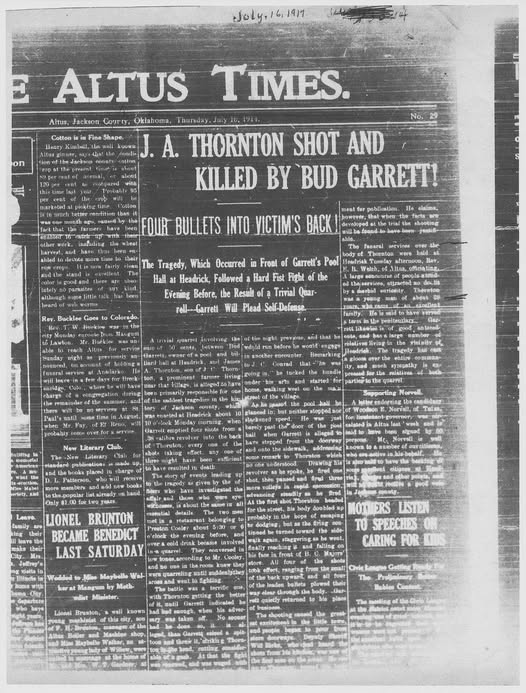
My family and the Land Run, my family and Choctaw Nation, my family and Chickasaw Nation, my family and secret pregnancies, my family and the circus, my family and the rich husband, my family and a fancy house, my family and phonographs, my family and furs, my family and cars.

My family and suicide, my family and The Great Depression, my family and shipyards, my family and displaced Asian-American families in California, my family and racism, my family and fighting racism, my family and no farm, my family and no fancy house.

My family and being shunned, my family and learning to run, my family and fire, my family and oil, my family and power, my family and crime, my family and lies, my family and phobia, my family and rape, my family and incest, my family and trafficking.

Also, my family and surviving.

I forgot a big one: My family and the Dust Bowl. Also, my family and Freemasonry. My family and Mormonism. My family and (alleged, attempted) poisoning. My family and a gunshot to the back (at least, I think that’s how it was told to me). My family and mobile bars in GMC vans. Well, one van. One mobile bar.

[Interlude. Heart racing. I met a poet once who said she disdained any poet who feels anything while writing. That still has me stumped.]

In the dream, two men were after me. One was the devil. I was in one of those Russian-looking apartment complexes with exposed-aggregate concrete and iron rails everywhere and an open courtyard with all the apartments surrounding it, facing in.

I knew both men, but one was a shape-shifter, a self-identifying soothsayer. I never knew if he was there to help or harm. I saw the first through his window while passing by with a load of laundry. He was red, hot, everywhere in the room, and spinning like PSR J1748−2446ad.

The second caught me looking in the window. He saw me run toward the open concrete stairs leading to my apartment. He ran after me, yelling: I told you the devil was real. I told you to look to the angels. I fell, my heart arrhythmic. I clung to the rail, bleating.

I thought the second man was going to help me. Instead, he told me it was my fault. What had to happen now was on me because I didn’t feed the angels. He grabbed my ankles and dragged me, step by rough step, lower and lower. The concrete tore at my knees and shins.

I don’t want to do this, he said. He meant it. He was doing what he thought he had to do, what he was compelled to do by some imagined power. My skirt snagged on the stairs, exposing more and more of my legs, then pulled higher. I clung to the railing. I was so tired. I almost let go.

Then I did it. I said no to the dream, to the scene, to the weakness, to the surrender. To all of it. I closed my eyes. When I opened them, I was on the sand, in wildlands, no concrete in sight and no men.

Four women were with me: my mother, my mother-in-law, my dearest friend Pat Best who always said I was her daughter, and my neighbor—the one who recently tried to love me.

We stood in our respective traumas, unable to speak, tension in and between us like circus wires. Then the tension broke. We danced. For the Earth. For ourselves. For each other. For our bodies. For surviving. We danced and laughed and felt love’s malleable connective tissue.

Three of those women are dead. I love them dearly and understand them better now more than ever. It was just a dream, one I lucidly chose, but there was real healing in it. The one who’s alive can’t love me. We are tension in this life, but we are soft support in other realms.

I had four mothers: one cloth mother, and three cloth-wire mothers. It’s still four mothers. I’m lucky.

I had one motherlike monster, a skinwalker who trafficked me with her husband. I was also unlucky.

As we were dancing, one of my mothers had chest pain. She pulled out a blood pressure cuff and took a reading on her right arm. The other mothers laughed. Stop, I said. This is important. We all need to take our blood pressure readings now in both arms. Things got serious.

Our blood pressures checked out. No big differences between each arm. No heart disease. No blocked arteries. We laughed and continued to dance. I woke up.

That’s all I have to say today. The rest will have to wait. I’m staying on the sand with my four mothers, with their cloth and wire. We’re all together there, and we’re surviving. The cloth is for our bodies. The wire is what we’re using to skid over life’s glowing coals.

The First Face

I feel for those who’ve come out about Jeff Church and am especially moved by Young and Manning’s accounts of seeing Church’s face when they re-experienced what Church did to them.

I know that feeling of seeing a face overlaid on other faces and not knowing what to make of that feeling.

I know the feeling of entire states feeling marred, of a face overlaid on other faces within that place.

For me, it was Georgia.  But not just Georgia. Illinois. But not just Illinois. Missouri. But not just Missouri. Tennessee. But not just Tennessee. 

I had to trace my trauma all the way back to that first state, the one with the sound of home built right into it. And it was my home: Oklahoma. 

Oklahoma and its swirling faces. Its drunken faces. Its maniacal faces. Its aged hidelike faces. Its taunting faces. The home of that first face which jacked up all the others. The face of a man aptly named Jack.

The face attached to the body that held me after I was born. The face that posed with me in my first photos. The face I would later associate with one of my first words: “Daddy.”

When I was little, my parents marveled at the way I could spin a globe and find Oklahoma lickety-split just as the orb stopped spinning. “There, there, there,” my insistent little finger said, staking claim to that stolen state the way my ancestors had during the Land Run. 

There: that where, that no/where, that now/here I can’t shake.

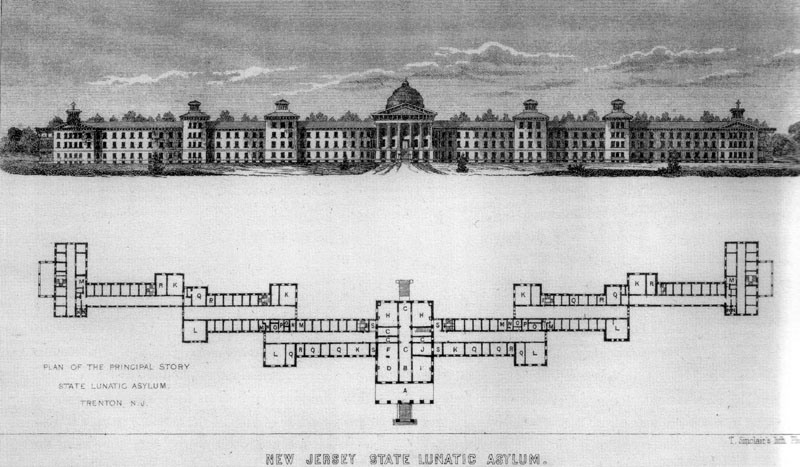
That land where my father lies beside my mother—him in a silky casket, her more elegantly in a little black cremains box—in the cemetery that also has a Catholic section, a children’s section, and a section where forty children who died in a 1918 fire at the state mental hospital were dumped in an unmarked mass grave.

Oklahoma is eternal within me. No Masonic or Hermle clock governs its presence in my body. The trauma—that first trauma and the countless ones that followed—has no timestamp. The Red River is as it was then. The bullfrogs are as they were, plentiful and at times inconvenient, especially when they flooded the road flanking the river. The moon lowering and lowering until it meets the sandy riverbed and shimmers like an arched doorway to heaven or hell or maybe just to someplace better, someplace where pain might exist but suffering isn’t manufactured faster than mobile homes and oil pumpjacks.

The scissor-tailed flycatchers and red birds and robins my mother loved. All as they were. The starlings my father hated. As they were and also as they are now: outliving him, as am I.

The streets and highways and gravel roads that my father wore down, ditched out, careened along protecting and managing his drawling and sprawling fief. The sound of tires hitting seams in the concrete sections that made up a stretch of I-35 and the way the El Camero or later the Monte Carlo or later the GMC van shuddered a little when the front and back tires hit each joint. Ka-dung. Ka-dung. Ka-dung. Ka-dung.

My beloved dog is as she was, the one my father let me keep. She still runs back and forth from one window to the next over my lap as we reach either our city home or that other home in Texoma, depending on whether we were coming or going. I’m still there with her, as I was, laughing, delighting in her joy. Because she brought me joy, even in that family, even in that life, even growing up with an unspeakable father, a boundaryless father, a cradling father who broke the bough over and over. One who made me fall then told me he was saving me when he caught me. Where being saved was his bed, almost every night. And his friend R—. And his friend C—. And the strangers on the other end of the CB radio, the ones he made me talk to. And that one trucker the day my father pulled over and met up with him. How my father called me out, made me stand beside him, showed me off. How nervous that trucker looked. How he wanted to leave. How my father compromised him by making him drink a beer before he left so he’d have the smell of alcohol on him if he tried to do anything like call the cops. How the man said he didn’t want to drink the beer. How my father made him. How the man complied and ran away after doing so. Or maybe he didn’t nearly run away. Maybe he liked the beer, the danger, even my father, just not little girls. No. He didn’t like my father. My father terrified him and meant to.

That father. That first face. That first confusing, crushing pain. That leader. That schemer. That pistol. That man who shocked everyone into quaking compliance.

That man who doesn’t scare me. The one who (s)pawned me, the one who toyed and turned me into a toy. The one who passed me, passed me, passed me around. It was like being on a merry-go-round only without my mother, Merry, there to catch me when I fell.