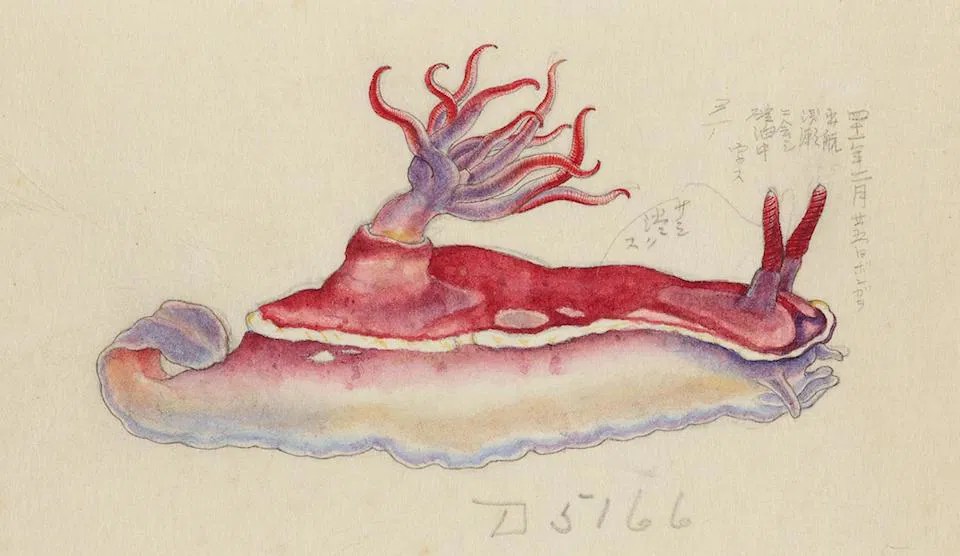
Be the Nudibranch You Want to See in the World

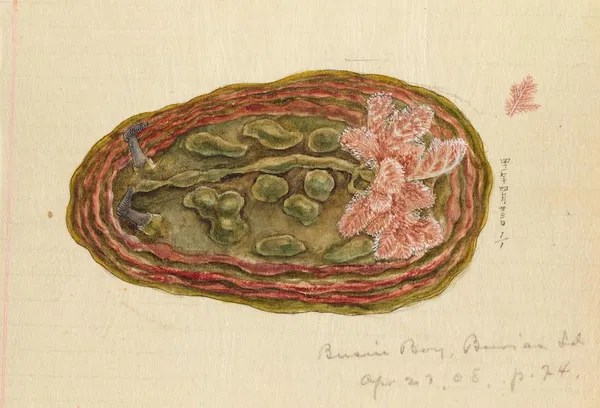
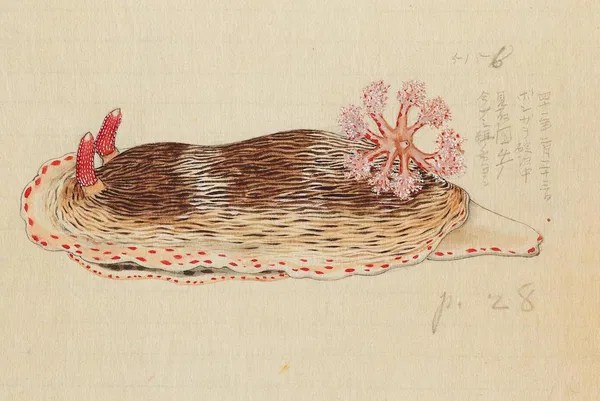
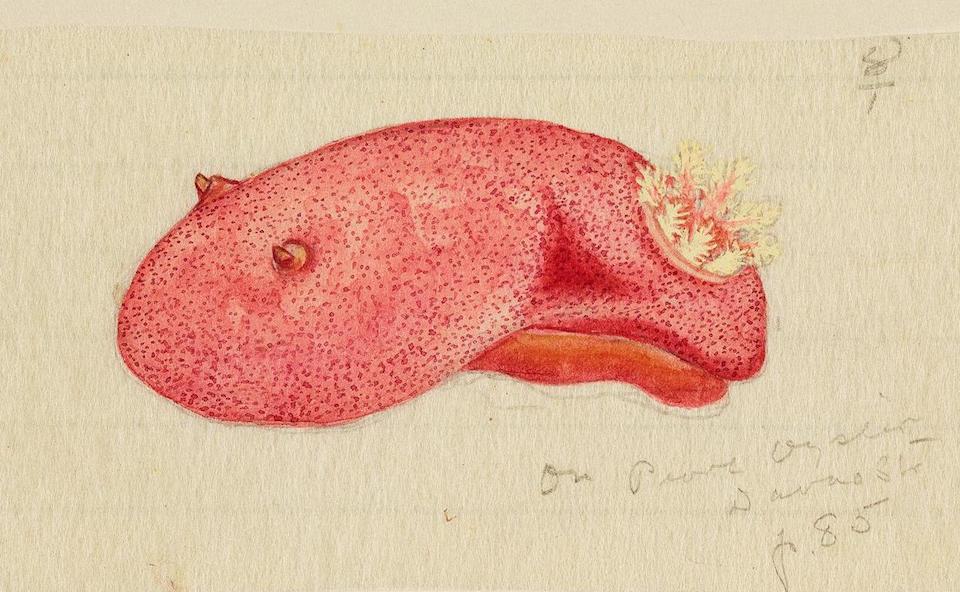
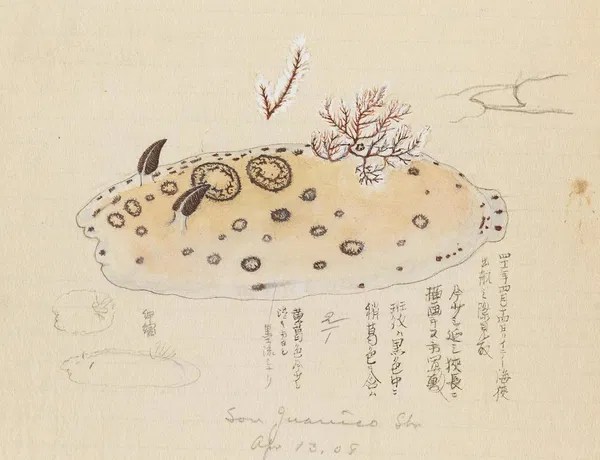
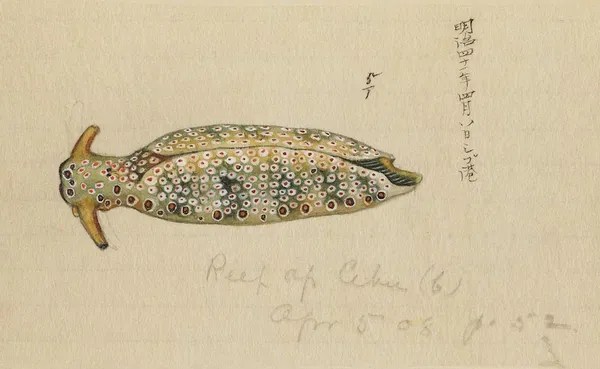
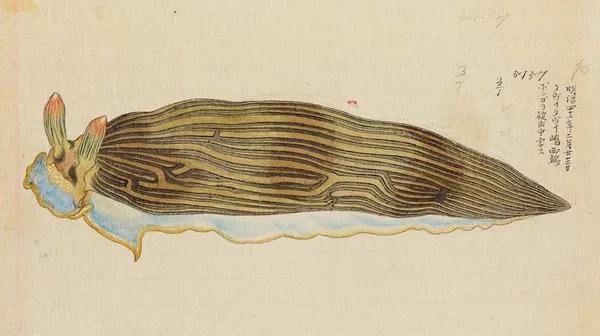
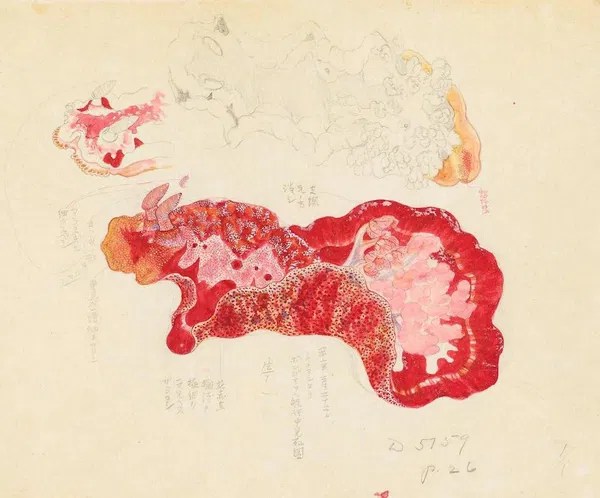
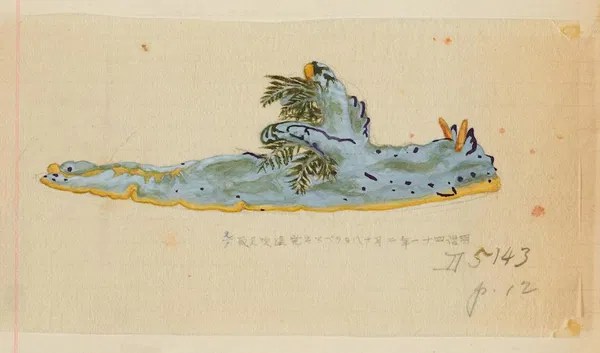
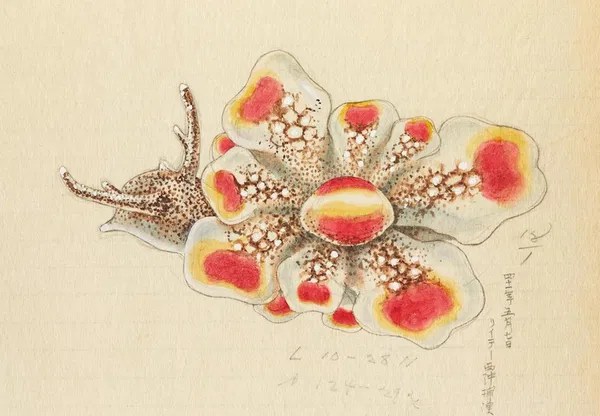
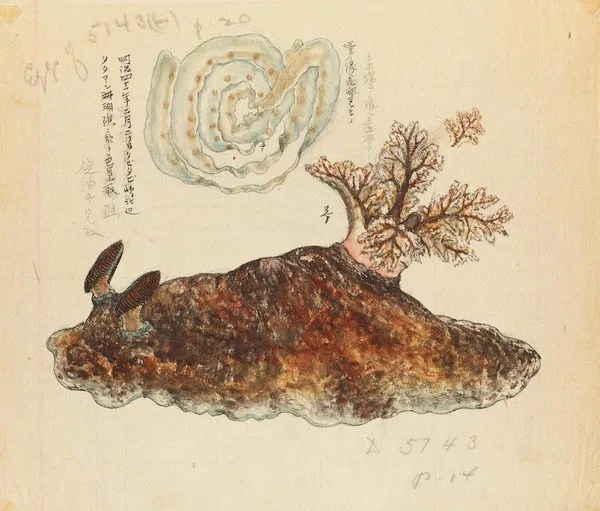
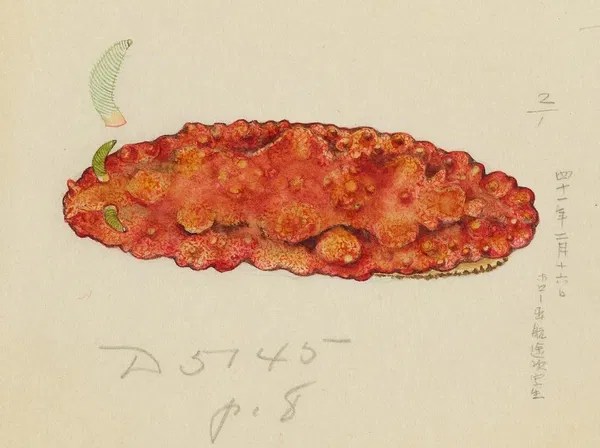
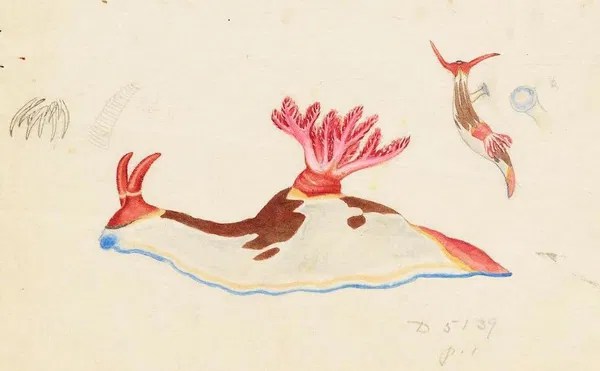
From Kumataro Ito’s Illustrations of Nudibranchs from the USS Albatross’ Philippine Expedition (ca. 1908). What’s your vibe? Which nudibranch are you? Which one do you aspire to be?

Shown: Watercolor illustrations by Kumataro Ito, the chief illustrator aboard the USS Albatross as it surveyed the aquatic resources of the seven thousand islands of the Philippines.

Source: The Public Domain Review.

Twin Fawns, Treats, and Sitting Right in Rooms

I dated a man who didn’t like to be touched when he ate. Never, not by anybody. Not even me. I tried a few times. It didn’t go well. He only liked square rooms, nothing with an angled or curved wall or a cutout of any kind. Cubbies were for sure off-limits. The house he was living in with his band off Gillham Road in Kansas City was one block over from serial killer Bob Berdella’s house, but that’s not what he didn’t like about it. The sitting room had cherry trim, which bothered him because the rest of the trim was oak. It was supposed to be different to indicate that the sitting room was special. That’s what they did in Victorian homes, at least in Kansas City. Architectural history didn’t matter to him. Consistency mattered, order, and not being touched while eating, which I suppose is order-enforcement of a different kind.

I’d say all of this was problematic, but at some point, I stopped being able to sit in rooms without being squared up to them. In bed, I have to lie in perfect alignment with the walls to either side of me or things feel super off. And curved rows of seating in a square or rectangular room? Floating in the space like that, maybe even with seats whose backs are to the entrance? No, thank you. I’ll find a chair against the wall or drag one there if needed, none of this organismic bacteria-esque drifting as if we’re all being observed under a microscope.

I also don’t like to eat treats when anyone’s in the room with me, namely my husband, or when the news is on or I’m reading a shitty anything anywhere from anyone. My treat time is my me time, and it has to be just right. I have a soundtrack I listen to when eating treats. It’s moody music like Eno and Radiohead. Everything I listen to is moody, or maybe I just hear it that way. Barber. Corigliano. Orff. I’m genre-drifting musically now, probably because I have treats nearby, but my fingers insist on typing this before I eat them (the cookies, not my fingers) despite the fact that my husband’s about to return home, which means there will likely be no treat time for me tonight, especially if I start in on editing this post. I also don’t eat treats while writing and editing. My brain won’t register that the eating has occurred, and I’ll get the keyboard all treat-sticky.

The guy I dated also didn’t like to read anything long, so he limited himself to short stories. Say what you will about that, but he introduced me to Raymond Carver, Gabriel García Márquez, and Kansas City poet and writer Conger Beasley Jr. I was still a music major then, as was he. I hadn’t drifted from music to literature and ultimately to poetry, where I remain a producer-consumer to this day.

The last thing I’ll say about him is he showed me twin fawns who died in their mother’s womb and had been taxidermied shortly after their death. They were on display with other preserved animal oddities at a toy store in a Kansas City neighborhood called Brookside. Years later, he bought them from the owner and gave them to his new wife, who’s an artist. They’re art now, those fawns. They live in a vitrine. The artist sells prints of a painting of them. I don’t think it was her, actually, who painted them. Someone did. The fawns were on television as part of an art-competition show. I’ve seen pictures of the artist with the twins beside her under their glass. I love them and hope they’re at peace. I hope they are loved in the real way, not any other way.

It’s hard not to feel something for a man who values taxidemied fawns and shows them to all the girls he loves. Their vitrine is round, not square. Nobody touches them when they eat. They don’t eat because they are dead. They don’t read because they are dead but also because they are fawns, and even living fawns don’t read. Somehow, this last fact makes me profoundly sad.

The Skeleton

Two days ago, I saw what was left of an animal’s body on the side of highway 17. It was stripped all the way down to its skeleton, its bones as clean as a museum display. The curved spine is what caught my attention. This was over by the construction for the bypass road on the same shoulder where we moved the porcupine after she died.

Obviously what I’m getting at is I think it might be the skeleton of that same porcupine. I want to get a better look at it on foot before someone makes off with it. But what would I do with the skeleton? I don’t know. Move it to a better spot, I guess, someplace she can literally rest her weary bones.

I have to stop thinking about this porcupine. Someday, I will.

It was not the porcupine’s skeleton. The ribs were much too large, and from one angle, I was able to see that it was a deer who was almost entirely stripped clean save for the head.

I ended up turning around in the cemetery, where I met three cows: Curly, Friday, and Jet. I stopped to say hi. They all came over to say hi back. Jet is the only one who urinated while walking toward me. It was surprising how much Jet could urinate. Jet and Friday appear to be very close. They nuzzle their heads and lie side by side in their grassy pasture. They live with a chicken. The chicken wasn’t interested in interacting with me. I don’t even know their name.

I don’t think this is the real cemetery for Toquerville. There must be another one for the pioneers, like the one over in Silver Reef. This is a more modern cemetery. The dead in it are barely dead.

Last year, a neighbor was upset that land near the cemetery is being developed. I don’t want people in their houses looking at me when I’m dead, she said. She went door to door asking folks to sign a petition to stop the development. Now, the bypass road will be back that way, too, not just houses. Things like that are going to happen, either now or after we’re dead.

If I planned on being buried, I wouldn’t really care who was looking at me from their homes or cars. I suspect something else was going on for that neighbor: something about safety, the fear of being watched without consent, something about trauma.

My husband was great this morning when I told him I needed to drive over and see if the skeleton belonged to the porcupine. He told me to watch for cars and be safe. If it’s the porcupine’s, we’ll have to go back and retrieve it after you get off work so we can relocate it, I said. I know, he said. I’ll clean out the car.

I’m glad he understands me and will

ife and the dead and bones and burials and honor and how it all somehow relates to healing.

Toquerville Bypass Road

You know that bypass road in Toquerville that I wrote the sad porcupine poem about? Well, while we were away, a boulder the size of a truck unexpectedly dislodged from the lava outcropping they’re slicing through to accommodate the road. The boulder fell straight down into the newly paved roadway while construction workers looked on, then it sat there for weeks because nobody could figure out how to move it.

Apparently, the boulder was eventually blasted to pieces using dynamite. The neighbors told us all about it when we got back. It was the talk of the town and even made it into the local paper. (Tom Bennett from neighboring La Verkin managed to catch the boulder falling on video, which made for a good online news story.)

The company building the road won’t comment on what happened or why they failed to anticipate it. There are many more boulders where that one came from. The outcropping that’s being opened up is heavy, dense basalt on top, but below it’s a combination of veins of hard and soft sandstone deposited over time that have been completely upended by geological forces so they may run almost perpendicular to the ground like the ones behind our home do. That’s important because it means water can erode the now vertical or nearly vertical veins more readily than if they were sandwiched horizontally between harder layers. Within all that sandstone are boulders of varying sizes, apparently including those the size of a truck.

There are houses up on that outcropping, too, which makes no sense. A little ways over by the Virgin River, a house slid into the gorge a couple of years ago. Other homes have been abandoned or are at risk. We saw someone trying to shore their property up with a massive retaining wall that eventually slid into the gorge along with their hummingbird feeder. Those people are gone now. They left their Joshua tree behind.

We’re in an erosion zone here as well, so everything is always cracking and crumbling and siding down to the lowest point it can find. This land’s essence is change. It doesn’t care one iota about smooshing people, houses, and roads as it continually changes.

But we care. So we talk about the big boulder and incorporate it into local lore and Henny Penny about it for weeks on end—and when the bypass road finally opens, sure we’ll drive on it, but probably not without looking up and saying a little prayer. We’ll be looking for boulders, to be clear, not toward the heavens.

I’m not sure how this bypass road conforms with Chapter 16 of Toquerville’s City Code, which requires the preservation and treatment of sensitive lands, including ensuring no hazards are created, such as rockfalls, and protecting and preserving significant natural and visual resources, such as lava outcroppings. But what do I know? Maybe I’m still just upset about the porcupine. (I’m definitely still upset about the porcupine.)

Heartbreaking Wombat Poem

I will describe the heartbreaking wombat poem I wanted to write last night when I was too tired to write because I’d been messing with poetry submissions for fifteen hours straight. (I actually submitted zero poems after all that effort.) The time for actually writing the heartbreaking wombat poem has passed. But here’s what I kind of think the poem would have done. Keep in mind, I never know what the poem will actually do until I start engaging with it for real.

The Poem Has Some Kind of Title

The poem opens with something about how a wombat can’t survive in the wild with only three legs.

The poem goes into detail about the kinds of things the wombat can no longer do because of the missing leg, making reference to an individual wombat who’s experiencing this situation. Evading predators. Foraging. Climbing.

(The poem’s not sure wombats climb. The poem will look that up.)

The poem starts to talk about the wombat in ways humans can relate to, especially those of us who are growing older.

The poem turns to humans explicitly and all the things we can’t do. The poem provides lists here because they can cover a lot of emotional territory. Accretion can be an effective technique in the poem and help the poem avoid sentimentality and other gobbledygook that mucks up poems and may muck this one up despite the poem’s efforts.

Here, the poem may take a turn toward the emotional things we can’t survive, not just the physical things. Traumas. Losses. Unimaginable suffering. The poem will provide some examples, perhaps those pulled from recent news or perhaps from the poem’s past.

The poem might move out from individual traumas to larger traumas by talking about groups of people who are like wombats, ones who’ve lost their lands and are being driven from their homes into the harsh reality that the world is no longer designed for them if it ever was. It’s for others, many of whom want them gone the way they want wombats gone.

The poem may bring up Marky Mark and the way he brutally beat two Venezuelan men when he was sixteen years old, namely how that’s not dissimilar from people attacking and harming wombats, though of course the comparison is problematic because humans aren’t wombats and Marky Mark does whatever he wants, and it’s funny how the history of celebrities always seems to be getting lost, as if it’s all being tucked inside the pouches of wombats never again to see the light of day.

It’s risky, but the poem might talk about the emotional lives of wombats, perhaps discussing how we can’t know the interior lives of nonhuman species, but we can make some educated guesses. And we really don’t know that much about our own interior lives, do we, and that doesn’t keep us from talking about ourselves and each other, so why not allow the stretch here. It’s a poem, after all, not a scientific lab that experiments on animals. (And thank goodness it’s not.)

Now the poem may list a bunch of stuff a wombat can’t do after certain types of emotional damage, like being attacked or run over or left in the road or being burned or losing habitat or whatever. The poem may feel this is an effective way to bring you into the animal’s life quickly, before you can stop reading.

The poem wants you to feel all of this, both for the wombat and for other humans, but its mechanism of action is to get you to feel. You must feel what the wombat feels so you can feel what you feel and then extend more compassion and understanding to those around you.

That’s what the poem wants.

The poem will end but not before it tells you the wombat died. Humans made the decision to euthanize the wombat once they realized the leg couldn’t be saved. The poem may offer a kind of prayer here for safe passage from this world, but the poem knows it’s better if there were safe passage within it.

The poem will leave. It will disappear into the margins because the poem always has safe passage into silence.

Incrementally, Tenderly

Morning Prayer September 21, 2024

In the fall, Tucson smells like mildew, dirt, and cold metal. The wildlands behind our home are full of mouldering plant matter, animal matter, too. Every morning here is like an episode of my favorite series ever, Sunrise Earth, which aired on PBS years ago. The earth wakes up the same way everywhere: incrementally, tenderly, and without assistance from humans.

The coyotes are howling. They’ve been like this for days. They made it to fall. They’re anticipating winter, perhaps, bodily if not consciously. The moon has been big and glorious, which has affected us all, especially, it seems, the coyotes.

It’s like Sunrise Earth here with the birds calling and singing and buzzing, first the curve-billed thrashers, then the northern cardinals, then the house finches and the cactus wrens and the gila woodpeckers. A northern flicker even joined the crowd today, a rare treat.

The birds sing more as the sun rises higher, until it’s above the saguaros and palo verde trees. They sing until they stop, either because the sun is where it’s supposed to be and singing time is over or because the Cooper’s hawk has made an appearance. The birds are alarm clocks. They have a collective circadian rhythm that’s entrained on dawn. They help me keep my body clocks in sync and in working order.

Human sounds are here, too, which is where these mornings diverge from the Sunrise Earth episodes. Cars, too many of them, speed along Old Spanish Trail anticipating or dreading where they’re headed. Someone operates a chainsaw next door, an undertaking that started before six in the morning. If only humans would stop and watch the sunrise for five minutes and be part of the earth rather than setting themselves apart from it. I don’t know what that might change, but it might change us.

May we all be part of the Earth today. May we find a way to anchor ourselves on this planet and the lands we inhabit. My we be of this world, not separate from it.

Zion

Deliver me from the man who ran over a porcupine in broad daylight because of his need to thrust his way forward always forward always faster and always darker, coal smoke billowing from his tailpipe as he hits the gas hard.

Deliver me from that man who saw the porcupine struggling after his back legs were crushed, who didn’t stop, who didn’t take the porcupine to the wildlife rehab on the other side of Flying Monkey Mesa, who didn’t care because black smoke because man because manly because grrrrr because move over here I come like it or not because get off of my road and out of my town and I’ll put my foot in your ass and I’ll mow you down I mean it I mean it look at me I really mean it look at my Gadson flag and my Dixie flag can’t you see I mean business look at my neck veins little lady, pretty little lady, lady why’s there a thought in your head a little tinkling thought about love that’s so silly so outdated so childish like a school bell hey little lady listen here it’s not God’s way for you to think or tell a man what to do a big man a strong man a fast man and you damned well know it so stop thinking just stop stop it right now.

Deliver me from what the porcupine must have felt there in the road on the hot asphalt in the heat so close to the soft sage flanking the road’s shoulder. He got so close but not close enough never close enough for speed for thrill for look I killed that varment woohoo hot damn and never enough blood left in the leaking husk never enough life left in the pressured heart and never enough limp left in the body nobody will ever gather for ever.

Deliver me from those who came after and also didn’t stop. The sedans and SUVS and minivans and trucks and semis and hatchbacks and Outbacks and Elements and motorcycles and RVs.

Deliver me from every one of them. Deliver me from my neighbors. They didn’t stop. They didn’t stop. My neighbors didn’t stop. Too busy doing God’s work to do God’s work.

Deliver me from my own absence as the porcupine struggled, for coming behind too late by hours, maybe, or maybe only by minutes which is even more self-hatred to be delivered from.

Deliver me from rewriting the story so I’m there, so I take the limp, quilled creature in my arms and usher him to safety, to people who care, to angels on this earth who spend all day helping the creatures of this earth. I almost typed heart. Heart is earth. Earth is heart. Same letters. How did I never see that before? Grief brings out glimmerings, doesn’t it? This is how and why we survive grief. No glimmering, no future. No heart in earth, no earth in our hearts.

Deliver me from those who have no earth in their hearts, no heart in their earths.

Deliver me from my revisions my impossible revisions my anger that story only takes us so far into the future because it never changes the past. Our stories are cursed that way as we are cursed.

Deliver me from the cursed. Deliver me from myself as one of the cursed. Curs-ed, say it with two syllables. Say it with me. Curs-ed. Clop along to that languid beat, that dirge. The march of what we’ll all be without love and without hope.

Deliver me from revisions existing only in our minds and not actually changing what happened, what really happened. The porcupine is dead. That’s what happened. In broad daylight. Visible on open road. The driver could have slowed. The driver could have slowed. The driver could have slowed his hellbent smoke-infused take that world roll.

Deliver me from this iron-encrusted place whose heart was lost in the creek, in the canyons, up on the cliffs when … years, hours, minutes ago? How long? How long has it been? Since we came, since we named, since we shamed, since we couldn’t leave couldn’t leave couldn’t leave this place alone?

Deliver me from how long we’ve lived like this, baffled and battled and beaten and battered and branded and broken. How long must I writhe, I mean write, before I write my way out of this failing, flailing, hellish heaven on earth? A minute? An hour? A day? An eternity?

Zion—my great nephew, not the place—deliver me from this land whose name you carry in your pocket on your papers in your heart and in your genes. Yours is the real Zion. It lives inside you, little one. Never deliver me from who you are—from you, my kin, my kind, my kindred. [REDACTED] Pin me here to this tree, the only one that’s safe these days with all the fruit trees eaten bare. The family tree. My tree, our everlasting tree.

As for you, Zion—the place, not the great nephew—deliver me from you. Free me from you. Forget me. You don’t even have to forgive me. If you can’t reverse time and bring that porcupine back to life, if you can’t unwind the clocks that are all wound too tight here warping time and space and hearts and minds, then deliver me. I beseech you. Deliver me from what we’ve made you, from what you’ve become. Please deliver me.

Sacred and Desecrated

One of the penalties of an ecological education is that one lives alone in a world of wounds. 

― Aldo Leopold

I’m staying in a tiny home that overlooks the Virgin River Gorge in La Verkin, Utah. This is my view from the balcony. When I got here, the river was low and relatively unremarkable—a muddy brownish-red my friend in Missouri described as “stark.” Then it rained heavily in Cedar City, a town that should have been called Juniper City because those are the trees that grow there, but I digress. The river swelled and grew noisy, pushing trees and other large pieces of debris aside as it flowed angrily past. This was a new river, a different river, one that felt at once mystical and mythical. But the sky wasn’t about to let water get the upper hand. The sunset last night, shown in my photo, was brief but as powerful as the one James Tate describes in his poem, “Never Again the Same,” which reads, in part:

              The colors were definitely not of this world,
              peaches dripping opium,
              pandemonium of tangerines,
              inferno of irises,
              Plutonian emeralds,
              all swirling and churning, swabbing,
              like it was playing with us,
              like we were nothing,
              as if our whole lives were a preparation for this,
              this for which nothing could have prepared us
              and for which we could not have been less prepared.

Heavy rain and lightning today, along with markedly cooler temperatures, made the creatures who call this wild area home stir. A great blue heron hunted squirming fish from a basalt boulder flanking the river. Squirrels scurried on the balcony then settled in and stared into the middle distance. Broad-tailed hummingbirds fed on native and cultivated shrubs in the seam where what’s wild meets what’s manicured only to the degree that it still looks wild. A red-tailed hawk swooped into the gorge then headed southish following the water.

The collective stench of wildlife urine, pungent and rising from newly moist soil, mingled with the sweet and musty scents given off by the surrounding flora: native plants such as cottonwoods, globemallow, Mormon tea, and sand sage that live alongside introduced species such as cheatgrass, Russian olives, tamarisk trees, and tumbleweeds.

This riparian habitat is unique in Utah. It comprises only one half of one percent of the state’s total land. The highest levels of biodiversity are found in spaces like this. More wildlife species live here. Bird densities are twice as high here. The visitors who flock to this area each year, especially in the warmer months, may look out from their balconies and see something pristine and untouched and remarkable and precious. 

Except for the homes built right up to the gorge’s steep, unstable cliffs. Except for the homes and retaining walls and bird feeders and playground sets the gorge has already swallowed or threatened to swallow. Except for the large banner on the other side of the gorge advertising finished lots for sale—ones that also hug the gorge’s edge. 

Except for the trash dropped over the cliffs’ steep sides and forgotten. Except for the residents who breed their dogs unethically and leave them outside all night long to howl from fear and frustration. Except for what happens behind some of the closed doors here—the kinds of things that could happen anywhere in terms of the broad strokes but whose details follow unique, longstanding patterns specific to this area.

Wendell Barry writes, “There are no unsacred places; / there are only sacred places / and desecrated places.” This is a sacred place, but it is also a desecrated place. Visitors for the most part don’t see beyond the perfect images they capture from their balconies, the ones that literally exclude the houses, trash, and other incursions on the natural land from the frame. They trot out, often barefoot and shirtless, right when the sky erupts with color. They are, as Tate describes, totally unprepared for what they’re seeing, to the point that it makes no impression other than the ones they get on social media for images that have a shelf life shorter than the energy drinks they chug after getting a buzz scaling this or that nameless cliff—not because the cliffs have no names but because those scaling them don’t bother to learn their names before picking up and moving out, on to the next adventure, the next cheap high.

Because I Have Suffered

The birds are turning into flowers.

For Easter, I’m hiding peanuts around the yard for the birds.

Northern flicker: The last time I saw you, you were clinging to the sweetgum in the rain.

Don’t go, nuthatch. I was just learning how to watch you.

The American goldfinches are starting to look like marshmallow Peeps.

Today is rain and birdsong.

My yard is covered in puddles and juncos.

The red-winged blackbird returned to the yard today.

Haters gonna hate, but at least I get to come home to birds.

I miss the red-winged blackbird so much!

Today, I stopped to help a dog who was running loose. A woman came out of her house and said she wanted the dog to run into traffic and die. This kind of thing is why I’m a solitudinarian.

The Carolina wren loves to eat suet then sing from the silver maple.

After eleven days, the red-winged blackbird left me.

I love you more when you are with a dog.

Live alone, die alone. Live together, die alone.

Two days ago, I saw a male northern cardinal feed a safflower seed to a female.

I put down grass seed, and the birds ate it all.

It’s as if birds don’t care about lawns.

My skills include making the bed while my chihuahua is still in it.

A blue jay riffles through the leaves in my neighbor’s gutter.

Near the heronry, squirrels are busy making nests out of plastic grocery bags.

What have I done today? Nothing awful, I hope.

Today was strange because I didn’t see any hawks.

This half-tamed world is a respite from misery.

Red maple blossoms: How can I not have hope when I look at you?

Heartbreaking: As we age, we lose the ability to hear high-pitched bird songs.

You know who visited my yard today? A golden-crowned kinglet, that’s who.

Today, I misread the word “brides” as “birdies.”

My favorite chipmunk just climbed up the side of my birdbath and got a drink. So cute!

It’s almost time to put the hummingbird swings out.

A red-bellied woodpecker stashes safflower seeds in holes drilled by a yellow-bellied sapsucker.

Three blue jays gather in the nearest tree as I fill their peanut feeder.

When I stepped away from the window, the ice in the birdbath turned to water.

The hammock is covered in silver maple blossoms.

It’s hard to hear the red-winged blackbird’s melody when several hundred are singing asynchronously.

Here and there, mourning doves have settled into the earth like river rocks.

The male red-winged blackbird returned to my yard today. The greedy part of me is delighted.

I’m listening to the train and thinking about the juvenile Cooper’s hawk I saw this evening.

Two barred owls are singing to each other in my neighbor’s tree.

Two red-tailed hawks fight over rights to a marsh seeded with red-winged blackbirds. Each leaves with nothing.

Starling, your feathers are puddled motor oil on an asphalt road.

Nothing captures the entwined sense of desolation and hope more than a dead tree full of live birds.

The molting goldfinch is a half-painted canvas.

As soon as the Cooper’s hawk is gone, juncos pop out from their hiding places.

Two northern cardinals chase each other from tree to tree.

Bare trees flutter with finches.

The church bells next door don’t observe daylight saving time.

I dreamed the poet who assaulted me sent me a beautiful tree for my garden along with a note that read, “Keep quiet.”

We trimmed the trees but left the nesting cavities untouched.

I have a lot of time to look around.

A red-tailed hawk is perched on the tornado siren tower.

Moments don’t really exist, do they? They aren’t apart from anything else.

The robins wonder why I live in a structure on their land.

Help. I woke up with myself again.

I love it when blue jays let me in on their jokes.

The blue jay cried “kwirr kwirr” from the sweetgum as I filled the peanut feeder.

All morning, a blue jay has imitated a red-bellied woodpecker.

Every moment, I have a choice. Every breath, a choice.

Friendship formula for other people: time together + intentional self-revealing = feeling close to others. Friendship formula for me: time together + intentional self-revealing = feelings of panic, shame and fear.

I feel like I walked across a long bridge and nobody followed me. I stand here alone.

I don’t want you to be someone who enjoys more beauty. I want you to be someone who causes less destruction.

Tender, tender. Be tender.

Good writing is a bell ringing me back to life.

My mouth always feels like it’s falling off.

My life, as a whole, is divided into two parts: before trauma and after trauma. At this point, I barely remember before trauma.

Trauma passes through the gut in three hours, through the small bowel in four. It takes seventy-six hours for trauma to traverse the large bowel, but it never leaves the body. The undigestable parts stain fingers, swell joints, weave their way into every strand of hair.

I know when I don’t feel safe. I know when I don’t feel seen or heard. I know to avoid those situations whenever possible.

If the birds are in the trees, I want to be alone.

Like a scorned lover, the wind tore the mylar balloons to pieces.

Then: How can I make my life into art? Now: How I can just stay alive?

Sound is always leading me into ditches.

I feel like you used to be more than flowers.

Lie on the ground with me, neighbor. We’ll sort this all out when the wind dies down.

First Law of Wind: There is no wind without things.

Second Law of Wind: Great wind descends into stillness.

Third Law of Wind: You cannot escape from wind.

We can only know the wind through the things it touches.

You crossed the boundary long ago, so take what you want. This leaf. This seed. This wagon. This hoe.

Have my watering can and two-tiered birdbath, my chipmunk and his major and minor hoards.

What’s this? Your pill sorter. The chambers are chalky and taste like salt.

Your plastic will become my plastic. Your glass, my glass. I want your caps, your lids, your Juicy Juice boxes and their delicate little straws. Let it all blow my way.

I’ll retrieve your balloons with a cherry picker—deflated hearts that announce your love.

Take my birds as a sign of goodwill. Let them sing you back to joy.

I walk around picking up your branches, your receipts, your skiffs of tinfoil.

Your inflatable packing is strewn across my yard like entrails.

You once held the mylar balloons that quiver in the silver maple.

I come to know you through the things the wind blows from your yard to mine.

Snow. Wind. A pair of red-winged blackbirds clings to the crabapple.

You can tell a lot about a person from their detritus.

Dried hydrangea blossoms stumble along the culdesac, the wind’s playthings.

Two mylar Valentine’s Day balloons are stuck high in my neighbor’s silver maple. They aren’t just an eyesore; they pose a threat to area birds. This isn’t how you tell someone you love them.

Spring: Plastic bags snagged in the stubble field are turned into the soil.

First response to suffering: Because I have suffered, I don’t care about the suffering of others. Second response to suffering: Because I have suffered, I don’t want to see others suffer.

I laid the goldfinch to rest on a bed of moss and covered him with dried hydrangea blossoms.

Today, my Turin horse was a small bird who died because he tried to fly into the reflection of a tree.

If I hold your neck, will it unbreak? If I open your eyes, will you see? If I run my fingers along your feathers, will you fly? Summer is coming, your brightest season. Now you lay in my hand, your toes curling as if around a branch. I breathe and you don’t.

Unable to accept what is, I tried to will a dead goldfinch back to life today.

On new asphalt, the muddy tracks of Canada geese look like hieroglyphs.

There should be a brand of ice cream called Sorrow.

I kept one thousand words in a cage, then I set them free.

The next time you see a bird, know that part of me is with you.

Today, my Turin horse was a pair of bluebirds trying to nest in a construction zone.
Geometry

I found a heronry today near my home.

Birds froze to things last night: utility lines, branches, feeders. They left feathers behind when they flew away.

Geometry: two northern flickers—one on the utility pole, one in the sweetgum—and me, below, standing between them.

A European starling found a white feather and dropped it in the birdbath.

A blue jay used a peanut shell to bully other blue jays. He wielded it like a little sword.

Overhead, a single herring gull flew behind several ring-billed gulls.

I am as fussy as an American goldfinch.

I don’t know where the birds go at night, but I want to go there, too.

Songbirds slid off iced branches this morning.

The ground has thawed. Squirrels play in the wet grass.

Morning: A squirrel drags a dried hydrangea blossom to his nest in the silver maple.

The grackles arrived this morning. In the near distance, hundreds of Canada geese are moving north. Only a handful of juncos remain. One sings from the back fence.

I hear tapping on a nearby tree. Two red-bellied woodpeckers jag through the air. They needle the sweetgums then disappear.

I am mildly interested in leaving the house but only to go watch birds somewhere else.

Sunny and warm. Clear skies. Two geese fly past the tornado siren tower.

I live knowing there is a Turin horse in my future, a suffering so great it will finally break me.