Neck Tattoos with Queer Messaging

The life partner sneaked off and got some pizza yesterday from this place when he was supposed to be going to the gym. It was some kind of partner alone time with pizza thing that I wasn’t allowed to participate in. I guess he felt guilty, so he brought me some pizza, which was small and cold and covered in onions and not at all keto, and I ate it because of course I did.

Within hours, I was dizzy and felt super weird, so I ate a whole thing of chocolate hummus right before bed because I thought it might help, which as it turns out is ten servings, not five like I thought, but whatever, and then I went to sleep and had disturbung dreams that I did in a disturbing way, which only happens when I’m stressed. I was flying around on my back refusing gravity, sort of superhero-like, but my foe was just some Costco employee who didn’t like neck tattoos with queer messaging.

I woke up and then started back in on the dream before I felt like I was even asleep again. I do not like it when that happens. I woke up again and checked my fitness watch only to see that it wasn’t pairing with my phone. I tried to pair it because I am governed by these technologies, and the phone decided to pair with my walking pad, which started beeping and flashing its lights unsettlingly like a digital presence being birthed into something that approximates being.

All of this of course woke my dog up, who then needed to potty outside, and so here I am, bloated, dizzy, and suddenly playing with my Magic 8 Ball at 2 a.m. and not liking what it’s telling me about poetry while simultaneously watching the news and not liking what it’s telling me about the world.

In the dream, I could fly horizontally really fast in the lavender Converse high tops I had in the 90s, but when I got to the woman from Costco, I would stop suddenly and hover midair, my feet inches from the woman’s face, and I would be mad that something was keeping me from crashing into her feet first. Now, I have to sit with that part of me, a dream part but still a part, and I also have to sit with the fear that my dog has cognitive decline because the walking pad may have woken her up tonight, but she’s been waking up in the middle of the night like this a lot lately. Right now, she’s pawing at me and wanting to play. I love her so much, more than those lavender high tops, and more than flying in dreams without the violent impulse behind the flying, and more than my smart tech that’s got me doing its bidding in the middle of the night, and maybe even more than the moon and the bats and the creek and the laccolith put together.

I mean, I love my dog and don’t know why she’s never in my dreams. It’s always some stand-in, like my childhood dog or a dog I don’t know who’s supposed to be her but isn’t. I want to be able to visit her in dreams every single night so we’re always together now and for the rest of my life.

I shouldn’t have had that pizza. Or that chocolate hummus. I am puffy and emotional, beyond the degree to which I am typically these things. It is dark. Even the walking pad has gone back to sleep. Something appears to be on fire on the news. The Magic 8 Ball says Outlook Not So Good. That should be on all the faces of its floaty thing these days. Outlook Not So Good. Outlook Not So Good. Outlook Not So Good. That floaty thing is an icosahedron, so I should technically say Outlook Not So Good twenty times, but I’ll spare you. Five times is already four times too many.

P.S. I also sat in the pizza somehow. A little of it. Messed up my workout jeans. But I took my shirt off, drank some milk, and listened to Kid Rock, which made everything OK.
Institutions

Because Knott’s early life took place in various institutions, and because their confines would have seemed insurmountable, it shouldn’t be surprising that he viewed the poetry world with suspicion and contempt. After all, institutions were his only experience of organizing the chaotic world, and those institutions did not treat him well. — Sandra Simonds

I’ve been thinking about Bill Knott again. I feel this. I really do. Institutions have not treated me well, either, whether familial, social, political, religious, educational, or governmental. Read Simonds’s essay on Bill Knott on the Poetry Foundation’s website.

Flint

My father and his friends destroyed my childhood innocence. The poet who sexually assaulted me destroyed the innocence I reclaimed in adulthood. He did it in part by making me talk about how my father and his friends violated me while he violated me. I know you don’t want to hear about that. I know nobody wants to hear about that.

Maybe you want to write your poems. That’s what I want, too. Maybe you want to see your work in the world because you believe it could help others—and you for that matter. That’s what I want, too. Maybe you want to belong to something and feel proud of what you belong to. That’s what I want, too.

If there’s a difference between us, my guess is that you’ve been heard, believed. Or that what happened to you isn’t what’s been happening your whole life. Or that you found poets who are safe, kind, welcoming. Or that you conjured some kind of flint to restart the fire of your life.

One Life

Years ago, Tyrone Williams wrote that the poet who harmed me (and others) suffered two “deaths”—a social death and a cultural death. If Williams were still alive, I’d tell him what I suffered: one life I can’t even stop living, one life that feels like an emotional and physical battle every day, one life where I’ve lost trust in everyone, one life that just won’t end.

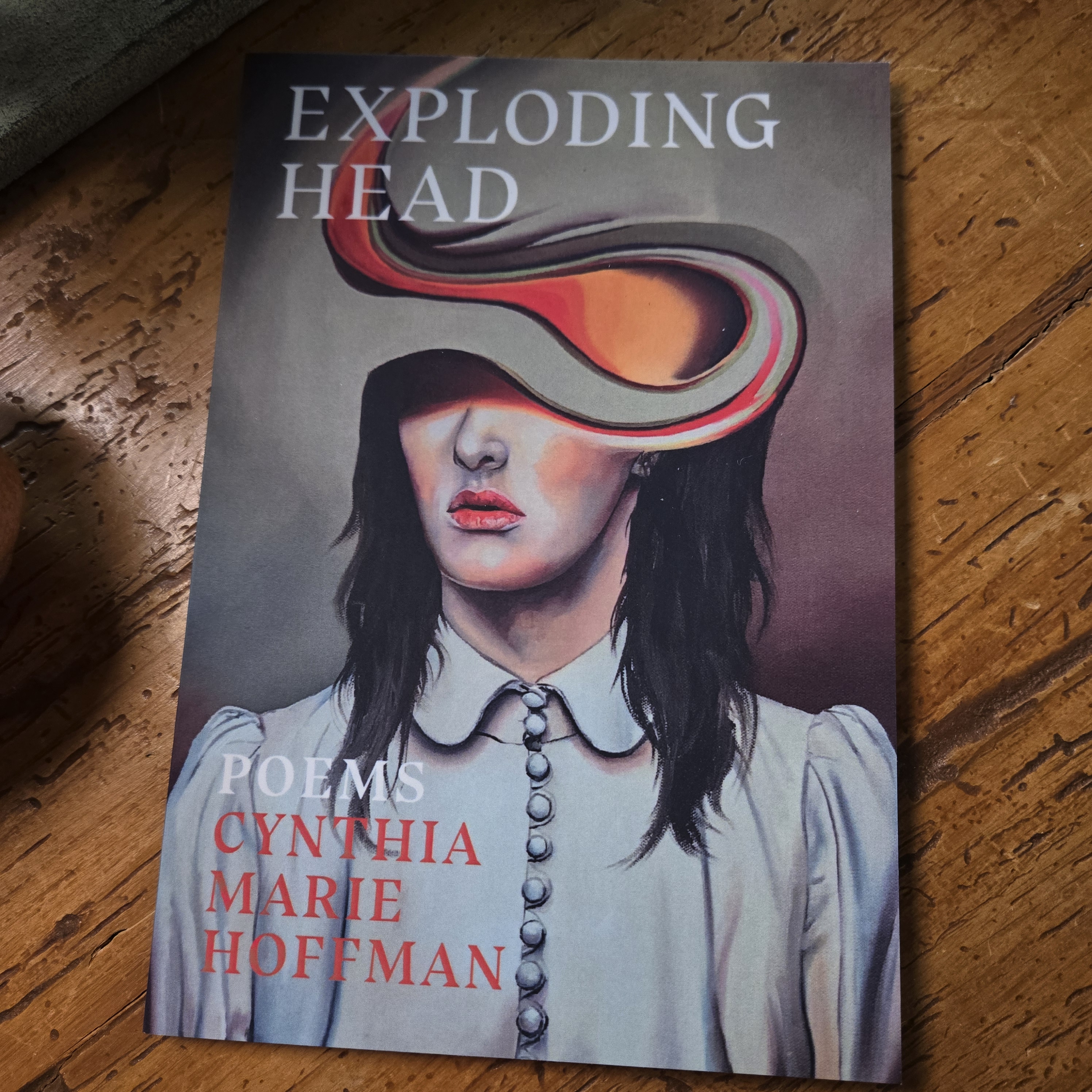
‘Exploding Head,’ by Cynthia Marie Hoffman

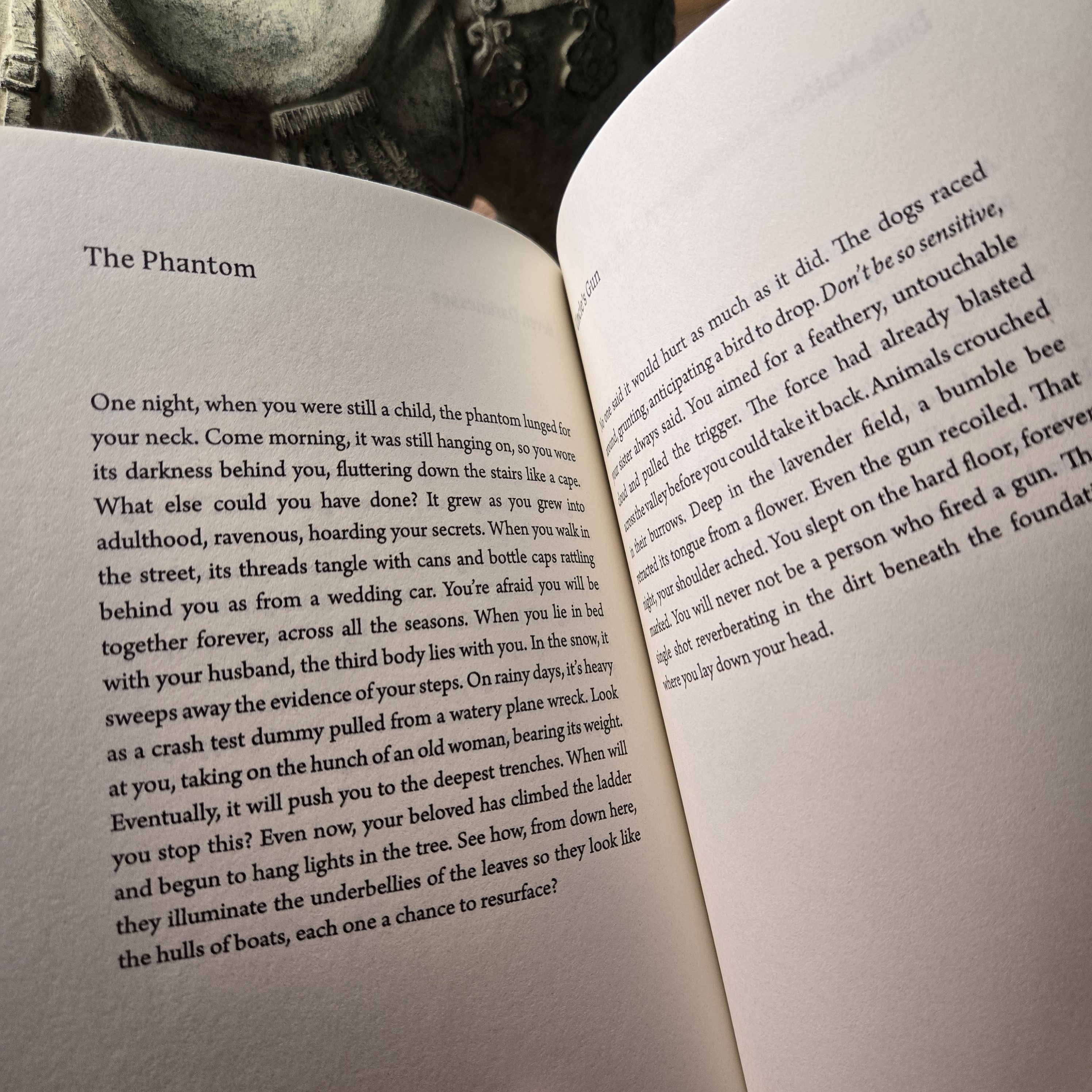
These poems have a feel for me, a texture. Take the opening lines of “MRA Machine”:

Strapped inside this bright rocket, you are a spirit ready to be launched toward the light.

Do you feel that? In the pacing, in the sound? There’s fear, but there’s also something soothing about the language because of its music.

In Exploding Head, Hoffman’s prose poems feel like the warp of the subject matter coming together with the weft of the language she uses—language that, in her words, both opens up and clamps down hard. Reading the work is, for me, like running my hand across the face of newly woven fabric, nubbins and knots and all. I’m talking about poems that drape, that shoosh or scritch, that become something sensual, that conceal and reveal. I’m talking about a poet who can make a poem into a garment woven from different types of yarn that readers can step into and then back out again, both ourselves and not ourselves—the you in the poem an internal conversation in second person but also us if we allow ourselves that moment of extension into and beyond, which I willingly and gladly do. What is poetry if not a way to experience the world through a consciousness and creative expression that is not our own?

These poems sley the reed, thread the heddles, and follow the fell line as they take shape on the page as blocks of memory, experience, imagination, and disquiet.

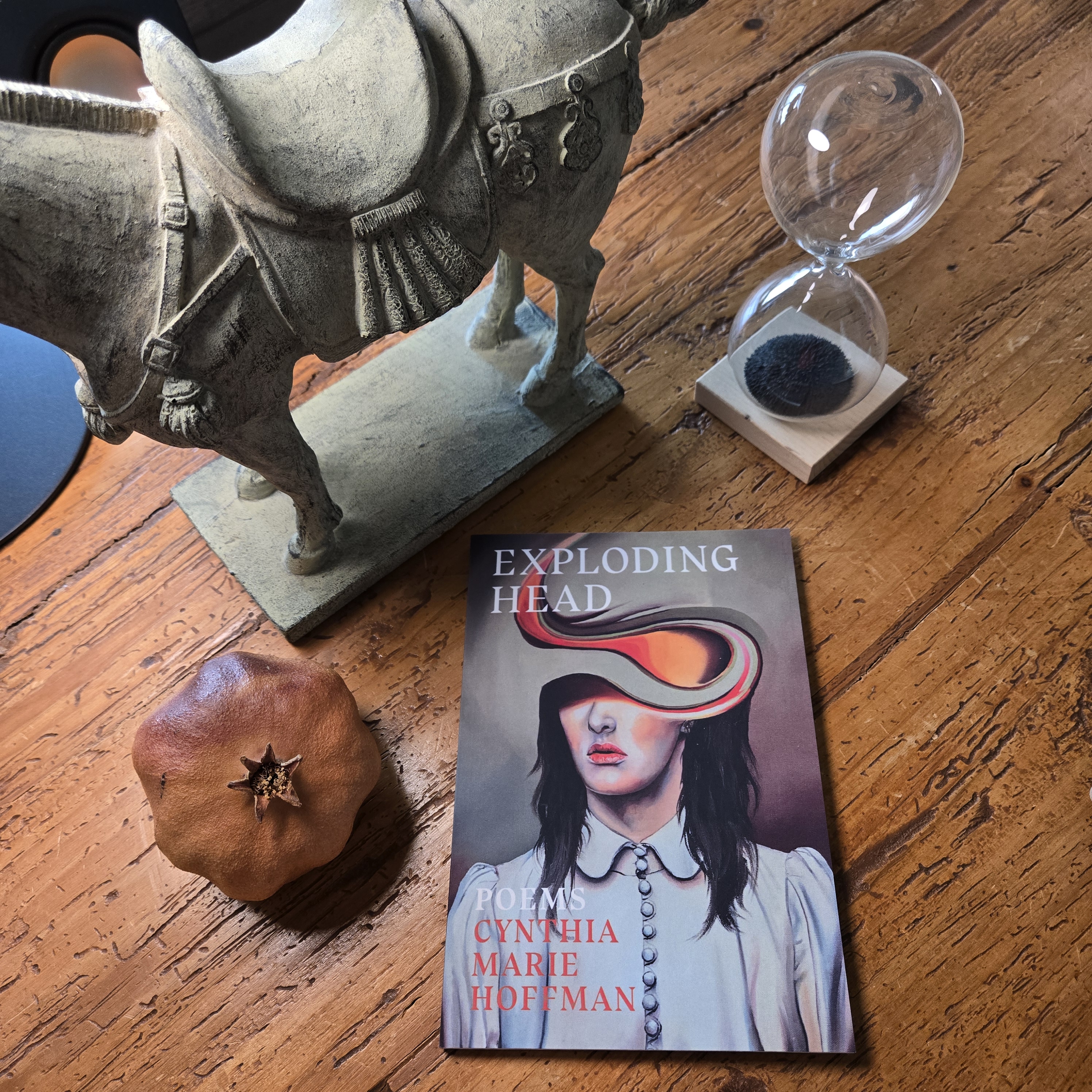
Images: 1. The front cover of Exploding Head, by Cynthia Marie Hoffman. 2. Two interior pages from the collection. 3. Another image of the front cover of the collection, along with a dried pomegranate, a horse sculpture, and an hourglass.

Utah State Mental Health Hospital

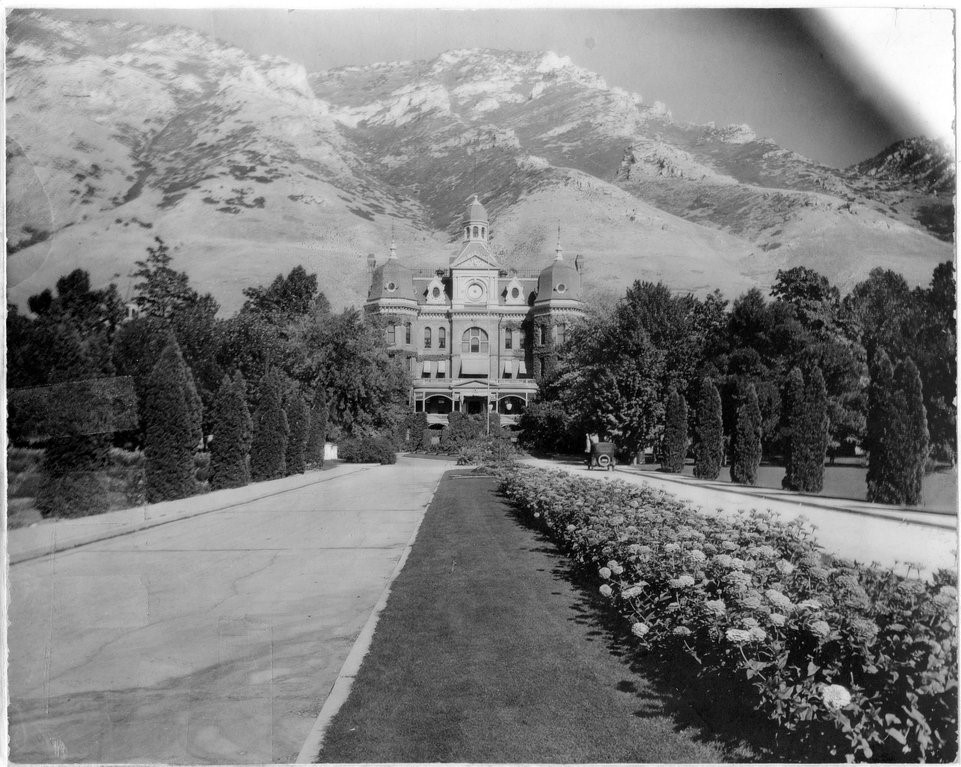
Here are some of the reasons a person could be committed to the state psychiatric hospital in Utah around the turn of the century: having epilepsy, financial embarrassment, disappointment, softening of the brain, death of a child, poverty, jealousy, unreciprocated love, studying prize fighting, ovarian trouble, reading novels, solar heat exposure, overwork, litigation, sedentary life, hypnotism, having girl trouble, being sheep herder, and smoking cigarettes.

Image: Utah State Mental Hospital in about 1920. From Utah Department of Health and Human Services.

Whateverality

I just called my partner my husband, and he was like I’m your partner not your husband, and I was like you’ve never taken issue with the word husband before, and he was like I am now and besides, he said, if I bring my husband into this, there’s going to be trouble, and I was like, you have a husband, and he was like, me as a husband not a husband I have, and I was like can we pretend like you have a husband and if so what’s he look like and is he into asexualish married nonbinary folks who sometimes lean into bambisexuality, and suddenly my partner was gone and I was sitting alone in the living room on the champagne-colored velvet sofa just as the sun was starting to rise and warm the creek and the horses and the laccolith, and I thought maybe I need a new word for my sexua-whateverthefuck this is.

Utah Mega-Shelter Update

This is major news: Utah’s House Majority Leader has filed a bill that would block plans for a homeless shelter campus in Salt Lake City’s Northpointe neighborhood, angry over what he suggested were broken promises to protect the Great Salt Lake.

On Monday, House Majority Leader Casey Snider, R-Paradise, filed House Bill 253. It would prohibit any permanent shelter over 300 people and shut down any efforts to develop land for what critics have blasted as a “mega-shelter.”

Naming Names

I’ve been thinking a great deal about a comment left on Facebook in response to my last post that merits deep consideration and a detailed response. This is my first attempt at such a response. The comment was about one of the essays I shared in which several poets and writers respond to an essay about assault and harassment in the literary world. It’s about naming names, specifically this comment by Roxane Gay:

I’d name names, but these aren’t my stories. It’s not my place. That’s what I tell myself while also knowing that when we keep these men’s secrets, we allow their predatory behavior to thrive. They won’t stop until they are held accountable.

I think it’s important to note that abuses of institutional power are ultimately an institutional issue. Institutions bear responsibility for doing more than negating complaints and concerns when they’re raised or making decisions that inadequately address these situations—and often behind closed doors.

I’ve never written about this before, but many years ago, I approached the institution the poet who sexually assaulted me worked for. I was told that because I wasn’t one of his students and because the assault didn’t happen on his campus, I couldn’t even make a complaint. But it did happen en route to a college campus, one where he was representing his school and one where he’d written a letter of recommendation for me for the MFA program he was dropping me off at. And I may not have been his student, but he was working with me as a mentor. He also, I realized in retrospect, engaged in grooming behavior several months earlier at the first and last AWP I ever attended.

Most of these abuses in the literary community occur in conjunction with a school, a school-supported event, a literary organization, or some other entity in which the poets in question are serving in formal and informal roles. Those institutions need to do better. Universities and colleges need to do better. Associations need to do better. Conferences need to do better. Publishers need to do better. Journals need to do better. And so forth.

Until complaints are taken seriously and appropriate action is taken, nothing will change and those who have these experiences will continue to feel invalidation, fear, shame, and guilt on top of the trauma from the experience itself. Some may stop writing entirely, as I did for seven years. Some may experience such fundamental shifts in their bodies and minds that they never feel like themselves again, not even years later.

Gay says she doesn’t name names because the stories aren’t hers to tell. I understand that and believe every survivor of these kinds of experiences has the right to discuss, or not discuss, what happened to them in whatever detail and whatever way makes sense for them. If we all rely on those affected to be the only ones naming names, though, we’re shifting responsibility not only for what happened—and the trauma of what happened—to those who often have little to no power and are often survivors of other abuses, but also for the naming and the responsibility and added vulnerability (and possibly targeting) that comes with that.

Speaking at all is terrifying. Carrying the twin burdens of having been abused and also having to publicly name the person who abused is heaping a whole lot on survivors of a system they didn’t create, one that has harmed them and that will most likely not change in any significant way—no matter what they say (other than to expunge those who speak).

And the fact is, many of us have named names. We’ve told the institutions that abusers are affiliated with exactly what happened. And they’ve looked the other way, protected their own, and allowed such abuses to continue.

Experts in the Field

It’s not that bad, they say. It happened a long time ago, they say. He was drunk, they say. One of these men is the publisher of a well-regarded imprint. Another is a poet. Another is a magazine editor. Another is a small press writer. And another. And another. It’s time to start naming these men. I’d name names, but these aren’t my stories. It’s not my place. That’s what I tell myself while also knowing that when we keep these men’s secrets, we allow their predatory behavior to thrive. They won’t stop until they are held accountable. — Roxane Gay

This is just one response that’s part of “Roxane Gay, Aimee Bender, and More on Assault and Harassment in the Literary World,” a collective essay published by Literary Hub in response to Bonnie Nadzam’s essay “Experts in the Field,” which ran in Tin House on February 6, 2017. Other responses are from Ramona Ausubel, Sally Ball, Aimee Bender, Kristi Coulter, Porochista Khakpour, Erin Coughlin Hollowell, Anna March, Aspen Matis, Elissa Schapell, and Sarah Vap.

I don’t know how I just came across both of these essays today, more than a decade after they were written. It’s probably because I left poetry two years before each piece was published as a result of my own experiences with being harassed, assaulted, and otherwise harmed from 1995, when I first started writing poetry, forward. My departure in 2015 was meant to be permanent. I had no intention of writing again. That changed seven years later, in 2022, after a cascade of serious health issues left me close to death. Suddenly, poetry was the only thing that could help me make sense of my past, my present, and whatever my future held. I vowed never to leave it again.

I’m at a different but not-so-different juncture now, after dealing with the poetry community again over the past four years. What I’m experiencing and witnessing isn’t as bad as the assault that caused me to leave poetry in 2015, but I realize the potential for assault is still there, even if I know how to identify grooming tactics and other red flags earlier. That doesn’t mean the space is safer, only that I know how to stay safer in the space. Many of the infractions I’ve detailed recently have occurred since I returned to poetry.

What I’m having a hard time with is the fact that Nadzam’s essay and the responses to it could have been written today, not more than a decade ago. Expand them so they don’t conform to the gender binary but instead focus on abuses of institutional power committed against those who have less or no power, and you would be describing the poetry community as it is structured now, from those who engage in abuses to those who are somehow complicit in those abuses to those who are abused and don’t even have the closure of giving voice to what happened to them. (I’m not saying these expanded definitions are new. I’m saying the male-female framework in the original essays carries certain biases and isn’t inclusive of everyone who’s abused. In my case, for example, I’m nonbinary, so not female and not a woman. Still, the way I am seen has made me vulnerable, perhaps more so because I don’t fit the gender-binary framework.)

I’ve been surprised recently when male poets have reached out to me to express their shock over some of the experiences I’ve shared. I say male because men are the only ones who reach out to me in this way, with both an absence of similar experiences and without any knowledge that such issues exist. One praised me for not writing about a recent incident and seemed to think my writing about it would be an attempt to embarrass the poet involved rather than to tell the truth about what happened and hold someone accountable who may have been engaging in this same behavior with other poets for years, or even decades, with impunity.

Given all the ways in which poets have made abuses in poetry known for many years now, it’s hard to believe there are poets out there who have no idea any of this is going on, who haven’t even heard whispers about this or that over the years. And given the call from poets like Roxane Gay to hold poets and writers accountable for their actions, I have a hard time with anyone suggesting I remain silent on any matter, especially one like this, that already cost me a good chunk of my life and has forever changed me as a person.