It rained ash on and around our home last night. I haven’t experienced anything like that since 2011 in Walla Walla, Washington, when a flaming tumbleweed breached a controlled burn line and set a field, then more than just the field, ablaze. Even then, the ash-rain never reached our home. We just ended up in it one day when we went walking in a nearby town. Ash-rain isn’t real rain—of course not—we’re in a drought. It’s just rain in the sense of raining down, the way water does but isn’t.
The smoke is affecting wildlife, including a juvenile Bullock’s oriole who hit a clerestory window this morning on the north side of our house, despite our following the method David Sibley uses at his home for protecting birds from window strikes. We have custom screens on all the large windows to protect the birds, but we draw vertical lines every four inches on the outside of the clerestory windows with a Sharpie. (As of this writing, those lines are now two inches apart.) This allows birds to see the windows and thereby realize they aren’t passable. They also interpret the vertical lines as branches, so they tend to steer clear of them. This method works for us, or at least it did until this morning when the young oriole, perhaps disoriented or otherwise weakened from the smoke, tried to fly between two of the Sharpie lines.
It was a hard hit. We heard it throughout the house. We have a protocol we follow when wildlife is in distress. Within minutes, the nearest wildlife rescue had been called, the bird had been placed in a special container we use for transport, and I was on my way to Wild Friends, a subset of Best Friends, over in Kanab, Utah, so the bird could get medication to prevent brain swelling and gabapentin for pain management—that is, if they survived the eighty-minute drive.
I would never drive to Kanab, especially not this time of year, because the only roads there and back are festooned with wildlife who rest on the asphalt, cross the asphalt, fly over the asphalt, and otherwise end up in harm’s way with every passing vehicle. Right now, many of these critters are young, or littles, as I call them. They’ve never seen cars before and don’t know the danger they pose. Juvenile birds don’t fly well and haven’t learned to stay above the cars. Baby squirrels think the roadways, which are cool in the morning, are a great place to hang out and socialize. The roads to Kanab are human intrusions into lands that belong to critters. We don’t belong there. I didn’t belong there. But I knew the oriole, who lives in my yard and fledged recently, would die without help. So I took the risk and drove carefully and stopped when animals were sitting in the road and slowed down and veered this way and that as needed and even slowed nearly to a crawl at one point with my hazard lights on because there were too many animals for higher rates of speed to be safe.
I nearly hit half a dozen animals. I navigated around, beside, and under another hundred or so. Then, right where Arizona turns back into Utah and the speed limit jumps from 25 miles per hour to 45 miles per hour, I saw what I thought was a rock squirrel sitting up in the middle of the oncoming lane. I slowed but couldn’t stop because the guy in the truck behind me was following me too closely. As I approached, I assessed the situation. The squirrel didn’t move. I thought I could continue, slowly, in my lane, and everything would be OK. It wasn’t. The squirrel darted in front of my car just as I passed, and just in time to be hit by both my front and back left tires. I heard it. I felt it.
I stopped to collect the squirrel and take them to Wild Friends with me if there were signs of life. There weren’t. And it wasn’t a rock squirrel. It was a stoat, a kit at that. Not even an adult. I killed a tiny, beautiful stoat, one of my favorite animals on Earth, whom I’ve never seen in the wild until today, when one was lying in the road where I hit them.
I should say lying in the road lifeless. The kit was dead. Body trauma, head trauma. I thought of William Stafford’s poem “Traveling through the Dark,” only this was daytime, and it was a stoat, not a deer, and I’m the one who hit them, not just the one who came across the body. I also thought about how every being that lives causes other living beings to die. Today, that fact was laid bare. I, a living being, helped an oriole live, but in doing so, I caused a stoat to die.
I moved the stoat off the road so ravens and vultures wouldn’t end up getting hit while trying to feed on the body and so people wouldn’t swerve trying to avoid ravens and vultures because to swerve might make more dead, as Stafford says. I also didn’t want the stoat’s body to be hit over and over again. That sort of thing makes me sad.
I apologized to the kit and said a small prayer before returning to the oriole, who needed to get to the rescue for treatment.
About eleven minutes from the rescue, the oriole roused and wanted nothing to do with being inside a box inside a car with me. It was a good sign. The rescue staff said the bird was old enough to get a full dose of all their medicines and that, based on how they were acting, they would most likely make a full recovery. I said Jon and I could come back for the bird and release them at our house. Wild Friends likes to make sure that happens whenever possible. I’ve known that bird since they fledged. I know their whole family. The wildfire here may make coming back impossible, which I understand. Fresh air is important, and we don’t have that right now. But I hope they recover and can come home.
May the fire stop burning. May the smoke clear. May ash-rain be replaced with real rain. May the oriole survive and come home to Toquerville. May the stoat rest in peace. May love restore what we fear we’ve lost forever in our lands, our hearts, and our minds.
—
The birds who sound like they’re laughing at funny jokes are actually Western kingbirds, not Bullock’s orioles. My bad for providing inaccurate information about that in earlier posts. Bullock’s orioles sound kind of like they’re saying, Oh, no! I dropped all my marbles or Look, my marbles! Right here. They are here, here, here.
—
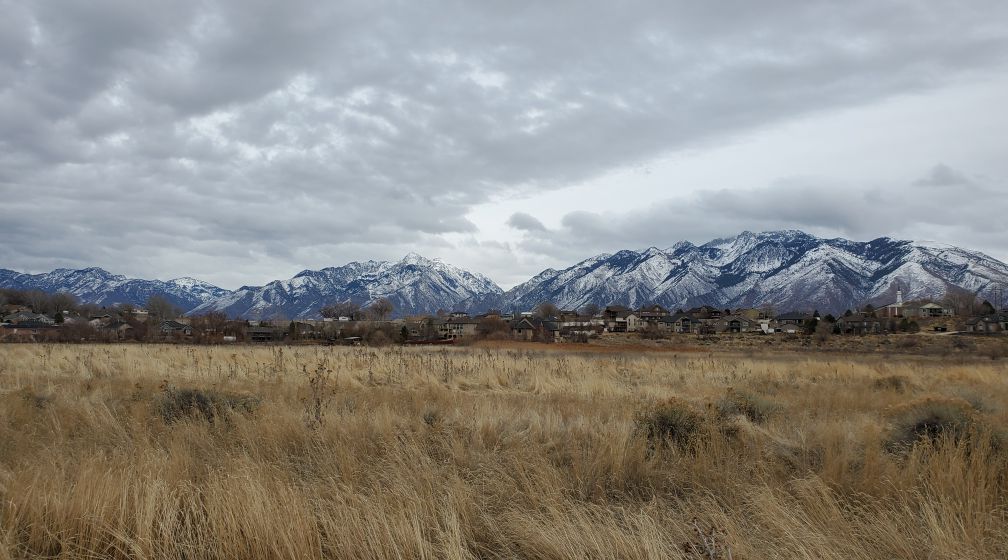
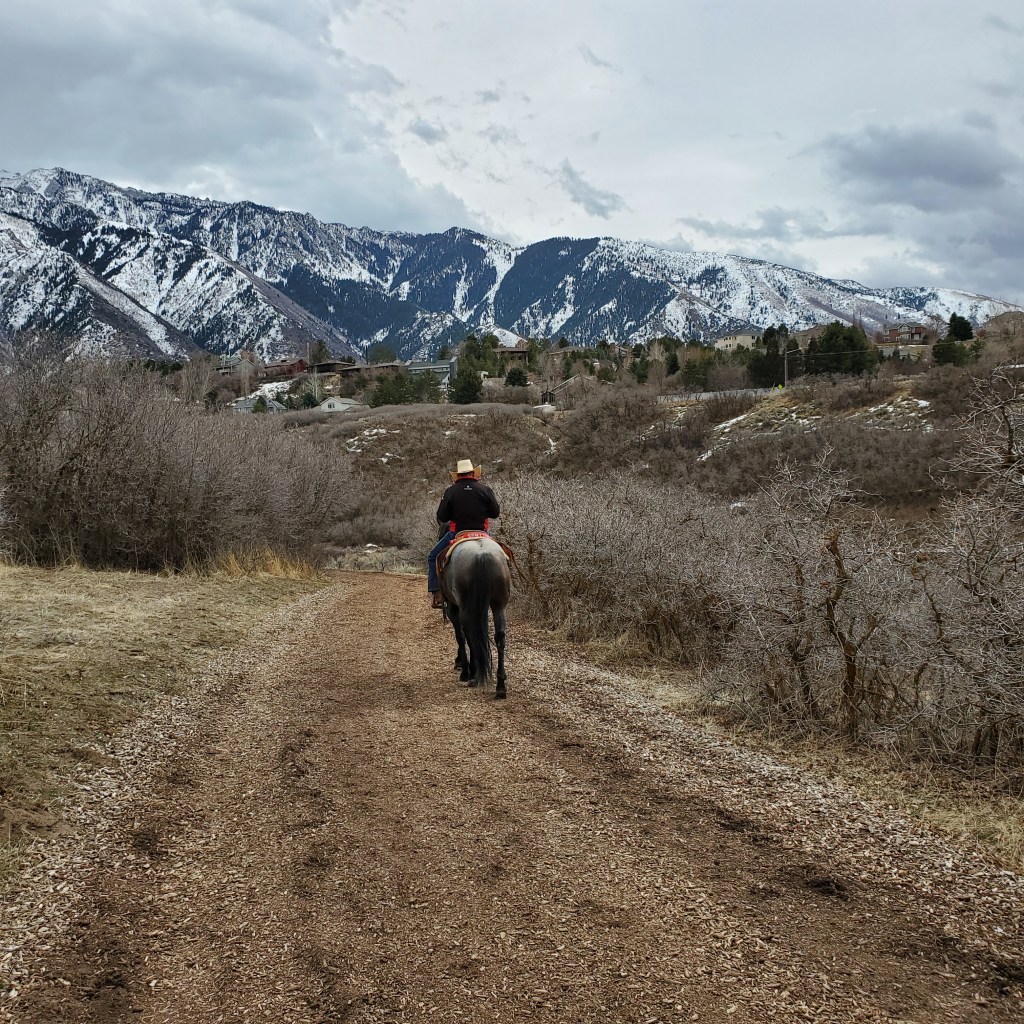
The drive back from Kanab, Utah, through Arizona after dropping off the injured juvenile Bullock’s oriole and hitting a stoat. Highway 237. Outside Pink Coral Sand Dunes, July 11, 2025.
[Add Images]
—
I found out there’s another way to get to the wildlife rescue in Kanab, one that doesn’t require driving through the area that’s so densely populated with wildlife. I didn’t know about the other way. I should have known. Friday would have gone very differently. I wouldn’t have hit and killed the stoat. I also found out that another wildlife rescue has opened in Enoch, which is much closer to my home. I don’t know if they take small birds or if they have the medicines needed after a window strike, but I’ll call them and find out tomorrow. It’s hard to be the reason another living being is no longer living.
—
Some deaths hit me hard. Andrea Gibson’s is one of them. I didn’t know Andrea, but I knew their work and their heart and the spaces they created for others in this world. I haven’t really moved since I learned Andrea died. I want the world to be kinder than it is, as kind as Andrea was. My heart is with all living beings and the Earth we share, which means it’s with Andrea, who is everywhere now.
In the morning, I’m bringing the Bullock’s oriole home from the wildlife rescue so she can join her family and the other orioles who are summering along our creek. Jon is coming with me. We’re taking the long way, the one that avoids the most sensitive wildlife habitats between our home and Kanab, Utah.
The oriole made a full recovery thanks to the rehabilitators who cared for her. She’s enough to get me moving again. Life is motion. Love is motion. Everything is motion.
—
We just got back from the wildlife rescue in Kanab and released the Bullock’s oriole. She flew right into the tree where her family has been hanging out. It might be the tree she was born in. The other orioles were in that tree yesterday evening singing their comical tune as the sun set. Orioles always sound like they’re recounting funny stories to one another, then laughing hysterically. It feels like they’re making fun of humans, which is fine by me.
The orioles didn’t know they’d soon be reunited with the juvenile female they thought they’d lost. They didn’t know she’d return at all. Five days is a long time to be gone and then appear again seemingly out of nowhere. She’ll never be able to explain what happened, and they wouldn’t believe her if she could.
When we got close to the tree and she could hear the other birds, the oriole started to dart around in her enclosure, eager to fly free. Then she did. All I saw were her spread tail feathers as she flew away, her body a noisy propeller trilling through the air.
I’m actually not certain the oriole is female or a juvenile. That’s what the rescue believes, but it’s difficult to tell immature males, immature females, and mature females apart. She’s duller than I would expect a mature female to be, and she lacks the eyeliner I would expect to see on an immature male. There’s no hint of black on her throat, which immature males can have, though probably not birds as young as I believe she is. She had the same clumsy flying behavior I’d seen the fledgling orioles, presumably her and her littermates, exhibiting a few days earlier. Taking all these factors into account, a juvenile female is also my best guess.
Her age matters because she needs to get back to learning how to be a bird and gain as much experience as possible before migration this fall. Five days is a lot of time to lose when you’re new to the world and need to get everything figured out pretty quickly in order to survive. She also needs to decompress from the stressful experience she’s had. I hope she has the time she needs to recover, learn, grow, and thrive.
We have bird-collision film approved by the American Bird Conservancy on order for our clerestory windows since the lines we drew on them didn’t prevent this strike. In the meantime, we’ve covered each window with a thick layer of soapy film. We can’t really see out of them, but that’s fine. I will wrap my entire house in blankets if it keeps birds like this oriole from being injured or dying.
—
Two Bullock’s orioles, a male and a female, just landed in the shrub in front of my window. I think the female is the one I took to the wildlife rescue for treatment after a window strike and later released here at our home, which is also her home. If you felt the ground shake a little wherever you are, it was from my heart exploding with love and joy. The epicenter of that seismic activity was Toquerville, Utah, latitude 37.2310016, longitude -113.2756992.


 Dana Henry Martin