dif/Fused Ancestry in Ardmore, Oklahoma

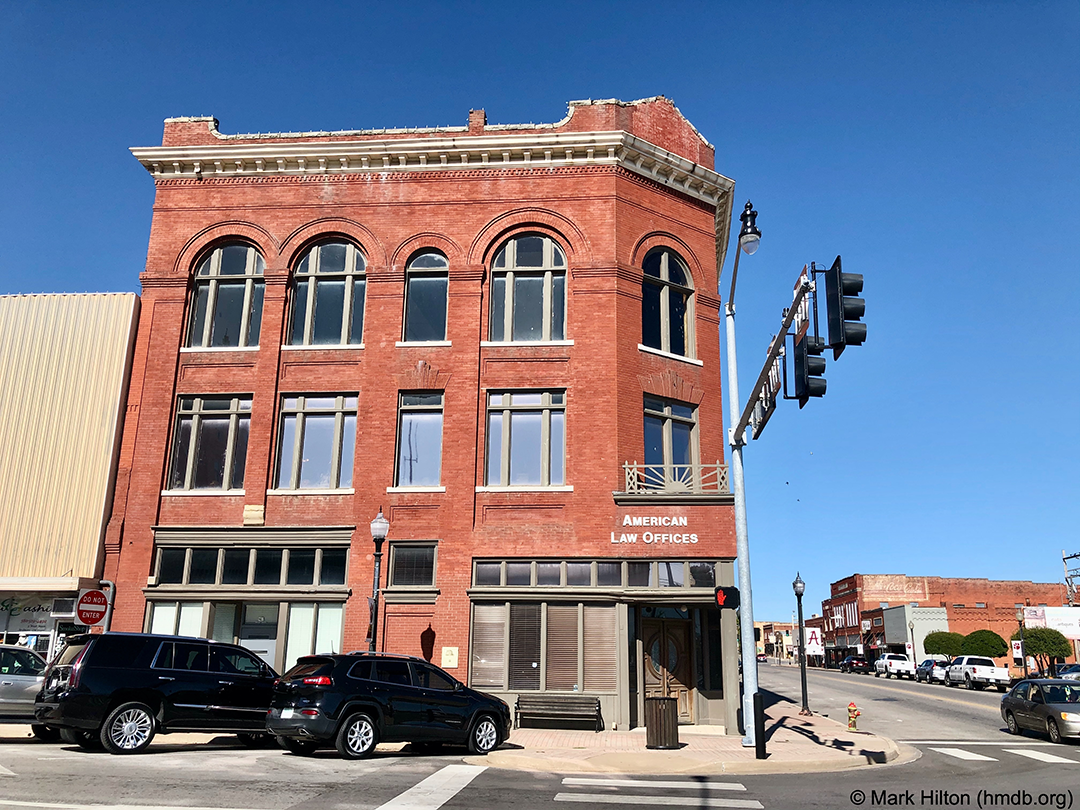
For my dif/Fused Ancestry project, I’m mapping sites where I want to collect soil samples for my father. One of those is the Masonic Temple in Ardmore, Oklahoma. I won’t go into why that is an especially painful site for me. If you want more detail, read the section after the break below. I’ll just say that I need soil from that location.

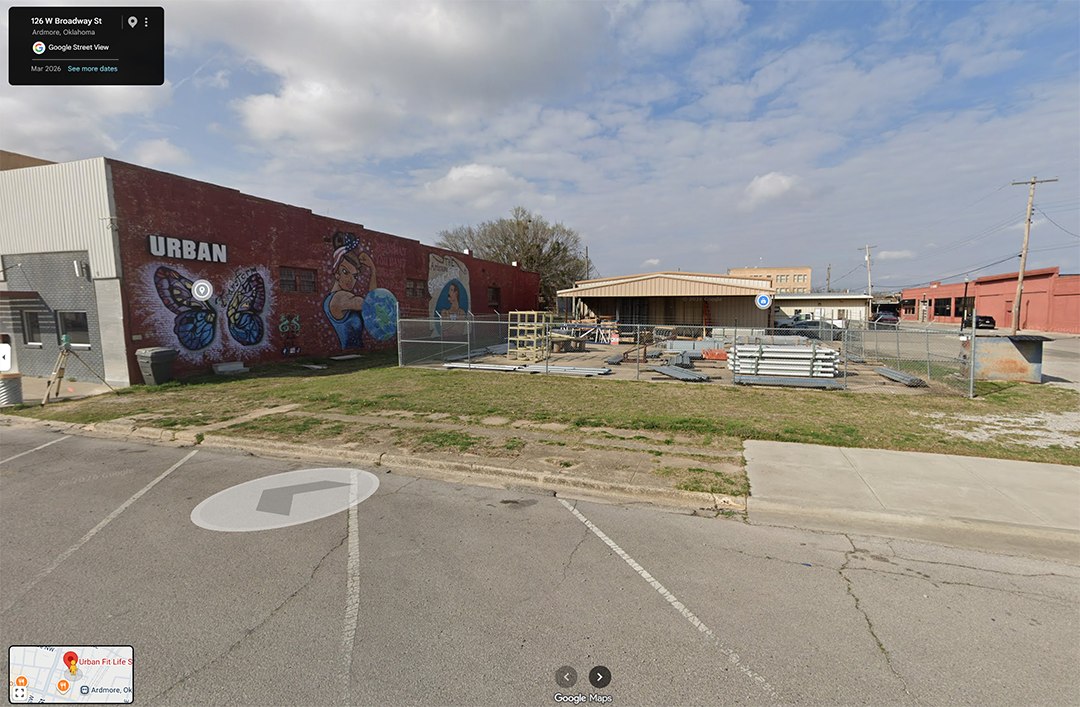
When I looked up the temple today, I saw that it was torn down in 1990. I didn’t know that. Why not? Because time tends to stand still once we leave a place and never return. What happened in that building can never happen again because it’s pretty much a vacant lot now. There’s some fencing and what looks like construction materials being stored there. There are also big murals on the wall that joined the temple with the adjacent building. One of the murals is a variation on Rosie the Riveter.

We change places, and places change again and again. What was is no longer. In this case, seeing the empty lot, even just on Google Maps, is helping me release the past. I’m sure that feeling will be even more powerful when I collect soil from the site.

This is something I hadn’t anticipated about dif/Fused Ancestry, that it would be an experiential and visceral way of realizing time has passed, things have changed, places don’t have to be what they were forever, and we don’t have to be the same forever, either, because of those places. What better way to get that message through to the body than by digging in the soil and transforming it into art.

Ardmore is the epicenter of sex and child sex trafficking in Oklahoma. A few years ago, the Department of Homeland Security had a presence in the area. They taught local residents how to identify trafficking and report it. In 2022, there was a huge bust at Lake Texoma, where my father and his best friend had properties adjacent to one another. Men, including powerful men, were caught in a trafficking case that involved a “party” at two hotels.

Oklahoma has one of the highest rates of sex trafficking in the country. I didn’t know that until I started researching the Lake Texoma bust. The crossroads area, where several highways intersect, is especially vulnerable, as are towns with transient populations, like colleges and military bases. My hometown had both at one point and the highway leading south from it fed into the crossroads. My father opened a business in my hometown called The Crossroads. Probably just a coincidence. After he died, I asked my mother why he liked that name. She said he liked it because the crossroads is where you summon the devil.

I have no evidence that my father was involved in any kind of trafficking beyond the ways in which he did so covertly with me. But it has been going on for decades. And it was facilitated by the availability of CB radios, which my father and his best friend both had. And he did have me talking to truckers on the highways down that way when I was in grade school. (They’d ask for me by my CB handle, Rainbow Unicorn.) And he did spend a lot of time down there alone with his buddies.

Since that bust in 2022, I’ve wondered if the temple was involved in trafficking in some way. Several lodges across the country have been caught up in such activities. I don’t think I’ll ever know. He may just have been involved in other criminal activity down there. He was always hustling. His whole life was a hustle until he got hustled by his own brother and died.

Images: 1. A photo of the Masonic Temple before it was torn down (credit: Mark Hilton). 2. A Google Maps screenshot showing the lot now, along with the murals on the brick wall of the adjacent building. There’s a butterfly you can take selfies in front of, a variation on Rosie the Riveter, and an image of an athlete titled “Ardmore Strongman.”
Post Oaks of Oklahoma

I met Scott LaMascus last night in Oklahoma City at McBride Center Writers, the generative workshop he and Aaron Pogue lead at Oklahoma Christian University. It was swell. I mean, my heart is swollen, and not in a cardiomegaly way but rather in a love way from that Big Oklahoma Love I’ve missed so much.

Everyone at the workshop was incredible, not only in terms of what they wrote but also in how they received other group members’ work. Selfishly, I want this for myself and for others in the area where I currently live, Southern Utah. But I can’t do something like what Scott does. His fluency with both poetry and people is remarkable. His care and kindness, coupled with his attunement to poetry and the craft of writing poems, is singular.

On the drive there from Tulsa, I almost rear-ended a semi because it almost rear-ended a gnarly, gloppy tar truck that decided to stop in the middle of the highway. I was like, Of course this would happen in the city where my father grew up! That horrible little tar truck is as monstrous as he was!

On my way back, I kid you not, Ottorino Respighi’s Pines of Rome came on the radio—yes, in Oklahoma that really happened—just as a barred owl woke for the night, emerged from a tree by the side of the highway right in front of my car, then glided over the other lane and disappeared into the green belt.

Pines of Rome is one of my favorite classical works. I listened to it all the time in high school, volume cranked the way my mother liked it so she could hear it from the dining room where she spent most of her time.

My mother was in that music last night. She was in that owl. She was the response to the tar truck and to my fear and to my anger at my father for wrecking everything.

I’m telling you facts now, so listen. You are in that music. You are in that owl. Everything moves toward holiness, toward magic and mystery, which are synonyms for miracle and love. Even places desecrated by people and their actions, by people like my father, want to heal, have no choice but to move in the direction of healing, because healing never leaves people or places or this Earth or this universe. It never leaves, even when it seems like it’s gone.

I had new tires on the car. The brakes had been serviced. I didn’t hit the semi, and the semi didn’t hit the tar truck. I also didn’t hit the owl. Last night, Respighi’s composition about pine trees in Rome was an ecstatic work about the Post Oaks of Oklahoma and what moves through them, especially in the spirited night, where all is and will be and always has been both amuletic and talismanic.

Also, on the drive home, I identified the issue with my manuscript Thoracopagus, the one I decided is missing that Graviton quality it needs. My realization was that the thoracopagus doesn’t represent the connection between me and my mother, which is how it’s framed now. It’s me and me. I’m the thoracopagus coming to terms with being of my mother but also of my father. In Crude, I turn my father into Hades and, later, into the devil. I can’t just leave him in that state. I have to keep haunting him the way he haunts me until he’s not me and I no longer feel like a monster or like I’m evil — two beliefs that have been tucked away in my mind my whole life.

I’m going to need all the amulets and talismans I can get to write about that, meaning every emanation of my mother and her family that inhabits this red earth.

Reconciling Familial Racism and Race-Shifting

In Oklahoma, the love I feel for my mother is boundless, as is the rage I feel toward my father. I didn’t expect the latter to hit me so hard. I’ve brought to light and reckoned with so many of the things he did, but there’s more. There’s always more with him.

I recently learned that his side of the family pretended to be Chickasaw when they weren’t. My father’s great-grandmother lived on appropriated ancestral Chickasaw land in Tennessee and, later, on similar tracts in Mississippi. I guess the family started telling folks they were Chickasaw when they came to Oklahoma during the Land Run.

It’s not quite the Cherokee princess story some white families tell to this day—including some folks on my father’s side of the family who are desperate to be anything other than white—but it’s close. Taking someone’s land, over and over, and following their path from Tennessee and Mississippi to Oklahoma, doesn’t make you Indigenous.

My father also performed with his brother and his entire class in blackface in 1947 at Central High School in Oklahoma City. A few months ago, Ancestry unearthed photos of that performance that appeared in the school’s yearbook. Ancestry is apparently using AI to collect and analyze thousands of high school and college yearbooks. I’m thankful for AI in this instance for bringing to light something I would never have known otherwise. About him. About that side of my family.

Some may say that’s just the way things were back then. But who is speaking in statements like that, and to whom, and why? Who is being left out of statements like that, and why? Who is being spoken for or not spoken of at all?

My mother’s side of the family wasn’t like that. They didn’t lie about their Choctaw heritage, and they fought racism and segregation. During World War II, my mother’s family moved to California so her father could work in the shipyards. There was no segregation in their neighborhood, schools, or my grandfather’s workplace. Kids played together. Adults worked together. Her family couldn’t stand moving back to Oklahoma after the war and to what they knew were backward laws and attitudes about race.

So it wasn’t just the times. It wasn’t just what people did. By that, I mean white people. These were choices white people were making—and in many ways, back then is right now. It’s today and tomorrow and all the tomorrows if we don’t put this internalized supremacy to bed, this othering, this skulking malice that seems to always be looking for people to harm. By we, I mean white people and anyone aligned with the ideology I’ve described.

I’m not saying anything new. It doesn’t mean it’s not important. This rage I feel for my father is a rage larger than me, and my father is larger than my father. But this is where it starts: in our families, in our homes—ones like mine where evil has taken up residence—then it moves to the community, to the county, to the state, to the country, and out into the larger world. We’re seeing that evil in corporeal form right now, diffused across many bodies, both individual and governmental, all of whom seem to share the same disposition and the same hatred.

It’s amazing how quickly evil spreads. The only thing that spreads faster is love, but it has to be love in action. We need to act and keep acting. By we, I especially mean those of us who come from hate but don’t want to see hate in the world. This world, as my father called it, as if it belonged to him. It didn’t and it doesn’t. I won’t let him have our world.

I should add: There was no segregation in California other than the abhorrent removal of Japanese Americans to internment camps (i.e., concentration camps) during World War II, which was absolutely fueled by racism.

Get Your Lit On at Tulsa LitFest

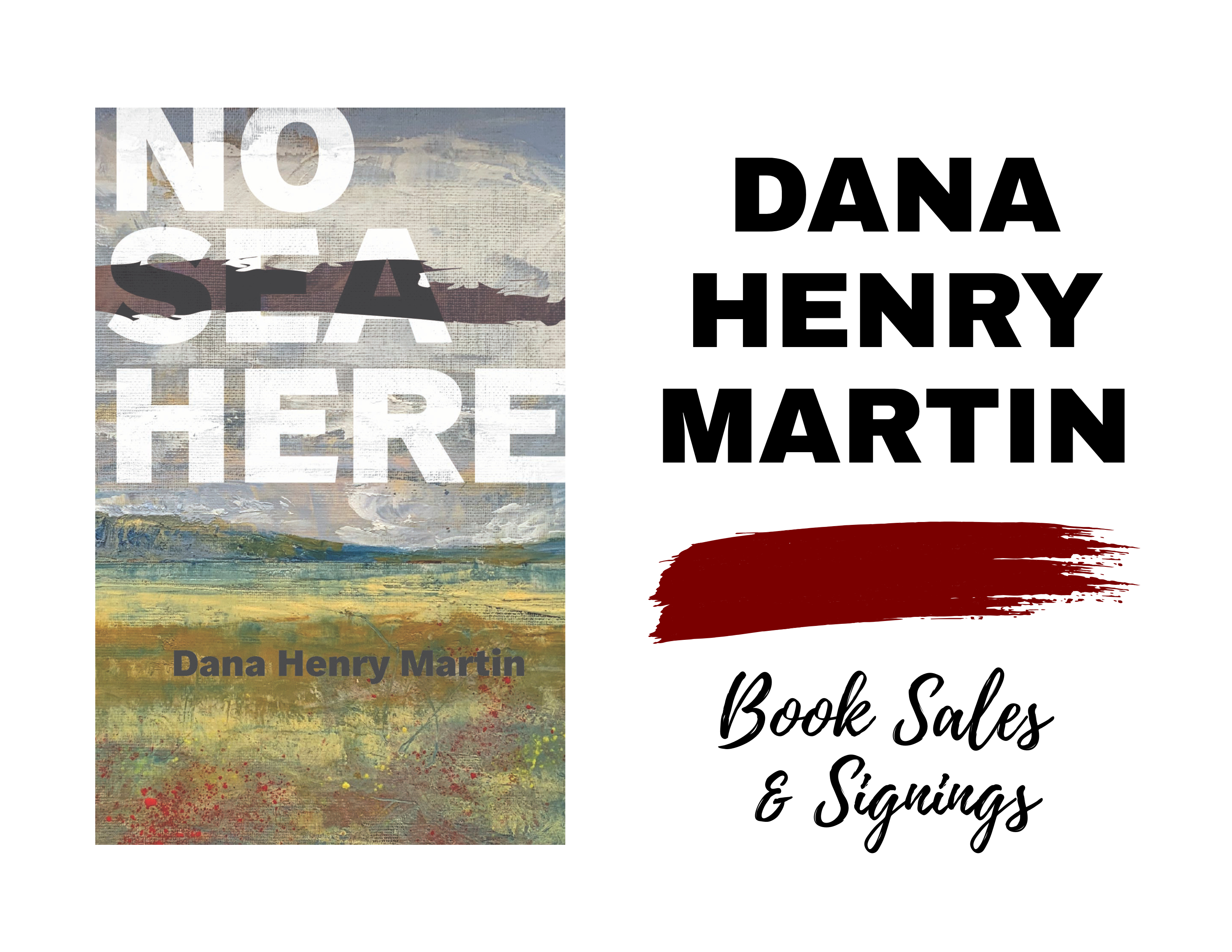
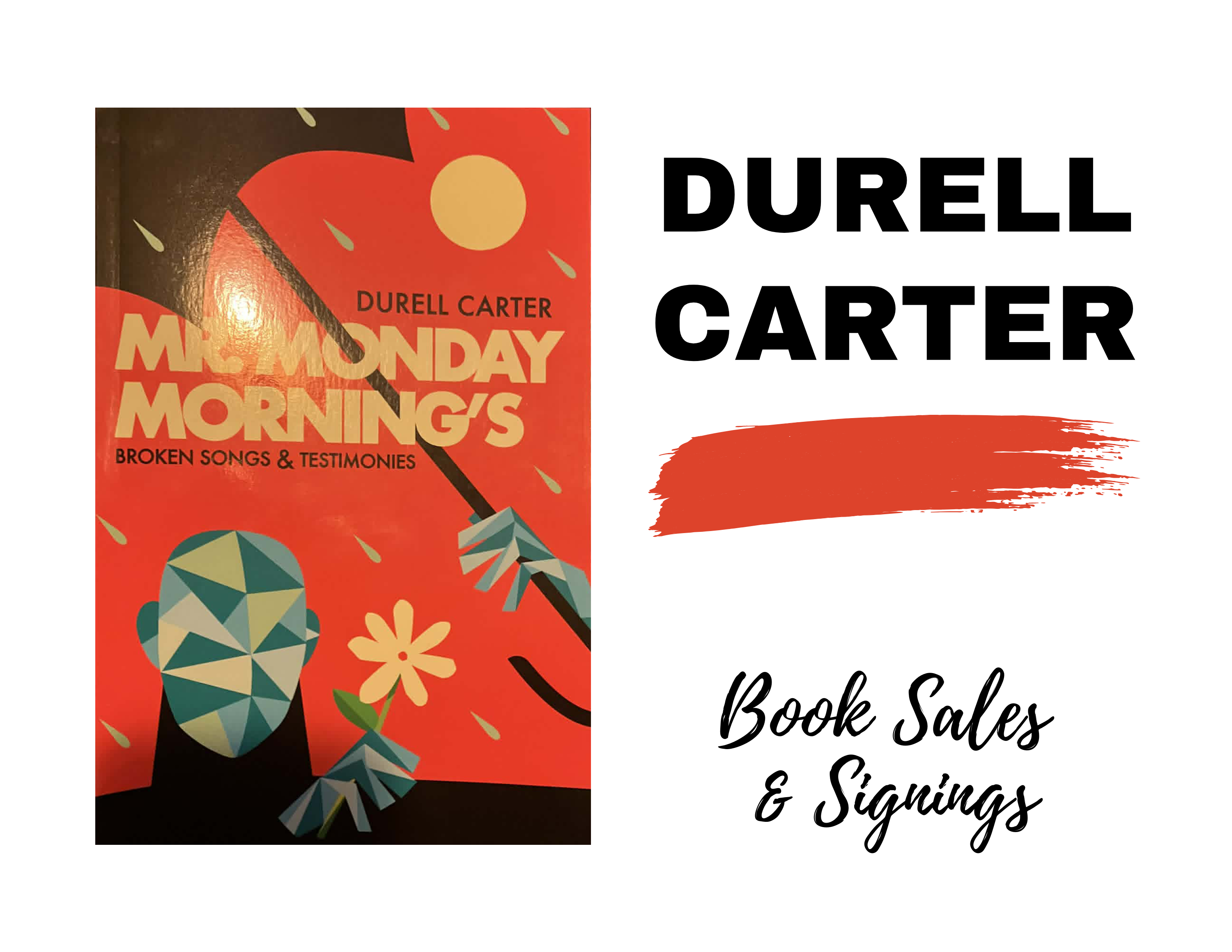
Here’s what’s going on at my Tulsa LitFest Book Fair table: a triple-billing of my work, Durell Carter’s work, and work by authors at Moon in the Rye Press. I’ll also have information about Nine Mile Press’s Propel Disability Poetry Book Series, where my full-length collection, Crude—which is largely set in Oklahoma—will be published next summer.

Come say howdy to Durell, me, and more than 50 other authors and publishers.

Tulsa LitFest 2026 Book Fair
Sunday, April 26, 11 a.m.–2 p.m.
OSU Tulsa Campus Mail Hall
700 North Greenwood Avenue
Tulsa, Oklahoma 74106

Images: 1. A sign for my collection, No Sea Here. 2. A sign for Durell Carter’s collection, Mr. Monday Morning’s Broken Songs and Testimonies. 3. A sign for Moon in the Rye Press.

Old Water

I learned today that we should all be drinking old water, really old water, ancient water, Pleistocene Epoch water, lest we be exposed to Anthropocene contaminants that significantly increase the risk of Parkinson’s and other diseases. If your area has it, it has it. If not, don’t even try to buy it bottled because the bottling process adds micro- and nanoplastics.

Oklahoma has old water. Eastern Washington has old water. Northern Utah has old water. Toquerville does not have old water. It has highly contaminated brand-spanking new water full of pesticides, herbicides, disinfection byproducts, heavy metals, and radioactive elements.

Boldface

The new Netflix documentary series, Trust Me: The False Prophet, details the story of Samuel Bateman, a man who committed horrific abuses in his attempts to claim he was the new FLDS prophet in Short Creek, located on the Utah-Arizona border, after Warren Jeffs was imprisoned.

Short Creek is thirty minutes from where I live. Its members girdle us, especially since Jeffs’ forced exit necessitated that many of his followers relocate to the surrounding communities.

In 2022, The Salt Lake Tribune ran a series of stories about Bateman in which he says some of the most vile things I’ve ever seen in print. Bateman and his actions shook my own childhood traumas loose and made me feel extremely unsafe in this community, or at least with that subset of the community.

My forthcoming book, Crude (Nine Mile Press, Propel Disability Poetry Book Series) discusses Bateman. In “Litany in Which I Talk About My Horse,” I tell my childhood friend Ruthie about the girls Bateman was hauling around a four-state area in a trailer to “recruit” male followers. He was caught in Arizona when a driver spotted something suspicious about his trailer and called the police. Inside it were just some of the girls he’d married and was trafficking. (Even more disturbingly, he also tried to marry his biological daughter, whom he felt called to wed while she was still a child. Yes, you read that sentence right. The documentary series leaves that part out.)

Below is an excerpt from my poem, which is seven pages long. I wrote it the night before my cardiac ablation when I thought I was going to die. It’s after Richard Siken’s “Litany in Which Certain Things Are Crossed Out.”

Completing “Litany in Which I Talk About My Horse” marked the moment Crude became Crude, even though I started writing Crude in 2009. It was also the moment I decided to come back to poetry after a seven-year absence. That day was November 28, 2022. 

I sent the poem to four poets I trusted that night before I went to sleep. I wanted them to have it in case I died while sleeping or during the procedure the next morning. This may seem like high drama, but I had five types of heart issues at the time, all from or exacerbated by post-viral sequelae, symptoms that linger long after the infection itself. For months, my doctors refused to believe any of these issues were serious, even though it felt like wild horses were stampeding in my chest day and night. My heart seemed hell-bent on trampling me to death.

It was in that state of physical and mental anguish that I finished “Litany in Which I Talk About My Horse.” I was responding quite literally to my heart and also to the fact that someone had just described me as riding into Southern Utah on a high horse, as if I were just some snob whose past wasn’t bruised, brutal, and bloody at times.

As it turned out, one of my issues was atrial fibrillation, which is quite serious. The other was postural orthostatic tachycardia syndrome, which hadn’t been diagnosed or treated yet and was causing a suite of severe symptoms like debilitating dizziness and vomiting. I sometimes had to crawl from room to room. Folks with dysautonomia know what I’m talking about.

Kelly Boyker was one of the poets I sent “Litany” to that night. She had a profound reaction to it, which strengthened my resolve to return to poetry. (Ad astra, dear Kelly.) My version of the poem doesn’t cross anything out. It sets atrocities in boldface. These are the lines about Ruthie’s father and Samuel Bateman:

              I’m sorry I did that to you, made that anger in him by speaking Latin,
                                  made him use you for supplication …
              later, in your room, in your bed, your own bed. If the window
                     were a heart, it would always be open not closed

              like the box trailer
                       found in Utah. It was full of girls. One wedged her fingers
                                                                                                                       over
                                            the right door. I thought of you but not of me. It’s what
              I do, Ruthie. It’s what I do.

Like I’ve said, Crude isn’t just about Oklahoma. Those same patterns repeat everywhere, including places like Utah. Folks should check out Trust Me: The False Prophet if they have the stomach for it. I barely made it through the series and don’t have the luxury of viewing it as a tragedy that unfolded a world away. This atrocity played out right here: first with Jeffs, and then with Bateman.

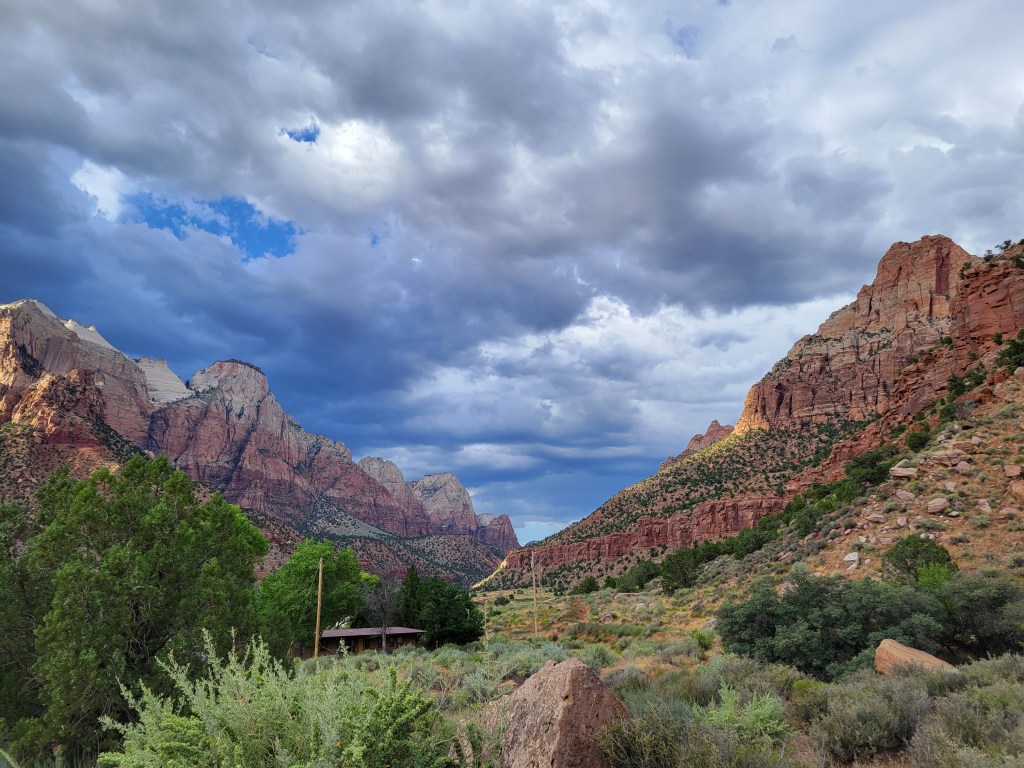
Image: My photo taken in Zion National Park outside Springdale, Utah, about thirty minutes from Short Creek.

‘Crude’ Publication Announcement

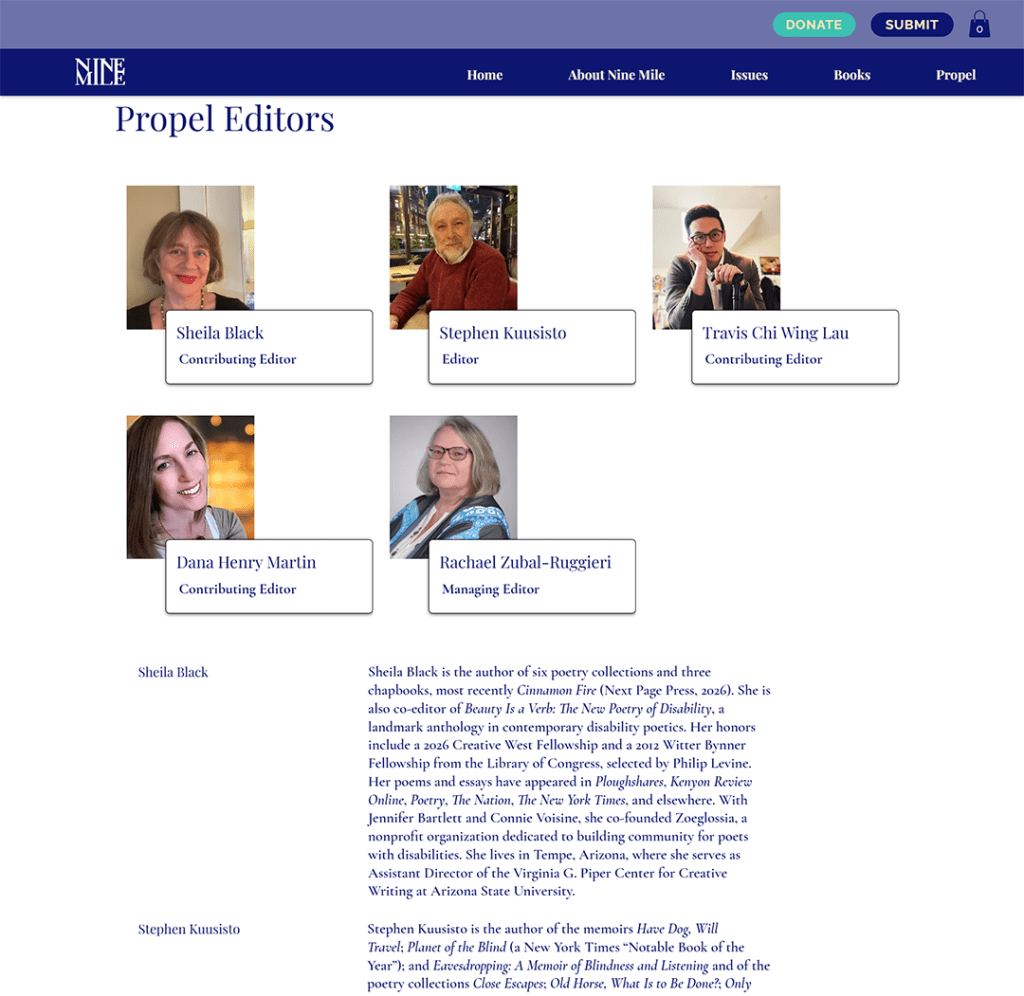
I’m thrilled to announce that I signed a contract with Nine Mile Press today. My collection, Crude, will be part of the Propel Disability Poetry Book Series and will be available in June 2027.

I’m also stepping into a contributing editor role for the series. Between the authors, editors, and founder Steve Kuusisto, Propel is doing phenomenal work around poetry and disability poetics.

This series matters deeply to me. Crude could not have found a better home.

Image: A screenshot of the masthead for the Propel Disability Poetry Book Series from Nine Mile Books.

The Good News

Things are shit in the world, but they’re looking up here in Toquerville, Utah. Check out all the good news:

  1. The sheriff who was nasty to me when I was traumatized and manic resigned.

  2. The bookstore in Hurricane where part of my mania played out in 2023 is under new ownership, so I feel like I can go in there again.

  3. The neighbor who wrapped his house, his car, and himself in American flags has moved.

  4. Only one truck rolled coal at me when I was out today.

  5. I saw two dozen baby goats by the side of the road.

  6. The pond at my neighbor’s house has been repaired and filled.

  7. The feral peacocks have returned to the pond.

Reflecting Light

Speaking of loneliness, I once played with light as a friend. When my brother-in-law, who was much older than me and a physicist, was visiting one summer, he showed me how to capture light in a small mirror and project it onto a wall. After he left, I played with the light for hours and hours in an otherwise dark hallway, the one that led to my parents’ separate bedrooms and to my bedroom and to everything that happened in them. I don’t know what I thought I was going to accomplish by getting a ball of light to bounce around on those nicotine-beiged walls, but I knew it was better than going it alone in that house. My light friend was everything to me that summer. It only let me down on cloudy days.

Alex Caldiero Memorial Essay

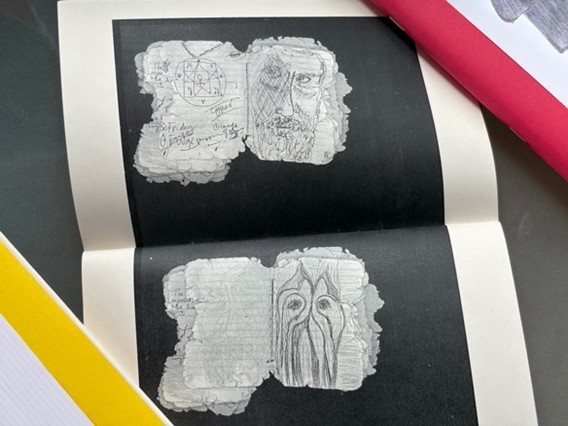
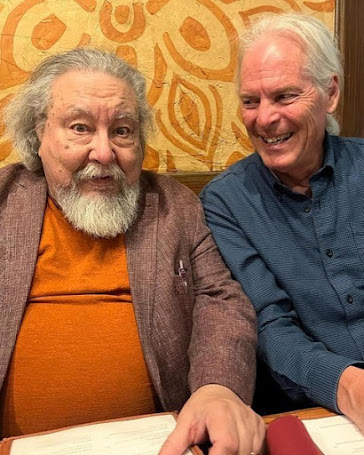
On this second day of April, I’m honored to share Scott Abbott’s tribute essay about Utah poet, sonosopher, composer, and musician Alex Caldiero, published today by Rob McLennan at periodicities : a journal of poetry and poetics. This tribute means so much. I only knew Caldiero’s work, but I recognize what a loss it was for Utah and for poets, artists, thinkers, and creative folks everywhere when he died. Rob was kind enough to reach out to me after I posted about Alex’s death to see if anyone wanted to write something about his work. Scott generously took the time to write this piece about Alex, his life, and his work. Read it. Then read it again whenever you start to think poetry and the arts don’t matter. Ad astra, Alex.

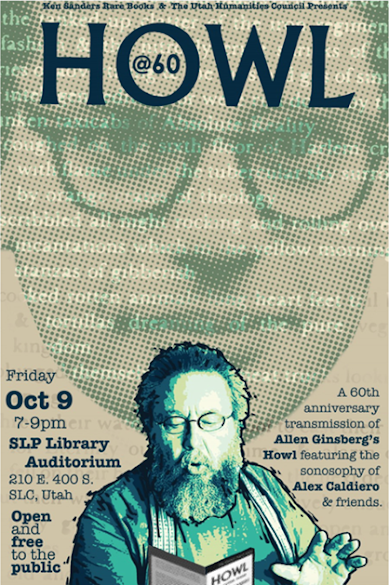
Images: 1. Alex Caldiero with Scott Abbott. 2. A poster for a Howl event with Alex Caldiero at the bottom. 3. An open page from one of Alex Caldiero’s notebooks.