By Dirt, by Blood, by Oil

I could have called my family by its dirt. I could have called it by its blood. But it’s oil I settled on, the oil that extracted something from us as a family and as Oklahomans even as we came for it this way and that.

How oil turned to paper money then burned. How it burned us in the process.

I could have called my family by its horses. I could have called us by our broken land, our busted hope, our anger, our crimes, our laughter, our deaths, our abuses, our bruises, our fires—I mean real ones we set, places we took a match to when they stopped being to our liking. That includes our own bodies.

But it was always oil, my family, even before it knew it was oil.

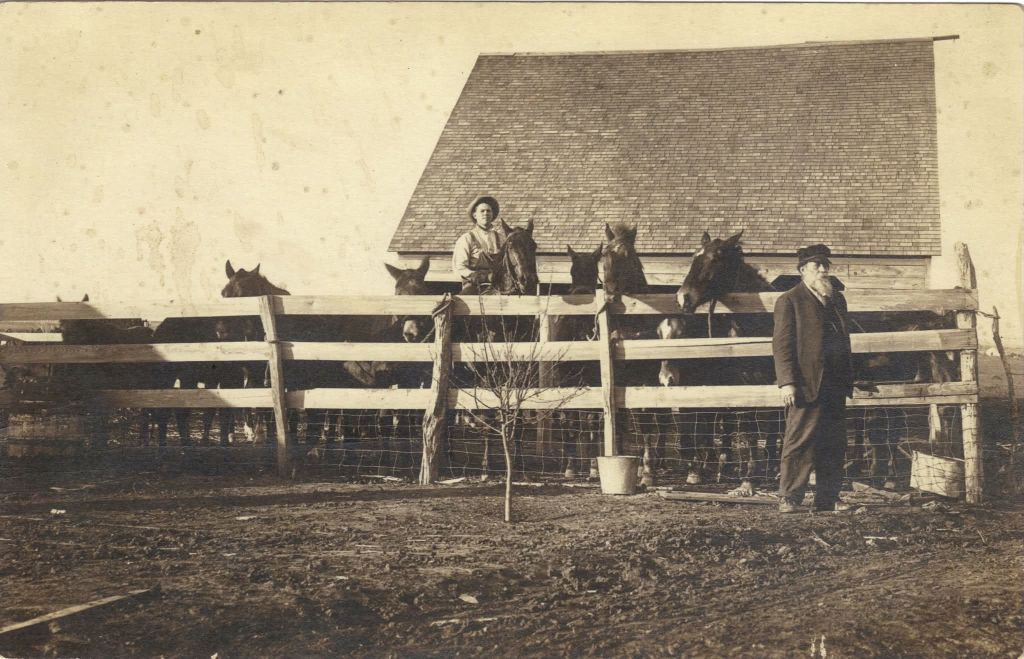
Image: My great-grandfather and my grandfather on my mother’s side along with their horses. Either Altus or Headrick, Oklahoma, date unknown, probably 1920s.

Scattering Light

My manuscript Crude was shortlisted for the Lightscatter Press Book Award, judged this year by Heid E. Erdrich.

I’m from Oklahoma. Crude is set largely in that state. The work deals with issues related to trauma, healing, and the formation (and destruction) of identity through places and what happens in them. The word crude functions in several ways in the manuscript. It captures what is raw and coarse and also speaks to the oil industry, which informed so many people’s lives in Oklahoma through the 1980s, including my family’s.

Things like the Dust Bowl, the Great Depression, and the oil boom (and subsequent bust) may seem like forever ago and like they have nothing to do with your story. But Crude is where we were and where still are, all of us. We are all hurting in one way or another in this crude country and this crude world. We are all healing in this crude world, too. Or trying to.

We’ve survived, my kin and me, the unthinkable, the unimaginable, the unsurvivable. Surviving the impossible is possible. That’s my story. It’s that I’m still here and so are you.

Lightscatter Press is a micropress here in Utah whose publisher, Utah Poet Laureate Lisa Bickmore, and board of directors all live, write, and work in the state. It’s one of those dream presses for me because of the people involved and what the press embodies. I’ve said before that I don’t aspire to be on the biggest press. I want to be on a press that cultivates a sense of community and connection, a sense of people and place.

I’m touched by this. It’s good to know my work matters in some way to some people. After all, I’m not writing about what I’ve experienced for fun. It’s not an exercise. It’s a decision to enter into a way of being and to remain there for as long as it takes, which I hope is as long as I live.

The winner of the award is Sagirah Shahid, whose book SPIRIT: An African American Muslim Lyric, will be published in Spring 2027.

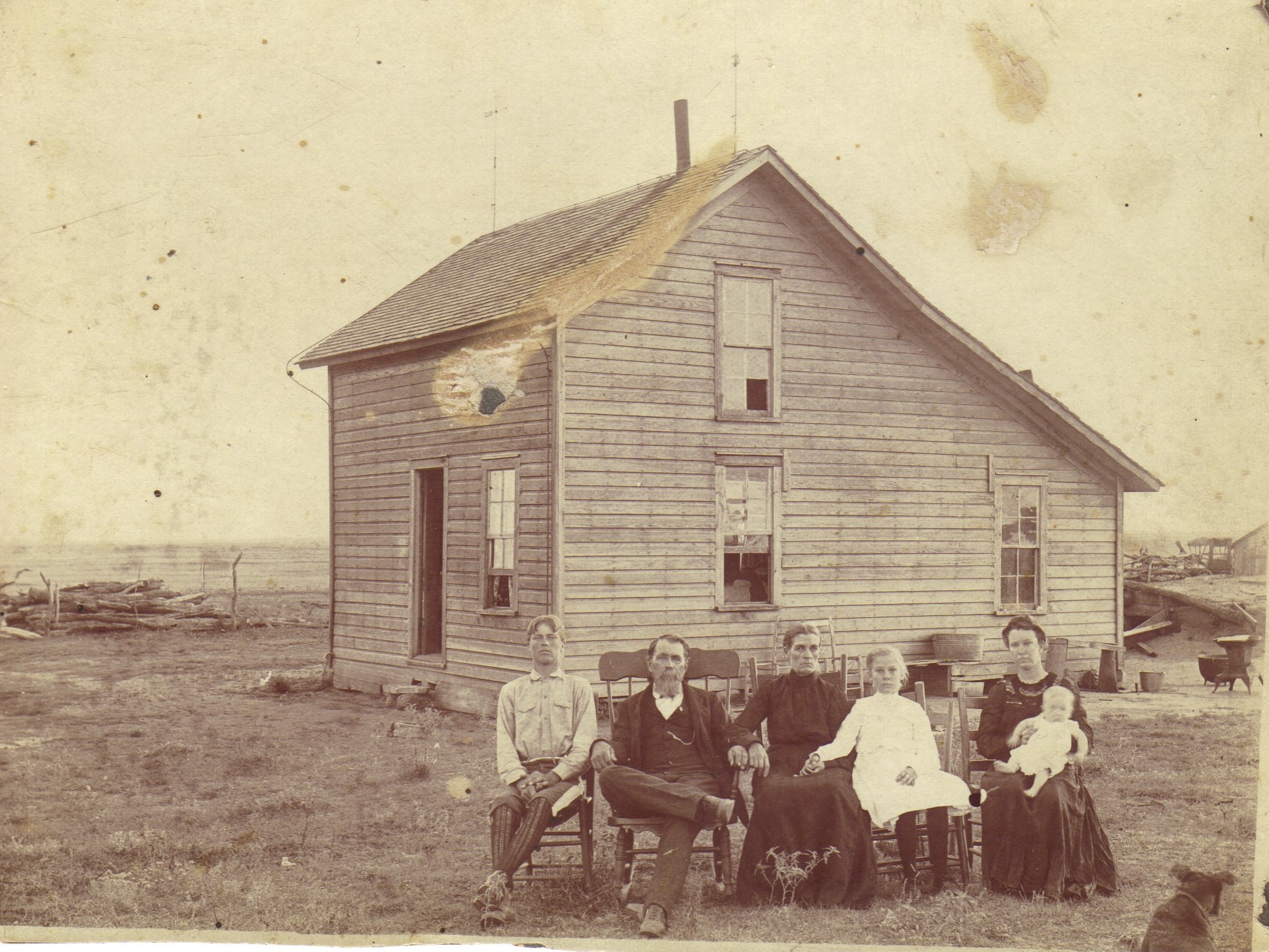
Image: My mother’s grandparents, father, aunts, cousin (who was passed off as an aunt if the rumor is true), and dog in front of one of their early homes in Oklahoma. This family photo and many more are woven into the fabric of Crude.
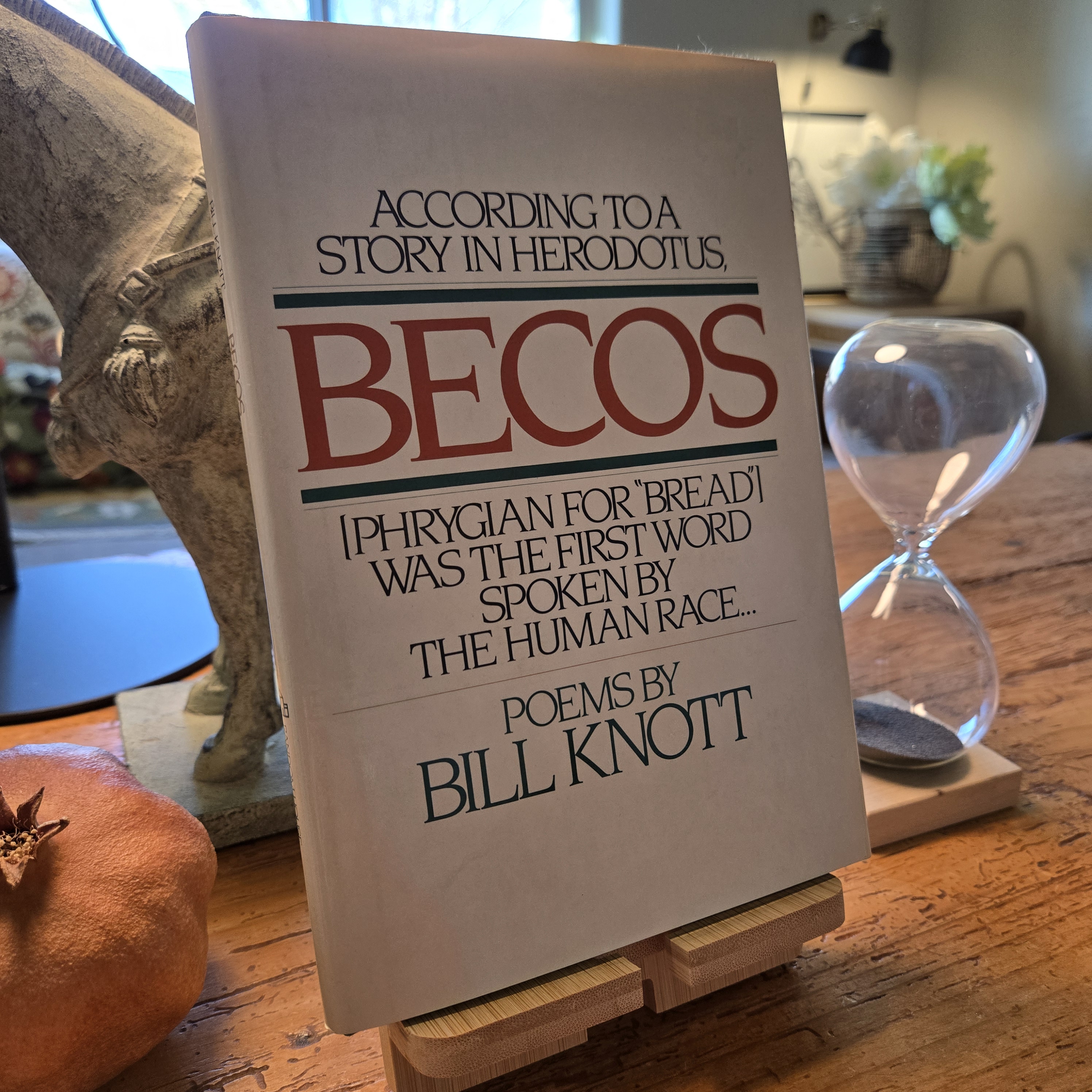
‘Becos,’ by Bill Knott

I had this collection years ago before I left poetry and sold, donated, or gave away most of my poetry books. I just got this beautiful copy from Chaparral Books in Portland, Oregon. A friend read a poem from the collection to me last week. I realized I no longer owned the book and needed a copy.

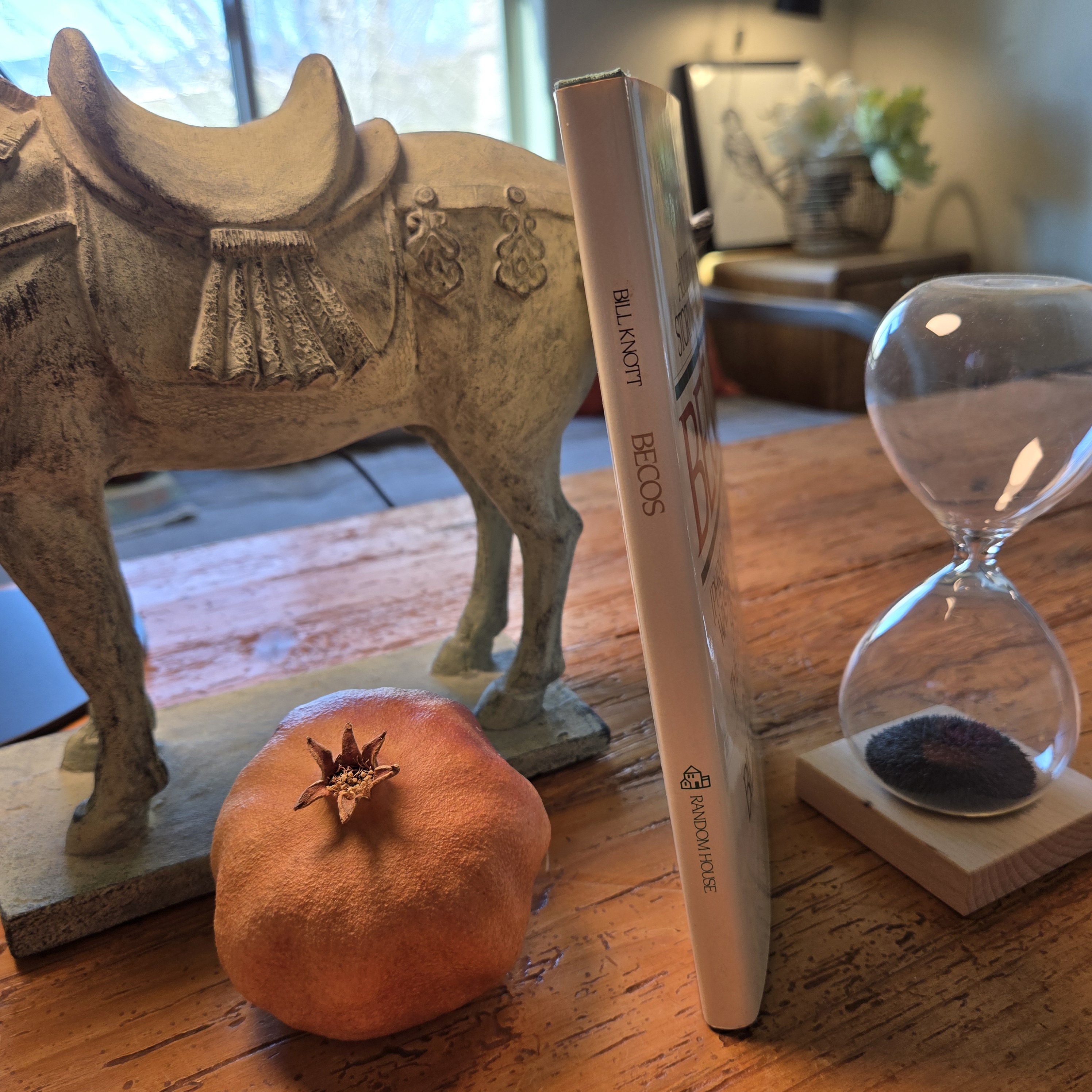
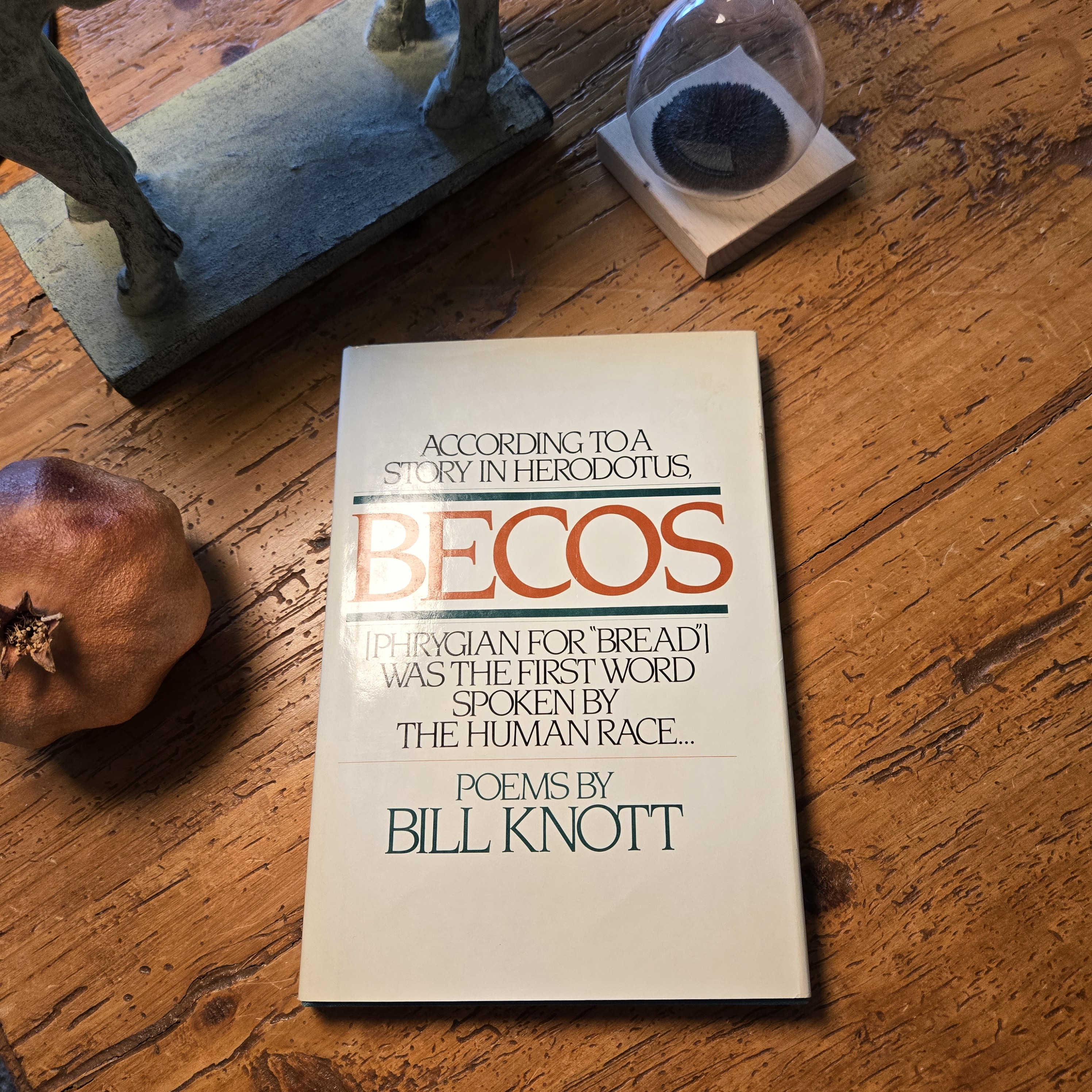
Images: 1. Becos propped up on a book stand with a dried pomegranate, a horse sculpture, and an hourglass. 2. Interior pages from the book. 3. The book propped up against the horse sculpture to show its spine. 4. The collection lying flat on a desk with the dried pomegranate, horse sculpture, and hourglass.

Eggs

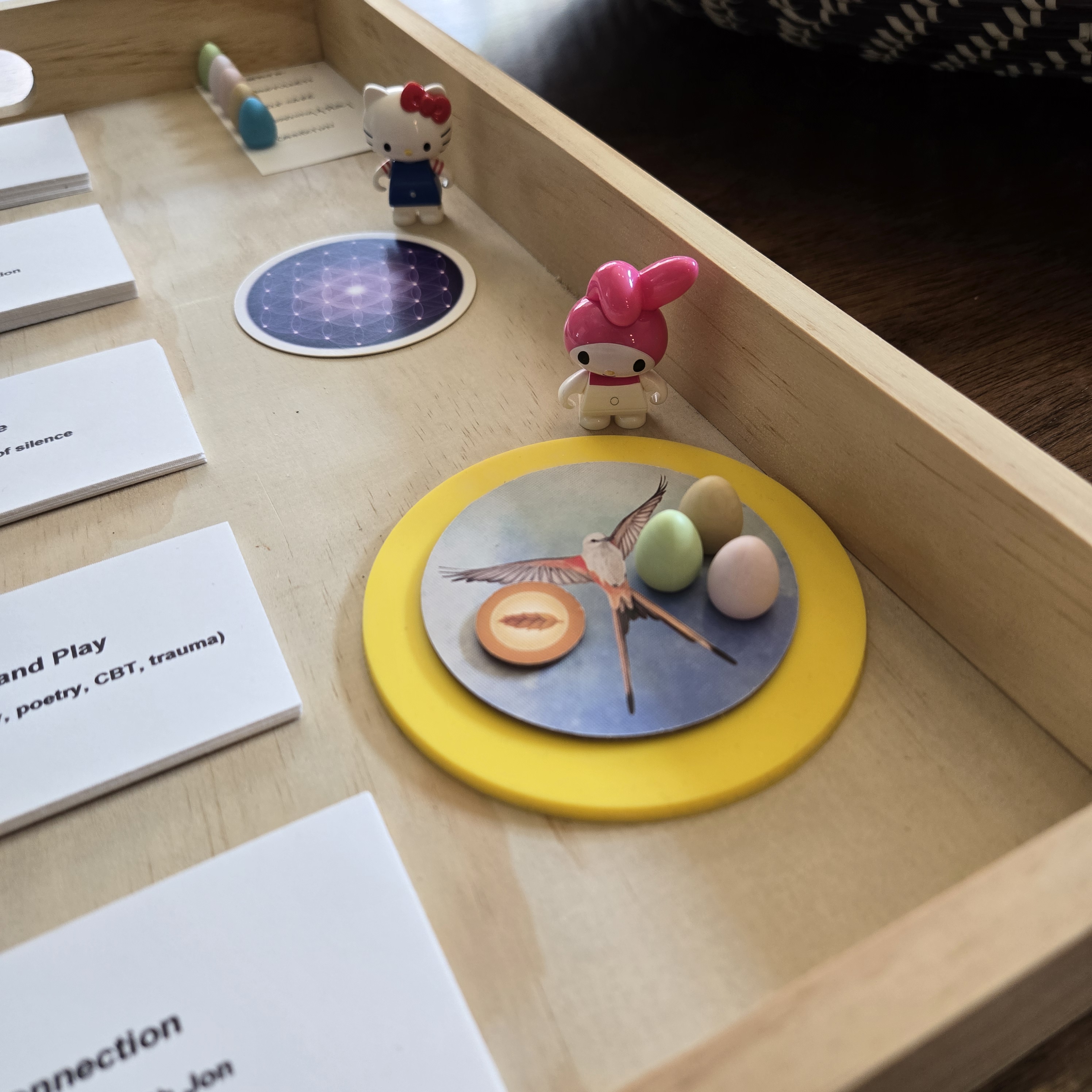
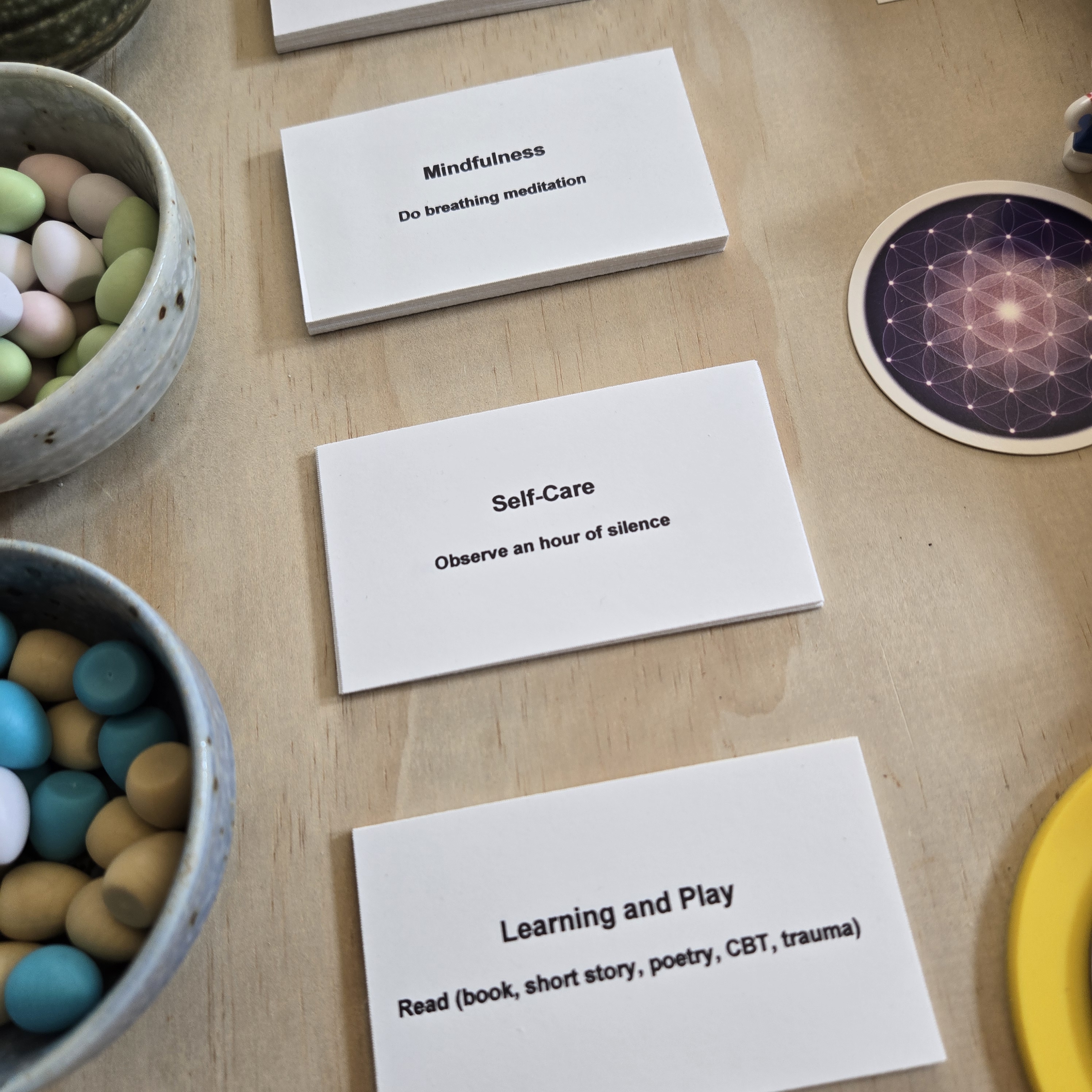
This is a game I made during the pandemic called Eggs. It uses pieces from the Wingspan game, custom cards I made, and some other stuff. The goal is to do things that are healthy and build resiliance, to connect with others, and to minimize stressors. The blocks represent stressors. The food coins represent connection. The eggs are what you get when you do something that falls into one of the following categories: Connection, Health, Learning and Play, Mindfulness, Self-Care.

Carolyn Kizer

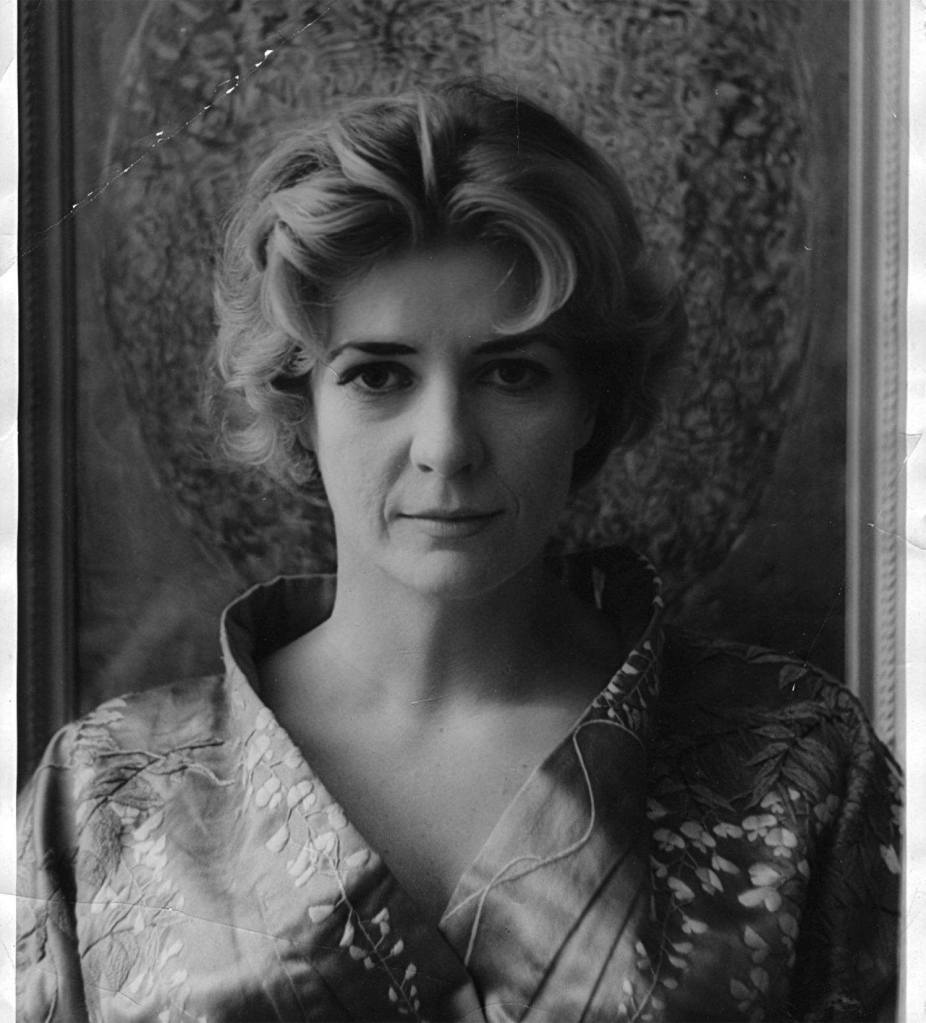
Let’s just call her what she was: a siren, a soothsayer, a mythmaker, a chorus, a riot. I met her. She took a sliver of me. I am but a sliver of her. You will never remove that sliver.

Image: A photo of Carolyn Kizer that ran in Poetry Northwest.

Calligrams

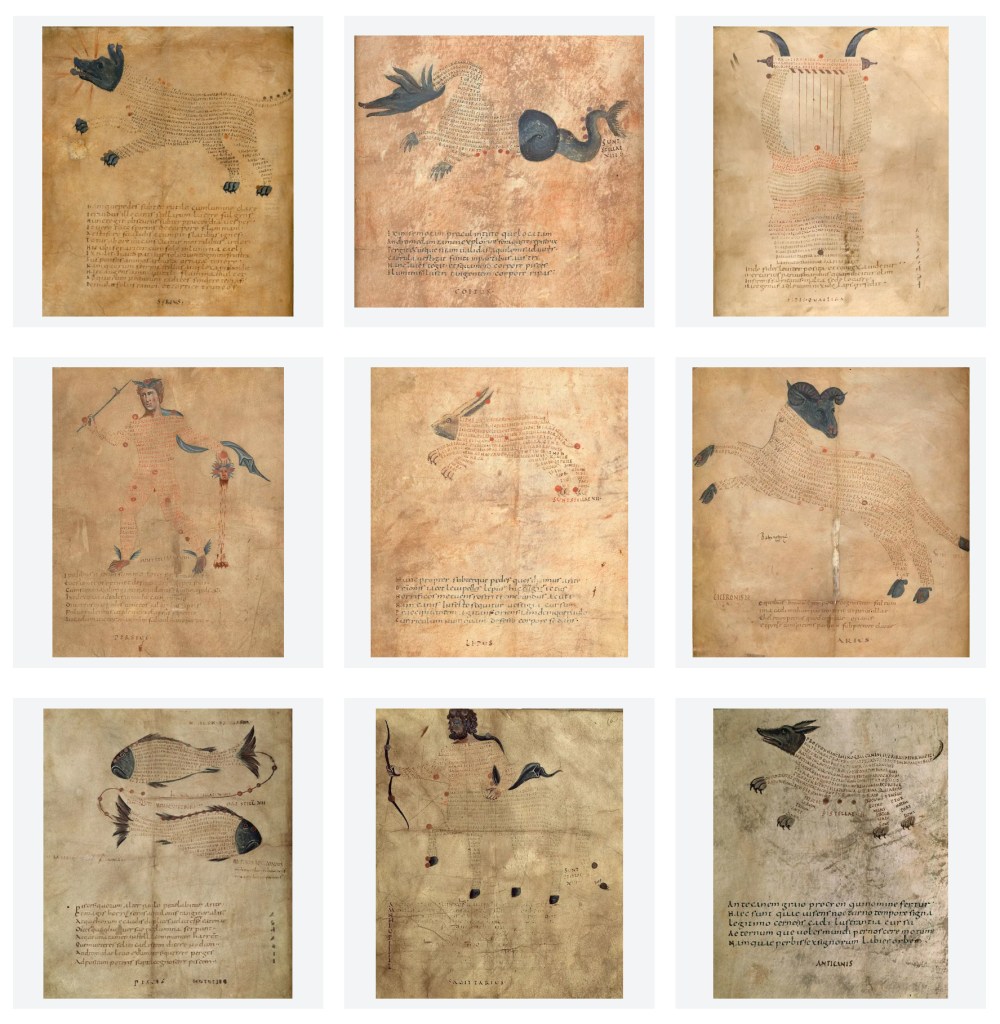
Folks were really reaching to find animals in the stars. I’m glad they did, otherwise we wouldn’t have these calligrams.

Source: Public Domain Review.

Don’t Mess with These Dactyls

Poetry is my weapon. Baby, you don’t wanna mess with these dactyls.

Image: an outline of a left hand with the thumb pointing up, the bottom three fingers folded back, and the index finger pointing out. A long red line (representing a stressed syllable) is above the finger’s bottom bone (proximal phalanx), as well as two red curved lines (representing unstressed syllables) above the middle and upper bones (middle and distal phalanges). Image fromWikipedia and used in accordance with its Creative Commons Universal license.